

|
Getting your Trinity Audio player ready...
|
By Victoria Musimbi
Nairobi, Kenya: To lower preventable maternal and neonatal mortality in Kenya, key priorities include reinforcing healthcare systems, expanding access to preventive care, resolving workforce shortages, and leveraging data to bridge gaps in maternal services.
These were among the recommendations emerging from the Kenya Editors’ Guild Forum on Maternal, Newborn and Child Health, which brought together editors, journalists, researchers, healthcare professionals and policymakers in Nairobi to examine how mothers and babies can not only survive but thrive.
The Kenya Editors’ Guild, President Zubeidah Kananu urged journalists to go beyond reporting maternal and newborn health tragedies and investigate gaps in healthcare delivery, including referral systems, specialised newborn care and the management of high-risk pregnancies.

Citing the September 2026 case of Mercy Kanini, a Juja mother who lost all five babies she delivered prematurely, Kananu said the tragedy raised important questions about the care available to women with high-risk pregnancies and babies born prematurely.
“Beyond the grief and the headlines, this tragedy raises important questions about the management of high-risk pregnancies, specialised newborn care and the effectiveness of our referral systems. What lessons can we draw from such experiences to improve the chances of survival for other mothers and babies?” she posed.
She challenged journalists to sustain coverage beyond tragic incidents by examining systemic failures, following up on government commitments and assessing whether healthcare interventions were improving outcomes.
“The real test of our journalism is not simply whether we report what happened, but whether we help the public understand why it happened, what could have prevented it and who is responsible for making things better,” she said.
Kananu noted that maternal and newborn health should be reported as a connected journey, from pregnancy and antenatal care to safe childbirth and newborn survival. She highlighted the need to examine access to nutrition, early screening, skilled healthcare workers and essential medicines, as well as whether facilities can respond effectively to complications.
While journalists have a role in holding institutions accountable, research provides the evidence needed to understand why mothers continue to die and where interventions are most urgently required.
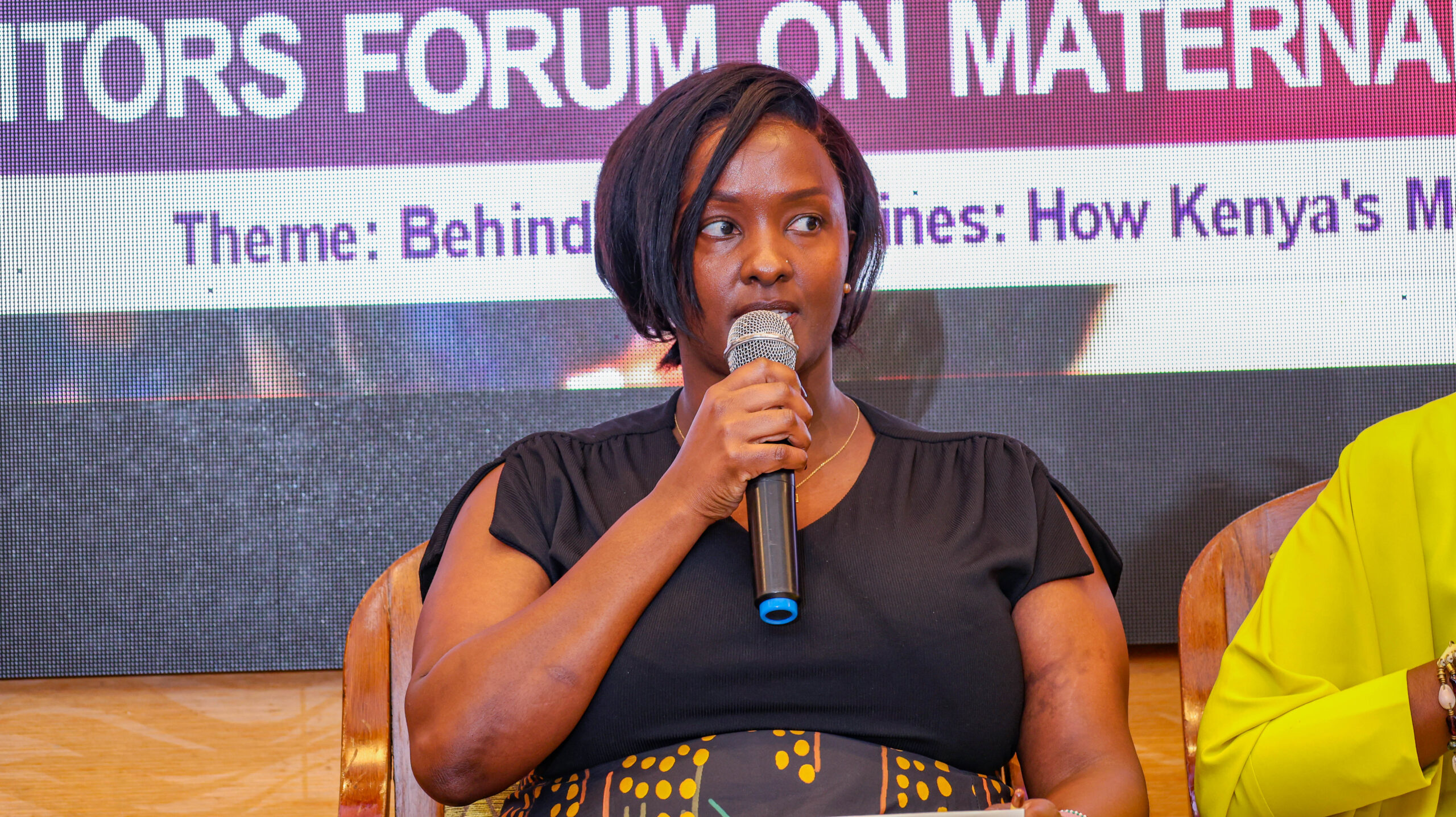
Dr. Njoki Kimani, PhD, Research Fellow at the Centre for Epidemiological Modelling and Analysis (CEMA), University of Nairobi, emphasised the importance of using data to guide policy decisions and improve maternal healthcare.
She said Kenya had recorded a decline in maternal mortality, according to the recently launched Mini Demographic and Health Survey (Mini DHS), which reported 263 maternal deaths per 100,000 live births.
“As a country, we have recorded a downward trend in maternal mortality. However, we still have a lot to do to achieve the Sustainable Development Goal target of 70 deaths per 100,000 live births,” she said.
Dr. Kimani says researchers analysed data from the Maternal and Perinatal Death Surveillance and Response (MPDSR) system to understand the circumstances surrounding maternal deaths in health facilities.
The analysis examined three delays associated with maternal mortality: delays in deciding to seek medical attention, reaching a health facility and receiving appropriate care after arrival.
“What we are seeing is that more than 80% of maternal deaths were attributed to the third delay, which occurs at the health facility level,” she said.
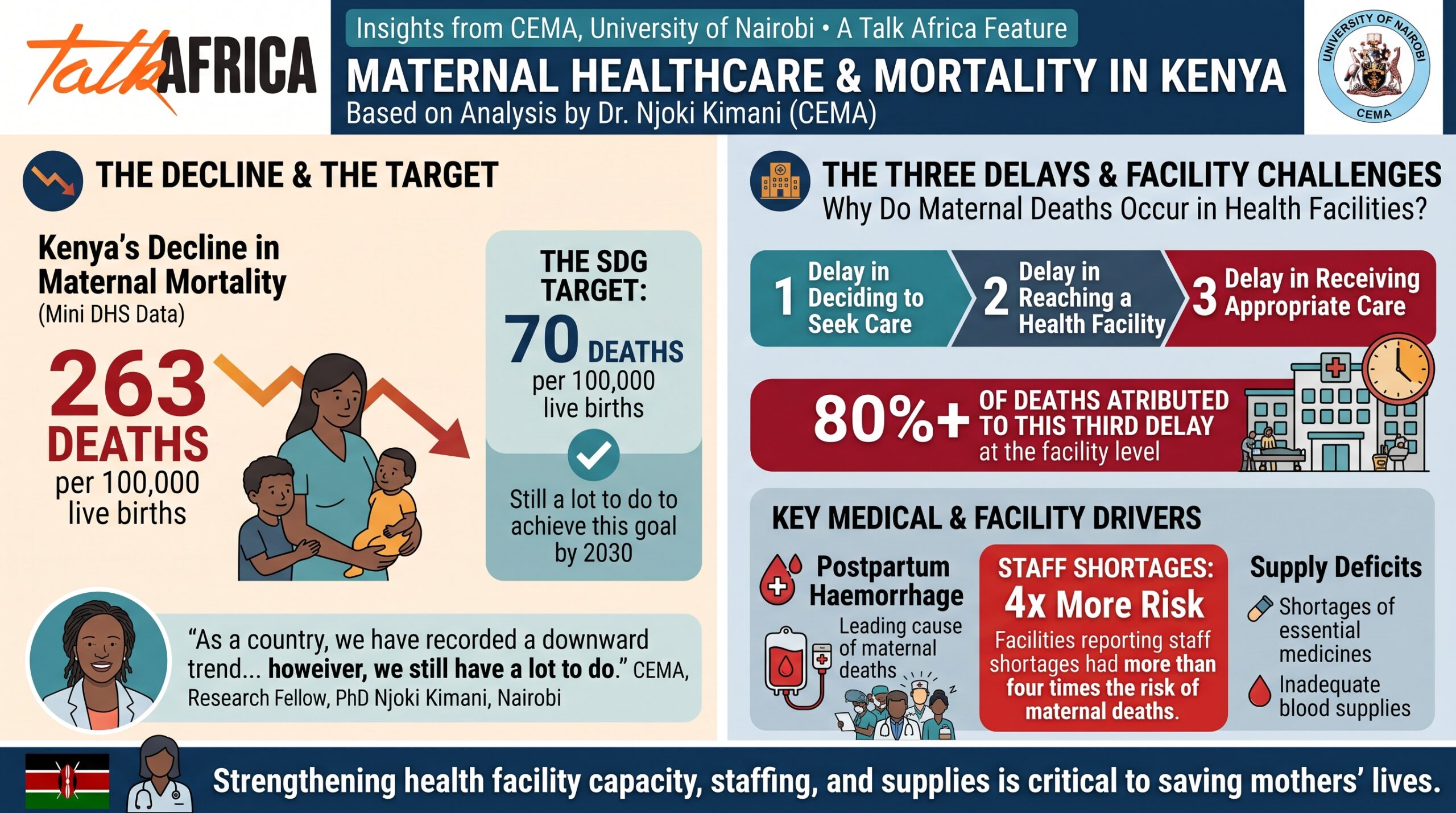
Postpartum haemorrhage emerged as a leading cause of maternal deaths. The analysis also established that facilities reporting staff shortages had more than four times the risk of maternal deaths. Other contributing factors included shortages of essential medicines and inadequate blood supplies.
Dr. Kimani said the findings highlighted the need to strengthen maternal health education so women can recognise danger signs and seek care promptly. Community Health Promoters also have a role in improving awareness and encouraging timely referrals.
She said the data was helping the Ministry of Health identify counties with high maternal mortality burdens, prioritise interventions and monitor progress through an accountability tracking dashboard.
She further stressed the need to improve data quality and make information accessible to communities and health workers.
“It’s important to look at the quality of data collected, the messages it communicates and how we package it for communities and health workers to understand the impact of their activities and guide their daily decisions,” she said.
Beyond identifying gaps in healthcare delivery, research has also established preventive interventions that can reduce complications and protect mothers and newborns.
Dr. Hellen Barsosio, Assistant Principal Clinical Research Scientist at the Kenya Medical Research Institute (KEMRI), said interventions during pregnancy could protect both mothers and their babies.
“The foundation of knowledge is strong. We know the tools, and we have generated the research in Kenya. The real challenge is excellence in delivery,” she said.
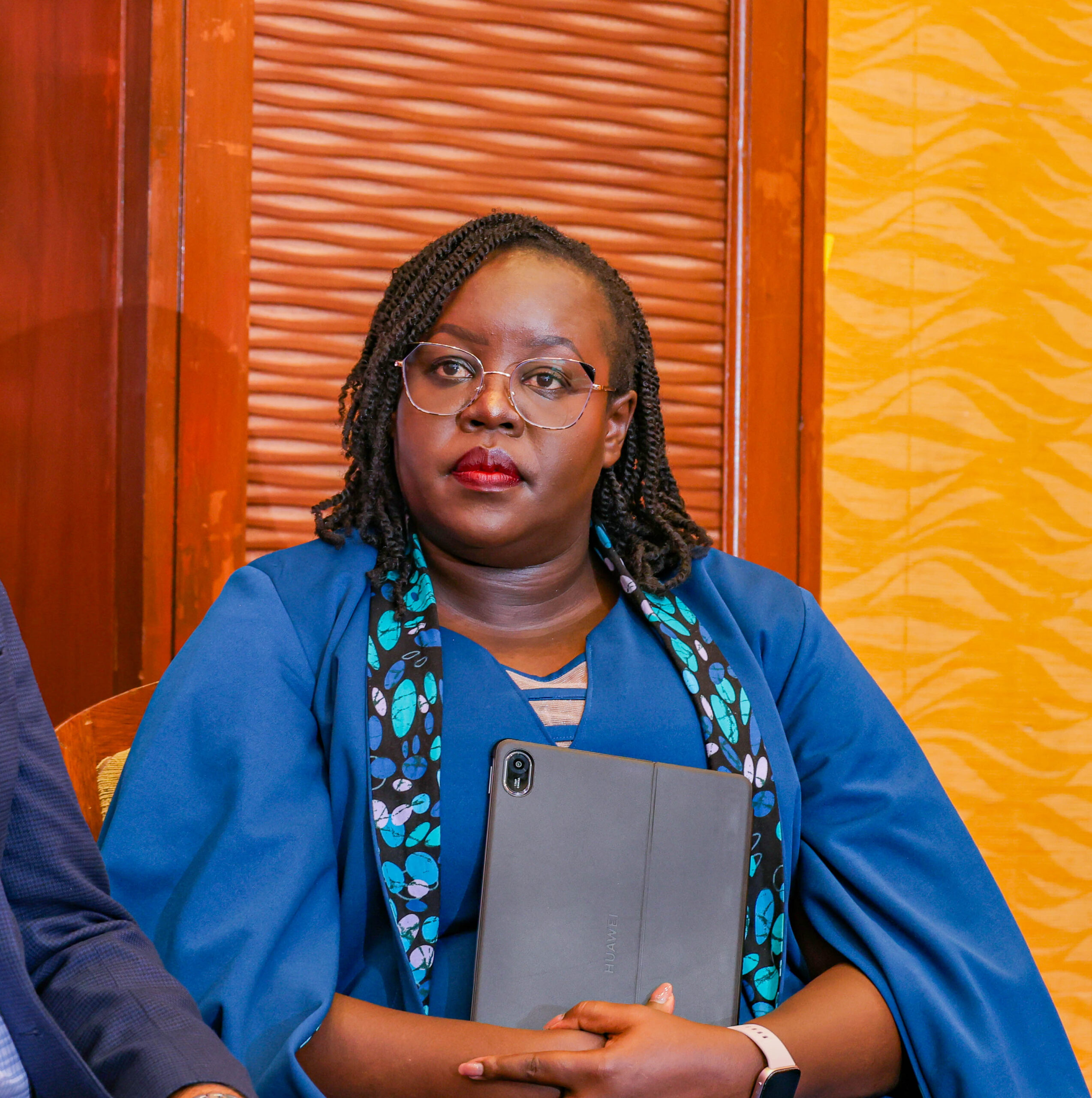
She explained that antenatal care should provide a package of preventive services, including medication to prevent malaria and anaemia, tetanus vaccination, mosquito nets in malaria-endemic areas and health education. However, some women miss these services or receive them too late.
“Prevention works. We need to bring it to the forefront so that mothers and families know that prevention works,” she said, urging communities to understand the value of routine antenatal care.
Kenya’s elimination of maternal and neonatal tetanus in 2019 demonstrates the importance of sustained prevention efforts. Dr. Barsosio also called for faster progress in reducing neonatal deaths, particularly those linked to infections such as early neonatal sepsis.
She cautioned against overlooking pneumonia, which remains a major cause of death among young children. She also highlighted the contribution of the rotavirus vaccine and the need to sustain successful immunisation programmes.
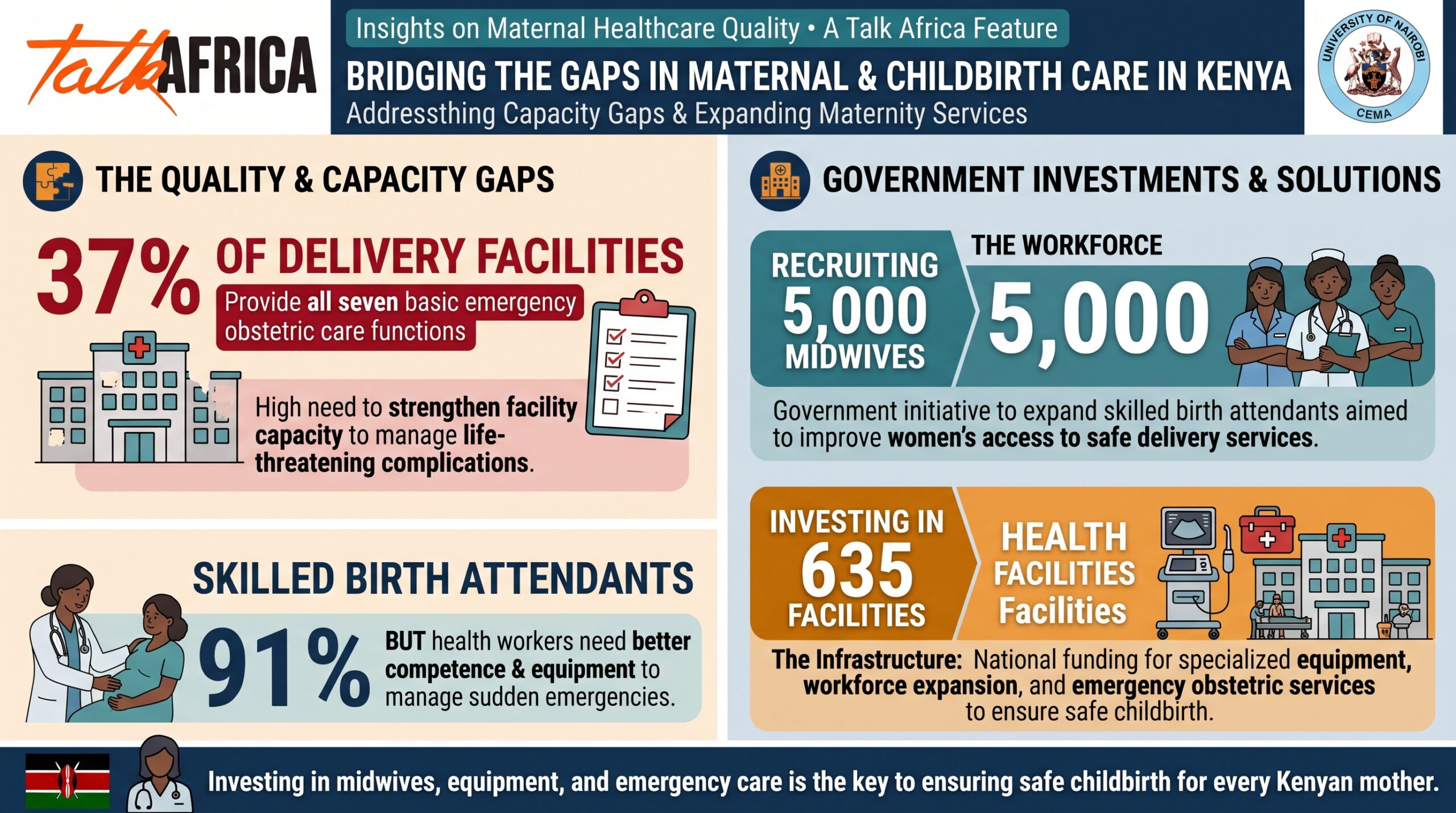
Maintaining these gains, she said, requires a functional health system, adequate funding and trained healthcare workers. She welcomed government efforts to recruit 5,000 additional midwives, saying more skilled birth attendants would improve women’s access to safe delivery services.
She called for stronger collaboration between national and county governments to ensure that proven interventions reach mothers when they need them.
Translating these interventions into better maternal and newborn health outcomes requires government investment, adequately equipped facilities and a skilled workforce.
Dr. Ouma Oluga, Principal Secretary in the State Department for Medical Services, outlined government efforts to improve maternal and newborn care while acknowledging persistent gaps in access and quality.
He said the government was investing in specialised equipment for 635 health facilities, alongside investments in the health workforce and emergency obstetric services.
However, gaps remain in the quality of care available to women during childbirth. Only 37% of delivery facilities provide all seven basic emergency obstetric care functions, highlighting the need to strengthen their capacity to manage complications.
Oluga also emphasised the need for mothers to complete the Ministry of Health’s recommended eight antenatal visits to receive appropriate care throughout pregnancy.
He stressed the importance of monitoring mothers for 48 hours after delivery to detect excessive bleeding and infections.
Skilled birth attendance stands at 91%, he said, but health workers also need the competence and equipment to manage emergencies.
On health financing, Oluga said reliable data was essential in determining the resources required to provide healthcare services.
“Budgets don’t come from emotions; they come from evidence. Numbers matter because they help us budget,” he said.
He noted that Article 43(1)(a) of the Constitution guarantees every Kenyan the right to the highest attainable standard of health, including reproductive healthcare.
“What the Constitution entitles every citizen to is the highest attainable standard of health. These are basic services that every Kenyan is entitled to, whether you have paid or have not paid, whether you are poor or rich, or whether you are employed. It is a right and an entitlement just by being Kenyan,” he said.
He called for more Kenyans to register for national identification documents, saying lack of IDs hindered access to services and digital health records in some facilities.
“We want to work with the media to drive registration because lack of national identification documents remains a barrier in many healthcare facilities, particularly for people above 18 who have not registered,” he added.