|
Getting your Trinity Audio player ready...
|
By Omboki Monayo
Nairobi: Kenya has confirmed its first imported case of Ebola Bundibugyo Virus Disease, a rare and deadly strain of Ebola for which there is no approved vaccine or treatment, the Ministry of Health announced Monday.
The patient, a Kenyan citizen who had lived in the Democratic Republic of Congo(DRC) for seven years, fell ill about a month ago and was treated in several hospitals while still in DRC. He travelled from DRC to Kampala by road and then boarded Jambo Jet flight 8523, arriving in Nairobi on Saturday, October 3 at 1:10 pm.
At a press briefing, the Ministry confirmed that the patient underwent standard public health screening at Port Health and immigration, then was transported by a relative and friend from Jomo Kenyatta International Airport (JKIA) to Nairobi Hospital, where he was quickly isolated in a separate room at the Accident and Emergency wing before being transferred to the East Wing Isolation Facility.
He presented with fever, chills, intense fatigue, muscle pain, painful swallowing, sore throat, and bleeding under the skin at injection sites. Based on his presentation and travel history, the doctor considered it a case of Viral Haemorrhagic Fever and collected a sample which tested positive for Ebola Bundibugyo at both the National Virology Reference Laboratory and the Kenya Medical Research Institute (KEMRI) Lab.
“The patient was given supportive treatment but regrettably passed on last night,” the Ministry said in its statement. “We take this opportunity to pass our sincere condolences to the family and friends of the departed.” Arrangements for a safe and dignified burial are ongoing, in line with Ebola protocols.
Bundibugyo virus, first identified during a 2007 outbreak in western Uganda, is one of four ebolavirus species known to infect humans. It has caused only two recognized outbreaks to date—Uganda in 2007 and DRC in 2012—with case fatality rates ranging from approximately 25% to 50%. Unlike the Zaire strain, there is no licensed vaccine or specific therapeutic for Bundibugyo. Transmission occurs through direct contact with blood or bodily fluids of infected persons, or contaminated surfaces and objects. The incubation period ranges from 2 to 21 days, and individuals are not infectious until symptoms appear.
According to the World Health Organization(WHO), the 2007 Uganda outbreak reported 131 cases and 42 deaths, a case fatality rate of about 32%. WHO’s International Health Regulations Emergency Committee report released in August 2026 stated that DRC’s Bundibugyo outbreak had spread to 55 health zones as of August 12, with 49 experiencing active transmission. The crude case fatality rate was approximately 46%. Contact tracing faced “very high” challenges, with only about 20% of cases detected through contact tracing.
WHO Director-General Tedros Adhanom Ghebreyesus, in a June 3 media briefing, reported that DRC had confirmed 344 cases and 60 deaths by that time, spanning 24 health zones across three provinces. Uganda reported one death and 15 confirmed cases.
So far, 28 contacts of the deceased have been listed, including family members and health workers who attended to him. Authorities are pursuing a further 23 passengers and 4 crew members who were on the same flight. Quarantine arrangements for those at risk are ongoing.
The Ministry reiterated that Kenya has maintained a high level of alert for Ebola since the outbreak began in May 2026. As of October 6, 652,584 travellers have been screened. A total of 267 samples have been tested across five laboratories, with only one turning positive. Additionally, 4,971 health workers have been trained on Ebola prevention and management.
“We have notified the World Health Organization of the event,” the Ministry said, in line with International Health Regulations. “I wish to reassure the public not to panic, as all systems are in place to mitigate the spread of the disease.”
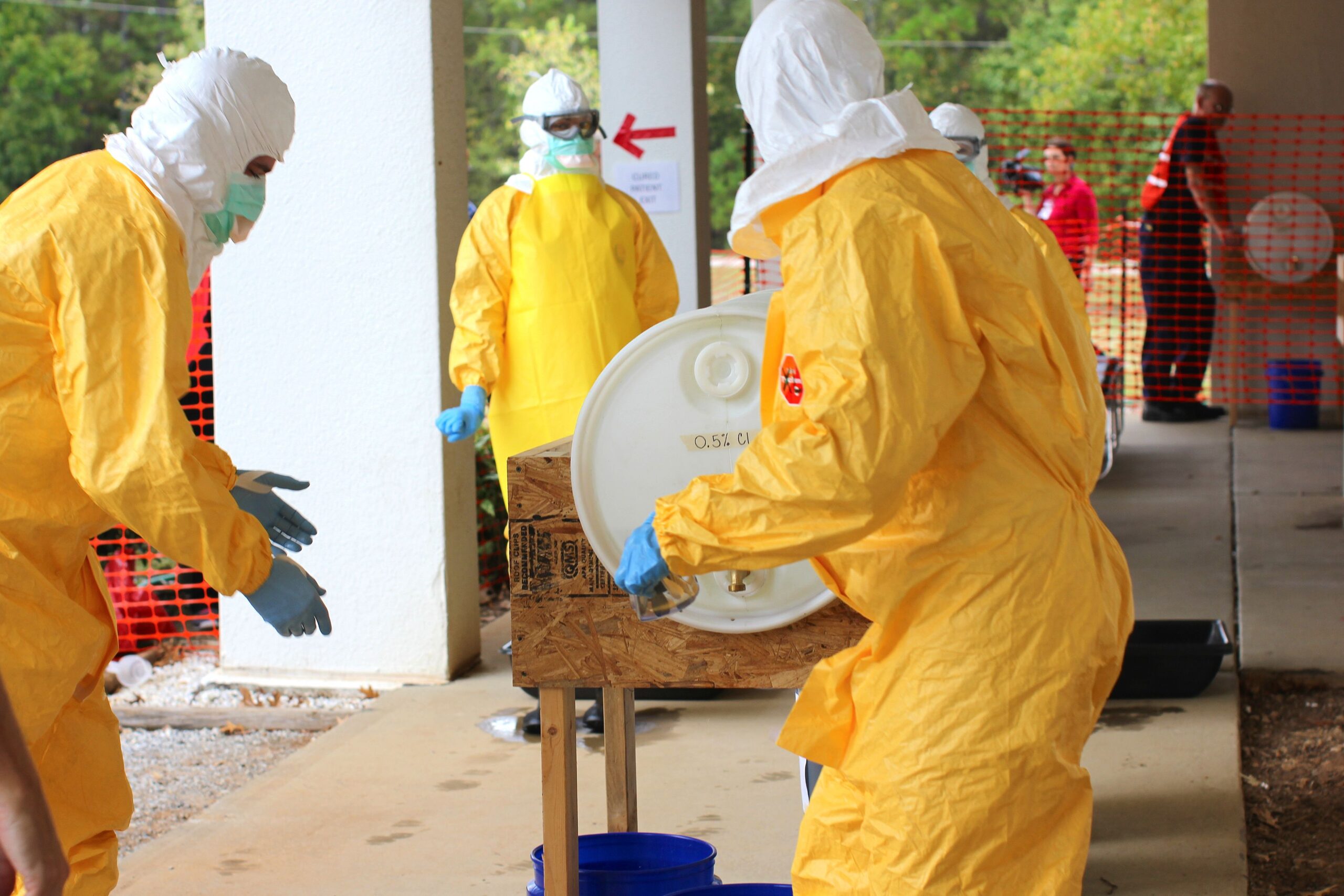
The public is urged to continue frequent hand washing or use alcoholic hand rubs, and to avoid close contact with sick people coming from countries reporting active Ebola transmission. Anyone feeling unwell should seek care from a recognized health facility and report any persons known to be unwell to the nearest facility.
Health workers are advised to be extra vigilant and maintain the highest infection prevention and control measures regardless of the condition being treated. The public should get information from official Ministry of Health platforms and the toll-free line 719.