|
Getting your Trinity Audio player ready...
|
By Mary Mwendwa
Joseph Muthuri Raiji was a tireless HIV awareness advocate with a functioning pair of ears. Then, the cure for his tuberculosis took his hearing away—a tragedy repeating itself across Africa where drug-resistant TB treatment often causes irreversible deafness.
Muthuri, a deaf man living with HIV in Kenya, is not seeking sympathy. “We are not seeking sympathy or special privileges,” he states emphatically. “All we are asking for is to be remembered, to be recognised as being vulnerable.”
His story reflects a silent crisis affecting countless persons with disabilities (PWDs) living with HIV across Kenya—a population that has been systematically overlooked by a healthcare system designed for the able-bodied.
A 2025 study on hearing impairment among drug-resistant TB patients in South Africa found that a staggering 37.2% of patients developed hearing loss as a result of their treatment.
drugs that save lives from multidrug-resistant TB (MDR-TB), particularly aminoglycosides like kanamycin and amikacin, are known to be highly ototoxic, causing permanent damage to the inner ear.
For patients co-infected with HIV, the risk is compounded by limited access to audiological monitoring, leaving many to discover their hearing loss only after it is too late.
Muthuri’s journey mirrors this grim reality. Diagnosed HIV-positive in 2004, he became deeply involved in treatment and awareness programmes. It was only after he contracted TB—first pulmonary TB in 2015, followed by MDR-TB in 2017—that his life changed irrevocably.
“It is during the medication that I lost hearing,” he writes. “Losing a part of yourself or the use of an organ is traumatizing. Top it with a disability, and you find yourself lost in a labyrinth of what others navigate relatively easily.”
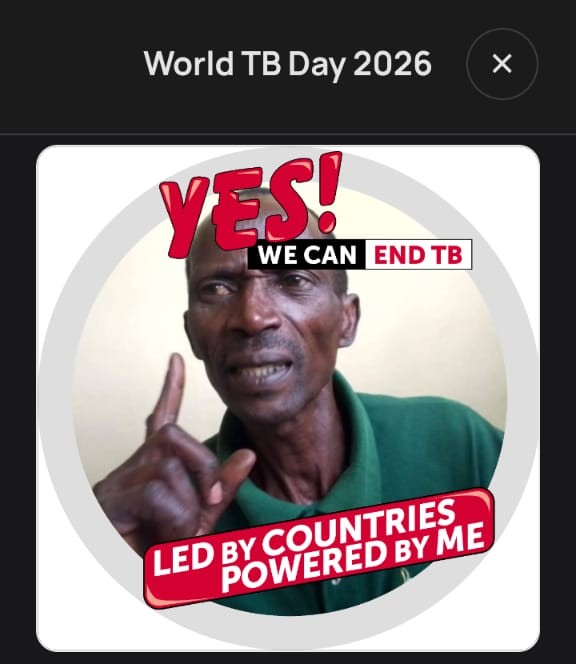
Now deaf, Muthuri has become a champion for PWDs living with HIV. His advocacy has brought him into contact with other PWDs, and together they are learning just how much the system fails them. “More often than not, PWDs with HIV are looked at as an inconvenience in our medical facilities,” he says. “Sad but true.”
Data Gap Conceals Scale of Crisis
Kenya lacks accurate data on PWDs living with HIV. At the 2024 Persons with Disability Summit, Dr Ruth Laibon-Masha admitted: “After nearly 40 years, we do not have an accurate count of the PWDs we are serving.” Yet available indicators suggest significant numbers—a study among deaf people found nearly 7 percent were living with HIV, above the national average of 4.8 percent.
The barriers that PWDs face are formidable. Physical inaccessibility of clinics, lack of sign language interpreters, and the absence of HIV and TB information in Braille or other accessible formats leave many unable to access basic care. “How many health facilities have a sign language interpreter?” asked Jackson Agufana Hassan, CEO of the Kenya Union for the Blind.
For HIV-positive PWDs on TB treatment, these barriers compound a deadly equation. Ototoxicity monitoring—routine hearing checks before and during treatment—is absent in most Kenyan public health facilities. In South Africa, where similar resource constraints exist, researchers note that many patients do not receive timely evaluations despite guidelines recommending baseline hearing assessments within 72 hours of starting treatment. A South African study found that hearing loss was often bilateral and sensorineural, consistent with drug-induced ototoxicity.
AI: A New Frontier in TB Detection
Even as Muthuri and others struggle to access basic care, technology is quietly revolutionizing how TB is detected—offering a glimmer of hope for earlier diagnosis and intervention. Artificial intelligence-powered Computer-Aided Detection (CAD) software is now being deployed in high-burden countries, including Kenya, to analyze chest X-rays with remarkable speed and accuracy.
In October 2025, the Kenyan government flagged off 80 ultra-portable AI-powered digital X-ray machines equipped with CAD software for distribution across 43 counties, bringing diagnosis closer to grassroots communities. One AI model, AIRIS-TB, has demonstrated a 98.51% accuracy rate, outperforming radiologists and showing the potential to automate up to 80% of routine chest X-ray reporting.
In resource-limited settings like the Central African Republic, AI-assisted screening helped detect TB in 90 out of 203 identified cases, proving that cutting-edge technology can work even in rural, underfunded environments. Yet for PWDs, the promise of AI remains hollow if they cannot physically access these machines, cannot communicate with health workers, or are not prioritized for screening. As Joseph would argue, innovation without inclusion is merely decoration.
A Call for Dignity, Not Pity
Muthuri says the problem goes beyond resources—it is a failure of recognition. “Systems are unequipped, underfunded, unprepared, and unwilling to properly come out for PWDs living with HIV,” he charges.
The psychological toll is immense. Muthuri, who now suffers tinnitus—a constant ringing in his ears—understands the trauma of acquiring a disability in adulthood. It is a trauma that few healthcare facilities are prepared to address, and even fewer have trained staff to handle the complex needs of PWDs.
“I may seem to personalize this narrative, but it isn’t mine,” Muthuri insists. “It’s what is happening to many of us PWDs living with HIV.”
At the summit, Principal Secretary for Medical Services Harry Kimtai acknowledged the failures and committed to reform. “PWDs have expressed that they have always been left behind, and as a ministry, our foremost goal is that no one should be overlooked as we implement Universal Health Coverage,” he said. The government has since rolled out the Social Health Authority, which includes benefit packages for PWDs with assistive devices such as hearing aids.
Yet for Muthuri and many like him, the promises have yet to translate into the kind of dignified, accessible care they deserve. “We are not begging,” he says. “We are asking to be looked at and regarded as people. People worthy of a life of worth.”
Muthuri has promised to return with a detailed layout of the needs of PWDs living with HIV. For now, his call is simple: Remember us. Recognise us. Include us. In a country striving to end AIDS by 2030, leaving behind thousands of PWDs is not an option.