
|
Getting your Trinity Audio player ready...
|
By Naomi Kago
Nakuru: Nakuru County is home to one of the largest populations of the minority Ogiek community. Despite their rich heritage, the community remains sidelined in national and county development.
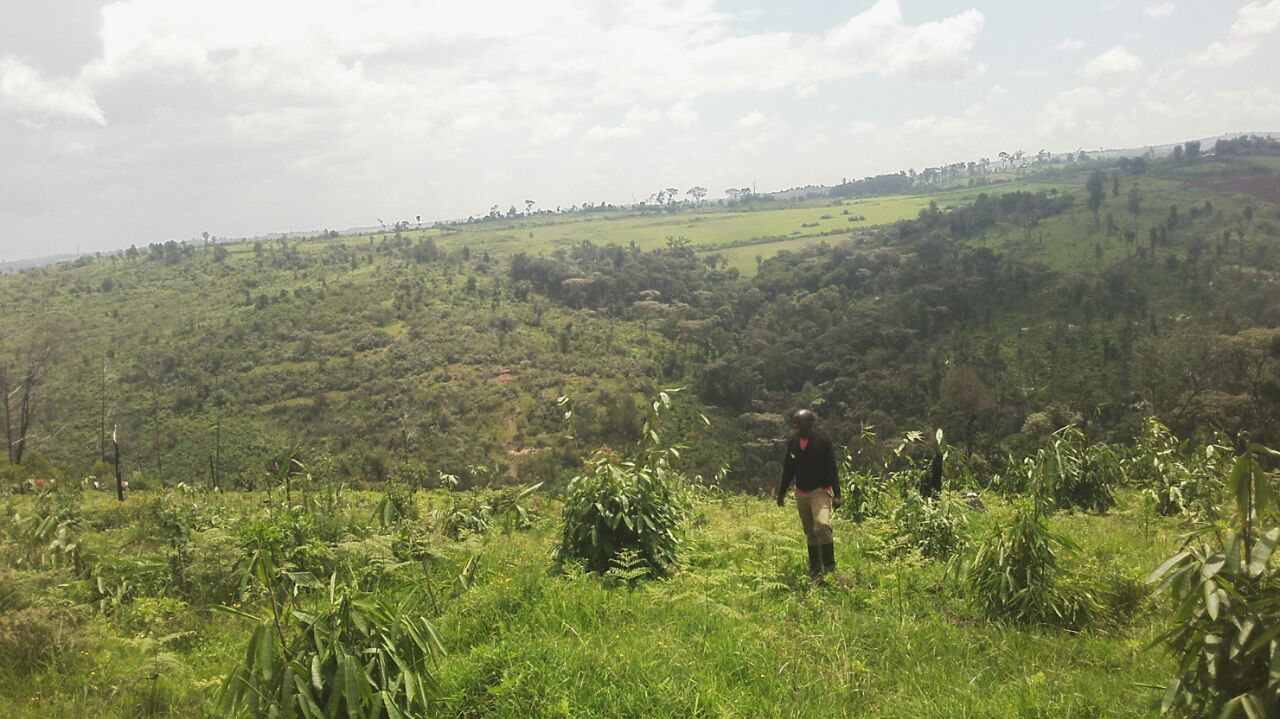
The Ogiek, traditionally forest-dwelling hunter-gatherers, have agitated for their rights since Kenya gained independence in 1963, yet the issue has been debated for decades with little concrete action. Originally living in parts of Naivasha and Nakuru, many were eventually pushed into the furthest reaches of the Mau Forest Complex.
According to the Kenya Population and Housing Census, the Ogiek make up roughly 0.11 percent of the national population. Most now live in Tinet in Kuresoi South, Mariashoni in Molo, and Nessuit Ward. Smaller pockets are found in Tinderet Forest in Nandi, Londiani Forest in Kericho, Mt. Elgon Forest, and Narok South.
The community’s struggle stretches back to the colonial era, when British authorities alienated large tracts of fertile highland for settler farms and declared much of the forest Crown land, with little regard for the Ogiek’s ancestral claims. Colonial and later government policies treated them as squatters in their own homeland. After independence, successive administrations continued to evict them in the name of conservation, forest gazettement and settlement schemes. Large-scale evictions in the 1990s displaced thousands of families, many of whom were left without alternative land, while some land excised from the forest was allocated to politically connected individuals rather than to the Ogiek.
Fresh eviction notices followed in 2005 and 2009, with the government citing the need to protect the Mau water tower. The Ogiek argued they were being blamed for degradation they did not cause. The 2009 Task Force on the Conservation of the Mau Forest Complex stressed the forest’s ecological importance, and its recommendations became a basis for further evictions.
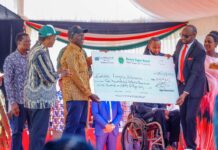
The community eventually took its case to the African Commission on Human and Peoples’ Rights, which referred it to the African Court on Human and Peoples’ Rights in Arusha. In 2017, the Court ruled that Kenya had violated the Ogiek’s rights to land, culture, religion, development and non-discrimination. In 2022, it ordered reparations, including collective land title and compensation. The community says implementation has been slow, and many families still lack title deeds.
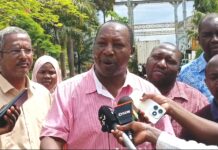
For community member Peter Kiplang’at Cheruiot, land ownership remains the biggest obstacle to progress.
“There was a ruling by the African Court at Arusha that directed that the Ogiek be settled,” says Cheruiot. He says the lack of title deeds has stalled economic growth, since residents cannot use land as security for loans.
Beyond land, Cheruiot says assimilation is steadily eroding Ogiek identity, with little attention given to the community’s traditional hunting and gathering culture. Of a local population of about 20,000, he says only around five percent speak their native language fluently, raising fears of cultural extinction.
He also says the lack of a direct representative in government leaves the community feeling excluded from decision-making, despite clear constitutional guarantees. Under Article 56 of the Constitution, the state must implement affirmative action programmes to ensure that minorities and marginalised groups participate and are represented in governance and other spheres of life.
International rulings and policies reinforce these protections. The African Court found that the Kenyan government violated the Ogiek’s rights through decades of forced evictions, and ordered land restitution and financial compensation. Under the World Bank’s Environmental and Social Standard 7, when the institution finances environmental or development programmes in the Mau Forest Complex or surrounding basins, the government is bound by its loan agreements to prepare a Vulnerable and Marginalised Groups Framework or Plan.
For Cheruiot and his community, permanent settlement remains the most pressing priority. He urges the government to honour the Arusha ruling and settle the Ogiek once and for all before the next general election.