|
Getting your Trinity Audio player ready...
|
Nairobi, Kenya: Kenya’s budget debate has for too long focused on how much money the government intends to collect, borrow and spend. Yet, for millions of ordinary Kenyans, the more important question is whether these billions will translate into better healthcare, affordable education, reliable infrastructure and protection from economic hardship.
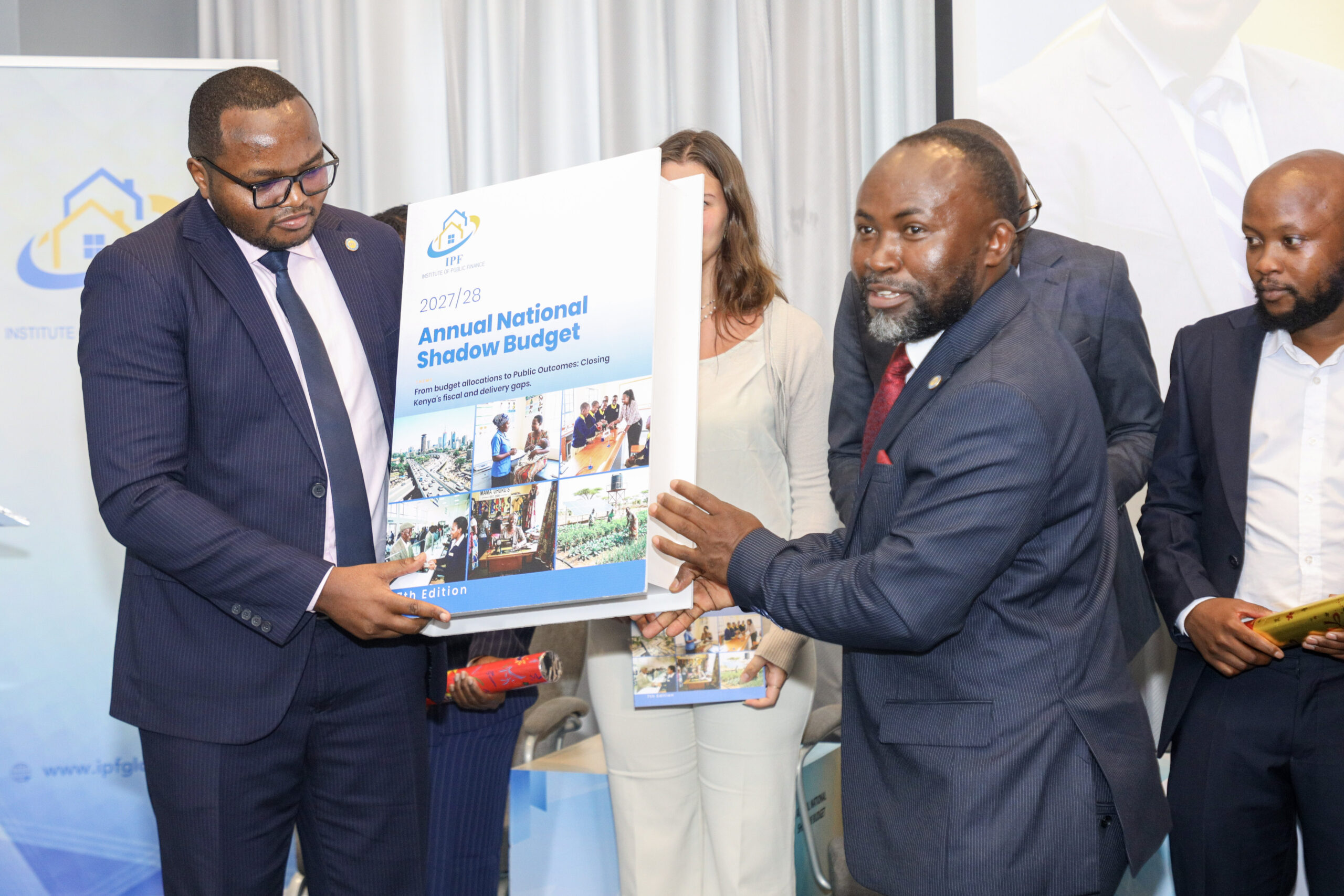
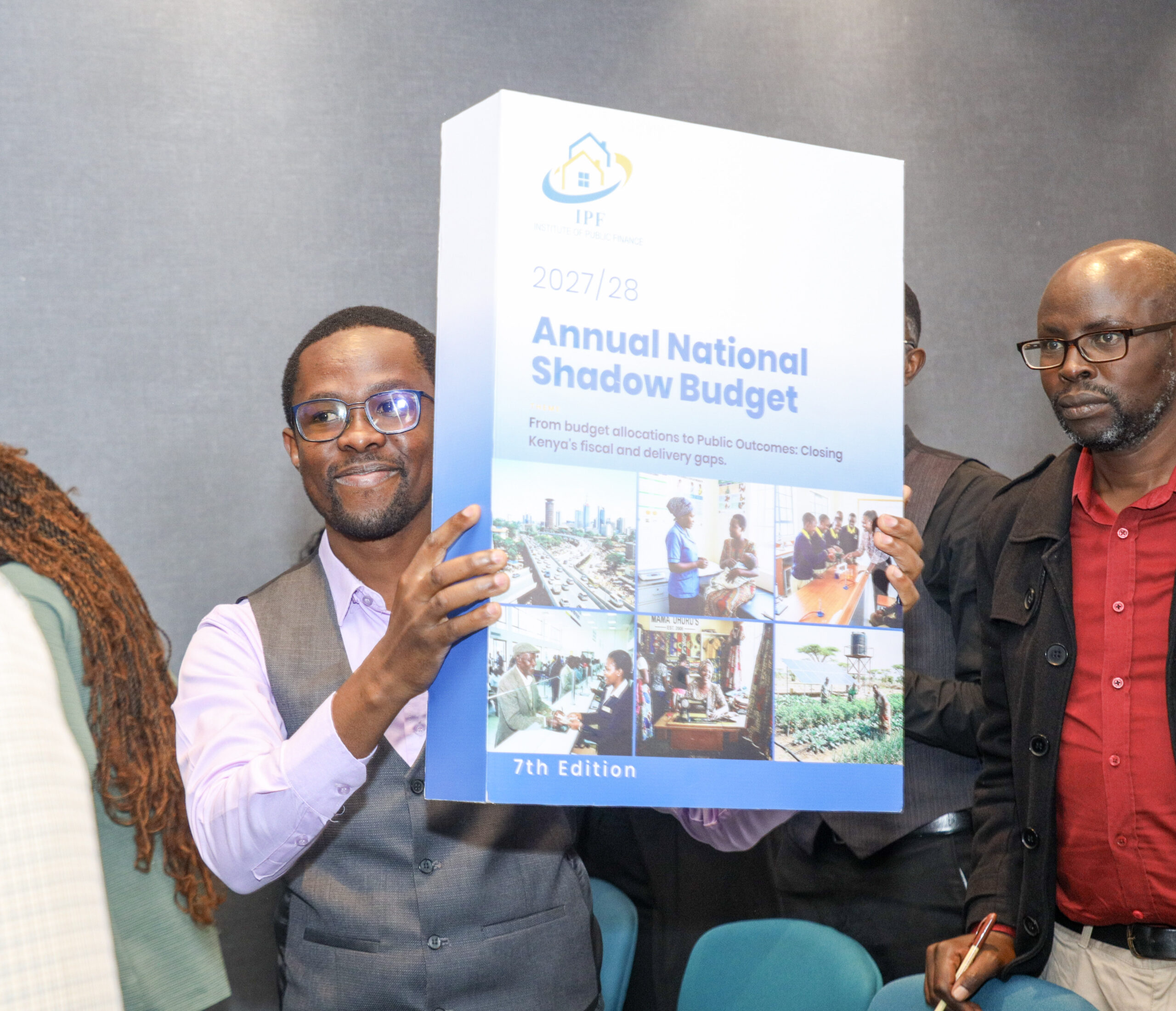
A new assessment by the Institute of Public Finance (IPF) suggests that, unless the government changes its approach, the disconnect between public spending and citizens’ needs is likely to persist.
The institute’s 2027/28 Annual National Shadow Budget paints a worrying picture of an economy facing mounting fiscal pressures, unrealistic revenue expectations and persistent weaknesses in public expenditure management. Its findings point to a fundamental problem: Kenya’s budget challenge is no longer simply about raising more money, but ensuring that the resources collected from taxpayers deliver tangible public benefits.
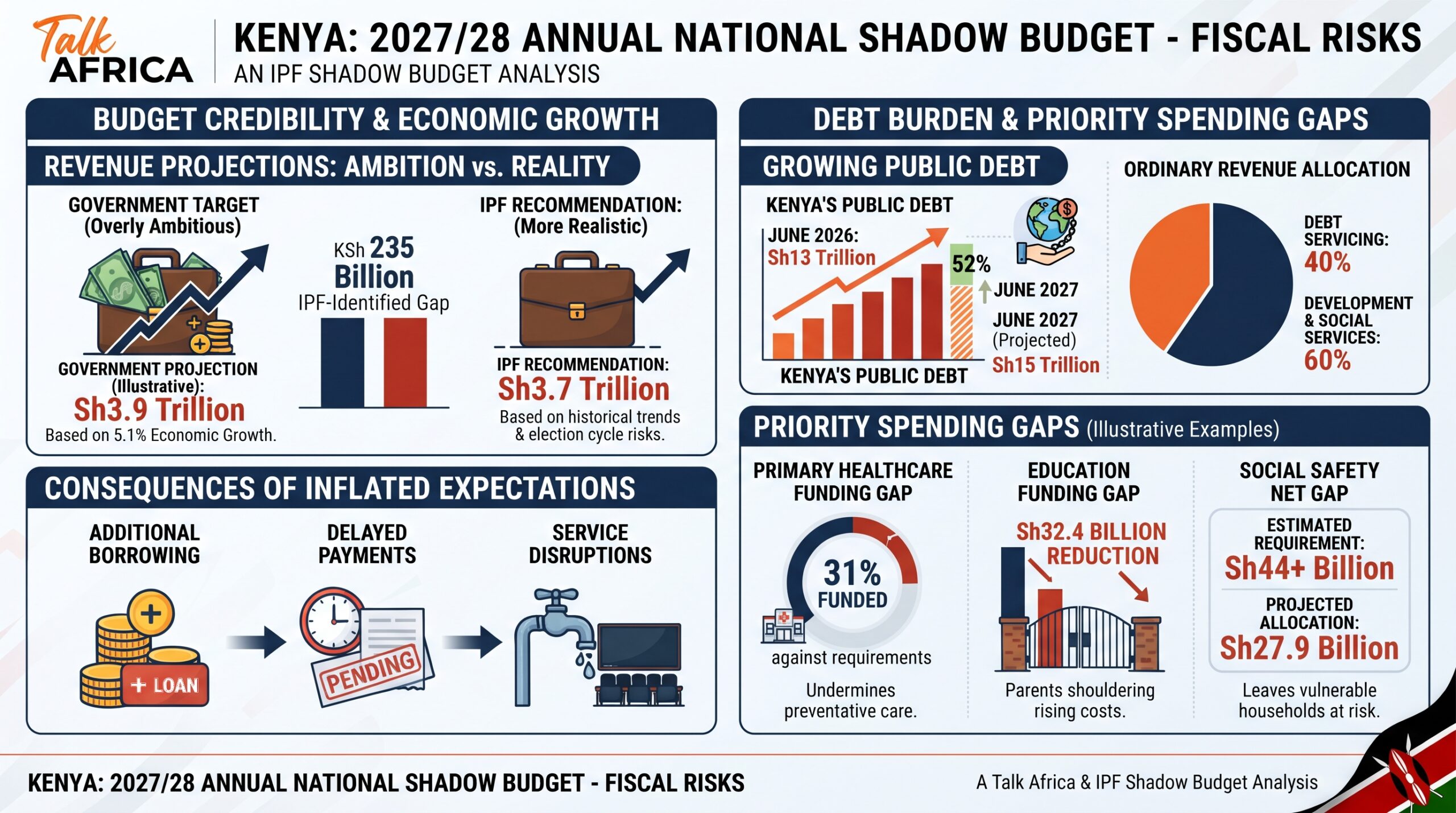
The government’s projected economic growth of 5.1% and revenue target of Sh3.9 trillion appear overly ambitious, particularly with the country approaching another election cycle. IPF argues that previous economic projections have frequently exceeded actual performance and recommends a more realistic revenue target of Sh3.7 trillion.
This is important because when revenue expectations are inflated, the government risks committing itself to expenditure it may struggle to finance. The eventual consequences include additional borrowing, delayed payments to contractors and disruptions in essential services.
The growing debt burden makes this situation even more concerning. Kenya’s public debt stood at approximately Sh13 trillion by June 2026, representing a 52% increase since June 2022. An increasing proportion of government revenue is being consumed by debt servicing, leaving less money available for development and social services.
For ordinary citizens, this translates into an uncomfortable reality: taxpayers continue contributing to government revenue, but an increasingly large share of that money goes towards servicing past borrowing rather than improving their living conditions.
Healthcare illustrates the human cost of these budgetary weaknesses. The Primary Healthcare Fund received only 31% of its estimated resource requirements, while the Emergency, Chronic and Critical Illness Fund received just four per cent.
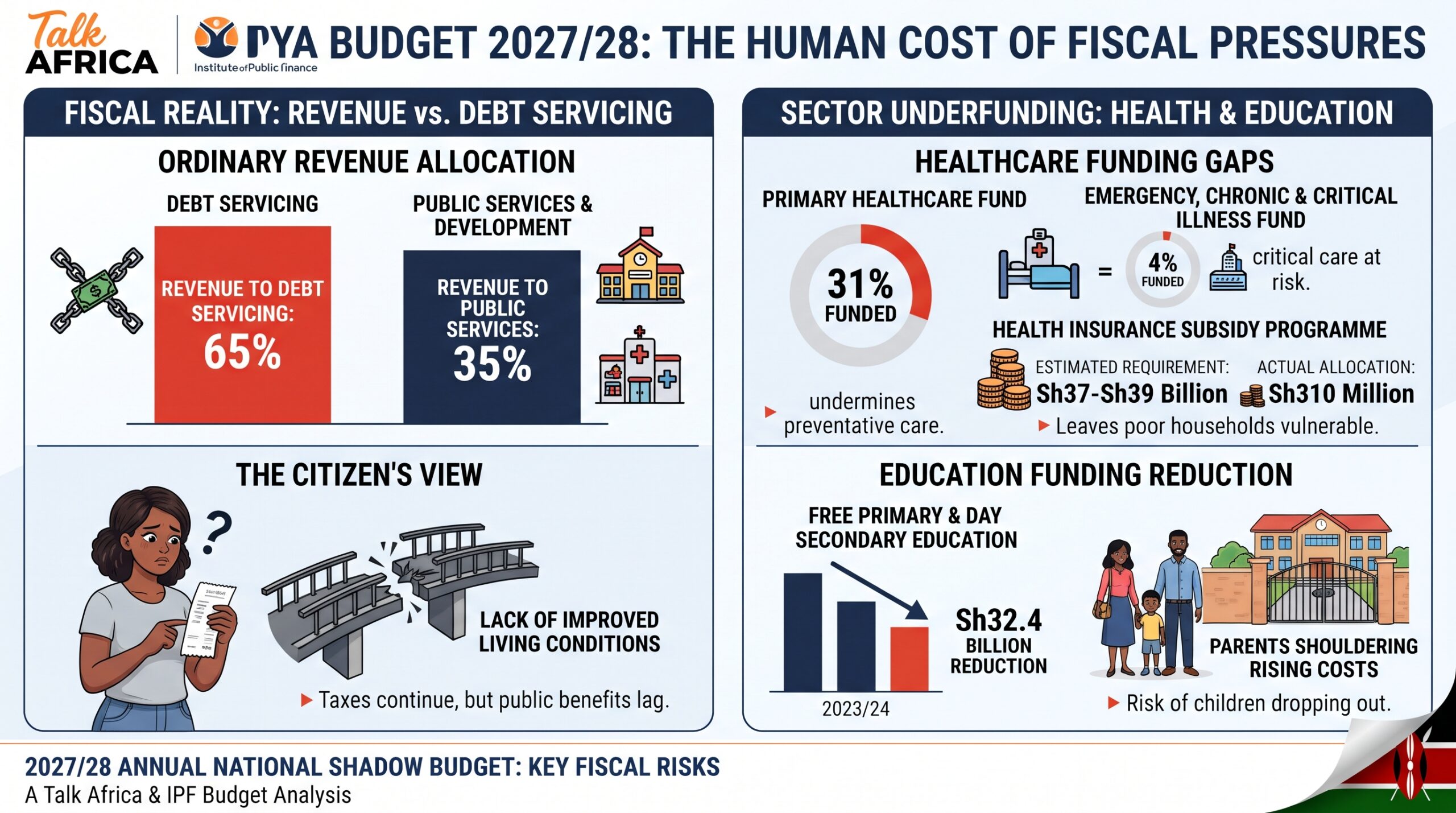
Meanwhile, the Health Insurance Subsidy Programme, intended to support poor and vulnerable households, received only Sh310 million against estimated annual requirements of between Sh37 billion and Sh39 billion. Such underfunding threatens to undermine access to affordable healthcare, particularly for families that cannot comfortably meet medical expenses from their own pockets.
Education faces similar challenges. The proposed Sh32.4 billion reduction in Free Primary Education and Free Day Secondary Education funding compared with 2023/24 raises questions about the government’s commitment to protecting access to basic education.
With schools operating costs rising, inadequate and unpredictable capitation payments could force parents to shoulder expenses that public funding should cover. For poorer households, this may mean borrowing money, delaying payments or struggling to keep children in school.
The situation is equally worrying for vulnerable households. The National Social Safety Net Programme is projected to receive Sh27.9 billion against an estimated annual requirement exceeding Sh44 billion.
This funding gap risks excluding people who depend on government assistance to meet basic needs. Social protection should not be treated as a discretionary expense, particularly when many households remain exposed to economic shocks.
Perhaps the clearest evidence of public resource wastage is the growing number of stalled government projects. IPF reports that 219 projects valued at Sh291.6 billion were stalled in the 2024/25 financial year. Another 77 projects worth Sh136.8 billion were delayed. These are not merely figures in government reports.
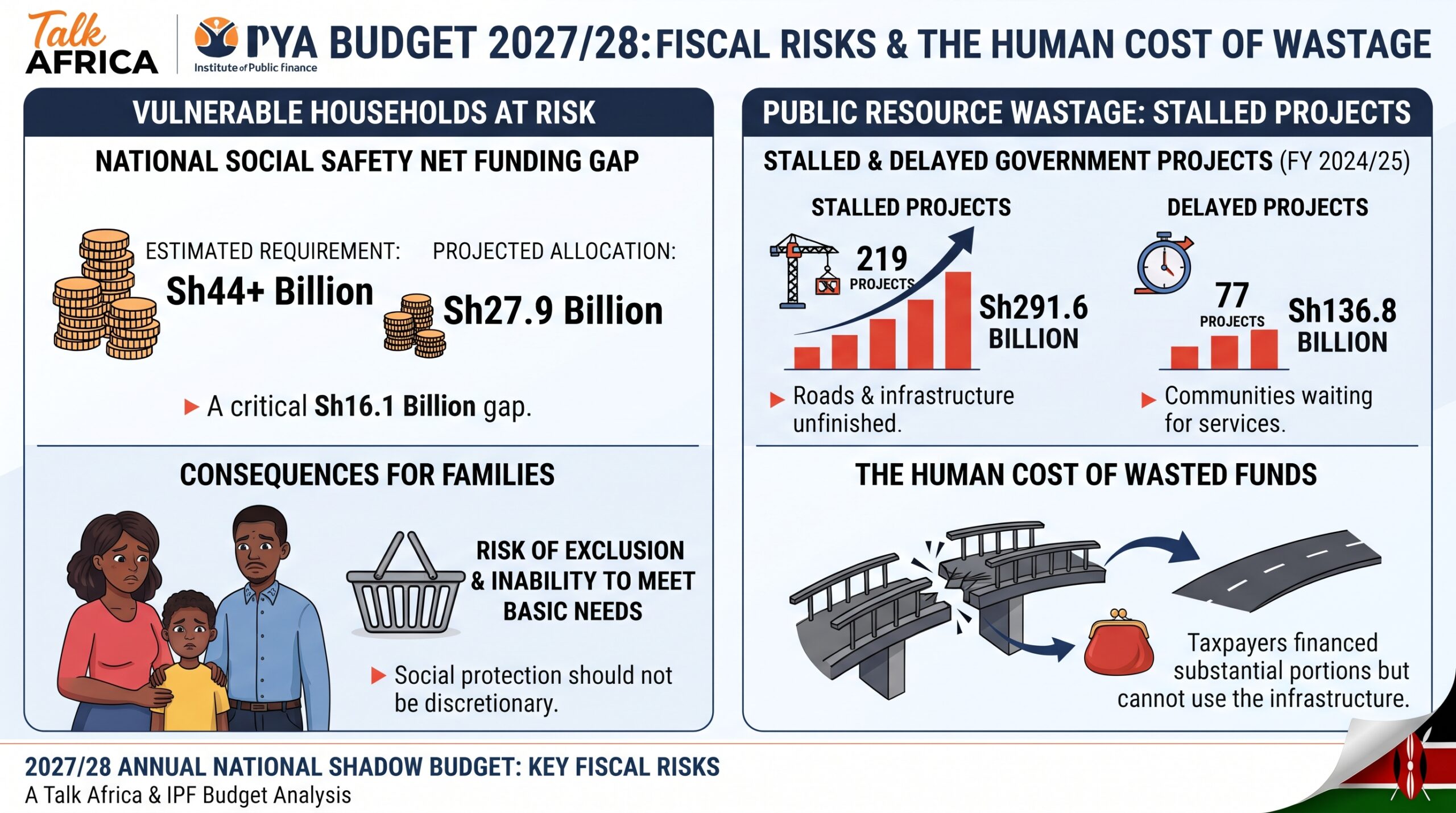
They represent roads that remain unfinished, infrastructure that cannot be used and communities that continue waiting for services despite taxpayers having already financed substantial portions of the projects.
The government must therefore rethink its spending priorities. Completing viable ongoing projects should take precedence over launching new ones. Essential services, particularly healthcare, education and social protection, must receive adequate and predictable funding. Equally important, public institutions must account for how money is spent and demonstrate measurable outcomes.
Ultimately, the credibility of Kenya’s budget should not be measured by the size of its allocations or the sophistication of its economic projections. It should be measured by whether ordinary citizens can access affordable healthcare, educate their children, find reliable public infrastructure and live with some degree of economic security.
Alex Musikoyo is a Freelance Journalist, Budget champion and Media trainer