|
Getting your Trinity Audio player ready...
|
By Omondi Rodgers
Busia-A groundbreaking waste recycling project at the Busia Agricultural Training Centre (ATC) is transforming solid waste from municipal markets and human waste into organic manure, addressing sanitation challenges while boosting agricultural production through improved soil fertility.
Implemented under the Financial Inclusion Improves Sanitation and Health (FINISH INK) programme in collaboration with the county government and other partners, the initiative converts waste into compost manure sold to farmers at affordable prices.
Moses Otieno, who heads the project under FINISH INK, explains that the county government supports the initiative by collecting and delivering solid waste from municipal markets, while other partners facilitate liquid waste collection and delivery.
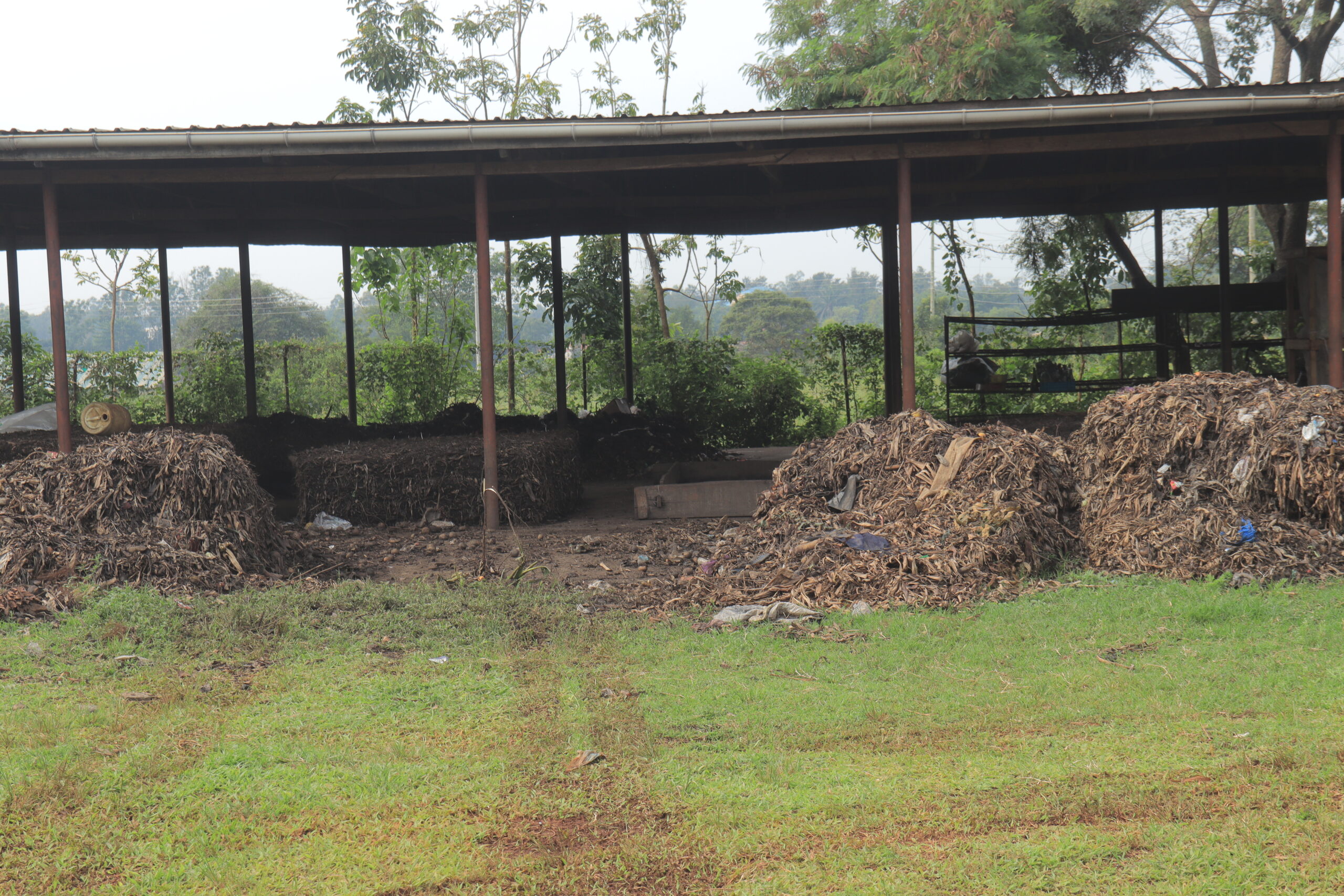
“We treat faecal sludge and manage solid waste to incorporate the two materials to get organic manure. We have a treatment sector and windrow composting, after which farmers can access our co-compost product at affordable prices to improve food productivity and soil fertility,” he says.
The plant receives between 15 and 20 tonnes of solid waste weekly from Busia’s municipal markets, alongside approximately 90,000 litres of faecal sludge. Monthly production yields between 10 and 15 tonnes of ready compost manure.
Otieno explains the project was established to tackle both sanitation and agricultural challenges, noting that large quantities of waste were previously dumped without recovering their potential value.
“We realised there was a lot of waste at market centres and dumping sites without any resource recovery. The adoption of organic manure was low, and accessibility was also a challenge. The project came in to ensure farmers can access it at affordable prices and save the public from sanitation-related diseases,” he says.
Waste Separation and Innovation
The facility separates biodegradable materials from non-biodegradable waste. The former is used in manure production, while some recyclable plastics are repurposed for agricultural activities.
“From the solid waste, we separate the degradable and non-degradable parts. We use the degradable materials in making manure, while some non-degradable materials, such as water bottles and other plastics, are reused to plant seedlings, flowers and vegetables through various innovations. The remaining polythene is taken by the county government to designated dumping sites,” Otieno explains.
At the Busia Agricultural Training Centre, where the manure is used for agricultural activities, farm manager Gabriel Nyongesa says the initiative is contributing to soil fertility restoration and improved crop production.
“The project is doing waste recovery through composting, producing compost manure that is helping in crop production. It is also improving soil fertility. We are getting higher yields per unit area compared to those resulting from the use of artificial fertiliser,” he says.
Nyongesa notes that the availability of organic manure is encouraging farmers to embrace kitchen gardening, including multi-storey gardens, as a way of maximising food production in limited spaces.
“We are also advising farmers to adopt kitchen garden farming, including multi-storey gardens, to increase crop production in small spaces as a way of addressing food security. This project is also promoting the principles of recycling and reusing, where waste from municipal markets and households is used to produce organic manure, which in turn is used to grow crops,” he says.
Safety Assurances for Farmers
Nyongesa assures farmers of the manure’s safety, explaining that the facility employs treatment technologies to reduce potentially harmful substances before the final product is released for agricultural use.
“Before getting the final manure for use, vertical slurry treatment technology is applied to help in extracting heavy metals from the materials. Vetiver grass is also used because it has the ability to extract heavy metals like mercury, making the end product free from metals,” he explains.
Erick Wekesa of Wezesha Agro-Eco Hub reports using organic manure in their farming activities for the past year with improved crop yields.
“We are doing sustainable agriculture using organic manure in our farming. The manure has proved fertile, as we have been using it on our farm and kitchen garden. We have been sourcing the manure for the past year to grow maize and maintain vertical gardens,” he says.
Wekesa notes the manure improves soil structure and moisture retention, creating favourable conditions for crop growth while protecting soil from erosion.
“The manure is helpful because it feeds the soil, which in turn feeds the crops, creating a proper cycle that benefits both the soil and the crops. Organic manure helps the soil retain water and also prevents soil erosion, keeping it fertile even after rainfall. This makes the manure important for soil health and human wellbeing through improved food production,” he says.