|
Getting your Trinity Audio player ready...
|
By Lourdes Walusala
From a suspected case to a confirmed result, the people and systems that turn one medical sample into the proof needed to stop an outbreak.
As Nigeria confirms its first Ebola case in more than a decade and Kenya reports nine infections, what actually happens between suspecting an infection and confirming it in the lab? And why does just one medical sample matter so much for stopping an outbreak?
It usually starts with a patient who isn’t sure what’s wrong. There might be a persistent fever, a bad headache, unusual tiredness or weakness, and sometimes vomiting or muscle pain.
These symptoms could point to malaria or another common illness. But if the person recently visited an outbreak area or had contact with someone infected, it could mean something much more serious.
For the health worker seeing that patient, spotting the warning signs is just the first step.
A sample needs to be collected, labelled correctly, packaged safely, and sent to a lab for testing. After that, the results must reach the people treating the patient and keeping the community safe. Every step is important. During an outbreak, acting quickly can make a big difference.
Across Africa, recent Ebola cases have renewed questions about how quickly countries can detect dangerous infections and respond.
On 6 October 2026, the Ministry of Health announced Kenya’s first confirmed imported case of Ebola Virus Disease (Bundibugyo virus). The patient had travelled from the Democratic Republic of the Congo through Uganda before arriving in Nairobi.
According to a World Health Organization (WHO) outbreak report published on 8 October, samples collected from the patient tested positive at both Kenya’s National Virology Reference Laboratory and the Kenya Medical Research Institute (KEMRI) on 5 October. The patient died that same day.
Meanwhile, on 20 October, Nigeria confirmed its first Ebola case in more than a decade, involving a woman who had recently travelled from Uganda. Laboratory testing confirmed the infection after she sought treatment at a private health facility in Abuja.
By 22 October, Kenya had reported nine confirmed cases, including one death, with cases among healthcare workers and relatives of the first patient.
Behind these numbers is a system that doesn’t often get attention: the people, steps, and labs that turn a suspected infection into the proof needed to take action.
It starts with the right sample
When there’s a disease outbreak, people often focus on lab testing. But even the best lab can’t give a reliable result if the sample isn’t right.
During an Africa CDC masterclass on sample management for outbreak response, held for African Union Media Fellows, John Kennedy Matovu, a Laboratory Systems Officer at Africa CDC, explained that a good sample must be the correct type, collected at the right time and in sufficient quantity. Proper labelling, handling, and storage are equally important to preserve its quality.
If a sample is mislabelled, contaminated, poorly handled, or improperly collected, it may be discarded or collected again. Sometimes, poor sample quality can even lead to wrong test results.
For patients, this means waiting longer. During an outbreak, it can make an already urgent investigation even harder.
Public health experts call everything that happens before lab testing the pre-analytical phase. This phase is more than just collecting blood or taking a swab. Trained healthcare workers, lab staff, and surveillance officers must work together to ensure the right sample is collected and reaches the right lab.
That’s why outbreak readiness means ongoing training, not just in using diagnostic tools, but also in collecting samples, identifying them, preventing infections, and handling everything safely.
When a sample poses a safety risk
Picture a tube of blood from someone who might have Ebola. You can’t just send it like a regular package.
For highly infectious samples, everyone involved, from the health worker collecting it to the person transporting it to the lab and the scientist receiving it, must follow strict safety rules to protect themselves and others.
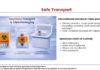
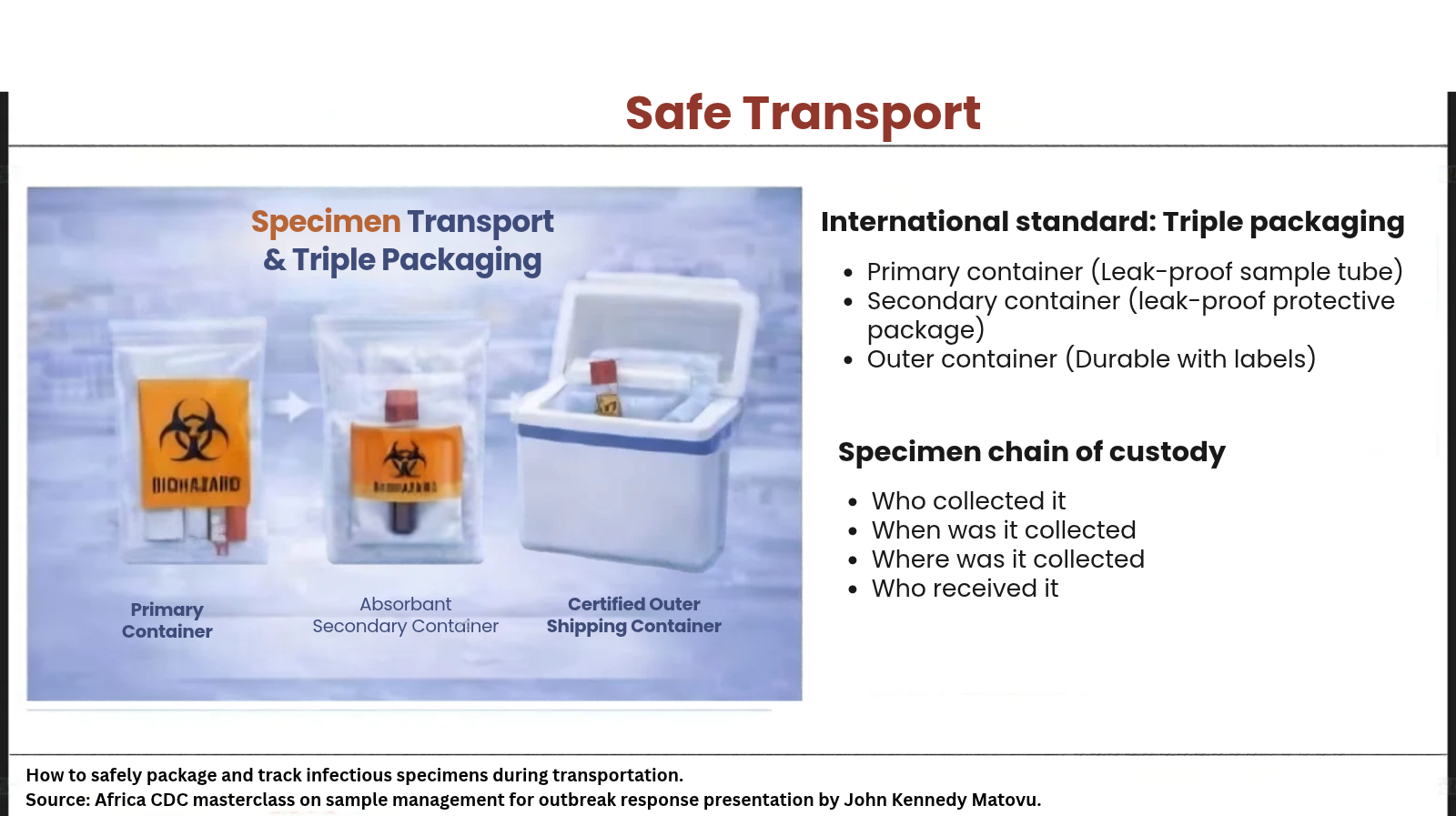
As outlined during the Africa CDC masterclass, one key safety measure is triple packaging, which involves using three layers of protective containers to prevent infectious material from leaking during transportation.
The session also emphasised the importance of tracking a sample throughout its journey to the laboratory to ensure accountability and traceability.
But ensuring the packaging is safe is only one part of the challenge.
Some samples must be kept at specific temperatures. This is called maintaining the cold chain.
Long distances, bad roads, power outages, and limited transport options can make this process harder, especially in remote or under-resourced areas.
These problems can slow diagnosis or affect sample quality. Setting up sample referral networks, using appropriate transport equipment, training staff, and improving how labs work together can help.
In a 2024 training programme, Africa CDC brought together laboratory specialists from across the continent to strengthen skills in specimen management, safe transportation and international shipping requirements. The lesson is simple: having a laboratory capable of detecting a disease means little if a sample cannot reach it safely and reliably.
Inside the lab
As explained during the Africa CDC masterclass, laboratory testing involves more than placing a sample in a machine. When a sample arrives, laboratory staff check its packaging, documentation, and transport conditions before registering it, assigning an identification number, and preparing it for the appropriate test. Different diseases need different testing methods.
For suspected Ebola, molecular techniques such as reverse transcription polymerase chain reaction (RT-PCR) can detect viral genetic material. Other methods, including antigen and antibody tests, play different roles depending on the disease and clinical circumstances.
No test is perfect. Choosing the right test, timing it well, having a good sample, and following lab procedures all affect how reliable the results are. After testing, results must be checked and approved before they are shared.
This is why getting lab results can take time, even if the test itself is fairly quick. Transport, paperwork, testing, verification, and result sharing all play a part in the process.
From a lab result to saving lives
Confirming an infection isn’t the end of the outbreak investigation. It is information that helps guide what happens next.
For Ebola, a lab confirmation supports patient management, contact tracing, infection control, and additional public health measures.
Importantly, key safety steps start as soon as Ebola is suspected, even before a positive test result. Before the first case was confirmed in Kenya, for example, the Ministry of Health had undertaken Ebola preparedness activities including surveillance, traveller screening, healthcare worker training and emergency response preparations.
The subsequent infections among healthcare workers show the risks those caring for patients with severe, highly infectious diseases face, and why proper protective measures matter.
Across Africa, national and regional reference laboratories play a critical role in providing specialised testing, supporting surveillance and coordinating outbreak investigations.
But lab readiness is about more than machines, equipment, or buildings. It depends on trained personnel who can spot warning signs, collect and handle samples safely, keep referral networks working, and share results quickly.
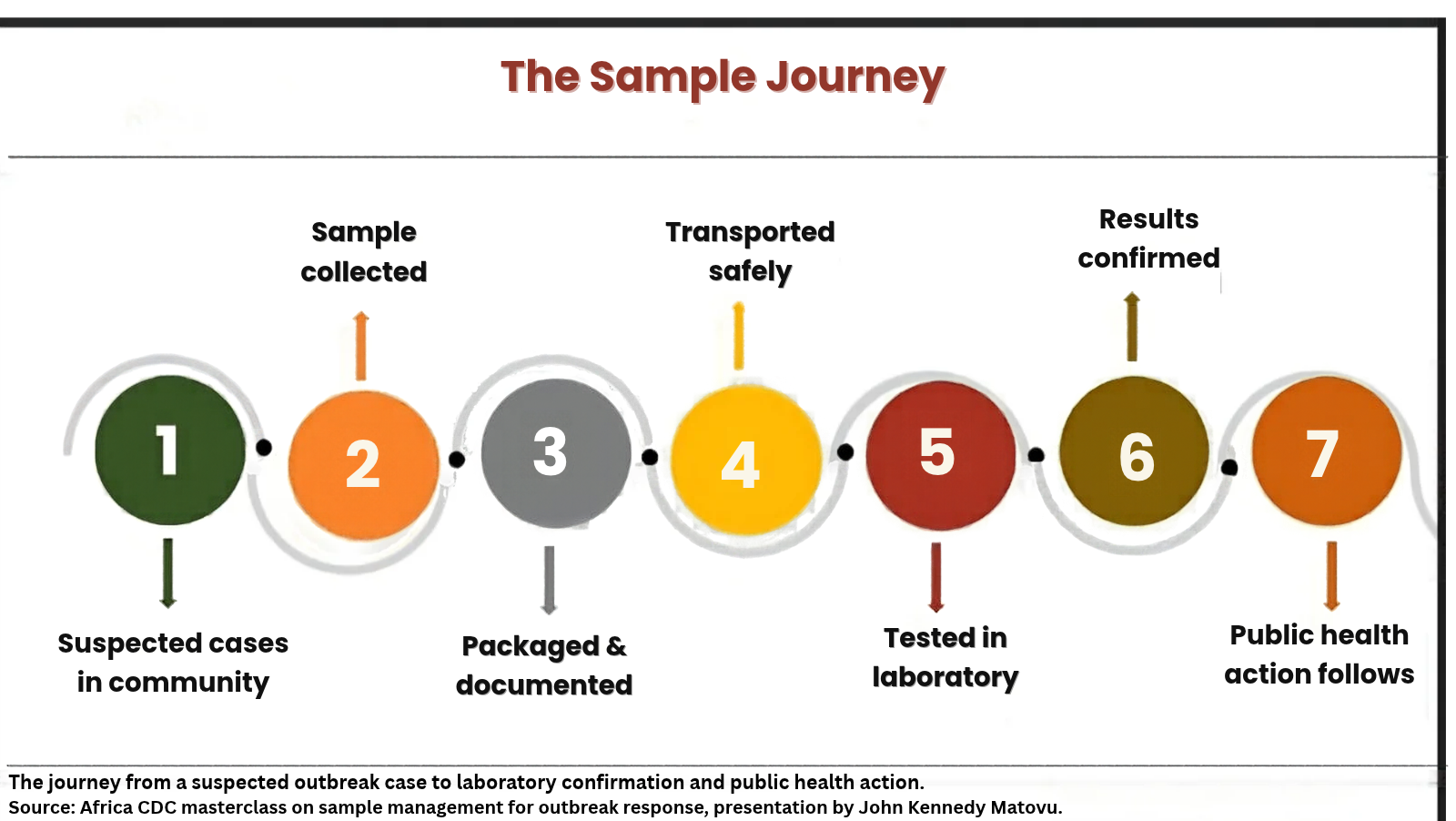
When outbreaks are in the news, most people focus on infections, deaths, and what the government is doing. We rarely think about the nurse collecting a sample, the lab technologist checking its quality, the transport staff making sure it’s safe, or the scientist trying to find an invisible threat. Each of these people plays a critical role in protecting communities.
Detecting an outbreak therefore isn’t just about one lab or one test; it’s about people and systems working together, from the first suspected case to the public health response that follows.