|
Getting your Trinity Audio player ready...
|
By Winnie Kamau
Nairobi, Kenya: Having restored control over its internationally recognised territories in 2020 and 2023, Azerbaijan is now working with Armenia to turn more than three decades of conflict into an opening for peace, connectivity and regional prosperity.
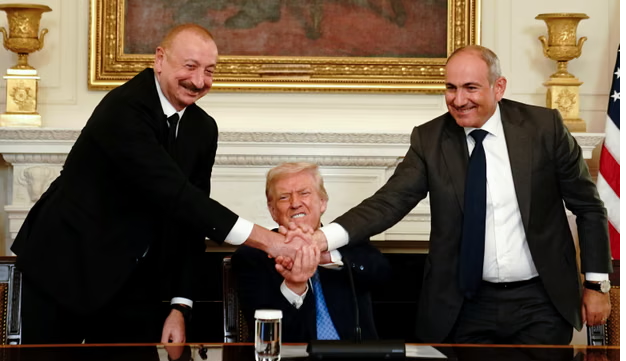
The process gained new momentum on 8 August 2025, when President Ilham Aliyev and Armenian Prime Minister Nikol Pashinyan signed a Joint Declaration at the White House, witnessed by U.S. President Donald Trump.
The declaration commits the two countries to continued dialogue, the opening of transport and communications links, and the development of formal diplomatic and economic relations. It also announced the “Trump Route for International Peace and Prosperity” (TRIPP), a planned connectivity corridor intended to link mainland Azerbaijan with its Nakhchivan Autonomous Republic through Armenian territory.
From Conflict to Cooperation
The road to this moment has been long and painful. Following the first Karabakh war of the early 1990s, Nagorno-Karabakh and seven surrounding Azerbaijani districts Lachin, Kalbajar, Aghdam, Fuzuli, Jabrayil, Gubadli and Zangilan came under the control of Armenian forces and the self-proclaimed “Republic of Artsakh,” which was not internationally recognised.
Azerbaijan regained substantial territory during the 44-day Second Karabakh War of September–November 2020. In September 2023, it conducted a one-day military operation in Karabakh, after which the separatist administration dissolved and Azerbaijan restored control over the entire region.
For Baku, the phrase “Karabakh is Azerbaijan” is therefore not merely a political slogan: it captures the country’s position that the territory was, and remains, part of its internationally recognised borders. The challenge now is to convert military and political outcomes into a durable peace that benefits both Azerbaijanis and Armenians.
Shusha: Global stage for dialogue
It is against this backdrop that Azerbaijan has, for the past four years, organised the Shusha Global Media Forum in Shusha, in the Karabakh region. The forum brings together journalists, media leaders, policymakers and technology experts to discuss misinformation, artificial intelligence, media freedom, global communication and the role of journalism in societies emerging from conflict.
 Shusha’s selection is deliberate. Once a major cultural centre of the South Caucasus, the city is being rebuilt as both a historic and modern symbol of Azerbaijan’s recovery. Hosting an international media gathering there sends a message that Karabakh is no longer being presented solely through the language of war, but as a place where dialogue, culture and international engagement can take root.
Under the Caspian skies
To understand Azerbaijan’s growing confidence on the global stage, one must look beyond diplomatic agreements to the shores of the Caspian Sea.
Strategically located where Eastern Europe meets Western Asia, Azerbaijan sits at the crossroads of the South Caucasus. Often called the “Land of Fire” because of its natural burning gas vents, including the famous Yanar Dag, the country combines ancient heritage with rapid modern development. Although about 95% of its population identifies as Muslim, Azerbaijan is a secular state in which different religions and traditions coexist.
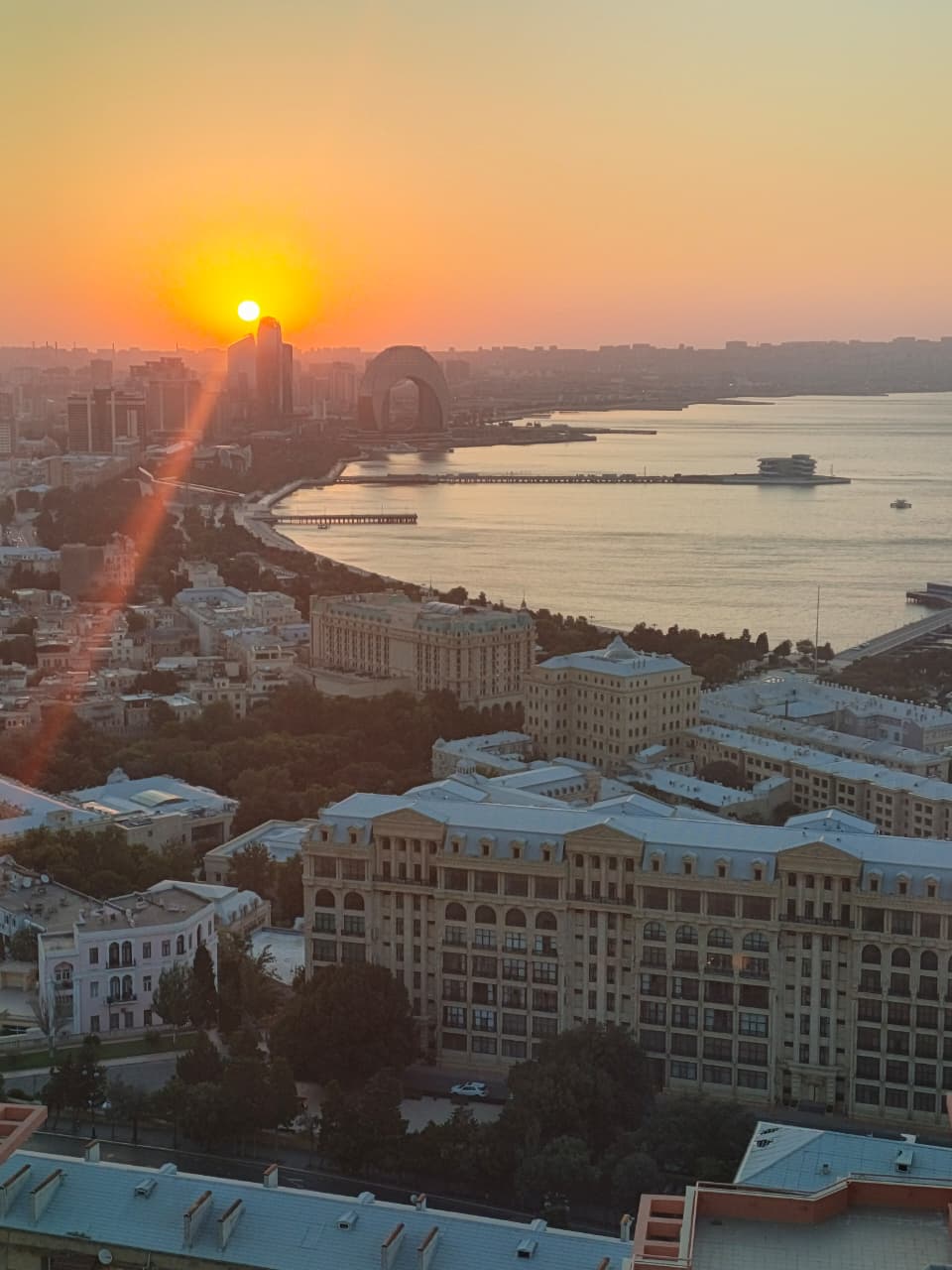
A journey from Nairobi through Istanbul ends at Baku’s striking Heydar Aliyev International Airport, where the country’s celebrated culture of hospitality becomes immediately visible. Baku, the capital, rises beside the Caspian Sea: a city of glass towers, restored stone streets, seaside promenades and a history shaped by trade, oil and empire.
A Culture of Warmth
In Azerbaijan, hospitality is woven into daily life. A local saying holds that “a guest is a gift from God.” Nothing quite begins without tea: served in traditional pear-shaped glasses known as armudu, accompanied by sugar cubes, jams, pakhlava and constant refills.
For Kenyans, this is an immediate cultural bridge. Tea is not simply a drink in either country; it is a social ritual, a reason to sit together, talk, negotiate and build relationships.
Azerbaijani cuisine reinforces that sense of community. Meals such as plov (saffron rice), dolma (stuffed vegetables), qutab (thin stuffed flatbreads) and grilled kebabs are generous, shared affairs. The kebab may be Azerbaijan’s answer to nyama choma: simple, smoky, social and impossible to avoid at a proper gathering.
 Guests arriving at a table already covered with starters are often surprised to be told, “This is only the beginning.” In Azerbaijan, starters are not the meal—they are the introduction to it.
The Old City and the new Baku
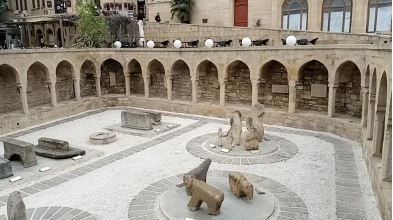
At the heart of Baku lies Icherisheher, the Old City or “Inner City.” A UNESCO-listed historical reserve, it contains stone walls, narrow lanes, caravanserais, mosques and palaces whose architecture spans from the 12th to the 19th centuries. It is a living reminder that Baku was a commercial and cultural crossroads long before it became an oil capital.
Yet Baku is equally a city of transformation. Its former 19th-century industrial oil-refining district once known as the “Black City” has been redeveloped into Baku White City, a modern residential, business and public-space district built on environmentally reclaimed land.
For more than a century, beginning in the 1870s, the area around Baku Bay was central to the refining, storage and transport of oil. The industry helped create enormous wealth, but it also left severe environmental damage.
Under President Aliyev’s 2006 decree, “The Comprehensive Action Plan on Improving the Environmental Situation in the Republic of Azerbaijan for 2006–2010,” Azerbaijan began relocating industrial activity, decontaminating land and restoring the coastline. The White City project followed, turning a polluted industrial zone into housing, public transport links, green spaces, business centres and public leisure areas.
The project matters beyond Azerbaijan. At a time when many rapidly growing cities struggle to balance industrial expansion, pollution and liveability, Baku White City offers an example of how a country can reclaim damaged urban land rather than simply abandon it.
Heritage and Resilience
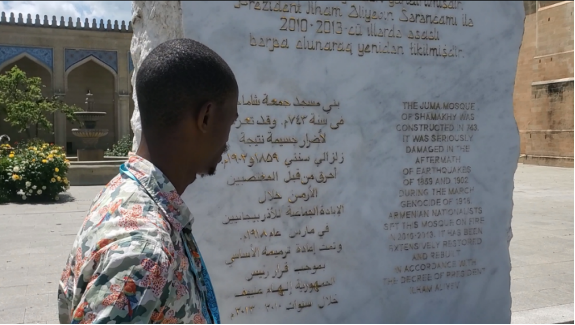
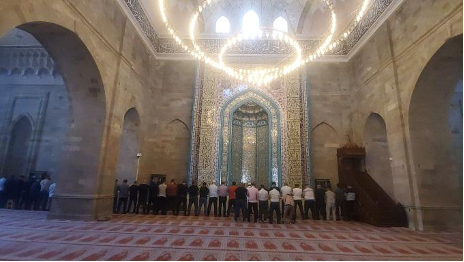
About 122 kilometres from Baku lies Shamakhi, home to the historic Juma Mosque, originally constructed in 743 AD and among the oldest Islamic places of worship in the South Caucasus. The mosque has endured earthquakes, wars and centuries of political change, making it a powerful symbol of Azerbaijani resilience.
That resilience is visible across the country: in restored heritage sites, in the rebuilding of Karabakh, in Baku’s transformation from an oil city into a regional hub, and in its effort to move from conflict with Armenia toward a peace-based regional future.
Azerbaijan’s story on the global stage is therefore not only one of military restoration or energy wealth. It is also a story about memory, hospitality, environmental renewal and the difficult work of turning a fractured past into a shared future.