|
Getting your Trinity Audio player ready...
|
By Mercy Kachenge
Nairobi, Kenya: As African leaders gather for this week’s United Nations 81st General Assembly, the world’s premier decision-making body remains without a permanent African representative which many view as a systemic imbalance that has sparked decades of advocacy.
Despite Africa comprising 54 nations and over 1.4 billion people, the continent lacks permanent representation on the UN Security Council, where global peace and security resolutions are determined.
The Security Council consists of 15 seats. While 10 non-permanent members serve two-year elected terms, the five countries include the United States, Russia, China, France, and the United Kingdom who hold permanent status with veto power.
Consequently, critical Council decisions regarding African conflicts and crises are frequently finalized without any African nation possessing the veto authority or permanent standing held by the 5.
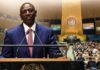
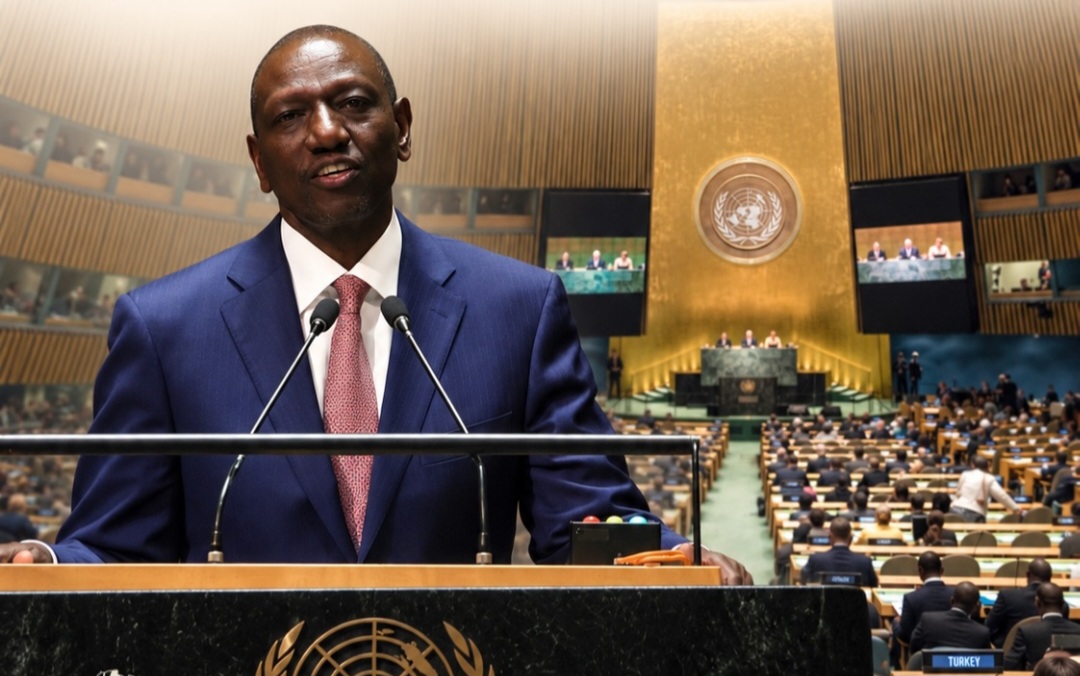
Kenyan President William Ruto put the imbalance bluntly during his address to the 81st UN General Assembly in New York on September 23.
“Africa has 54 member states, more than a quarter of this assembly, yet no permanent voice in the body entrusted with the primary responsibility for international peace and security,” Ruto said.
Adding “We are frequently the subject of its decisions, permanently discussed but permanently excluded.”
His remarks capture the central contradiction at the heart of Africa’s campaign for Security Council reform, the continent is frequently affected by decisions made by the Council, particularly on conflicts and international security, yet has no permanent member with veto power.
The Imbalance Is Not A New Concern
African governments began raising questions about their representation in the UN system after independence. In 2005, the African Union formalised its common position through the Ezulwini Consensus, calling for at least two permanent seats for Africa.
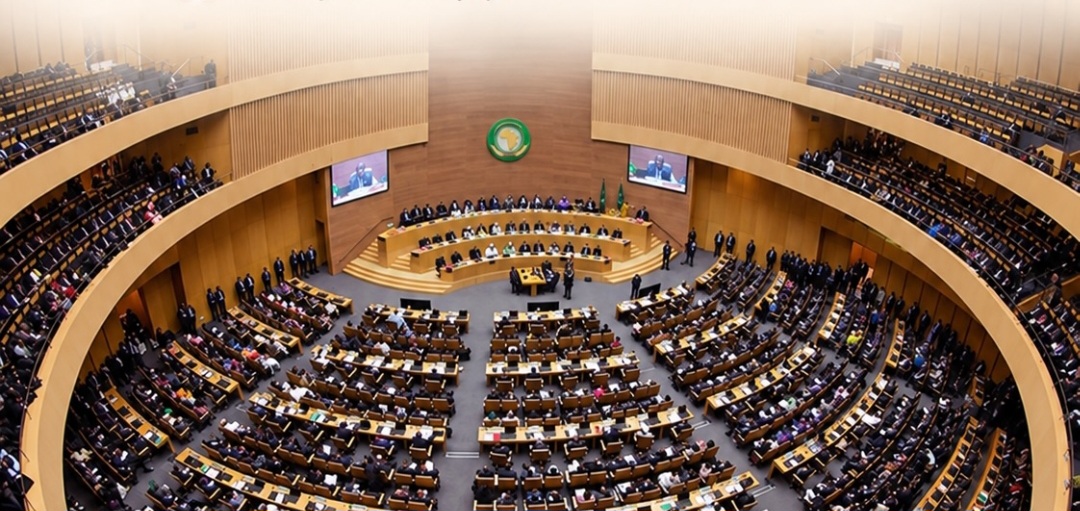
With the privileges of permanent membership, including the veto while it continues to exist, alongside five non-permanent seats. More than two decades later, that position remains the foundation of Africa’s campaign for Security Council reform.
So Why Has It Not Happened?
The answer lies partly in how difficult it is to change the structure of the Security Council. Any amendment to the UN Charter requires approval by two-thirds of the General Assembly and ratification by two-thirds of UN member states, including all five existing permanent members.
That gives the current permanent members a decisive role in any Charter amendment that would fundamentally alter the Council’s composition.
But The Obstacles Are Not Only Outside Africa
The Ezulwini Consensus does not name which African countries should occupy the proposed permanent seats. That leaves the question of how representatives would be selected to be resolved by the African Union.
The issue has also been complicated by competing reform proposals from other regions and disagreements among UN member states over whether new permanent members should receive veto powers.
The African Union has continued to insist that the continent’s representation should not be separated from the broader question of equality in global governance.
What Would A Permanent African Presence Change?
For African governments, the argument is about more than occupying additional chairs.Africa is frequently at the centre of the Security Council’s peace and security agenda, including conflicts, peacekeeping operations, sanctions and humanitarian crises.
Yet the continent has no permanent representative with veto power in the body making those decisions. The AU therefore argues that Africa should have a greater role in decisions that directly affect its countries and populations.
Ruto similarly framed the issue as part of a broader challenge to the post-Second World War international order. He argued that the Security Council’s current structure may have reflected the world of 1945 but does not reflect the world today.
In 1945, most of Africa was still under colonial rule, and only four African countries participated in the San Francisco conference that established the foundations of the United Nations. Today, the continent consists of 54 UN member states.
“The world has transformed. The Council has not,” Ruto said. The question therefore extends beyond representation. It is about who has a permanent voice when the international community makes decisions on war, peace and security.
A Reform Debate That Refuses To Disappear
Security Council reform has remained under discussion for years without agreement on a new permanent membership structure.
The African Union has maintained a common position through its Committee of Ten, while individual African governments continue to lobby other UN member states for support.
The continent’s position remains that Africa should have at least two permanent seats with the same prerogatives as existing permanent members, including the veto while it exists.
For now, however, the five permanent seats remain occupied by the United States, Russia, China, France and the United Kingdom.
As African leaders gather in New York for the General Assembly, the central question remains: how long can an international security system continue to make decisions affecting Africa without giving the continent a permanent voice in making them?
For Africa, the campaign is no longer simply about adding seats to the Security Council. It is about whether a global institution created in 1945 can be reshaped to reflect the political realities of 2026.