|
Getting your Trinity Audio player ready...
|
By Mercy Kachenge
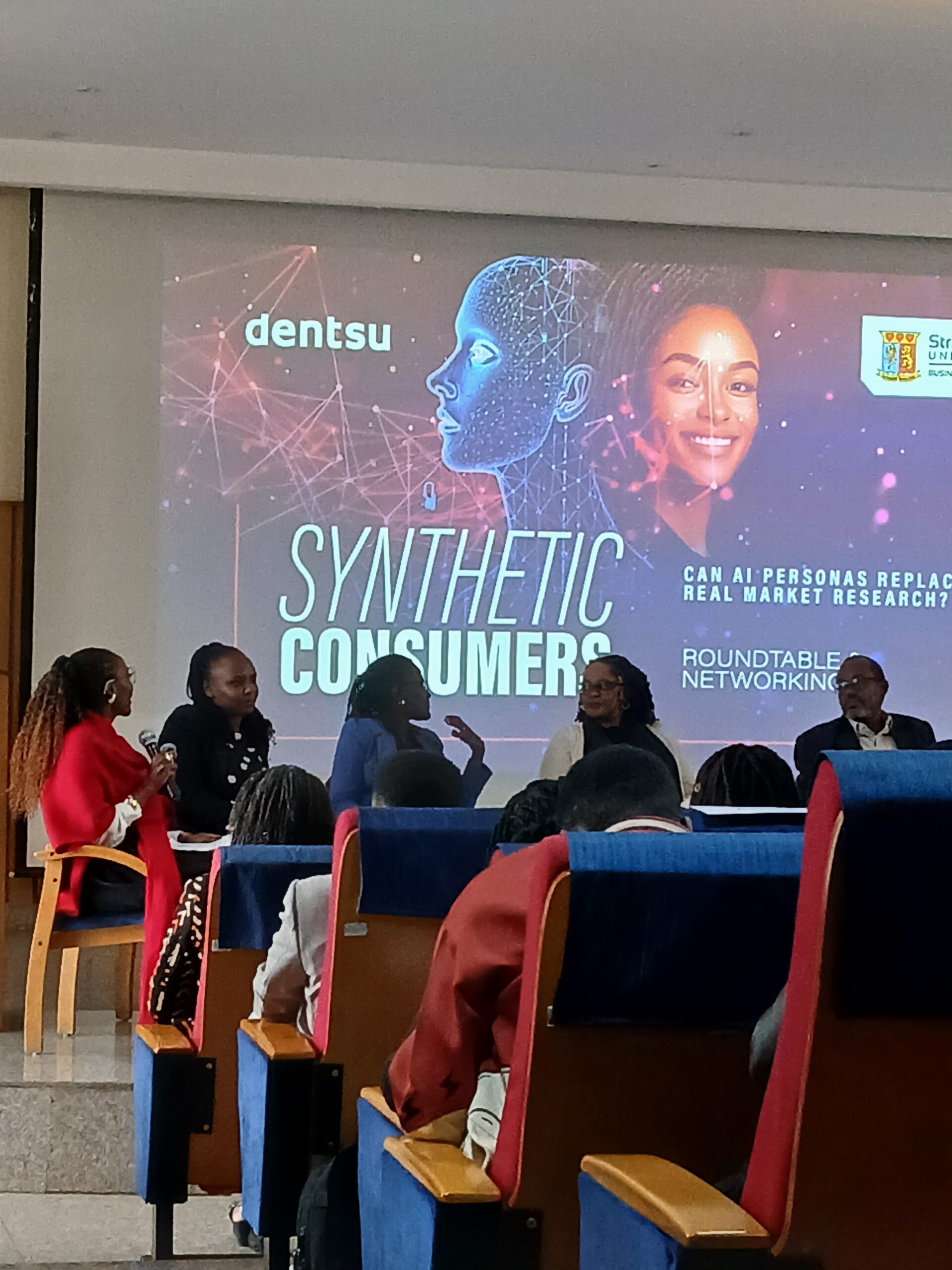
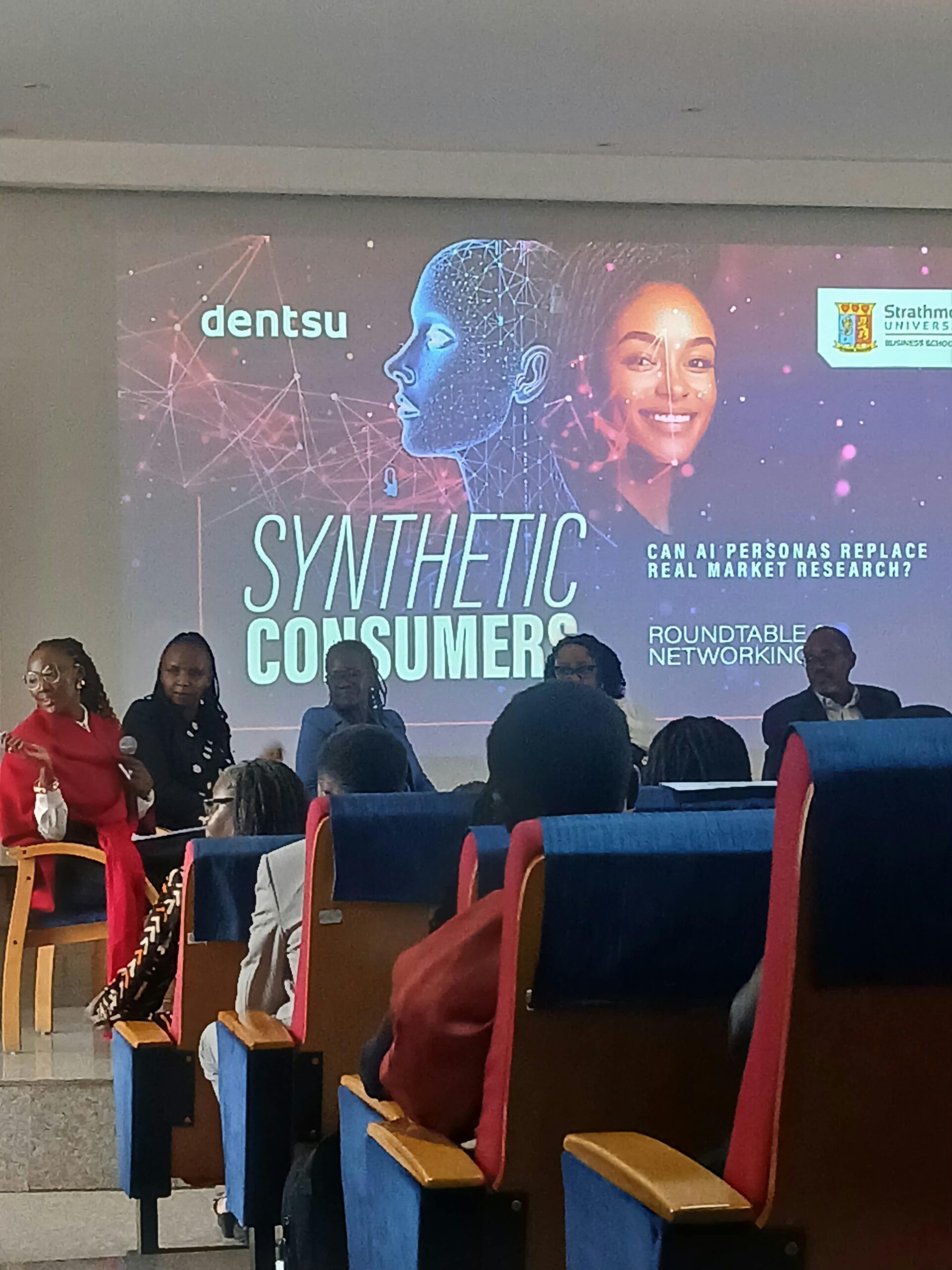
Nairobi, Kenya: Can an AI-generated “consumer” replace a real one? Kenya’s research, advertising, regulatory and academic leaders met at Strathmore University Business School to debate that question, and the two keynote speakers agreed on one point: the future is a mix of humans and machines, not machines alone.
The roundtable, “Synthetic Consumers: Can AI Personas Replace Real Market Research?” served as the launch of Strathmore’s Strategic Marketing and Communication Excellence (SMaCE) Hub.
Organisers described the hub as young but ambitious. It aims to give marketing in Kenya a permanent academic home, uphold research standards and build a professional community, with ethical leadership at the centre.
It rests on four pillars: research and insights, experiential talent development, industry and academic collaboration, and ethical transformational marketing.
Organisers stressed that the hub complements existing work at Strathmore rather than competing with it. They also set out what different stakeholders can expect: co-branding and regional reach for corporations, publication and applied-research partnerships for academics, and a professional pool for practitioners and students.
Dr. Nancy Njiraini, Director of the SMaCE Hub, said the debate belongs in Kenya. “Synthetic consumers are not going away, and neither is the need for rigour, and so the real question is who sets the standard,” she said.
Adding “We built the SMaCE Hub to make sure that conversation happens here, in Kenya, with our own researchers, regulators and corporates in the room, rather than importing someone else’s answer.”
Dr. Sarah Awinyo, Lead for Industry and Academic Collaborations at the hub, said corporates are already piloting synthetic personas without waiting for industry consensus. The conversation, she said, could offer “not certainty, but a shared standard for knowing when synthetic insight is good enough to act on, and when it still is not.”
Kantar CEO Daniel Oseman made what he called the “establishment case” for human-centred research. Kantar is investing heavily in AI, he said, but clients ultimately want confidence in their decisions, and confidence depends on knowing who was interviewed, how they were recruited and whether they represent the population.
Oseman said AI models trained on thousands of respondent surveys can now evaluate advertising concepts in seconds, with results 95%–98% as accurate as respondent-based surveys. Those models work, he argued, only because generations of researchers built high-quality evidence.
“Today’s AI is not replacing decades of research. It’s standing on the shoulders of decades of research” he said.
He warned of a future in which agencies stop collecting fresh data. By 2030, he said, platforms could be running on consumer responses collected five years earlier, with no way of telling when a model had drifted from reality.
Adding “That is not intelligence. That’s an echo chamber.”
He said it matters little whether a human or an AI conducts the interview. What matters is whether researchers are still learning from real people.
“An AI agent speaking to a real consumer is still generating fresh evidence. A digital twin speaking to another digital twin is not.” He likened synthetic data to a photograph, quick and useful but capturing only a moment, and human research to a conversation.
Joel Rao, co-CEO of Dentsu Kenya, said every client wants the same “miracle” of faster, cheaper, lower-risk learning, and that synthetic audiences promise speed, scale and cost efficiency. But he cautioned that “a synthetic audience is not magic.” It is a simulated audience built largely on historical data, while marketers need to understand consumers at the moment of purchase.
Rao said the tools work best early on, before money is spent and before “a weak idea” is taken into a real room. They can help teams kill weak options and enter real research with better questions. Where context, contradiction, culture and consequence matter, he said, they break down.
He added that on the continent the hidden variable is not only data scarcity but cultural specificity. Real audiences, he noted, reveal what they did not know they needed to say, through the pause, the joke and the disagreement in the group.
He presented Dentsu’s own synthetic audience dataset, which layers AI-generated audiences over a real consumer panel. It combines telco attributes with more than 10,000 human attributes, from demographics and media habits to attitudes, interests and hobbies. Rao said early campaign results, including work with Meta and a Google-backed fibre lead-generation campaign, showed improvements, and that data would be shared after the event.
His recommended approach is a four-step loop: simulate, shortlist, validate with real people, then learn and repeat. “The future is hybrid. It’s not human-free,” he said. “Let’s replace repetition, not reality.”