|
Getting your Trinity Audio player ready...
|
By Victoria Musimbi
Thika, Kenya: Unpredictable rainfall, rising temperatures, deteriorating soil health, and emerging pests are putting coffee farmers under increasing pressure, jeopardizing both crop yields and the long-term sustainability of coffee production.
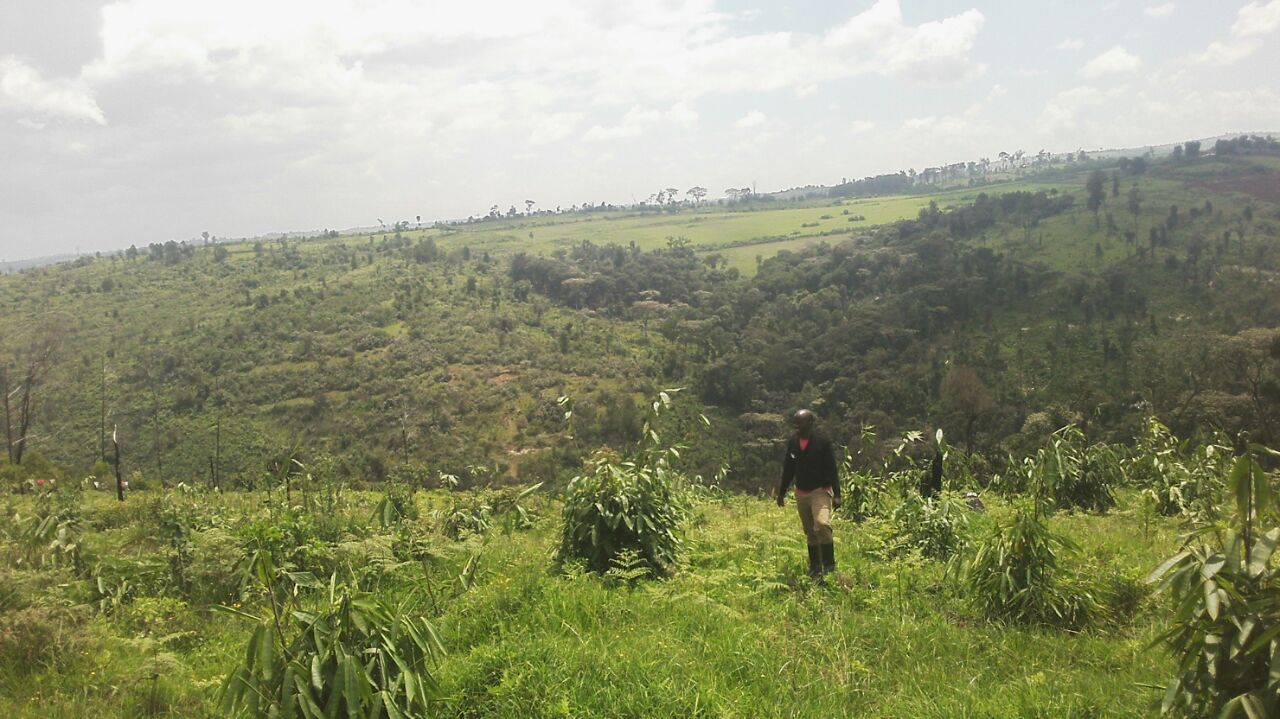
To address these challenges, growers and industry stakeholders are adopting regenerative practices designed to rehabilitate key natural resources while boosting farm productivity and resilience.
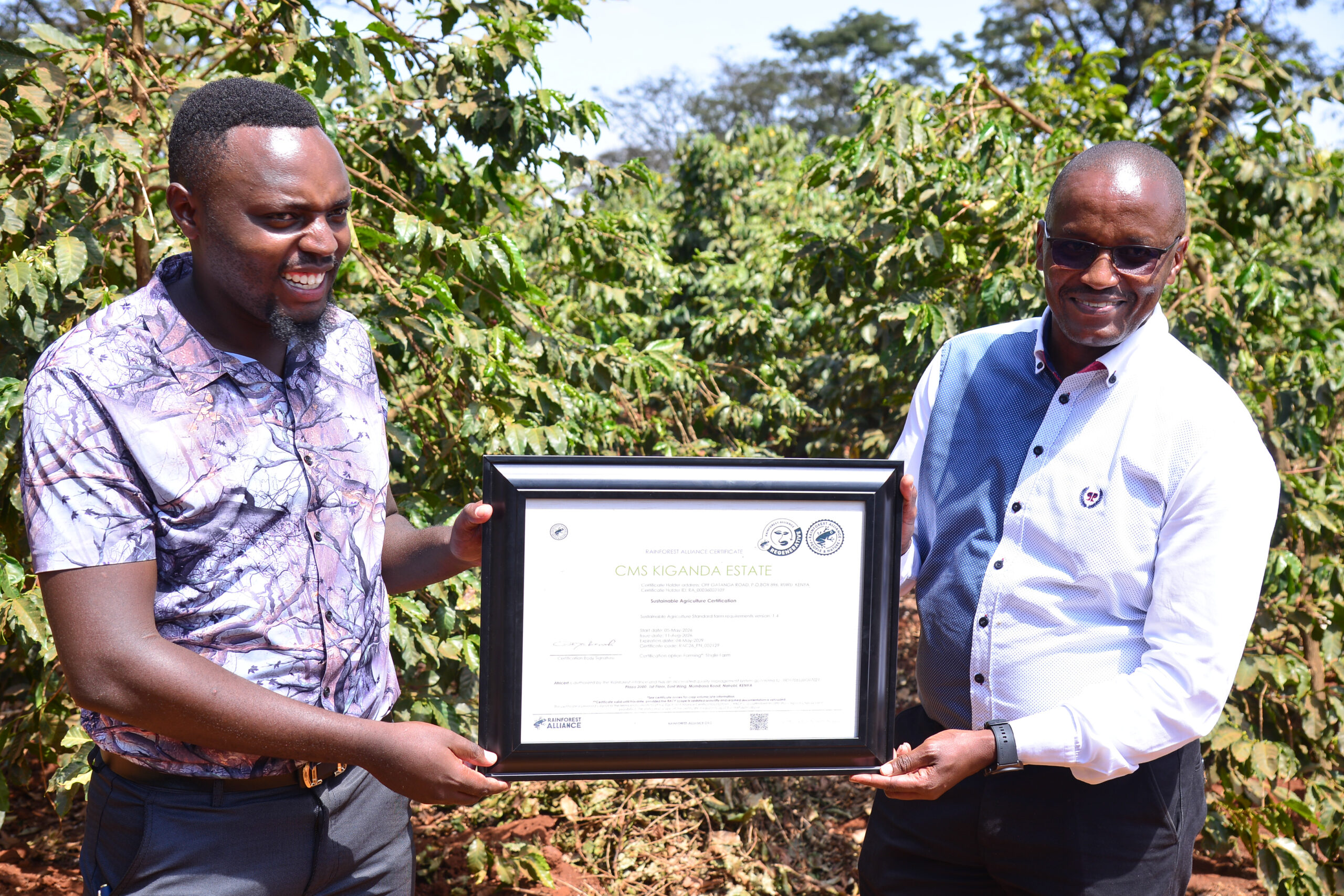
Through a joint initiative involving the Rainforest Alliance, Coffee Management Services (CMS), Kiganda Estate, and industry partners, the estate has achieved a major milestone by becoming the first farm in Africa to earn certification under the Rainforest Alliance Regenerative Agriculture Standard.
Recognising the Work at Farm Level
The certification awarded to Kiganda Estate, situated in Thika, Kiambu County, stands as formal recognition of the dedicated efforts of its workforce, according to Farm Manager Paul Kabubi.
“It’s a great honour and a significant achievement. It has not been easy, but through the good practices we have been implementing, we have been able to achieve this certification,” he said.

Kabubi, who works for CMS, which leases and manages the estate, said the certification will allow its coffee to be sold as certified coffee while supporting better working conditions for its close to 200 employees.
He said the practices have become part of the farm’s production system, with staff adopting methods aimed at using natural resources more efficiently.
Kiganda has been in coffee production for more than a century, making sustainable and responsible production important to securing its future.
“I would encourage every farmer to farm smart and adopt regenerative agriculture practices. It should become a culture,” Kabubi said.
Making Coffee Production More Consistent
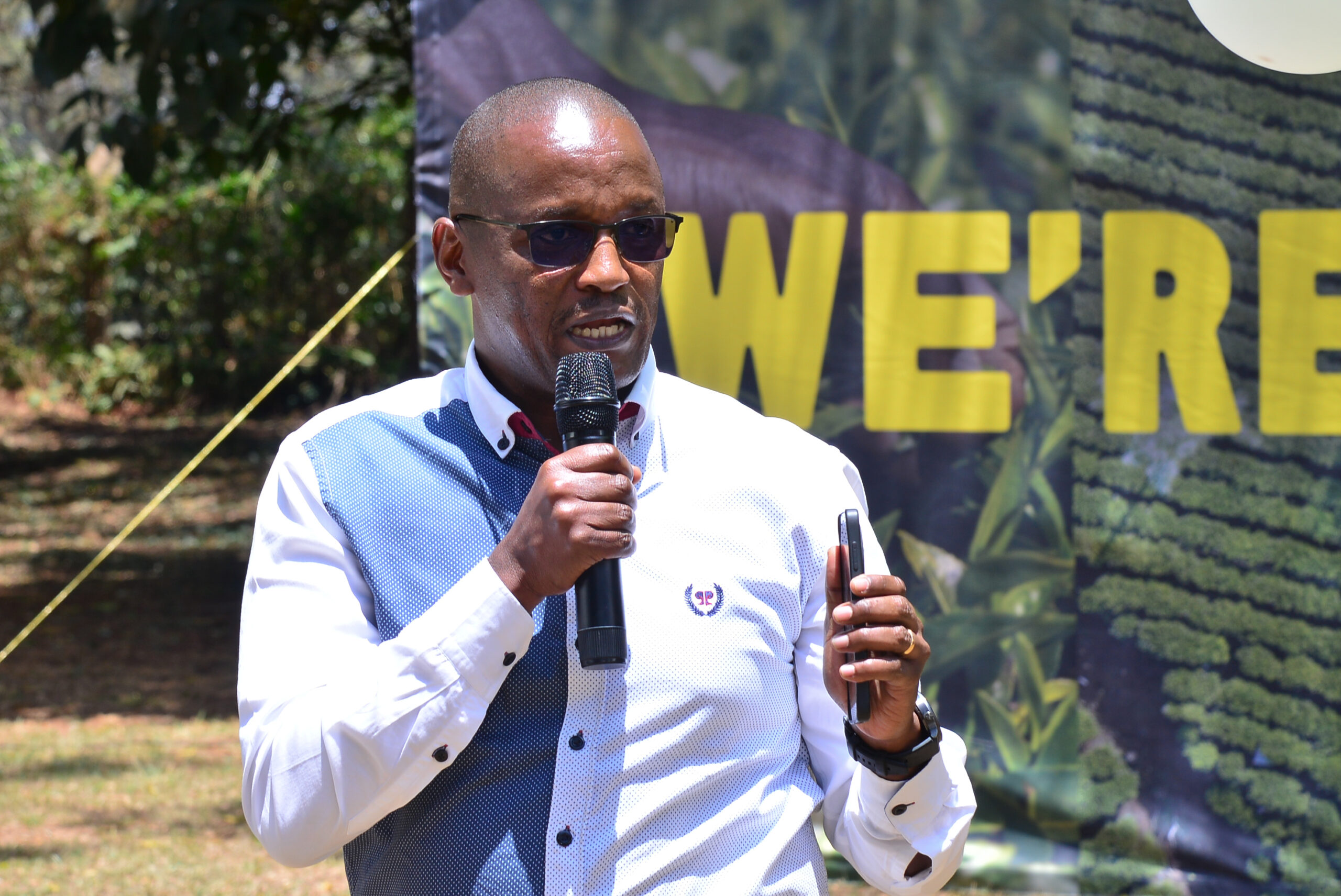
For Martin Ngare, Group General Manager at Coffee Management Services (CMS), the value of this approach lies in its potential to make coffee production more consistent.
Kiganda produces an average of 110 to 120 tonnes of green coffee annually. However, coffee production is naturally biennial, with a high-yielding year often followed by a significant drop in production.
“Regenerative agriculture seeks to flatten those peaks and troughs so that we can maintain sustainable production year after year,” Ngare said.
The farm combines carefully managed inorganic fertiliser with organic inputs. Soil analysis is conducted before fertiliser is applied to determine the nutrients required, while about 85 tonnes of organic manure were applied over the past year.
Shade trees, including nitrogen-fixing species such as Albizia, are maintained to support soil fertility and organic matter. Pruned coffee branches are left on the ground to decompose and return nutrients to the soil, while mulching helps retain moisture.
Ngare said the impact is becoming evident in the farm’s production patterns. After harvesting about 120 tonnes, the estate is still expecting a comparable level of production rather than the sharp decline traditionally associated with the year following a heavy crop.
“For us, the curve is much flatter than it was before,” he said.
The consistency is also important to coffee buyers, particularly international customers who need reliable supplies from one year to the next. Most of the estate’s coffee, roughly six containers annually, is exported to Europe and the United States.
The farm has also introduced ring basins around coffee trees to improve water retention and reduce losses. It previously relied on overhead irrigation, which resulted in considerable water loss through evaporation and evapotranspiration, particularly when temperatures rise to between 33 and 35 degrees Celsius.
Kiganda has also adopted integrated pest management, prioritising non-chemical methods wherever possible. Regular scouting helps identify pests early, while cultural, mechanical and biological controls are used depending on the situation.
Natural predators such as wasps and ladybirds are encouraged to control pests, while chemical treatment is targeted only at affected trees when necessary.
Ngare said these measures can contribute to improved coffee quality and better returns, with certified coffee generally attracting a premium over non-certified coffee.
For CMS, however, certification is only the beginning.
“This is not the end of the journey; it is an important beginning,” Ngare said. “Our responsibility now is to build on the lessons we have learned, strengthen our practices further and continue promoting regenerative agriculture across the landscapes and communities where we work.”
Making the Approach Practical for Farmers
Karagu Macharia, chairman of the Kenya Coffee Platform, said the approach should not be viewed as a new or complicated concept, noting that many of its practices are rooted in traditional farming methods.
“Regenerative agriculture sounds like a very long name, but this is the kind of agriculture our grandfathers and mothers used to practise,” Macharia said, citing intercropping maize, beans and onions as examples of practices that helped improve soil cover, reduce erosion and manage pests naturally.
He said smallholder coffee farmers can apply similar practices by using manure and maintaining organic matter in their soils.
“When you apply manure, you improve your organic matter. When you improve your organic matter, the soil becomes alive. You start seeing frogs and earthworms,” he said.
Macharia identified soil conservation as a major priority for coffee farmers in Central and Eastern Kenya, noting that fertiliser alone cannot improve productivity where soils are degraded.
“We can get fertilisers from the government, but if we are not doing soil conservation, we will apply them and everything will go down,” he said.
He also highlighted the importance of proper pruning and feeding of coffee trees, warning that over-pruning can reduce productive branches, while inappropriate fertiliser use can further affect soil health.
Macharia said changing rainfall patterns and rising temperatures were putting additional pressure on farmers, contributing to uneven flowering and the emergence of pests in areas where they were previously uncommon.
He said integrating trees such as avocado and macadamia into coffee farms could provide shade, additional income and help conserve soil as farmers adapt to a changing climate.
Climate-resilient Varieties can Reduce Chemical Use
Dr. Tony Maritim, Deputy Institute Director at the Coffee Research Institute (CRI), said climate-resilient coffee varieties are another important tool for helping farmers adapt to changing conditions.

CRI, currently an institute under the Kenya Agricultural and Livestock Research Organization (KALRO), is transitioning into a standalone institution known as the Coffee Research and Training Institute (CRTI). Maritim said its mandate will remain focused on developing varieties that can withstand changing climatic conditions and meet farmers’ needs.
The institute has developed five varieties—SL28, SL34, K7, Ruiru 11 and Batian. While traditional varieties face challenges from diseases such as coffee leaf rust and coffee berry disease, Ruiru 11 and Batian offer greater resistance.
Maritim said disease-resistant varieties can help farmers reduce their reliance on chemical inputs.
“As we move into regenerative agriculture, you need the right raw material on the farm. That means having climate-resilient varieties that can reduce the need for pesticides and other chemical inputs,” he said.
He also emphasised the role of shade trees, noting that some provide cover while improving soil fertility through nitrogen fixation.
Maritim described the approach as rooted in indigenous farming knowledge that is now being documented, strengthened and certified.
He said Kiganda’s achievement could encourage more farms to adopt similar practices and potentially enable farmers to access markets offering premium prices for sustainably produced coffee.
Certification Signals a Shift Towards Restoration
Julius Ng’ang’a, Senior Director of Impact Programs for East and South Africa at the Rainforest Alliance, said the organisation works to restore the balance between people and nature while supporting farmers, protecting ecosystems and strengthening agricultural systems.
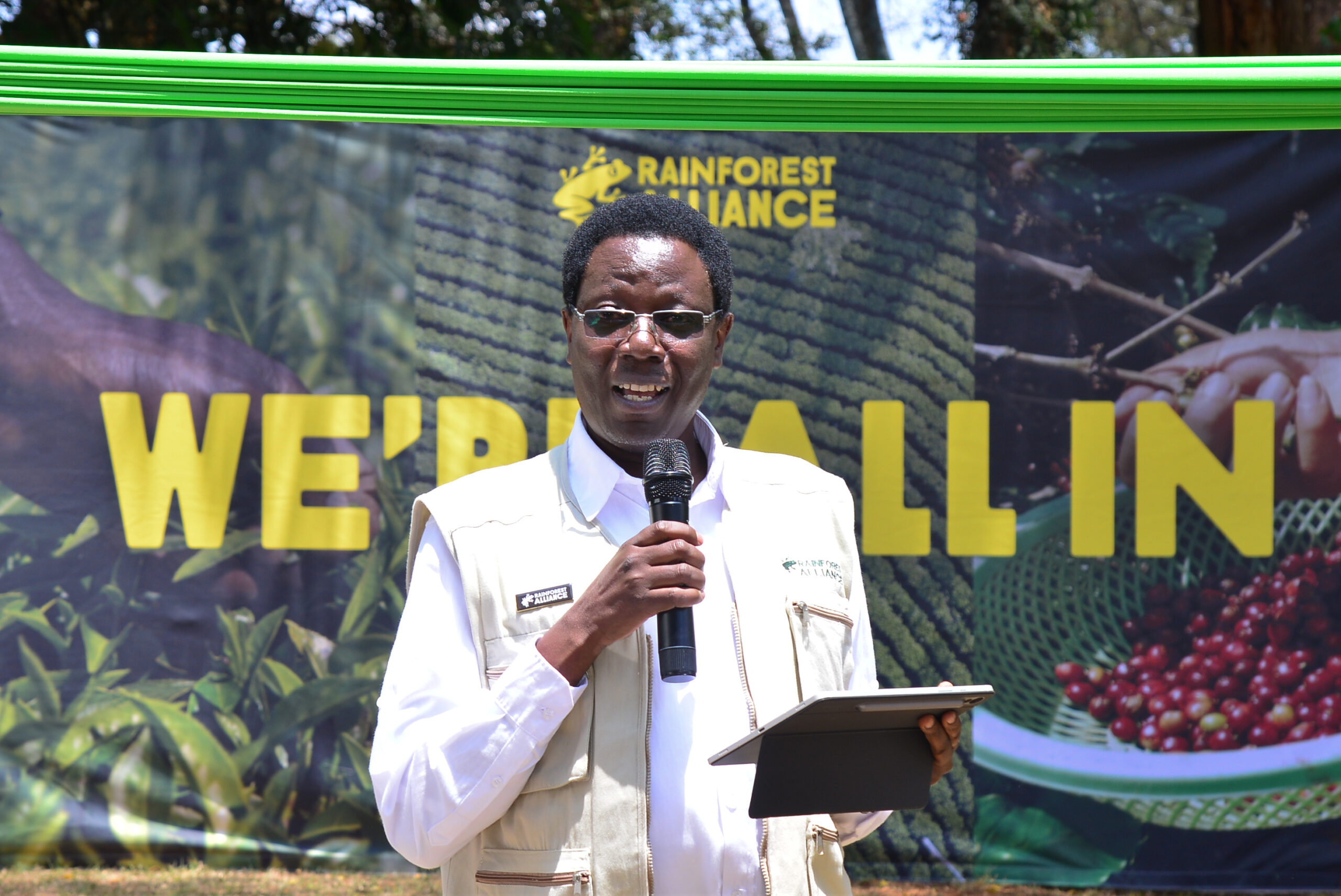
The organisation brings together farmers, forest communities, companies, governments, civil society and other partners to promote more sustainable agricultural and forestry practices.
In Kenya, Rainforest Alliance certification has been active for 21 years and, through collaboration with its Alliance members, now covers more than 50 per cent of coffee and 90 per cent of tea production by volume. The organisation has certified more than 1.1 million farmers across various value chains, covering about 372,000 hectares.
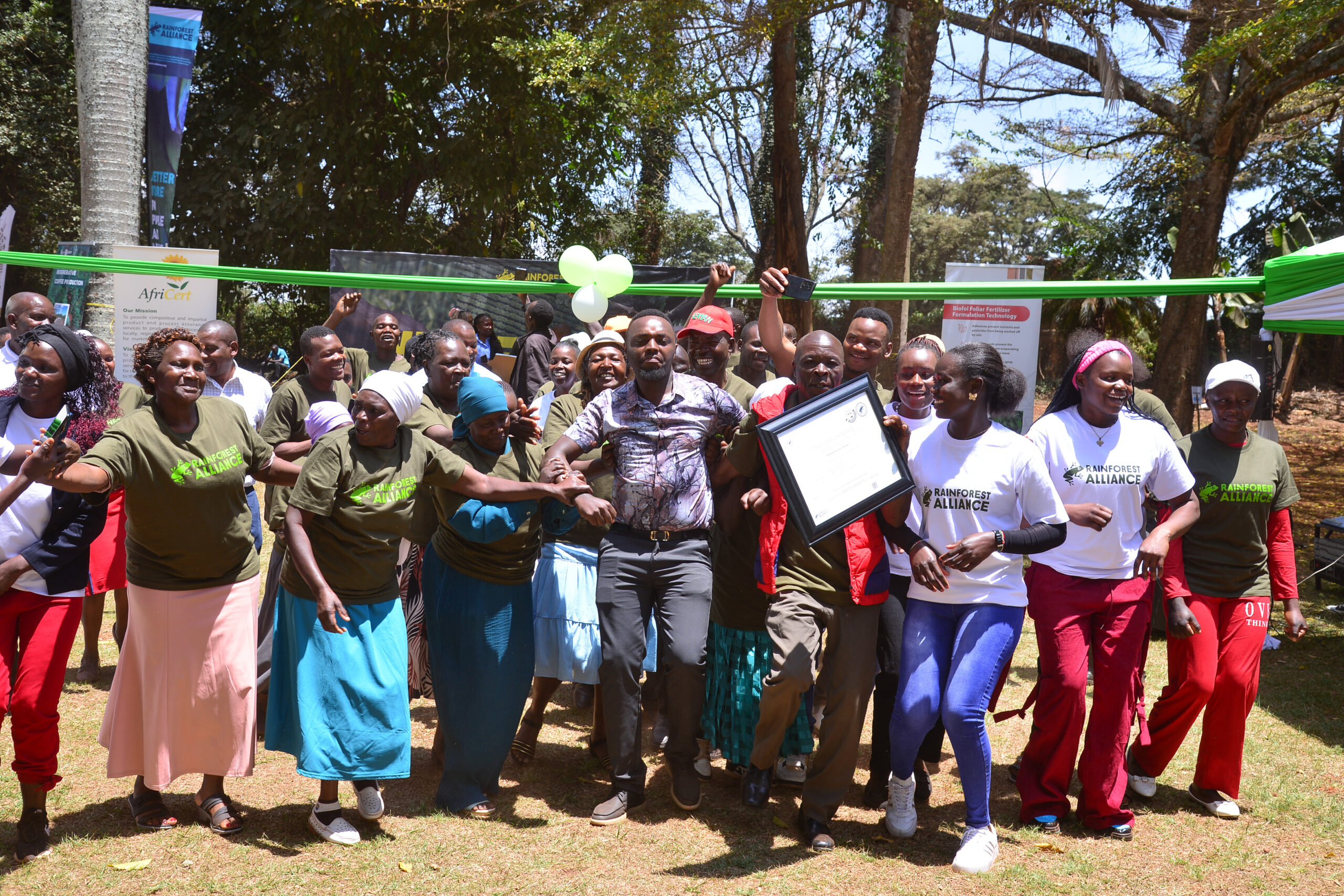
Ng’ang’a said the alliance convened stakeholders to celebrate Kiganda’s achievement as the first farm in Africa to receive certification under its Regenerative Agriculture Standard.
He said the certification reflects a shift from agriculture that simply reduces environmental harm to practices that actively restore ecosystems and strengthen farms’ resilience to climate change.
At Kiganda, this includes improving soil health through organic matter and manure, maintaining soil cover, conducting soil analysis and adopting integrated weed management, while trees provide shade and support biodiversity.
Ng’ang’a said the transition requires investment and called on coffee buyers and other value-chain actors to support farmers through better prices and premiums.
“Regenerating is an investment in the farm, so farmers need to be rewarded,” he said.
Kiganda’s certification offers a practical example of how regenerative agriculture can be integrated into coffee production while addressing soil degradation, climate pressures and the need for more resilient and sustainable farms.