|
Getting your Trinity Audio player ready...
|
By Shaban Makokha
The fight against climate change is moving to the grassroots, with Deputy County Commissioners (DCCs) from Western Kenya undergoing sensitisation on a programme promoting natural resource conservation, resilient livelihoods, food security and community adaptation to climate change.
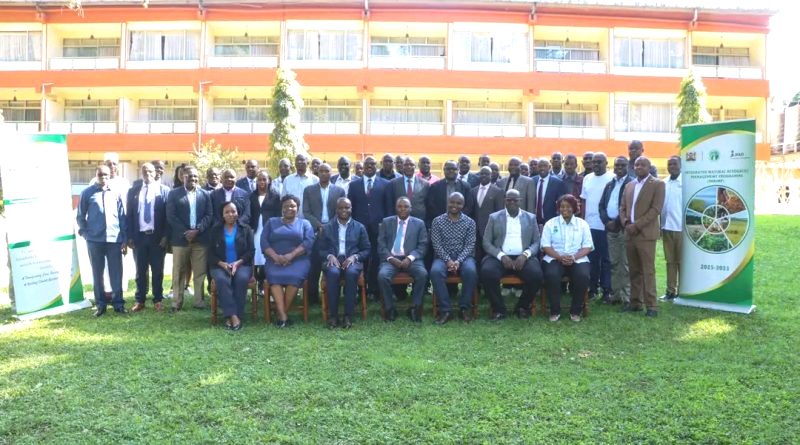
Officials from West Pokot, Trans Nzoia, Nandi, Uasin Gishu, Kisumu, Elgeyo Marakwet and Kakamega counties have been taken through the Integrated Natural Resources Management Programme (INReMP)—an initiative seeking to transform how communities manage the land, water, forests and other natural resources on which their survival depends.
Supported by the International Fund for Agricultural Development (IFAD), the programme comes at a time when rural communities are increasingly feeling the consequences of a changing climate: unpredictable rainfall, prolonged dry spells, declining agricultural productivity and mounting pressure on natural resources.
At its heart, INReMP is about equipping vulnerable communities with the tools and knowledge to withstand these shocks, while ensuring that the resources sustaining them today are not destroyed at the expense of future generations. The programme seeks to promote sustainable natural resource management, strengthen community resilience to climate change and improve food, nutrition and income security among rural households.
The sensitisation of Deputy County Commissioners is seen as a critical step because the National Government Administrative Officers (NGAOs) are closely connected to communities and can help ensure that programmes reach those who are often left behind.
During a sensitisation session at the Golf Hotel in Kakamega town, the DCCs were taken through the structure and objectives of INReMP, its governance and coordination mechanisms, as well as the role expected of NGAOs in supporting implementation. They were also briefed on the status of the National Climate Security and Resilience Programme (NCCSRP), together with the geographical mapping and targeting of communities expected to benefit.
“Climate resilience cannot be built from offices alone,” said Bill Silingi, Chief Officer for Environment, Natural Resources and Climate Change in Kakamega. “It must begin in villages where farmers depend on increasingly unpredictable rains, where degraded land threatens food production and where poor households have fewer resources to recover when climate-related disasters strike.”
Silingi said involving key stakeholders, particularly NGOs, would be critical in ensuring that the programme reaches marginalised and vulnerable communities. He urged the Deputy County Commissioners to help take the message of sustainable natural resource management to the grassroots and encourage communities to take ownership of climate resilience initiatives.
He emphasised the importance of community-driven interventions, noting that solutions imposed from outside communities may struggle to deliver lasting change unless local people are involved from the beginning. The approach places communities at the centre of decisions affecting their environment and livelihoods.
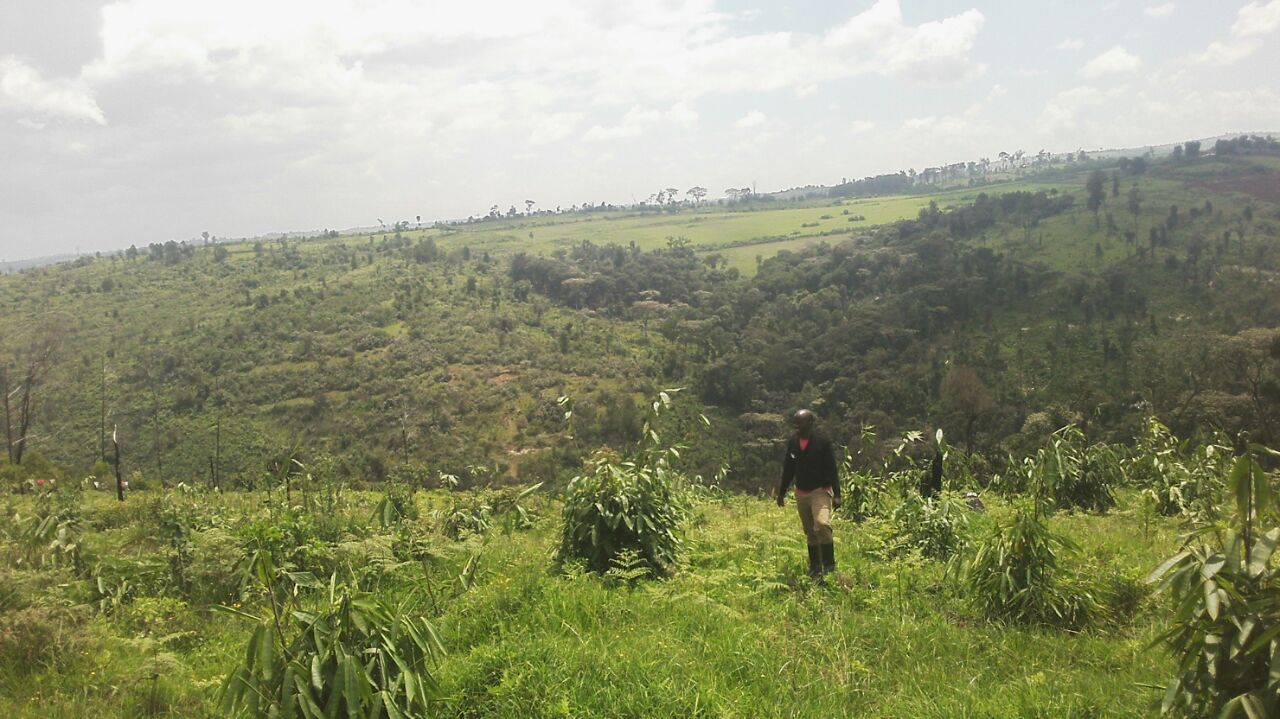
For rural families, climate change is no longer a distant scientific discussion—it is increasingly reflected in the soil beneath their feet, the water available to their households and the harvests coming from their farms. When rainfall patterns change, farmers are forced to rethink when and what to plant; when land becomes degraded, food production suffers; when water sources decline, households, livestock and agriculture compete for the same precious resource. And when crops fail, the consequences go beyond food shortages—they affect household incomes, children’s education and the ability of families to meet basic needs.
“This is why the natural resources agenda is closely tied to poverty reduction and food security,” added Mr Silingi. A healthy ecosystem provides water, supports agriculture, protects biodiversity and sustains livelihoods. Once those systems are degraded, the poorest households often suffer first and hardest.
The sensitisation meeting sought to bridge the gap between national programmes and the communities they are intended to serve. DCCs were urged to understand their role not merely as administrators but as important links between government programmes and citizens.
Kakamega County Commissioner Taari Rwaria said the involvement of local administrators could improve coordination among national government agencies, county governments, communities and development partners.
“It could also help ensure that vulnerable households are properly identified and targeted,” he said. “The geographical mapping and targeting component of INReMP is particularly important because communities do not experience climate risks in the same way. Some areas may face water scarcity, others land degradation, floods, declining soil fertility or other environmental pressures. Understanding these differences is essential in designing interventions that respond to actual community needs.”
The involvement of IFAD underscores the growing recognition that environmental protection and economic development must move together. Protecting forests, soils and water sources cannot be separated from the question of how families earn a living. For communities to conserve their natural resources, they must also have sustainable alternatives that enable them to feed their families and generate income.
INReMP therefore presents an opportunity to link conservation with livelihoods—encouraging communities to protect the environment while improving food and income security. The programme’s success will ultimately be measured not by the number of meetings held, but by what changes on the ground: healthier landscapes, more resilient farms, protected water sources and households better prepared to withstand climate shocks.
County Programme Coordinator Titus Omengo and IFAD Agronomist Khabi Samuel were among officials who attended the sensitisation alongside other stakeholders. Their participation highlighted the multi-agency nature of the climate resilience agenda. Government officers, development partners, county authorities and communities will all have a role to play if the programme is to deliver meaningful results.
The challenge is enormous, but so is the opportunity. Across Western Kenya, communities have generations of knowledge about their land and natural resources. Combining that indigenous knowledge with scientific expertise, government support and climate-smart approaches could give rural households a stronger chance of surviving an increasingly uncertain climate.
Ultimately, the INReMP agenda is about more than trees, water, soil or agricultural production—it is about people: the farmer who needs a reliable harvest to feed a family, the mother who depends on a nearby water source, young people looking for a sustainable livelihood and communities that want their children to inherit land capable of sustaining them.
The message emerging from the sensitisation was therefore simple but urgent: climate resilience must start where people live. By bringing Deputy County Commissioners into the programme, the government and its partners hope to strengthen the final link between policy and the people who need it most.
If that link holds, the benefits could stretch far beyond environmental conservation—they could mean stronger households, more secure food supplies, better incomes and communities capable of facing climate change not with fear, but with resilience. Because protecting natural resources is ultimately about protecting the lives and livelihoods that depend on them.