|
Getting your Trinity Audio player ready...
|
By Victoria Musimbi
Nairobi, Kenya: Although Africa possesses a vast wealth of creative talent, many young individuals face difficulties converting their concepts into profitable, enduring businesses. This struggle stems from a lack of solid business acumen, deficient monetization tactics, and minimal knowledge regarding intellectual property.
Consequently, creators frequently depend on volatile income streams and external social media channels, which restricts the industry’s ability to foster economic expansion and employment.
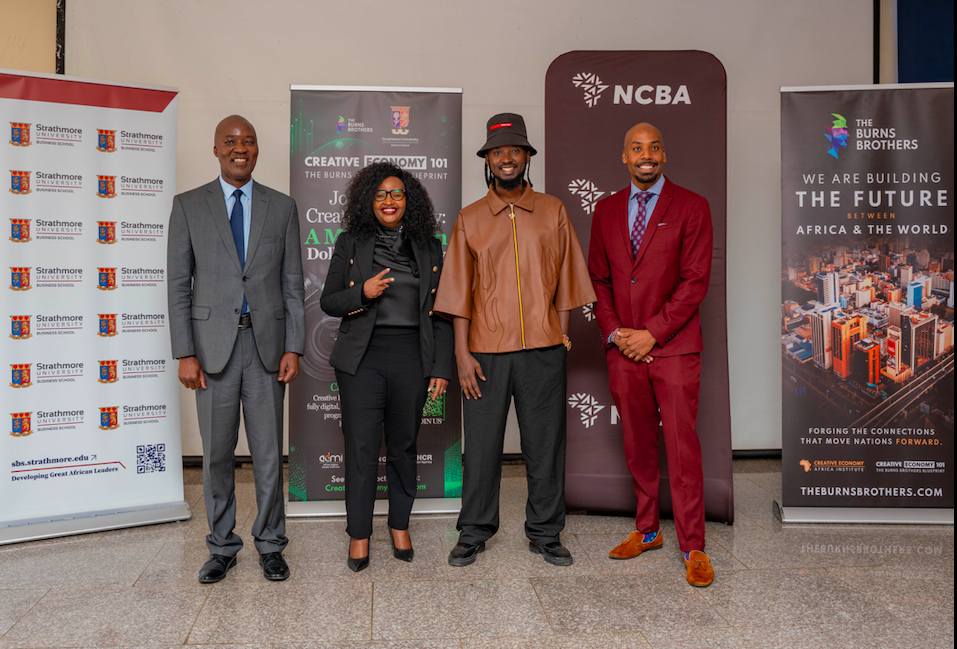
To address this disconnect between commercial success and creative talent, the Creative Economy Africa Institute established by The Burns Brothers in collaboration with Strathmore University Business School has introduced its first initiative dubbed the Creative Economy 101.
This self-paced digital course, certified by the business school, provides
creators with hands-on training in digital products, intellectual property, business management, and monetization strategies to transform creative endeavors into functional companies.
Young Creator Finds Opportunity in Business Training
Kerry Amani, an 18-year-old digital content creator, entrepreneur, and the founder of Amani Systems, is among the initial cohort of students. Amani, whose company assists authority-led brands in establishing online credibility while producing educational content focused on personal growth, financial literacy, and entrepreneurship, originally did not set out to create content.
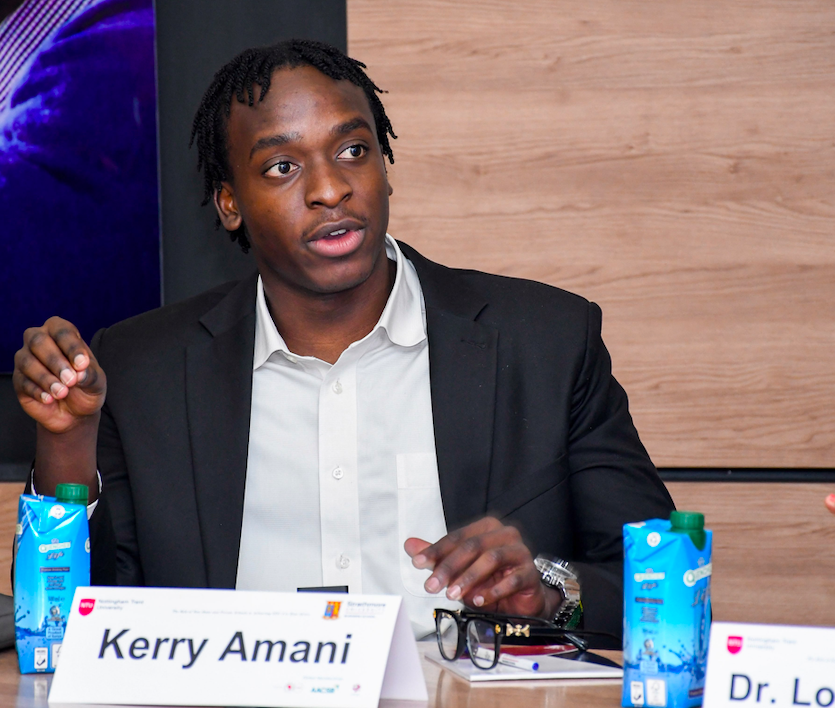
However, he recognized that social platforms are vital for engaging youth and building businesses, and he trusts that Creative Economy 101 will provide young professionals with the necessary skills to transition their artistic skills into sustainable enterprises.
“I never planned to become a content creator. I simply realised that social media had become inseparable from entrepreneurship, and the advice I was giving my friends about business and personal finance could reach thousands more young people online,” Amani said.
His content quickly gained traction, generating nearly two million monthly views on Instagram. However, an artificial intelligence (AI) moderation error led to the suspension of his account, wiping out years of work overnight. The experience, he said, highlighted a broader challenge facing African creators: while the continent has no shortage of talent and creativity, it has limited ownership of the digital infrastructure and distribution platforms that shape the creator economy.
“Africa doesn’t lack talent or creativity. What we lack is ownership of the platforms and digital infrastructure that shape the creator economy. That’s why programmes like Creative Economy 101 matter; they teach creators how to build businesses that can survive beyond views and followers,” he said.
According to Amani, many creators focus on producing quality content but often overlook how to commercialise their work, protect their intellectual property and create multiple income streams beyond social media. He said Creative Economy 101 addresses that gap by giving participants practical knowledge to turn creativity into long-term economic opportunities.
He encouraged young people to take advantage of opportunities such as Creative Economy 101 and other learning resources to strengthen their skills, saying creators should focus not only on growing an audience but also on building sustainable businesses capable of generating long-term income. For aspiring creatives, he said, investing in business knowledge today could open doors to greater opportunities tomorrow.
Building Partnerships For a Thriving Creative Economy
Speaking during the launch, Kenya Film Commission Chief Executive Officer Timothy Owase said the creative economy should be recognised as a serious business sector capable of transforming Kenya’s economy.
He described the initiative as an important milestone that will equip creators with the knowledge and skills needed to build sustainable businesses, protect their intellectual property, embrace emerging technologies and compete in regional and global markets.
“The creative economy is the new oil. It is no longer a peripheral industry but a strategic economic driver that creates employment, stimulates innovation, promotes tourism, strengthens national identity and showcases African stories to the world,” Owase said.
He said stronger collaboration between government, academia and the private sector is essential to creating an environment where creators can innovate, safeguard their work and compete successfully in regional and international markets.
“We want creatives to learn not only how to produce exceptional work, but also how to negotiate confidently, develop business plans, build strong brands and turn their creativity into sustainable livelihoods,” he said.
Investing in Creative Talent
Nelly Wainaina, Group Director, Marketing, Communication and Citizenship at NCBA Group, said the bank’s partnership with The Burns Brothers and Strathmore University Business School reflects its commitment to investing in Kenya’s creative economy by equipping creatives with the skills needed to build sustainable careers.
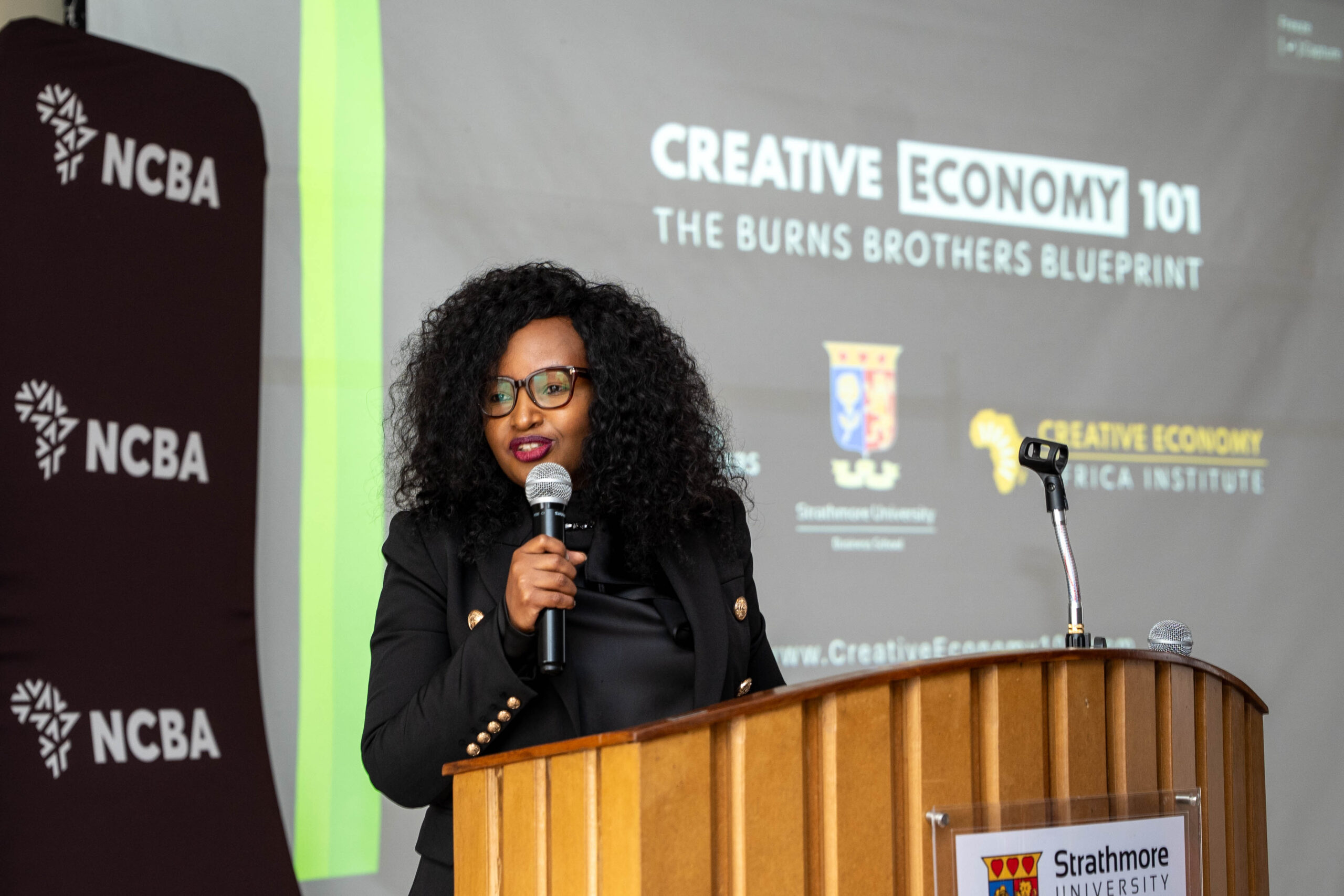
She said the programme gives creators an opportunity to sharpen their entrepreneurial skills, validate existing knowledge or begin their learning journey, with certification enhancing their professional credibility and preparing them for new opportunities in the industry.
“We are proud to partner with The Burns Brothers and Strathmore University Business School to support the launch of Creative Economy 101. This programme provides creatives with an opportunity to develop their skills, validate what they already know or begin their learning journey. Ultimately, our goal is to help creatives monetise their talent and build sustainable careers,” Wainaina said.
She noted that NCBA has committed to sponsoring the first cohort through its Elevate Programme for musicians. As part of the launch, the bank will sponsor 10 students to participate in the programme, describing the initiative as the beginning of a broader effort to invest in Kenya’s creative sector.
Wainaina said one of the programme’s strengths is its flexible learning model, offering both foundational courses for beginners and specialised masterclasses for more experienced creatives.
“At NCBA, our philosophy is rooted in Ubuntu—we believe in people before the world does. That is why we are investing in creatives at the beginning of their journey, before they become household names across Africa and the world,” she said.
She expressed optimism that lessons from the pilot cohort would guide the programme’s expansion across Kenya and eventually the rest of Africa while encouraging more organisations to invest in developing the continent’s creative talent.
Education Creating Opportunity
Dr. Caesar Mwangi, Executive Dean of Strathmore University Business School, said the initiative reflects a growing recognition that young people can build successful careers beyond traditional professions when given the right opportunities, mentorship and business knowledge.
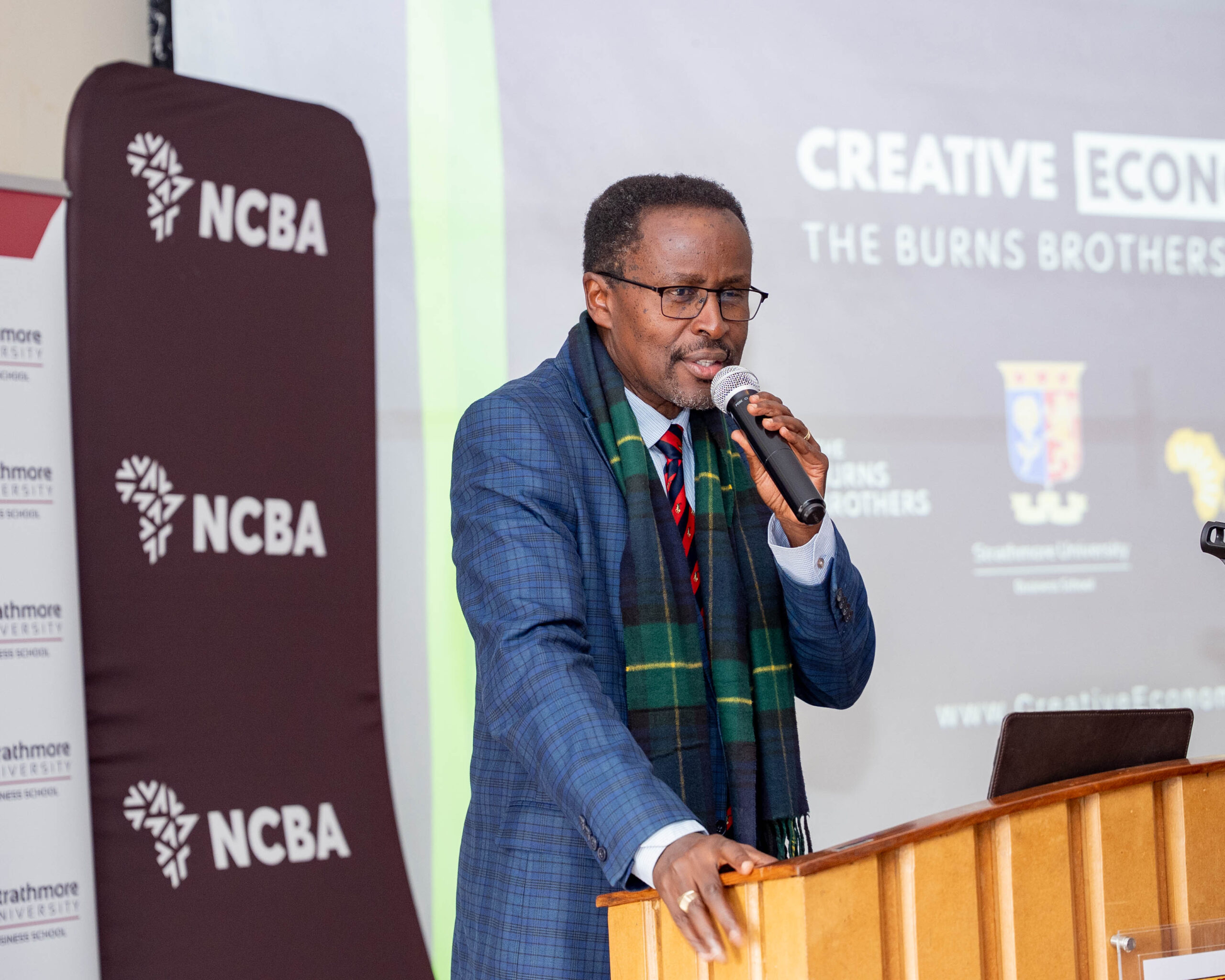
Recalling his own experience, Mwangi said he had once aspired to become an actor but was discouraged because creative careers were not considered viable at the time.
“Today, the world has changed. We now recognise that young people can succeed in many fields beyond the traditional professions. We believe Africa can become the world’s leading continent because we are possibility thinkers. The word ‘impossible’ should not be part of our vocabulary,” he said.
Mwangi said Africa’s creative industries remain among the continent’s most underdeveloped yet high-potential sectors, making investment in education, innovation and collaboration essential to unlocking opportunities for millions of young people.
He said the Business School’s partnership in the Creative Economy Africa Institute reflects its commitment to developing ethical and transformational leaders while connecting education with industry to nurture the next generation of creative entrepreneurs.
Beyond training, he said, the initiative creates a platform for research, thought leadership, collaboration and innovation, giving young creatives access to the knowledge, networks and opportunities they need to build sustainable businesses while restoring hope for the future.
A Business Mindset for Creators
Sharing the vision behind the initiative, Mike Burns, partner at The Burns Brothers, said Creative Economy 101 is the inaugural programme of the Creative Economy Africa Institute, established in partnership with Strathmore University Business School to bridge the gap between creativity and commerce.
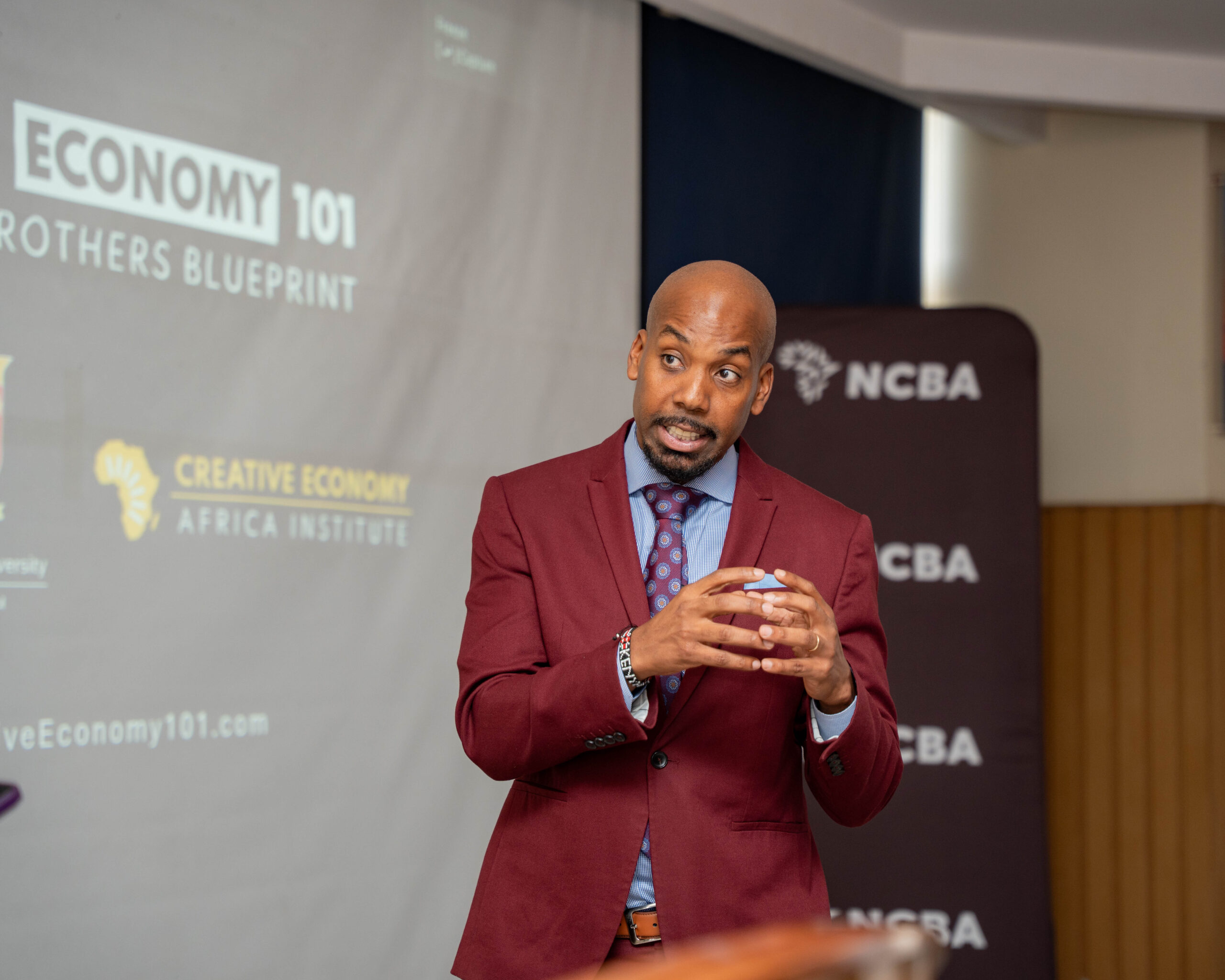
He said the Institute was founded with a long-term vision of positioning Africa as a global leader in creative enterprise while helping unlock one million jobs across the continent. Creative Economy 101, he added, marks the first step in that journey by helping creators see themselves not only as talented individuals but also as businesses capable of generating sustainable value.
“The creative economy is much bigger than talent,” Burns said. “Without infrastructure, distribution platforms, strong intellectual property protection, sound business skills and supportive policies, creators cannot fully realise their potential.”
The programme is built around six core pillars that underpin successful creative economies around the world: talent, infrastructure, platforms, intellectual property, business mindset and policy. While talent remains essential, Burns said, it is only one part of the broader ecosystem needed for creators to thrive.
Burns said Africa’s greatest challenge is converting creativity into commercially viable enterprises. Although the global creative economy is worth trillions of dollars, the continent has yet to capture its full share because many creators lack the systems, networks and business support needed to scale their work.
He added that the self-paced, avatar-based learning platform was intentionally designed to be accessible to creators of all ages and can easily be translated into multiple languages, making it scalable across Kenya and eventually the rest of Africa.
Burns said achieving the Institute’s vision will require governments, universities, financial institutions, the private sector and creators to work from a shared framework that encourages investment, innovation and job creation across the continent.
“What you’ve been doing is amazing. Don’t stop, but always be willing to learn and look at things differently,” he said. “Don’t reach a point where you believe you’ve figured everything out. There is always more you can do to maximize, accelerate and grow.”
Expressing confidence in the initiative’s future, Burns said Creative Economy 101 is only the beginning of a broader movement to equip creators with the knowledge, networks and confidence to build resilient enterprises, shape Africa’s stories and contribute to the Institute’s vision of unlocking one million jobs across the continent.