|
Getting your Trinity Audio player ready...
|
By Lenah Bosibori
Nachukui, Turkana- In 2022, a severe drought hit Turkana North, causing the pasture to completely disappear. Adhering to the traditional pastoralist lifestyle of migrating with animals to find water and grazing fields, Akiru Lele’s husband departed from their home in Karibae village, situated close to the Kenya-Ethiopia border, leading the family’s livestock in a quest for grass and water.
As the drought worsened and pasture disappeared, the struggle for survival intensified. Herders from different areas began to fight over the same small patches of grass and water. To save their animals, the family was forced to move closer to the Ethiopian border.
There, Turkana pastoralists had to share grazing lands with the neighboring Dasanach community, also known as Merille, it was during this period of growing tension over pasture and water that Lele’s husband was killed during a raid, according to the family.
“Losing my husband changed everything,” Lele said. “He was my partner, the family’s provider, and someone I depended on for support. After his death, I had to carry the responsibility of raising the children and providing for them on my own. It was one of the most painful experiences of my life.”
According to Kenya Meteorological Department’s ‘State of the Climate Kenya 2023’ Five consecutive failed rainy seasons (October 2020–December 2022) left much of Kenya’s arid and semi-arid lands (ASALs) without sufficient rainfall, devastating crops, pasture, and water sources. State of The Climate Kenya 2023
The Deadly Cost of Scarce Resources
For 14 years, Lele and her husband had depended on pastoralism to raise their six children. Their cattle, goats, sheep, donkeys and camels provided food, income, transport and security. The animals helped pay school fees and carried the family through hard seasons.
“When our herd was taken, I felt devastated,” Lele said. “The animals were our livelihood and our only source of income. It felt like we had lost not just our wealth, but also our hope for the future. I worried constantly about how I would feed and educate my children.”
Following her husband’s death, Lele’s brother, Francis Angole, took her and her six children all under age 12 into his home at Nachukui village, assuming responsibility for their care and support in addition to his own six and one adopted son.
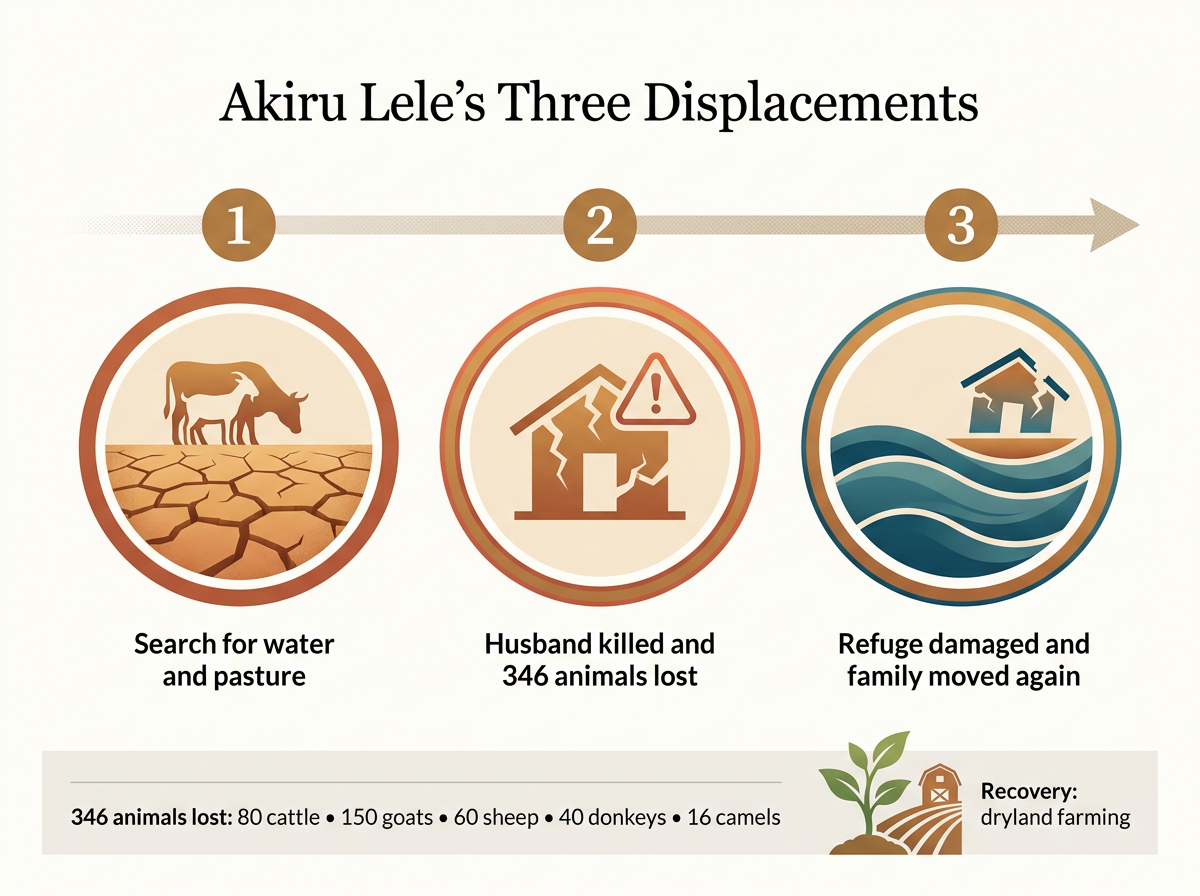
“My sister lost 346 animals, 80 cattle, 150 goats, 60 sheep, 40 donkeys and 16 camels,” said Angole. “Everything was taken. For a pastoralist family, that is the collapse of an entire livelihood in a single day.”
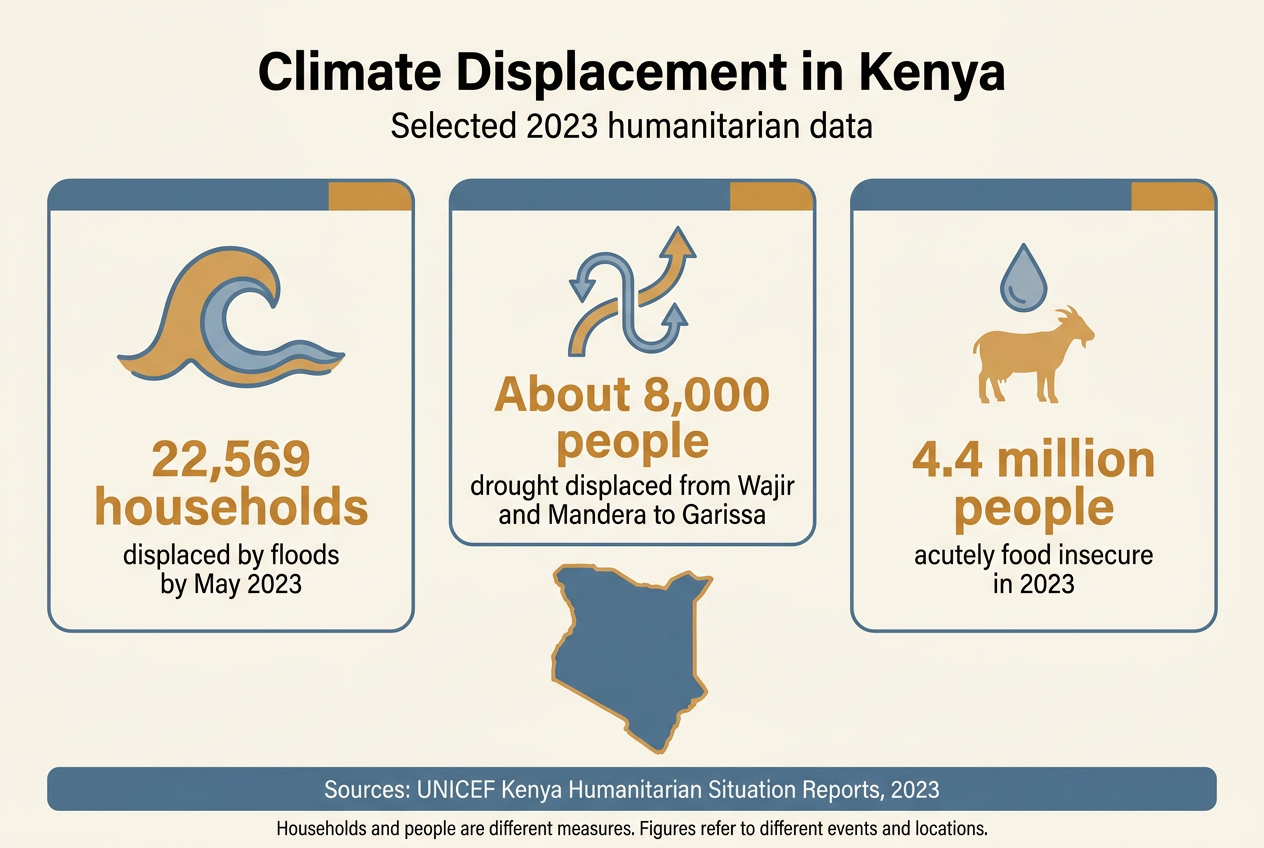
According to UNICEF, the 2022 drought was among Kenya’s worst in decades. After five consecutive failed rainy seasons, more than 4.4 million people needed humanitarian assistance. The drought killed livestock, dried up water sources and increased competition for shrinking pasture across Kenya’s dry and semi dry regions. Drought Flash Update No. 06 Situation in Numbers UNICEF’s Response and Funding Status
Lele found safety for a few months until another tragedy struck. Her brother, Angole, relied on fishing in Lake Turkana, but as the water rose, it swallowed the shoreline and reached their village. Strong winds blowing from the lake eventually ripped the roof off his house, leaving now two families homeless.
“The rising lake waters reached the place we had taken refuge in, destroying our shelter and forcing us to move once again,” Lele said. “We lost what little we had managed to rebuild, and each displacement made life even harder.”
Lele’s life has been shaped by three connected crises. Drought forced her family to search for pasture. Conflict took her husband and livestock. Rising water disrupted the refuge she found near Lake Turkana.
Using his savings, Angole relocated the family to higher, safer ground, where he rebuilt their home. But for families in Turkana North, rebuilding has become a recurring reality. Climate change is no longer a distant threat, it is uprooting communities, intensifying conflicts over scarce resources, destroying livelihoods, and leaving lasting emotional scars on those who survive
The irony is painful. Drought is drying up water and pasture for pastoralists, while the rising waters of Lake Turkana are flooding homes and making fishing harder.
As the lake rose, fish moved towards shallow waters near the Kenya Ethiopia border. But many fishers avoided the area because of recurring conflict with the Dasanach community.
“We decided not to go that far,” Angole said. “The long history of conflict, and the trauma those attacks caused our family, made it too dangerous.”
A Regional Crisis of Repeated Shocks
Dr. Paulino Omoj Omay, a climatologist at the Intergovernmental Authority on Development, IGAD Climate Prediction and Applications Centre, said in a webinar that Eastern Africa is facing increasingly frequent and severe climate extremes, including droughts, floods, heatwaves, environmental degradation and desertification.
“Our region is experiencing repeated climate shocks,” Dr. Omay said. “We move from floods to drought, and sometimes drought follows flooding after only a short time. These extreme events are increasing exposure and vulnerability across the region.”
He said floods and droughts affect nearly every part of life because most economic activities in the region depend on the climate. “Communities rely on farming, livestock keeping, fishing and natural resources,” he said. “All of these are highly affected by changes in rainfall and temperature.”
Across the IGAD region, millions of livestock died during the 2022 drought as families searched for food, water and pasture. For many pastoralist communities, the loss of animals meant the loss of their main source of survival.
“Economic losses include damage to crops, livestock and infrastructure. But there are also losses that cannot easily be counted in money, including loss of life, displacement, mental distress, biodiversity loss and the loss of cultural heritage,” adds Dr. Omay.
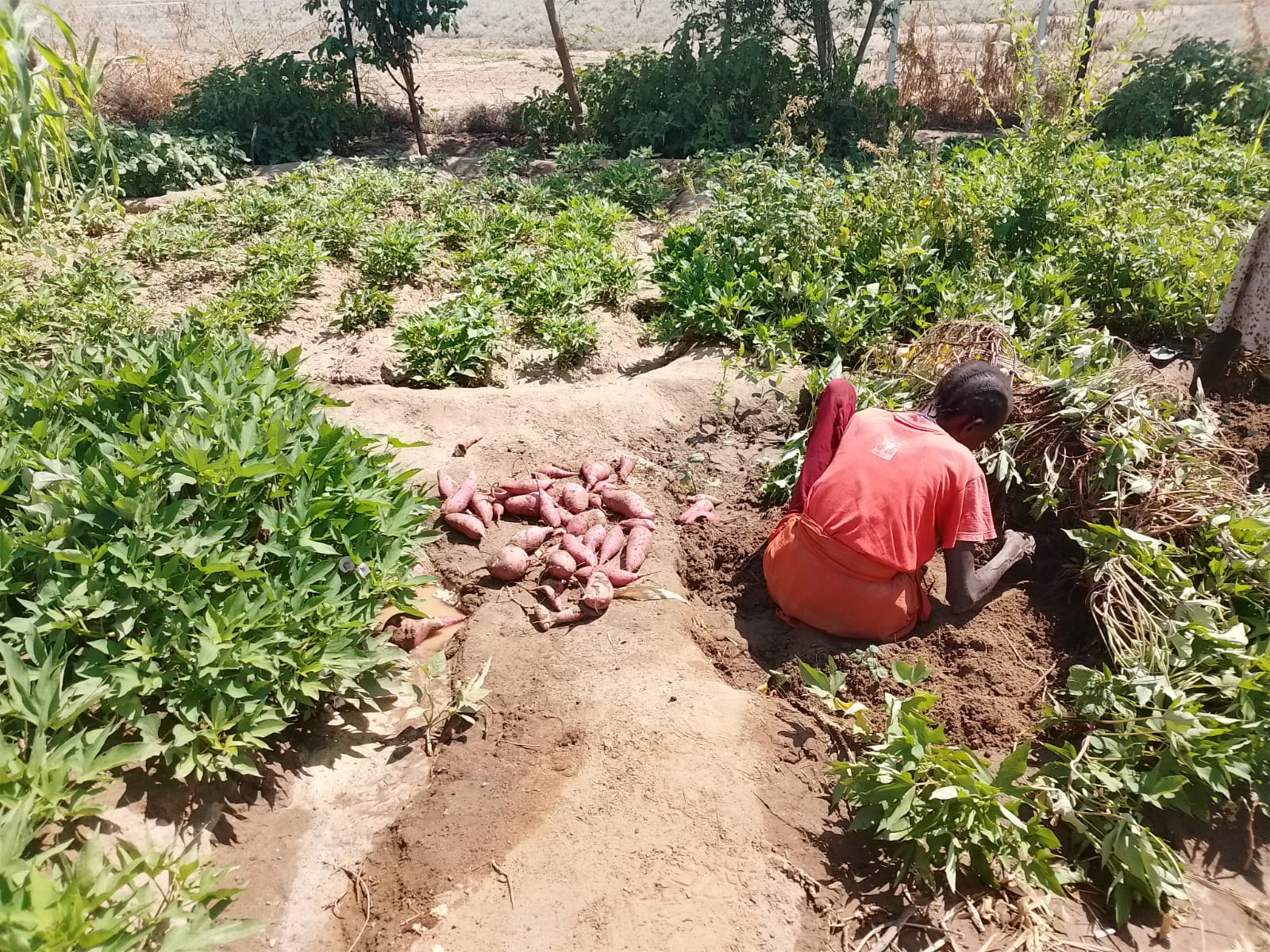
Dr Omay emphasized that taking timely action today is essential to preventing greater losses in the future adding that early warning is important, but it must lead to preparedness and action.
“At ICPAC, we share seasonal forecasts, climate outlooks and drought monitoring reports every week, every 10 days, every month and every season,” he said. “The aim is to help governments, humanitarian agencies and communities understand the risks early and prepare before disaster strikes.”
“Early warning must lead to early action,” Dr Omay added. “Forecasts should not only tell us that floods or drought are coming. They should help us protect lives, safeguard livelihoods and reduce suffering.”
For Lele, the cost of the climate crisis cannot be measured only in his stolen animals, flooded homes or empty fishing nets. It is also carried in grief, hunger and the fear of what comes next.
The Hidden Cost of Climate Loss
Angole said the loss of her husband, livestock and independence deeply affected Lele. Struggling with grief and the burden of raising six children alone with no proper home, she sometimes turned to alcohol.
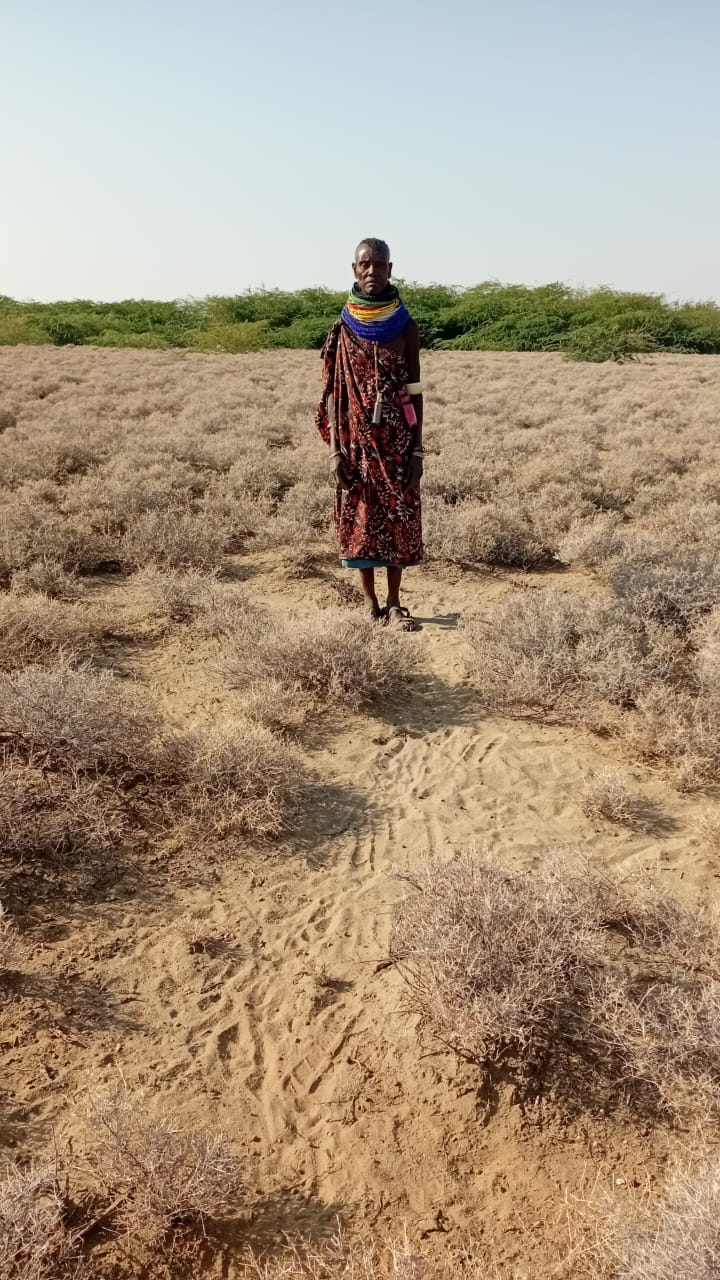
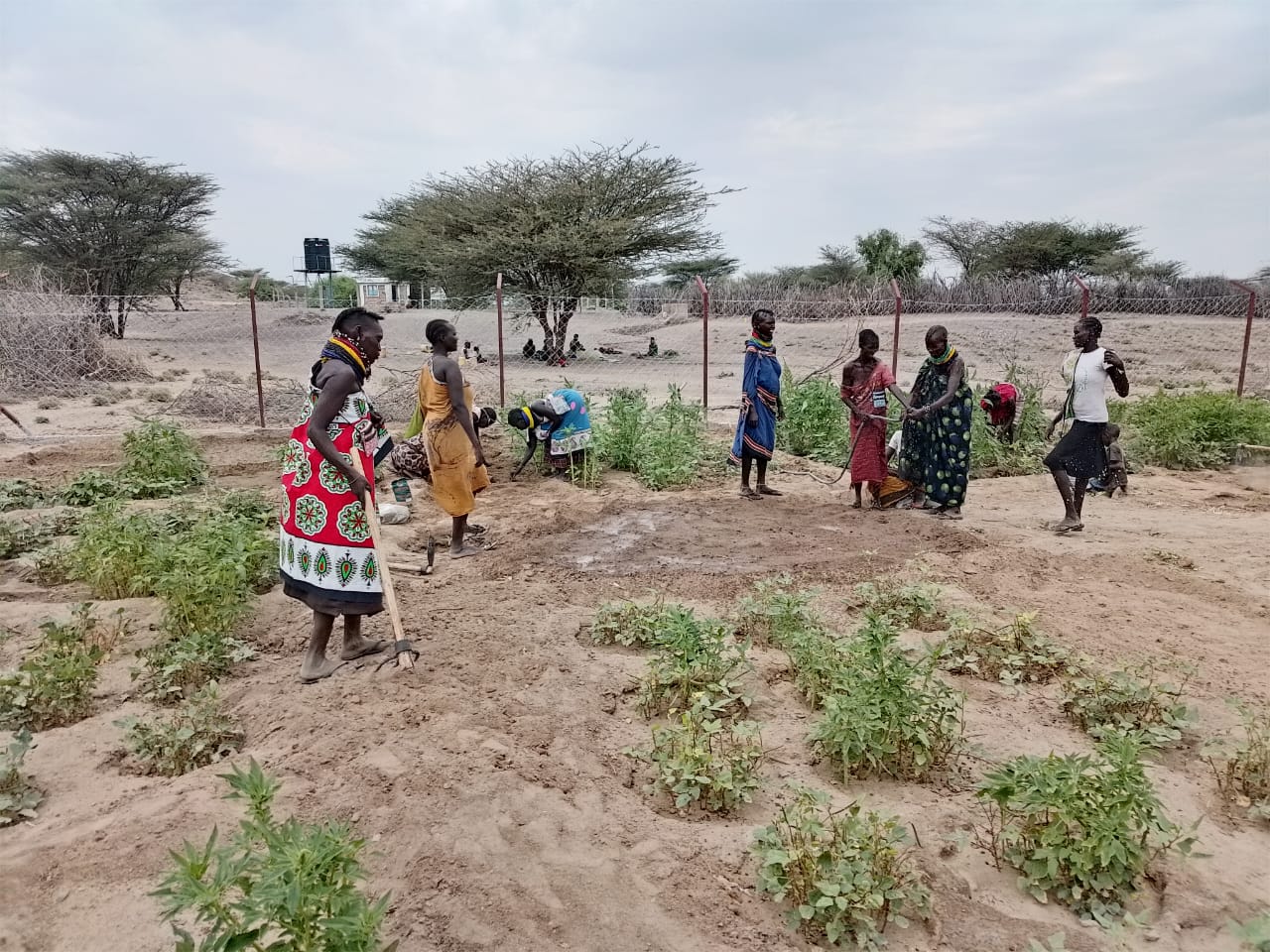
Angole, who founded Green Turkana Community Based Organization, later started a small dryland farm with support from the African Population and Health Research Center (APHRC). Through training from the organization, he learned how to grow organic crops that use locally available fertilizer.
He brought Lele into the farm to help her earn an income. She now grows and sells onions, sweet potatoes and other produce. The money helps her buy food and support her children’s education.
But Angole says the grief of losing her husband and livelihood still affects her. “When she gets money from selling onions or sweet potatoes, it becomes hard for her to divide it among family needs,” Angole said. “Sometimes she drinks because she wants to forget all the problems.”
It is a heavy burden that Angole has carried alone. He is now caring for Lele’s six children, his own six children, and an adopted child. With some of his children in college, others in high school, and another in primary school, the responsibility of providing for thirteen children is immense.
Angole believes Lele’s experience has exposed a deeper problem in Turkana: silence and stigma around mental health.
“In many villages, people do not understand that mental illness is a health condition that can be treated,” he said. “When they see Lele, they assume she has lost her mind, without knowing that she needs care and support. A woman like her may be judged, mocked or written off instead of being helped.”
He added that because of the ever-changing climate and the stress it causes, Turkana needs psychiatrists. “People need to understand that mental illness is just like any other sickness. If someone is treated well and given proper care, they can recover and lead a normal life,” he said.
His concerns reflect research by the APHRC’s survey conducted in 2024, which found that climate shocks are worsening hunger, poverty and mental health challenges across Kenya’s drylands.
The research, carried out under the Visibilize for Climate Action project, examined the effects of climate change on nutrition and mental health in Turkana, Samburu and Laikipia counties.
Esther Anono, a research officer at the center, said the project sought to understand how communities are experiencing climate shocks and how they are coping. “We wanted to understand how communities are living with climate impacts and what they are currently doing to adapt,” she said.
Researchers surveyed households in Turkana North and parts of Turkana Central, Samburu East and Laikipia West and found that more than 97 percent of households in Turkana reported experiencing at least one major climate shock in the previous year (2023).
“In simple terms, at least eight out of every 10 households have experienced a climate shock in the last year,” Anono said. The study also found that nearly 97 percent of households in Turkana do not have enough food to eat.
“We have been suffering from hunger, malnutrition and stress without knowing the real cause,” said Angole. “It is clear that climate change is behind many of the problems affecting Turkana.”
Farming a Way Forward
While Lele continues to live with grief and trauma, the demonstration farm has given her a way to earn an income and support her children. Every morning, she joins other women to grow onions, sweet potatoes and other crops. The farm trains residents in dryland farming, agroecology and Farming God’s Way.
“Farming has become my lifeline,” Lele said. “It is how I feed my family, earn a small income and regain some dignity. Although farming is becoming more difficult because of changing weather patterns, I continue because it is the only reliable way I know to provide for my children.”
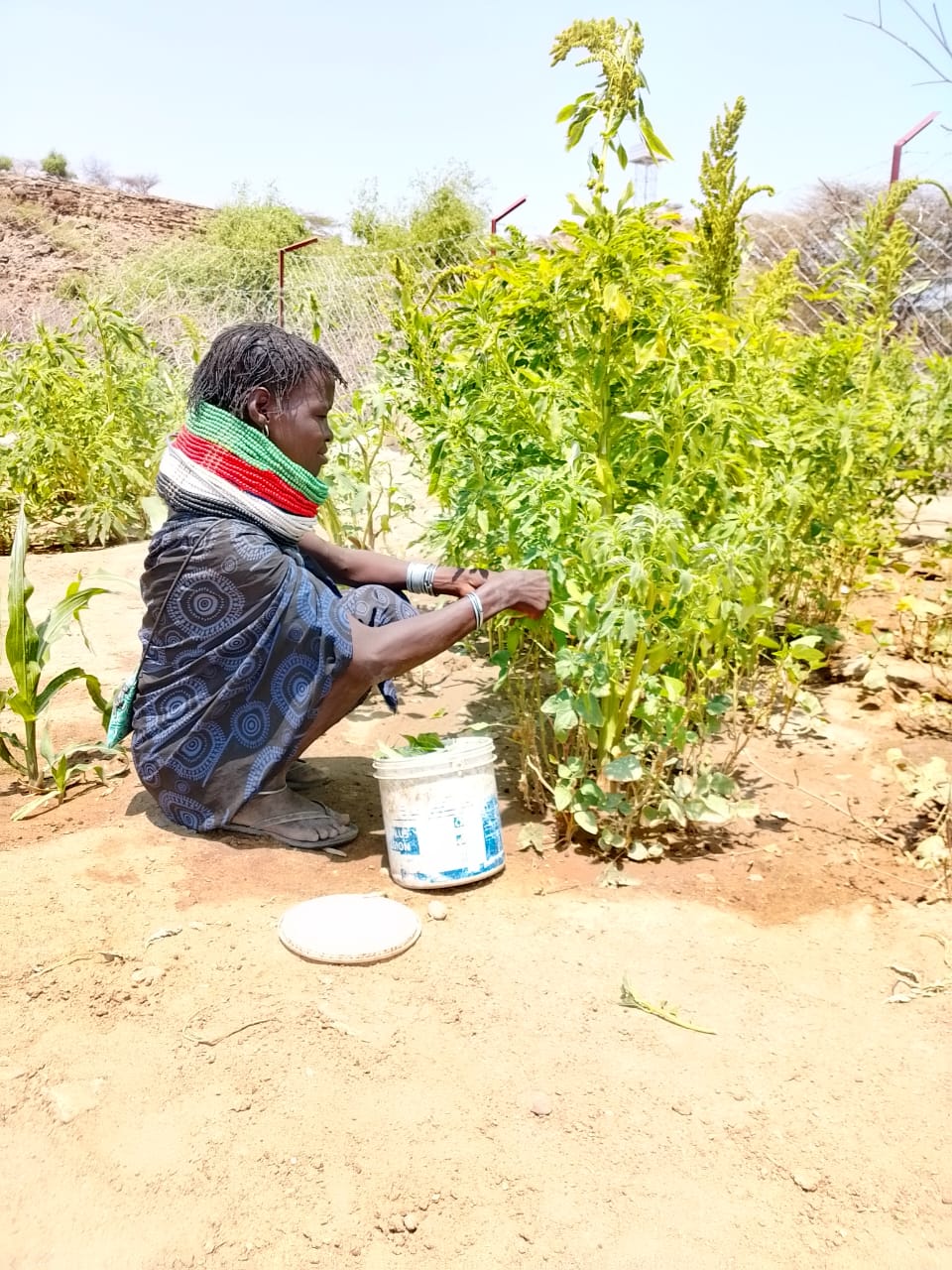
The crops can be eaten at home or sold for a small income. But the farm is only one and a half acres, while the needs of the community are far greater.
“My farm is only one and a half acres,” Angole said. “The irrigation system sometimes fails, and when I hire workers, I have to wait until the crops are ready to harvest and sell before I can pay them.”
He adds that the farm has given displaced and struggling families a chance to learn a new skill. But training people who are hungry remains difficult.
“It is hard to run this model farm and train people without help,” Angole said. “Some people come to work for two or three days, but then they stop because they have no food. To have the time and energy to work on the farm, these families need support with food and other basic needs.”
The community has seen what the small farm can produce and has offered more land for expansion. But Angole says he cannot take the land without financial support. “I cannot afford all that,” he said. “I do not have the finances.”
That is the hard truth about climate adaptation in Turkana. Communities have land, labour, knowledge and a strong desire to rebuild. What they lack is investment.
Lele’s story is not only one of personal loss. It is a warning from the front line of the climate crisis in the IGAD region.
“My greatest dream is for my children to get a good education and have better opportunities than I did,” Lele said. “I want them to grow up healthy, become self-reliant and build lives where they do not have to endure the hardships that I have faced.”
In the drylands of the Horn of Africa, climate change is not an argument about the future. It is a widow walking with six children towards an uncertain lake. It is a fisher forced to choose between safety and a catch. It is a small farm trying to feed a hungry community.
Resilience should not mean asking traumatized families to endure repeated loss in silence. It should mean mental health care reaching villages such as Nachukui. It should mean support for women who lose livelihoods during climate linked conflict. It should mean peacebuilding across borders where water and pasture are disappearing.
And it should mean investment in local solutions that help families rebuild before displacement becomes permanent. “People suffer and people die because the rest of the world is not aware of what is happening in some areas,” Angole said. “Help us amplify this story so many people can know.”
In one small farm in Nachukui, the seeds are more than food. They are a small sign that after drought, conflict and displacement, life can still take root again.