|
Getting your Trinity Audio player ready...
|
Omondi Rodgers
Busia—A group of youth from Busia County and neighboring counties has received training on value-added equipment to promote climate-smart agriculture, increase incomes, and create employment opportunities for young people.
The programme, which brought together participants from Busia, Bungoma, Migori, and Homa Bay counties, focused on equipping youth with skills and machinery to process agricultural products into higher-value commodities.
The initiative funded by the World Food Programme through the Cereal Growers Association targets crops that are resilient to climate change and can withstand unpredictable weather conditions.
Speaking during the training in Busia, Geoffrey Wanjala of the Cereal Growers Association (CGA) said the initiative seeks to change the perception that agriculture is limited to crop production by exposing young people to opportunities in agribusiness and value addition.
“Training youth and equipping them with machines for value addition encourages them to embrace agriculture as a source of employment and income. Agriculture offers numerous opportunities beyond farming, and value addition is one of the areas with great potential for wealth creation,” said Wanjala.
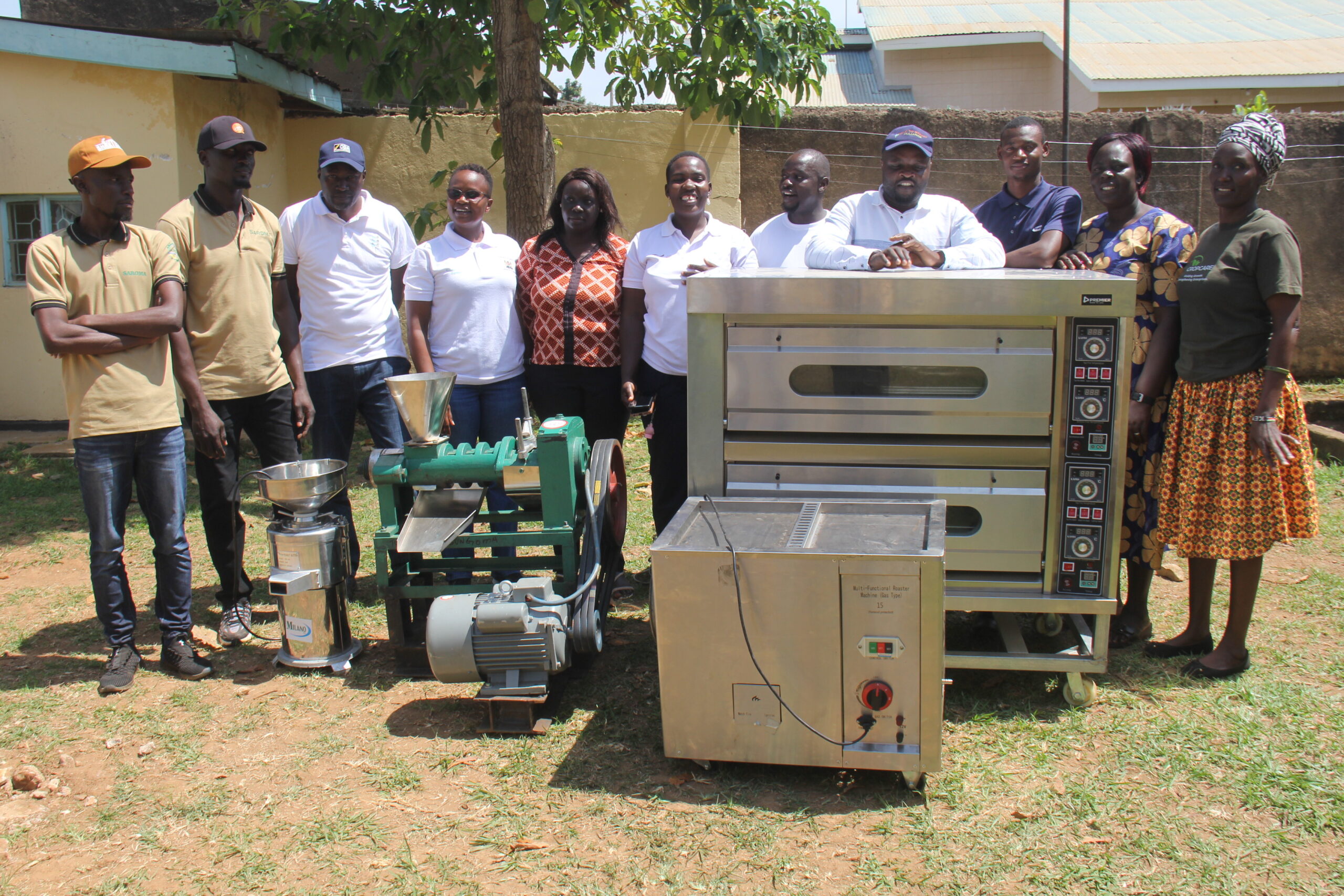
The beneficiaries received various machines, including peanut butter makers, peanut roasters, oil extractors, cassava chippers, solar dryers, and soya beverage processors. Wanjala noted that the equipment will enable the youth to process their produce locally, increase profits, and access wider markets.
He said climate change has necessitated a shift towards climate-smart agriculture due to declining crop yields and increasing losses among farmers.
“Due to the shift, the programme is promoting conservation agriculture practices such as minimal tillage, crop rotation, and crop residue retention to improve soil health and enhance productivity.” He said
Wanjala further urged farmers to adopt climate-resilient and early-maturing crops such as soybeans, groundnuts, sorghum, and cassava, which are better suited to changing weather patterns. He added that the organization is also helping farmers access reliable markets for their produce.
Greenwells Agriculture representative Charles Odhiambo said the changing soil conditions and emergence of harmful weeds have significantly affected maize production, creating the need for farmers to diversify into alternative crops.
“Our focus is to provide markets for products such as soybeans, sorghum, and eggs through aggregation centers. We are encouraging farmers to embrace soybean farming because it performs better under the current soil conditions and climate challenges,” he said.
Participants hailed the initiative, saying value addition has transformed their livelihoods and created employment opportunities for other young people.
Lidya Nasimiyu from Bungoma County said processing groundnuts into peanut products has enabled her to improve her income and employ six youths.
She noted that many farmers have suffered losses due to erratic weather patterns, making climate-resilient crops a better option.
“I cultivate six acres of groundnuts and process them into peanut products. Value addition has changed my life and helped me create jobs for other young people in my community,” she said.
Lukas Olewe, an agribusiness entrepreneur from Homa Bay County, said value addition has expanded markets for cassava and soybean products while increasing their shelf life. He noted that the processed products can be sold to animal feed manufacturers and food processors, creating additional income streams for farmers.
“Cassava and sorghum have become increasingly popular because they can withstand prolonged dry spells and low rainfall, unlike many traditional crops. Promoting such crops is key to enhancing food security and helping communities adapt to the effects of climate change.” Olewe said