|
Getting your Trinity Audio player ready...
|
By Lenah Bosibori
Nairobi, Kenya: As Africa grapples with the twin crises of biodiversity loss and food insecurity, experts from across the continent have gathered in Kenya to champion agroecology as a pathway to sustainable food systems and environmental resilience.
The workshop aims to bridge a longstanding gap between conservation and food systems approaches in Africa. While initiatives promoting agroforestry, sustainable water management, and human–wildlife coexistence have gained momentum, agroecology remains largely absent from key conservation policies, development agendas and funding frameworks.
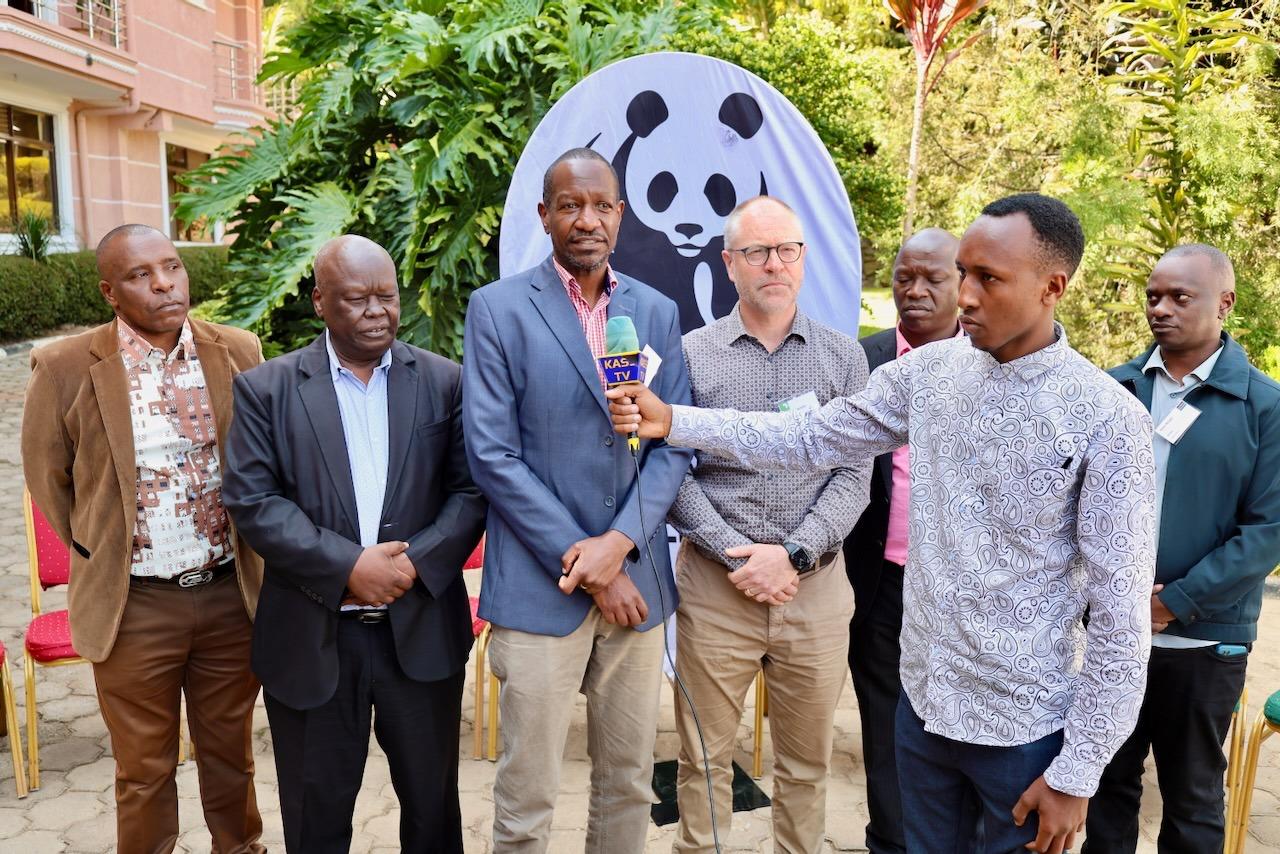
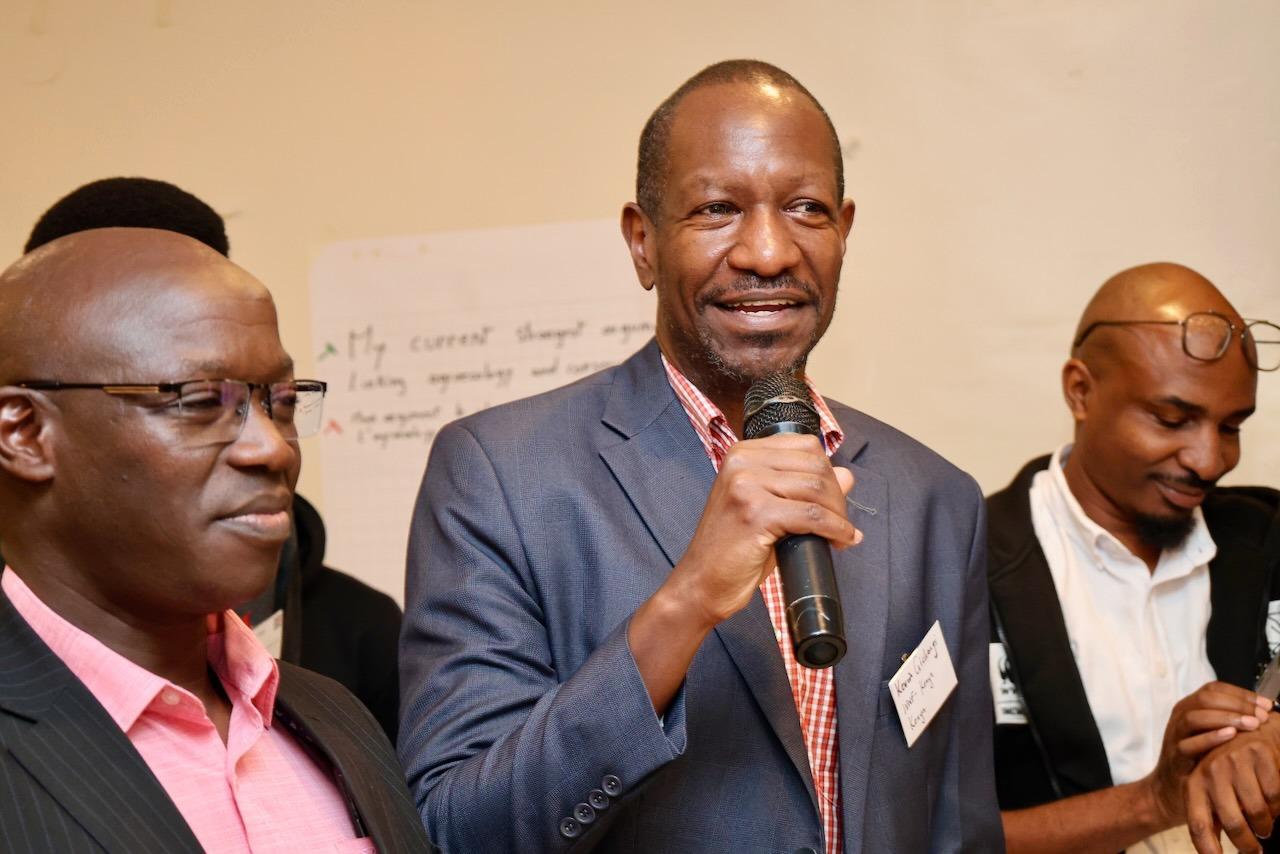
Speaking during the workshop, Kevin Gichangi World Wide Fund (WWF-Kenya) Rift Lakes Manager said Africa faces interconnected challenges that cannot be solved in isolation. “Climate change, biodiversity loss, land degradation, and food insecurity require integrated solutions that support both people and nature,” he said.
The workshop happening in Bomet county brought together more than 30 conservation practitioners, researchers, policymakers, and agroecology experts from across Central, Eastern, and Southern Africa for the Africa Agroecology Regional Exchange.
The three-day learning workshop, jointly organized by WWF and the Biovision Foundation under the Agroecology for Life Initiative, aims to strengthen collaboration and explore how farming systems can simultaneously support biodiversity conservation and livelihoods.
Participants will build a shared understanding of agroecology and its alignment with frameworks such as the Kunming–Montreal Global Biodiversity Framework (Target 10), nature-positive production and regenerative agriculture.
According to Gichangi, agroecology offers a practical pathway to restore ecosystems while enabling communities to produce food, strengthen livelihoods, and build resilience to climate shocks. “Agroecology presents us with a unique opportunity to produce food in ways that restore nature, strengthen communities, and build resilience to climate change,” he said.
Beyond Farming
While often described as a farming approach, speakers repeatedly emphasized that agroecology is much more than agriculture.
Representatives from WWF’s Global Food Practice and the Biovision Foundation described agroecology as a conservation strategy capable of addressing food security, restoring degraded landscapes, and protecting biodiversity.
The discussion, they noted, has moved beyond proving whether agroecology works. “The question now is not whether agroecology works,” one participant noted. “The challenge is how to scale it and integrate it into broader conservation and development agendas.”
For decades, conventional agriculture has increased food production globally, but often at significant environmental cost. Soil degradation, biodiversity loss, water pollution, and increasing dependence on external inputs have become major concerns.
 According to agroecology expert Eliane Steiner of the Biovision Foundation, agroecology seeks to reverse that trend by integrating ecological principles into food production systems.
“Agroecological systems promote biodiversity at genetic, species, and ecosystem levels,” she explained. “They improve resilience, nutrition, food security, and farmer incomes while supporting wildlife habitats and ecosystem services.”
Rather than treating conservation and agriculture as separate sectors, Steiner argued that they should be viewed as complementary approaches.
Learning From Communities
For Reguli Marandu, an agroecology expert with WWF Tanzania, one of the most important lessons is that agroecology is not entirely new. Many African communities, he said, have practiced agroecological principles for generations through indigenous knowledge systems, traditional farming methods, and cultural practices.
“When we visit communities, we often find diverse farming systems where crops, livestock, forests, and culture are interconnected,” Marandu said.
Instead of introducing entirely new approaches, he argued that development practitioners should build on what communities already know.
“The goal should be to strengthen and scale what is already working rather than replacing it entirely,” he said.
However, he cautioned against romanticizing traditional farming systems. The real challenge, he noted, is making sustainable farming economically attractive, especially for young people.
“Many young people are moving away from farming because they do not see sufficient economic returns,” he said. “If agroecology is to succeed, it must demonstrate that sustainable farming can also be profitable.”
Market access remains one of the biggest obstacles facing agroecological producers. While many farmers produce healthy and environmentally friendly food, they often struggle to find reliable markets.
As a result, farmers may reserve healthier food for household consumption while producing commercially viable crops using high external inputs for sale.
Marandu called for stronger links between farmers, local businesses, tourism operators, and consumers to create local value chains that reward sustainable production.
Another recurring theme throughout the workshop was the need for a shared understanding of agroecology. Ayesiga Buberwa of Iles de Paix Tanzania noted that different organizations often use different definitions and approaches, leading to fragmented implementation.
To address this, stakeholders in Tanzania worked together to develop a national agroecology strategy that aligns concepts such as ecological agriculture, organic farming, regenerative agriculture, and nature-based solutions under a common framework.
“Coordination is critical,” she said. “Organizations may focus on specific aspects of agroecology while overlooking its broader principles and objectives.”
Similarly, Ottilia Mashingaidze of TSURO Zimbabwe stressed the importance of communication. “Stakeholders need to understand not only agroecology itself but also how to communicate it effectively,” she said.
Drawing from experiences in Zimbabwe, she highlighted how training extension officers helped address confusion between conventional agriculture and agroecology, enabling them to become effective advocates within their communities.
“Building awareness and capacity among extension officers, producers, policymakers, and other stakeholders is essential if we want to increase adoption,” she said.
Policy and Partnerships Matter
Speakers also emphasized that scaling agroecology will require strong policy support and investment. Representing the County Government, Dr. Kibet Sitienei reaffirmed the county’s commitment to environmentally friendly farming practices and sustainable land management.
Bomet Deputy Governor Shadrack David Rotich said county governments have a critical role in developing policies and allocating resources that support agroecology. “Agroecology should be supported through policy frameworks, legislation, and budget allocations,” he said.
He called for stronger partnerships among governments, communities, civil society organizations, researchers, and development partners. Participants agreed that agroecology cannot be scaled by any single institution acting alone. Partnerships, financing, knowledge exchange, and supportive policies will all be necessary to move from isolated projects to systemic change.
Throughout the workshop, participants explored how agroecology aligns with global frameworks such as the Kunming-Montreal Global Biodiversity Framework, nature-positive production systems, and regenerative agriculture.
The exchange provided opportunities for peer learning, practical case studies, and discussions on integrating agroecological approaches into conservation programmes across Africa.
By the close of the opening sessions, one message had emerged clearly: agriculture and conservation can no longer be treated as separate conversations.
For participants gathered in Bomet, agroecology offers an opportunity to produce food while restoring ecosystems, protecting biodiversity, and strengthening livelihoods.
As Africa searches for solutions to some of its most pressing environmental and development challenges, advocates believe that farming with nature rather than against it may be one of the continent’s most powerful tools.