|
Getting your Trinity Audio player ready...
|
By Winnie Kamau
BUNIA, Democratic Republic of Congo (DRC): Two months after the Ebola outbreak was officially declared in the DRC and Uganda, with more than 2,000 confirmed cases and 750 deaths.
Médecins Sans Frontières (MSF) is calling for an urgent scale-up of the medical response. The epidemic continues to spread at an unprecedented pace into new areas, while efforts to control it remain insufficient.
“Every delay costs lives. We are still chasing the outbreak instead of staying ahead of it. More people become infected, more families lose loved ones, and the epidemic becomes harder to contain. We need stronger, more coordinated international action to move faster and improve access to both Ebola care and other essential health services,” says Trish Newport, MSF Emergency Program Manager.
A record-breaking Epidemic
The current Bundibugyo virus outbreak has quickly escalated into the third-largest and fastest-growing Ebola epidemic ever recorded within only two months. Over a span of less than five weeks, confirmed cases surged threefold, jumping from 650 to over 2,000 by 12th July.
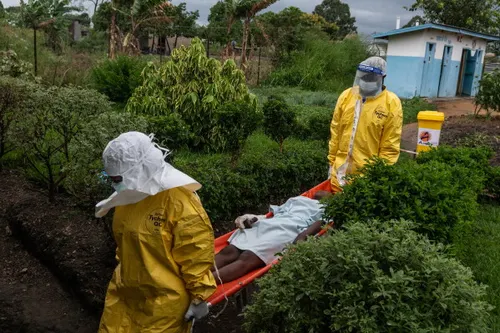
While the death toll spiked more than five times, rising from 130 to upwards of 700. This rapid trajectory has already pushed the case count past half of the total recorded during the 2018–2020 Ebola outbreak in the DRC, which spanned nearly two years.
Two Countries, Two Very Different Pictures
While the situation in Uganda remains stable, the disease continues to expand in eastern DRC. Health authorities report Ituri province remains the epicentre of the outbreak, accounting for 91.1% of confirmed cases and 84.3% of deaths in the DRC roughly 90% of all confirmed cases nationwide.
“In Mongbwalu, we are seeing the deadly human consequences of these gaps every day,” says Ayokunnu Raji, medical doctor and MSF Medical Program Manager.
Adding “At the Ebola Treatment Centre, we continue to see patients arriving in critical condition, little chance of survival. Since MSF started its Ebola response activities, we have treated 57 survivors, but more than 110 patients have died. Increased national and international resources would help prevent further transmission and loss of life.”
North Kivu province has reported the highest provincial case fatality rate (CFR), at 56.8%. Uganda’s outbreak has far been more contained, with 20 confirmed cases, 2 deaths, and a CFR of 10%.
Active contact tracing continues on a large scale in the DRC, with 14,119 contacts currently under follow-up, compared with none in Uganda, underscoring the intensity of ongoing transmission in the affected DRC provinces.
Local Human Impact and Overwhelmed Facilities
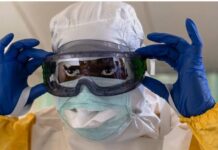
The operational realities on the ground highlight the severe strain on local medical facilities in Ituri province. In Mongbwalu, patients are arriving at the Ebola Treatment Centre (ETC) in critical condition, resulting in more than 110 deaths compared to 57 treated survivors.
Meanwhile, in Bunia, the 90-bed Elikiya Ebola Treatment Centre consistently operates at full capacity, leading many patients to remain at home until a bed becomes available, which drastically decreases their chances of survival due to delayed care.
Overstretched Surveillance and Operational Barriers
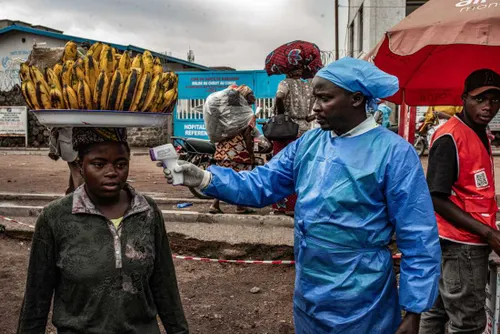
DRC’s overstretched surveillance system is being pushed to its limits by the current Ebola outbreak and multiple concurrent health threats. Controlling the spread of the Bundibugyo virus requires bringing the response closer to communities through enhanced testing, active contact tracing, and engagement.
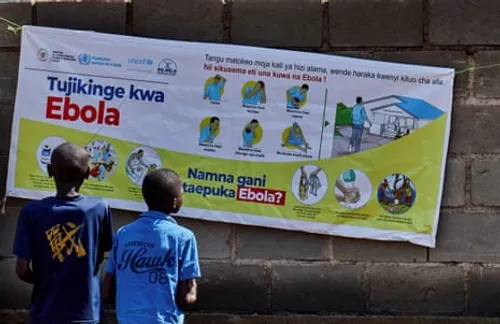
However, response efforts are heavily impeded by movement restrictions, border closures, self-monitoring rules, and administrative measures that delay the deployment and rotation of specialized Ebola personnel.
Compounding Crises and MSF Response Footprint
The outbreak is unfolding alongside active armed conflict, mass displacement, and other major health emergencies, including cholera and malaria, which are expected to worsen with the upcoming rainy season.
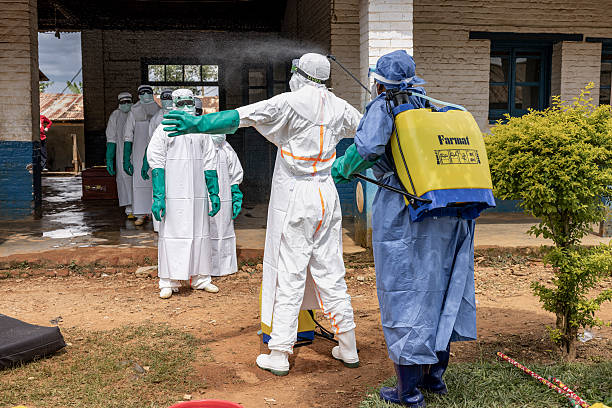
In response, MSF is running seven ETCs and over 15 isolation units across Ituri, North Kivu, South Kivu, and Tshopo provinces, offering a combined capacity of over 430 beds. By mid-July, MSF teams had admitted over 968 patients, confirmed 357 cases, and supported 116 survivors in their recovery.
A Widening Gap in Care
The situation is particularly alarming as the outbreak continues to expand geographically. Limited access to medical care, an overstretched surveillance system, and mounting pressure on treatment centres mean entire communities outside major urban areas remain without adequate support.
MSF urges health authorities and humanitarian actors to quickly increase resources for community engagement, surveillance, testing and diagnosis, patient care, survivor support, and safe burials, while ensuring that other urgent health needs continue to be met.