|
Getting your Trinity Audio player ready...
|
By Victoria Musimbi
Nairobi, Kenya: For many learners in Kenya’s public schools, particularly those in informal settlements and other underserved communities, education is often hindered by a lack of science laboratories, learning equipment, and adequate resources. For girls, the challenge is compounded by period poverty, which forces some to miss classes regularly due to a lack of menstrual hygiene products.
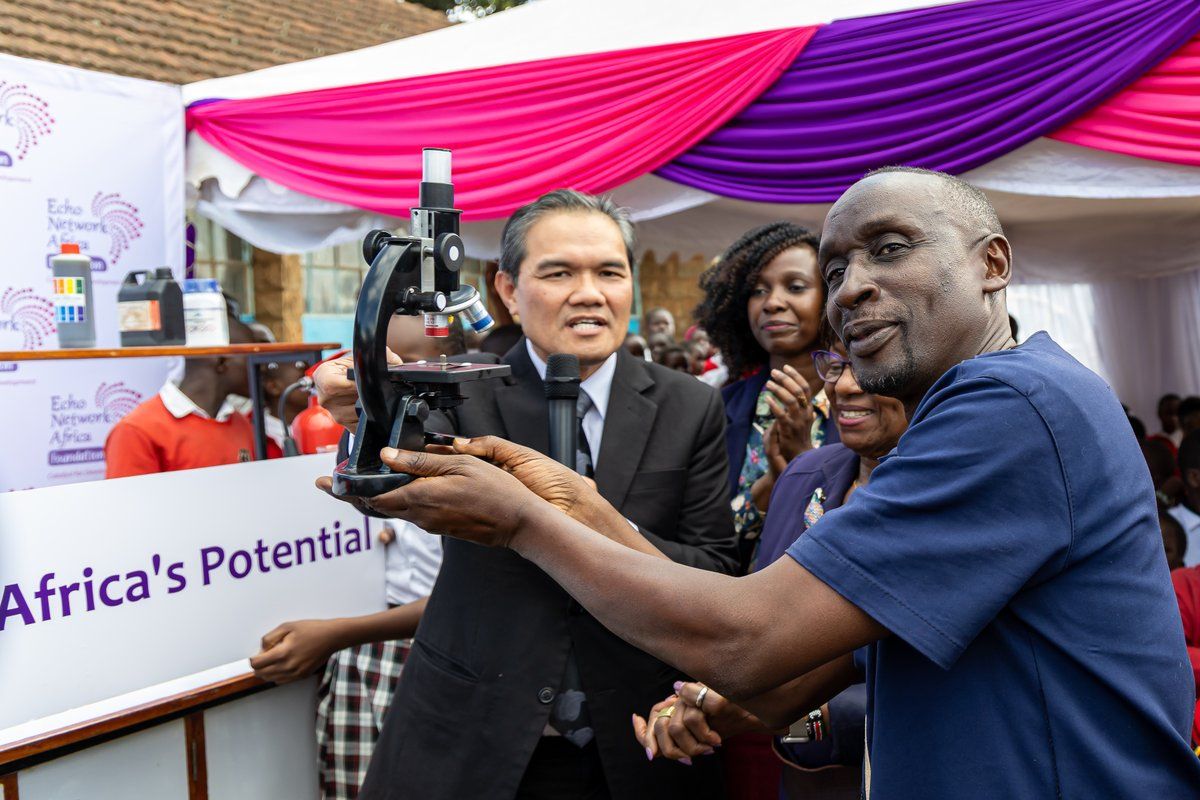
Against this backdrop, global attention on menstrual health provided a timely context for action. On World Menstrual Hygiene Day, learners at Kibera Primary and Junior School received a boost in both science education and menstrual health support through a partnership between the Echo Network Africa Foundation (ENAF) and the Malaysian High Commission.
The initiative saw the donation of a mobile science laboratory and dignity kits aimed at improving access to practical STEM learning and helping girls stay in school during their menstrual periods. At the school, the intervention was welcomed as a timely response to long-standing gaps in science education and menstrual health support.
Bridging Gaps in STEM Education and Menstrual Health
Headteacher Samuel Onyango said the institution serves approximately 1,800 learners, many of whom come from vulnerable households within the informal settlement. He noted that despite steady enrolment, limited resources continue to affect effective teaching and learning, particularly in science subjects that require practical work, as well as girls who struggle to access menstrual hygiene products.
“We have a very large number of learners in this school. Many of them come from families facing significant economic challenges,” he said. “One of the issues we continue to see is that some girls struggle to access sanitary pads. Sometimes we receive support from the ministry or from well-wishers, but it is never enough and often comes only once in a while. When organisations and partners step in to support us, it makes a huge difference because it allows girls to remain in school and continue learning.”
He welcomed the introduction of the mobile science laboratory, saying it would help improve the quality of science instruction by giving learners access to practical experiments that were previously difficult to conduct.
“This mobile laboratory will greatly support our teachers and learners. Science is best understood when students can see, touch and conduct experiments themselves. This facility will make learning more practical and enjoyable for our students.”
Partnerships Driving Inclusive Learning in Public Schools
Speaking during the handover ceremony, ENAF President and Chief Executive Officer Dr. Jennifer Riria said the intervention was designed to bridge persistent inequalities in Kenya’s education system and support schools implementing the Competency-Based Curriculum (CBC).
“We know that schools in this country are going through a very difficult time. Teachers are doing their best to implement the Competency-Based Curriculum, and while nobody is against the curriculum itself, the challenges are immense,” said Dr. Riria.
She noted that disparities in infrastructure, equipment, and learning resources continue to affect learners’ educational outcomes, particularly in public schools serving low-income communities.
“There are significant inequalities among schools in terms of infrastructure, equipment, and learning resources. Some schools have laboratories and adequate facilities, while many others are struggling to provide even the basics. As a community and as a nation, we must come together to bridge these gaps. We cannot leave this responsibility to the government alone. We all have a role to play in ensuring that every child has access to quality education.”
According to Dr. Riria, practical science education remains one of the most affected areas due to resource shortages, making interventions such as mobile science laboratories critical in improving learning outcomes. She added that funding gaps continue to strain schools.
“The capitation allocated to schools is not always sufficient to meet the growing needs of learners. Teachers cannot effectively deliver quality education without adequate resources and proper facilities.”
Dr. Riria said education reforms can only succeed if institutions are adequately supported to implement them effectively. She also spoke about the growing challenge of period poverty, which continues to undermine girls’ education and wellbeing.
“One of the challenges we have encountered in our work is the reality of period poverty. It came as a shock to us to learn that some girls are forced into risky situations simply to access menstrual hygiene products.” She noted that many learners miss up to five days of school every month due to a lack of menstrual hygiene products, affecting attendance, performance, confidence, and overall well-being.
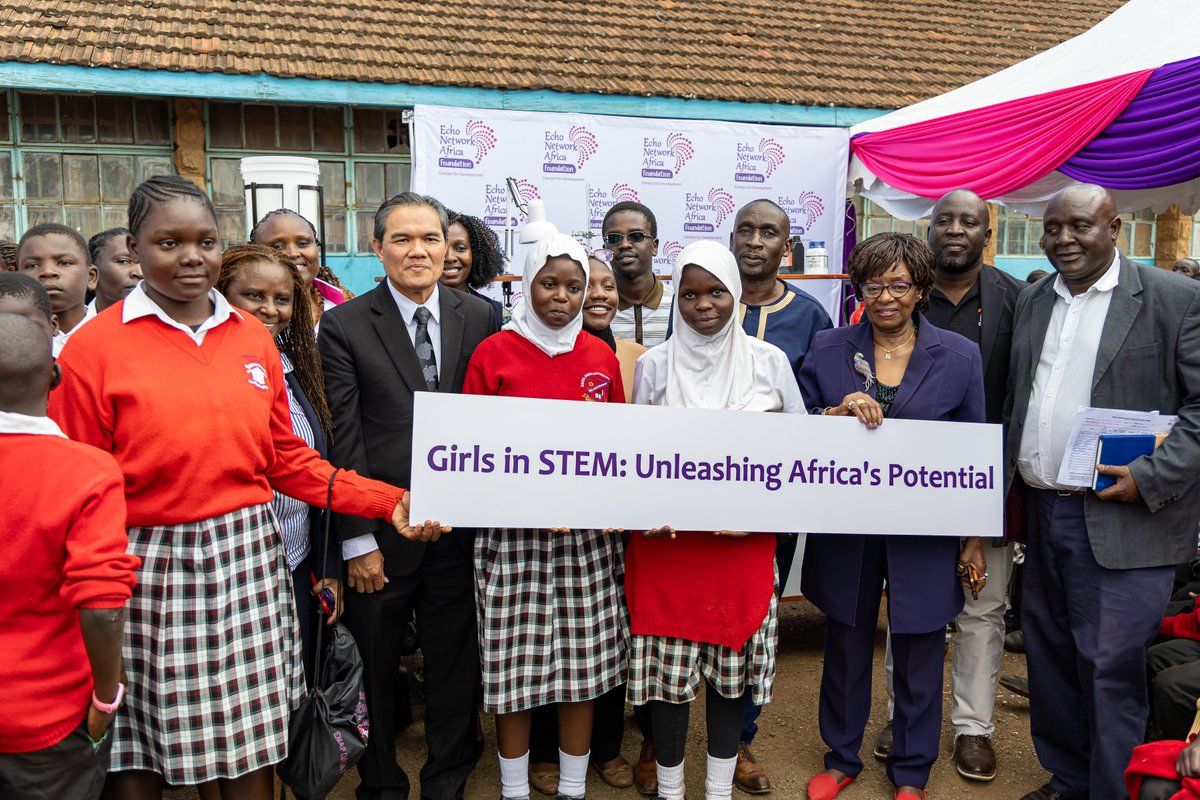
To address this, ENAF developed dignity kits that go beyond sanitary towels. “Through our dignity kits, we provide sanitary towels, soap, undergarments, and other essential hygiene items. Our goal is to ensure that girls stay in school, learn with confidence, and are protected from vulnerabilities associated with period poverty. No girl should miss a science lesson, an examination, or an opportunity to learn because she lacks basic menstrual hygiene products.”
Dr. Riria said the programme has already reached learners in public schools across 14 counties in Kenya, reflecting its expanding impact beyond a single school or region. “We will continue expanding these interventions to underserved communities because every child, regardless of where they live, deserves access to quality education, practical STEM learning opportunities, and the support they need to remain in school and succeed.”
Speaking during the event, Malaysian Ambassador to Kenya Ruzaimi Mohamad said the donation reflects Malaysia’s commitment to supporting education and empowering young people through science and technology.
“Today, we are at Kibera Primary and Junior School, where we are donating a mobile science laboratory for the use of the students,” he said. He noted that the lack of laboratory facilities had limited learners’ ability to fully grasp scientific concepts despite the efforts of teachers. “Previously, they could not have proper science lessons because they did not have a science laboratory that would help them fully understand the science subjects taught by their teachers.”
The ambassador expressed hope that the facility would spark greater interest in science and help learners pursue future careers in STEM fields. “We hope that this donation will help them better understand science, which is very important for students to become successful in the future.” He added that investments in education have the power to transform communities and create opportunities for future generations.
For learners, the mobile laboratory and dignity kits represent more than a donation. They offer an opportunity to learn science through practical experience, remain in school with confidence, and pursue a future where circumstances do not determine the quality of education they receive.