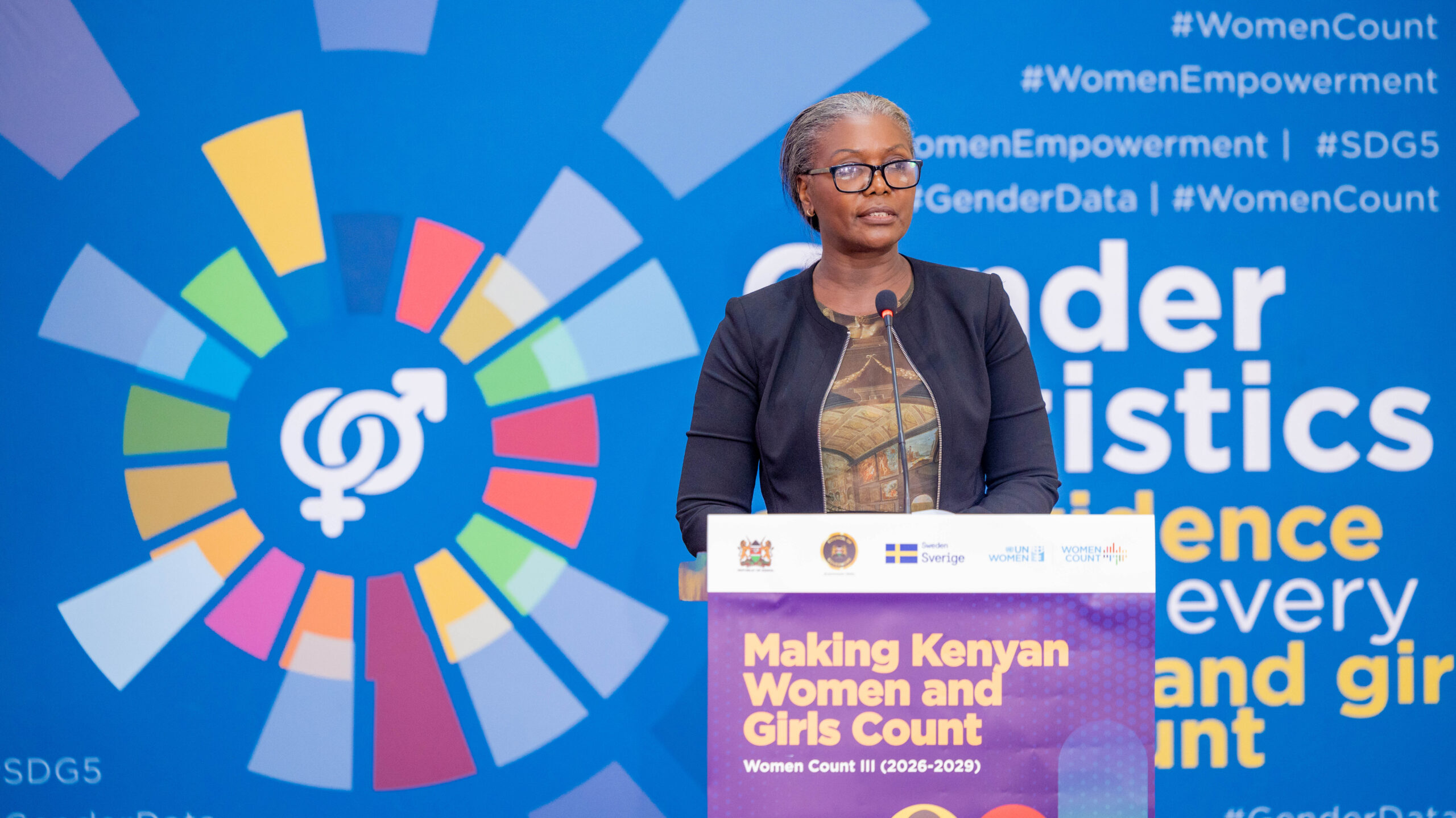
By Victoria Musimbi
Nairobi, Kenya: Persistent gaps in gender data continue to challenge effective planning, policy-making, and resource allocation for women and girls in Kenya. The data is often incomplete or insufficiently disaggregated, which hinders the ability to track progress, identify inequalities, and design targeted, evidence-based interventions at both the national and county levels.
To tackle this critical issue, Kenya has launched Women Count Phase III. This collaborative initiative involves the Council of Governors, UN Women, the Government of Sweden (via Sida), and key national institutions. The programme’s objective is to strengthen gender data systems nationwide and improve the production and use of gender statistics.
Building on achievements since 2016, the initiative will focus on enhancing data systems at the county level, strengthening inter-institutional coordination, and ensuring that reliable data informs budgets and policies. This ultimately aims to make women and girls more visible and central to development decisions.
Sweden Emphasizes Data as a Pillar of Democracy
Marie Ottosson, Head of Development Cooperation at the Embassy of Sweden in Kenya, underscored the critical role of gender data in advancing equality. She emphasized that reliable statistics are essential for evidence-based planning, informed decision-making, and democratic accountability.
“Without reliable statistics, it is difficult perhaps even impossible to plan accurately and make informed decisions,” she said, adding that statisticians are “frontline defenders of democracy.”
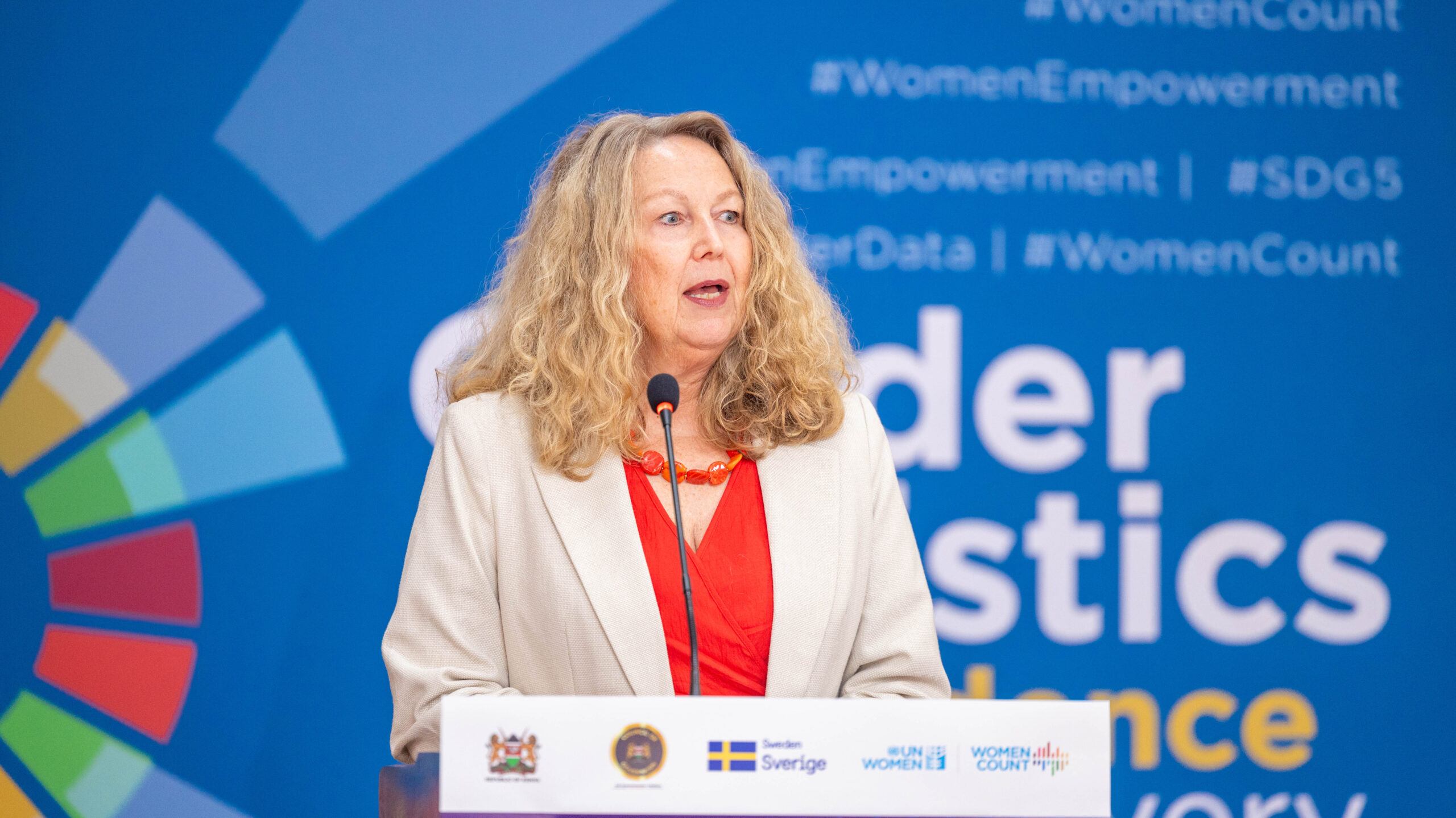
Ottosson highlighted Sweden’s long-standing commitment to gender equality, describing it as part of the country’s development “DNA,” and reaffirmed its importance as both a goal and a foundation for sustainable development and inclusive growth.
She pointed to the strong partnership between Sweden, UN Women, the Government of Kenya, and the Kenya National Bureau of Statistics (KNBS), noting that the collaboration has delivered significant results at both global and local levels.
“Increasing both the production and use of gender data is a Swedish priority, and partnerships like Women Count are critical in ensuring that no woman or girl is left behind,” she added.
She further emphasized that sustained investment in national statistical systems is key to ensuring that data is not only produced but also actively used to shape policy, guide resource allocation, and strengthen accountability frameworks across sectors.
Ottosson also commended the integration of gender data into the KNBS Strategic Plan (2023–2027), calling it a key milestone in strengthening the use of data for policy and planning. She expressed optimism that Phase Three will help close critical gaps, particularly in areas such as time-use and labour force surveys, further strengthening evidence-based decision-making.
Gates Foundation Highlights Investment in Gender Data
Diana Warira, Senior Program Officer for Women’s Economic Empowerment at the Gates Foundation, echoed the importance of data in advancing gender equality. “We cannot close the gender gap until we first close the data gap,” she said.
She noted that the Women Count Programme has been over a decade in the making, with the Gates Foundation committing 80 million US dollars in 2016 to strengthen gender data systems in partnership with UN Women.
“Only with good data can we make great policy and implement great programming,” she added.
Warira highlighted key achievements, including collaboration with KNBS and UN Women in conducting the Time Use Survey, which informed Kenya’s National Care Policy, and the development of the Household Satellite Account, which quantifies the economic value of unpaid care and domestic work.
She observed that these efforts have positioned Kenya as a leader in integrating gender data into decision-making, with other countries adopting similar approaches. However, she noted that growing demand for gender data must be matched with sustained funding and strong partnerships.
UN Women Calls for Data-Driven Action
UN Women Country Representative Antonia N’gabala Sodonon described the launch as both a moment of celebration and strategic renewal, marking a decade of investment in gender data and eight years of Kenya’s leadership as a Women Count Pathfinder country.
She noted that the current environment characterized by fiscal pressures, growing inequalities, and challenges to women’s rights makes gender data more critical than ever.
“Frameworks alone are not enough. Data transforms commitment into action,” she said.
Sodonon emphasized that gender data helps identify gaps, target interventions, allocate resources, and ensure accountability.
She highlighted Kenya’s progress since 2018, including the Data Time Use Survey, valuation of unpaid care work at KES 2.54 trillion (23% of GDP), the Women’s Empowerment Index, and strengthened SDG monitoring.
“These are not just statistics; they shape policy, influence budgets, and ultimately improve lives,” she added, noting that the next phase will focus on deepening impact and bringing data closer to communities and decision-makers.
Council of Governors Urges County-Level Action
Governor Simon Kachapin of West Pokot, representing the Council of Governors, underscored the importance of strengthening collaboration between national and county governments in advancing gender equality.
He noted that partnerships with UN Women, Sweden, and other stakeholders have been instrumental in transforming gender data in Kenya.
“For too long, we have worked without sufficient data. Today, that is changing. Data is power. Data is voice. It is the foundation upon which we build policies that change lives,” he said.
Kachapin highlighted the launch of county gender data sheets as a major milestone, providing counties with critical insights into disparities in education, health, economic participation, and leadership.
He explained that these tools will enable county governments to better identify priority areas, allocate resources more efficiently, and design targeted interventions that respond to the real needs of women and girls at the grassroots level.
“Data alone does not change lives. It is what we do with it that matters,” he emphasized, urging counties to institutionalize the use of gender statistics in planning and budgeting processes.

He further called for stronger political goodwill, capacity building for county technical teams, and deeper community engagement to ensure that data translates into tangible development outcomes.
Government Reaffirms Commitment to Gender-Responsive Planning
Principal Secretary in the State Department for Economic Planning, Mr. Bonface B. Makokha, who delivered remarks on behalf of Cabinet Secretary for the National Treasury and Economic Planning Hon. John Mbadi, reiterated that gender data is the foundation of evidence-based planning and inclusive development.
“Gender data is not optional; it is the foundation of evidence-based planning and inclusive development,” he said.
Makokha noted that the initiative reflects a shared commitment to building a development approach anchored in evidence, equity, and inclusion. He emphasized that gender data remains central to planning, budgeting, investment, and accountability, and is key to achieving inclusive development outcomes.
He highlighted Kenya’s role as a pathfinder country under the programme since 2018, demonstrating strong political will and institutional readiness to strengthen gender data systems.
Makokha further outlined the role of the National Treasury and Economic Planning in advancing this agenda, noting its mandate to manage public finances, formulate economic policy, oversee national development planning, and coordinate the national statistical system.
He emphasized that this mandate ensures that planning and budgeting processes are grounded in credible, timely, and disaggregated data, enabling the government to better respond to the needs of all citizens.
“No country can achieve meaningful progress without fully accounting for the contributions of women and girls,” he said.
He added that the programme will support the production and use of high-quality gender-disaggregated data, strengthen gender-responsive budgeting, and improve coordination across national and county governments.
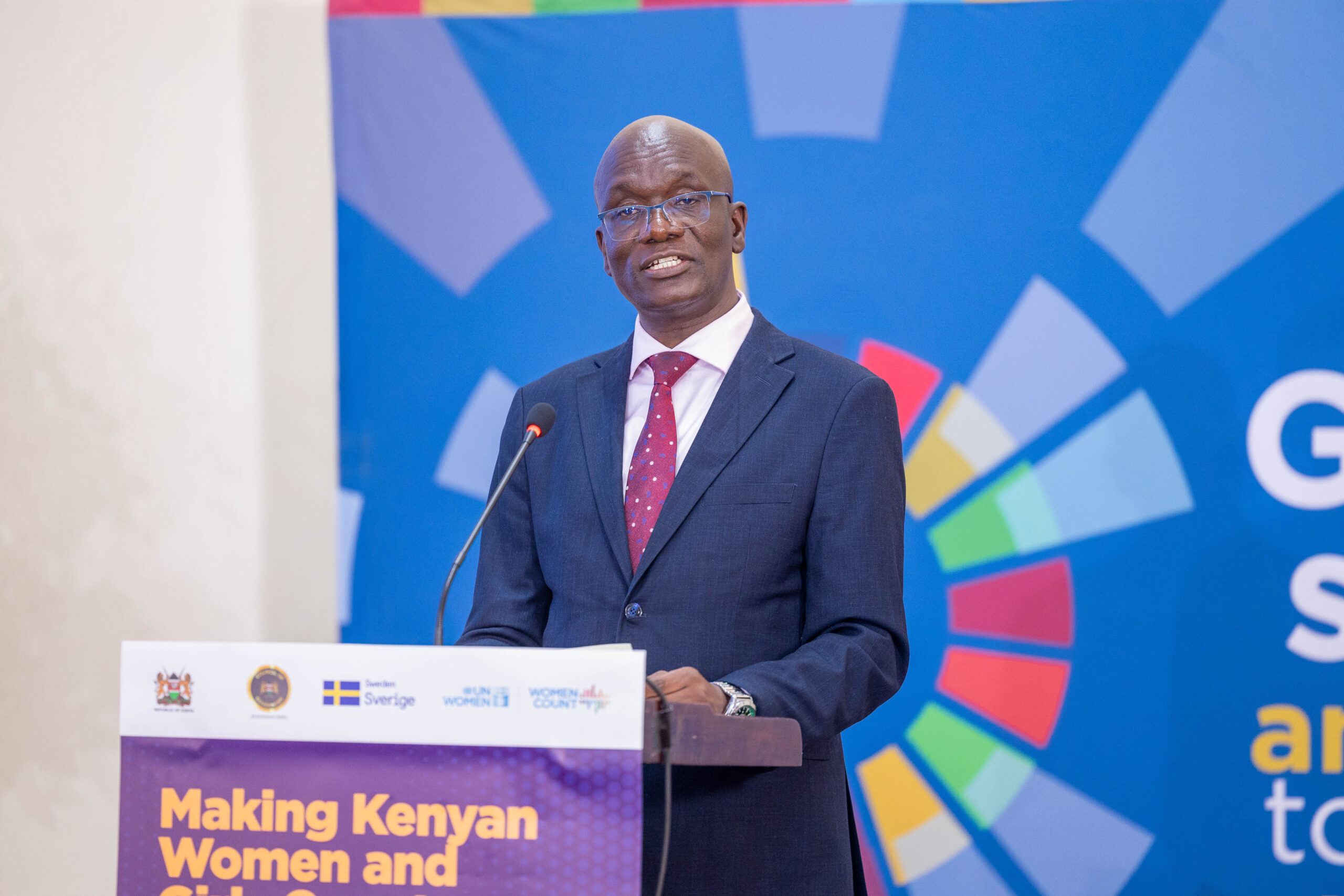
Makokha called on stakeholders to prioritize the use of gender data in planning and budgeting, strengthen institutional capacity, and sustain partnerships to ensure long-term impact.
“Economic transformation depends not only on infrastructure and investment, but on how well we count, value, and invest in women and girls,” he said.
He concluded by reaffirming the government’s commitment to institutionalizing gender-responsive budgeting and embedding gender statistics within national planning frameworks, ensuring that women and girls are fully represented in policies, budgets, and development outcomes.
As Kenya enters the third phase of the Women Count Programme, stakeholders emphasized that sustained collaboration, strengthened systems, and a strong commitment to using data will be key to ensuring that women and girls are fully represented in development planning, policies, and budgets.