|
Getting your Trinity Audio player ready...
|
By Jackson Okata
Garissa, Kenya: Despite the intense desert heat, 76-year-old Ahmednur Hassan has made the tiresome trip to the National Registration Bureau offices in Garissa countless times. This time, he is accompanying his 23-year-old granddaughter, Safiya Ahmednur, on yet another follow-up for her long-delayed identity card.
Safiya applied for the ID in April 2025, and her fingerprints were taken in July of that year, but the document has still not been issued months later. Hassan describes the ongoing, repeated visits as both exhausting and humiliating for the family.
“We keep being told to wait, but no one explains why it is taking this long,” Hassan says. For his granddaughter, the delay has meant she cannot fully move on with her life. At the same time, for Hassan, it is painful to watch yet another generation in his family struggle to access a document that should be a basic right of citizenship.
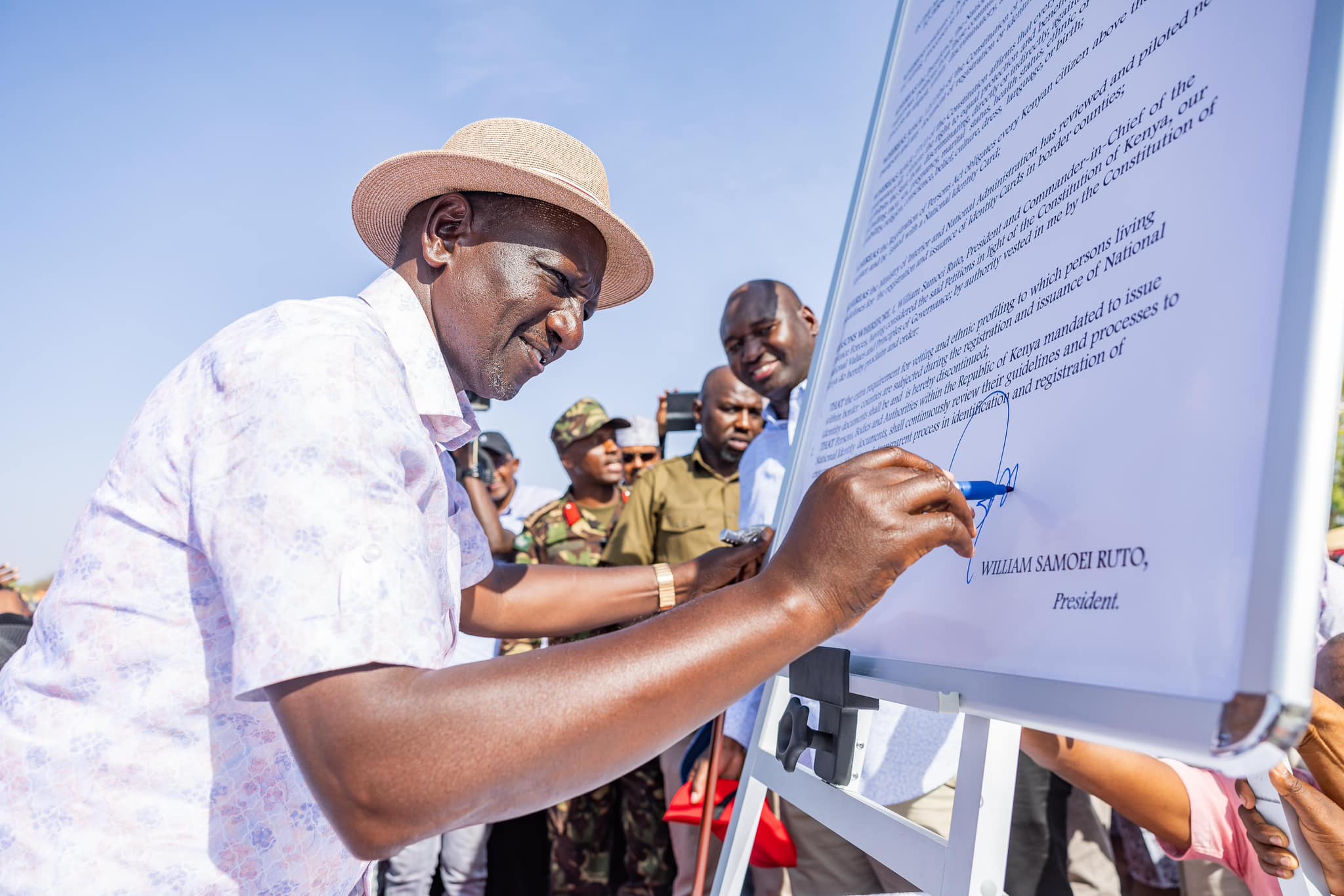
When he signed the proclamation on Registration and Issuance of national identity cards to border counties in February 2025, President William Ruto said the intention was to end years of state discrimination in the issuance of the vital identification document.
While terming the vetting practice “unjust and disenfranchising”, Ruto said abolishing it would make it easier for residents of Northern Kenya to acquire national identification documents.
For years, sections of the Kenyan border and minority communities have endured extra-vetting and ethnic profiling by the State before they acquire birth certificates and national identity cards.
But a year down the line, since the signing of the proclamation, things seem not to have changed, as residents of Northern Kenya still find it hard to get the national identity card.
Many say the vetting process shifted from physical to digital, yet the digital application process still takes them through the same steps as the physical one.
Long Waits Like Before
19-year-old Ahmed Farah, a resident of Fafi constituency in Garissa County, applied for the national identity card two days after President Ruto signed the proclamation. He had hoped to get the vital document after one month, as promised by the political class, but as of March 2025, he is still waiting.
“I got an introduction letter from my location. The Chief confirmed that he knows me. I took it to the National Registration Bureau (NRB) offices in Garissa in February 2025. After submitting the required documents, I waited for two months before they called me for fingerprint capturing, and since then I have been waiting for the document’’ Farah said.
When Farah’s father followed up with the Garissa NRB officials on the issue, he was informed that they were still verifying the documents and had no definite timeline for when his son’s ID would be ready.
Farah, who sat for his Kenya Certificate of Secondary Education (KCSE) examination in 2024, had secured a scholarship to undertake a maritime engineering course in Sweden, but cannot travel because he lacks a passport, the processing of which requires his national identity card.
Mohammed Aden, a community leader in Garissa township ward, says the abolishment of vetting only happened on paper.
“What was abolished was the physical vetting committee, but the vetting itself still happens’’ said Aden.
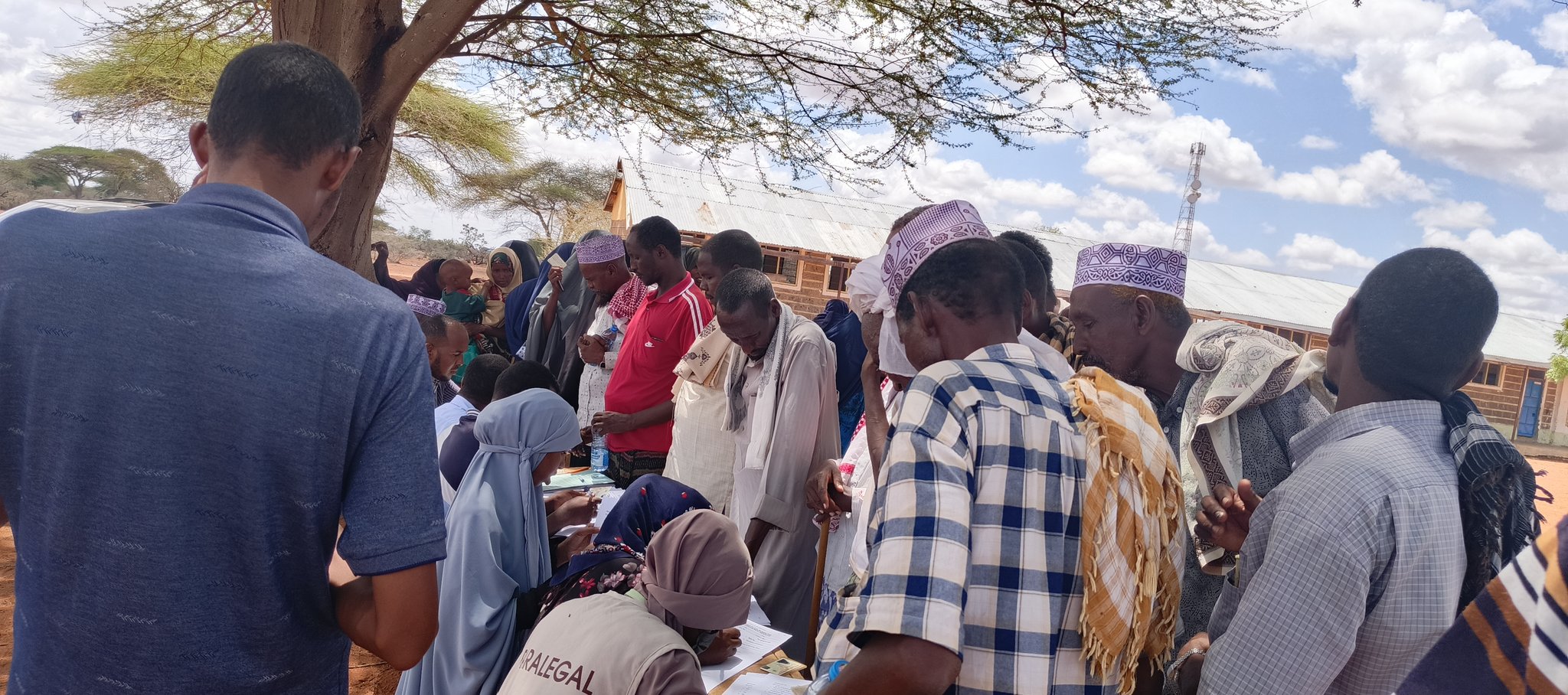
Aden argues that Garissa residents applying for ID cards still face subtle vetting by National Intelligence Security (NIS) officers operating within the NRB offices.
“We thought the process would be seamless after President Ruto’s proclamation, but things seem to have worsened instead’’ Aden told Talk Africa.
According to Aden, residents who applied for their IDs in February 2025 have yet to receive them.
He observes that physical vetting was better compared to the current one, since most residents were well known to the committee members.
Annual Mass Issuance
Amina Abdi from Ijara constituency applied for her ID in July 2025 and joined thousands of others on the waiting list. Despite assurances from her Member of Parliament that her ID would be ready by September 2025, she still clings to the hope of getting the vital document that has delayed her dream of joining the Kenya Police Service.
“I applied last year after the president’s announcement, but I am still waiting. I had initially applied twice in 2023 and 2024, but the vetting committees rejected my applications,” said 20-year-old Amina.
Before President Ruto’s proclamation, residents of Northern Kenya were issued ID cards during an annual mass drive that was held only once. Residents say that the process was better than it is now.
Abdinoor Mohamud, a paralegal officer working with Haki na Sheria, says that months after the Presidential directive, hundreds of applicants remain stuck in bureaucratic and systemic delays, just as before.
“Delayed issuance of IDs not only violates the rights of residents but also denies them vital health, economic, and education services,” said Mohamud.
Lack of Clear Policy
Civil society groups in Garissa blame the delays and backlog of applications on the lack of clear implementation guidelines following the policy shift.
Mohammed Ciraj, a program officer at Haki na Sheria, says that while Nairobi insists vetting was abolished, the situation on the ground is different.
“While vetting committees were formally scrapped, administrative practices on the ground appear inconsistent. The only thing they removed was physical vetting, but vetting of documents by NIS officers still happens,” said Ciraj.
Ciraj blames political leaders for what he describes as a lack of urgency in resolving the persistent delays in identity card issuance.
“Our elected leaders have gone quiet on an issue that directly affects the rights and dignity of their constituents. They campaigned on promises of inclusion and equality. Yet, now that residents are struggling to obtain IDs, we are not seeing strong advocacy or pressure from them to ensure the president’s directive is implemented.”
He says that local politicians should be at the forefront, engaging national authorities and holding registration officials accountable for the continued bottlenecks.
According to Ciraj, “The president has the authority to ensure his directive is not ignored at the local level.”
“We urge him to issue clear, binding instructions to all registration offices and deploy additional resources to fast-track the process,” he said.
Ciraj is afraid that without direct intervention from the highest office, thousands of eligible citizens risk being locked out of essential services, despite a policy meant to guarantee their inclusion.
An official from the Garissa National Registration Bureau office who spoke on condition of anonymity said the delays were due to logistical challenges, including a surge in applications and limited staffing.
Masoud Farah, from the Garissa Township constituency, fears that politicians will only revive the matter as elections draw closer.
“The campaign season is here with us when leaders will present themselves as saviours fighting for the release of IDs, despite having done little to push for solutions, while residents continue to suffer”, he said.
Farah argues that access to citizenship documents should not be manipulated for political convenience but rather be recognised as a basic constitutional right.
“They know this is a painful issue for many families, but instead of acting now, they will wait until it is time to look for votes,”.