|
Getting your Trinity Audio player ready...
|
By Victoria Musimbi
Nairobi, Kenya: Stronger access to public records, regular engagement with oversight institutions and independent investigative reporting are among the measures proposed to improve accountability in Kenya’s public finances.
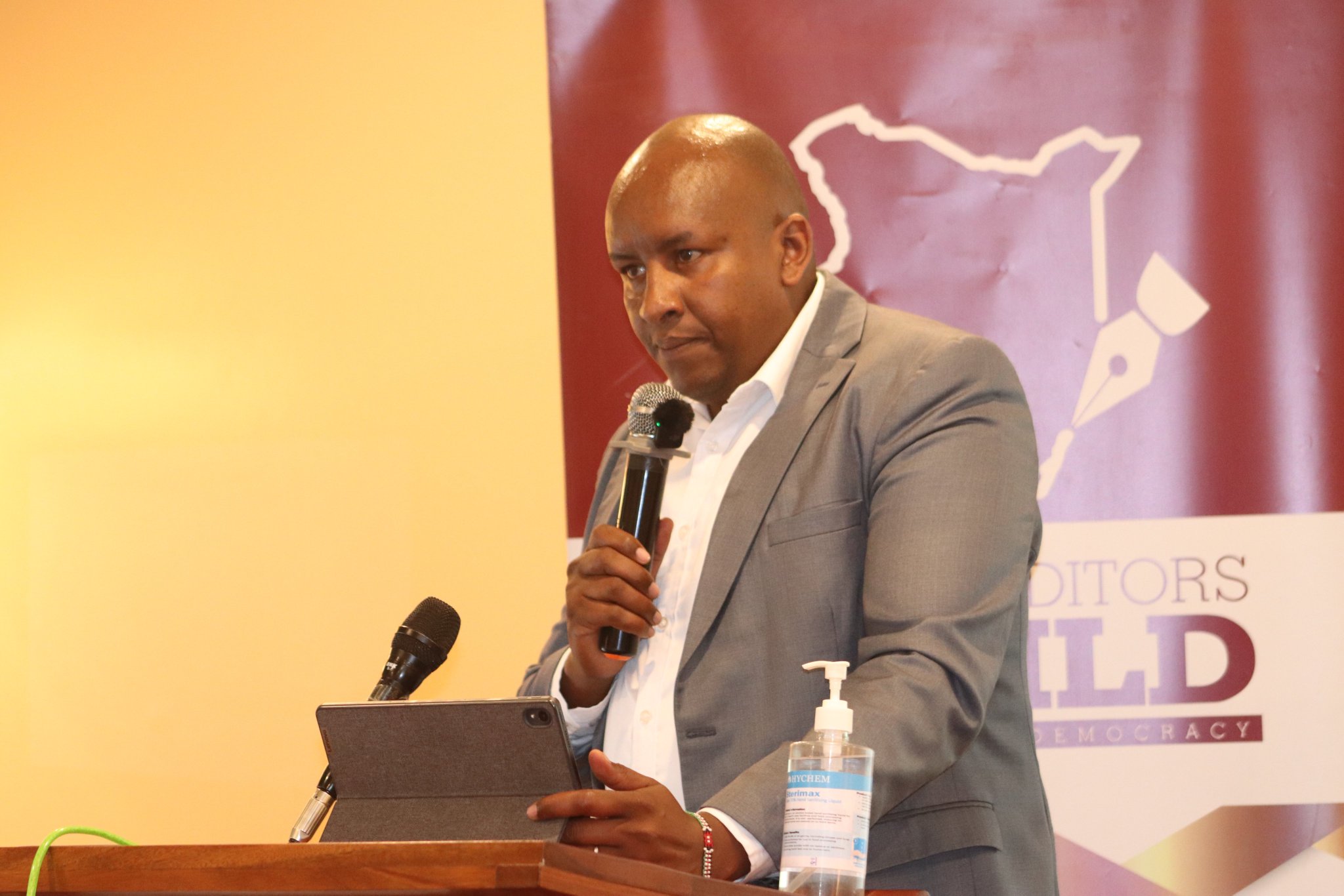
Kenya Editors Guild (KEG) Vice President Francis Openda said journalists must turn discussions into practical action to scrutinise public spending, borrowing and government financing arrangements.
“Today marks a critical transition: from dialogue to action, and from identifying accountability gaps to agreeing on practical mechanisms for addressing them,” he said.
He noted that public borrowing, public-private partnerships and contingent liabilities require greater scrutiny, particularly where information is difficult to access and the long-term implications for public resources remain unclear.
Openda said previous engagements had helped editors identify accountability concerns and develop a 24-item Issues, Referral and Follow-up Matrix to track institutional responses and unresolved questions.
He outlined five priorities for the media: regular engagement with public institutions, timely access to reliable information, transparency in financing arrangements, stronger editorial capacity and protection of editorial independence.
“Constructive engagement must complement, not replace, independent scrutiny,” he said, emphasising that working with public institutions should not compromise the media’s responsibility to question decisions and investigate matters of public interest.
With Kenya approaching the 2027 General Election, Openda said informed and evidence-based reporting on public finances would become increasingly important. He urged editors to develop an action plan with clear responsibilities, realistic timelines and mechanisms for tracking progress beyond the project period.
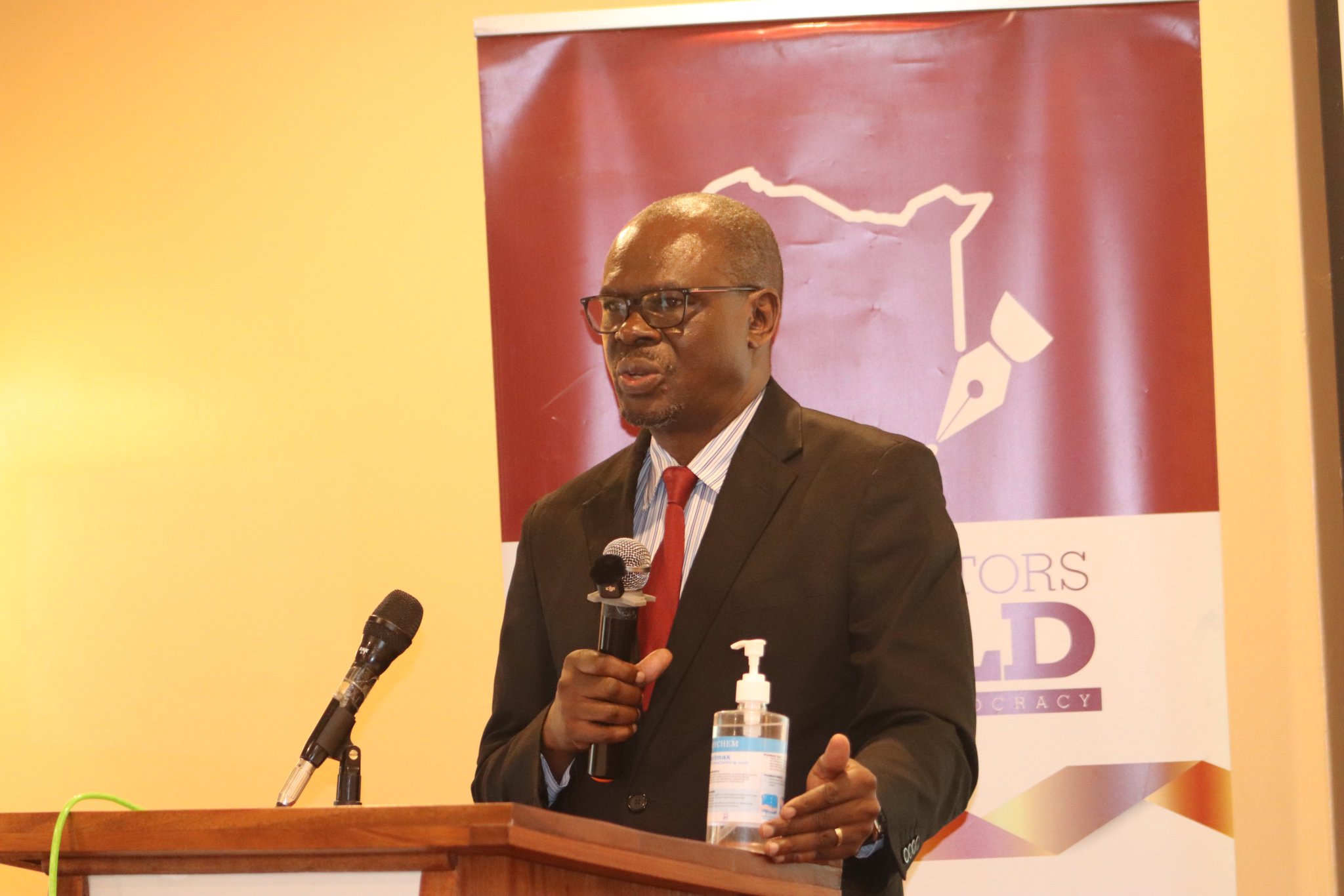
“Our success will not be measured by the number of meetings we have held, but by whether these engagements contribute to stronger journalism, greater transparency and more effective public accountability,” he said.
Access to Information Law Supports Investigative Reporting
Maryann Wanjiru, a legal officer in the Access to Information Department at the Commission on Administrative Justice (CAJ) office of the Ombudsman, urged journalists to use the Access to Information Act, 2016, to strengthen public finance reporting and hold public institutions accountable.
She said the media plays a critical watchdog role in promoting transparency, accountability and good governance, as provided for under Article 10 of the Constitution.
“The Access to Information Act basically breathes life into Article 35,” Wanjiru said, referring to the constitutional right to access information held by the State and, under specified conditions, private bodies.
She encouraged journalists investigating public debt, government borrowing and expenditure to make formal, written requests to institutions holding relevant records.
The National Treasury holds loan agreements, annual public debt reports and medium-term debt strategies, while the Central Bank of Kenya (CBK) holds information on domestic borrowing, Treasury bills, bonds, auction results and debt servicing.
“Provide specific particulars. Don’t be too broad because it becomes difficult for the information access officer to process that request,” she said.
Under the Act, institutions generally have 21 days to respond to information requests. Failure to respond within the stipulated period is treated as a refusal, allowing applicants to seek a review by the commission.
Wanjiru advised journalists to retain copies of their requests and evidence of receipt, including stamped documents and email trails, when escalating complaints. Applications for review should generally be lodged within 30 days of the refusal or unsatisfactory response, subject to applicable legal requirements.
The Ombudsman assesses complaints, gives the institution concerned an opportunity to respond and determines whether information should be disclosed in full or in part. It can order the release of information unlawfully withheld.
She emphasised that although the right to information is not absolute, institutions cannot rely on blanket claims of confidentiality or national security to deny access. Restrictions must be legally justified and satisfy applicable tests of necessity and proportionality.
Wanjiru also highlighted challenges facing investigative journalists, including secrecy surrounding financing agreements, fragmented public finance records and inadequate proactive disclosure.
Information on pending bills, for instance, may be held by different institutions, including the National Treasury, county governments, the Office of the Auditor-General and the Controller of Budget, making it difficult to reconcile figures.
She urged journalists to check institutional websites and published reports before submitting requests, noting that public bodies have an obligation to disclose specified information proactively.
Wanjiru called for closer collaboration between the commission and media organisations through joint training, proactive disclosure audits and a dedicated media liaison contact to help track journalists’ applications and facilitate timely processing.
“Your stories help the government become transparent and accountable to its citizens. You also play a critical role in educating citizens on matters of governance,” she said.
Debt Servicing Puts Pressure on Social Spending
Rising public debt is putting pressure on essential services, with a growing share of government revenue going towards debt repayment at the expense of healthcare, education and other social services, according to Alexander Riithi, Head of Programmes at the Institute for Social Accountability (TISA).
Riithi said that although spending on social sectors had increased in absolute terms over the years, it had declined as a proportion of the national budget, partly due to the growing cost of servicing public debt.
“Last financial year, according to the Controller of Budget report, we collected ordinary revenue of around KSh2.5 trillion, of which KSh1.8 trillion went into debt service. That tells you we remained with around KSh700 billion to KSh800 billion for everything else that government does,” he said.
He said the effects were evident in hospitals struggling with medicine shortages and public universities facing difficulties meeting their obligations to lecturers. He questioned whether ordinary Kenyans were benefiting from economic growth when substantial public resources continued to go towards debt repayment.
Riithi urged journalists to scrutinise government borrowing and ask how borrowed funds were spent, whether they achieved their intended purposes and what measures were in place to prevent corruption and misuse of public funds.
He also called for closer scrutiny of Parliament’s role in approving borrowing limits and examining budget proposals. He noted that the proposed KSh5.4 trillion expenditure for the 2027/2028 financial year included planned borrowing of approximately KSh1.4 trillion.
He called for greater transparency in public debt agreements, major infrastructure projects and audit reports, arguing that citizens needed access to information to hold public officials accountable.
With the country approaching the election period, Riithi urged journalists to question political candidates on how they intended to finance their campaign promises without worsening the country’s debt situation.
He added that citizens had a responsibility to monitor public borrowing and demand accountability for projects implemented in their communities.
TISA Proposes Regular Media Engagements
Riithi said TISA would work with media editors to explore the possibility of holding quarterly engagements with journalists to share information on public finance management, emerging issues and available reports.
He said the engagements would help journalists better understand public finance processes, identify issues requiring scrutiny and keep the public informed.
Riithi also urged journalists to track the pre-election fiscal report, expected four months before polling day, and the post-election report, due four months after polling day, under the public finance management framework.
He said the reports would provide important information on the state of the economy and public finances, helping journalists strengthen public accountability and keep citizens informed.