
|
Getting your Trinity Audio player ready...
|
By Shaban Makokha
Kakamega: As Kenya edges closer to the 2027 General Election, the National Cohesion and Integration Commission (NCIC) has called on politicians to shield children, women and older persons from election-related violence.
NCIC Chief Executive Officer Dr Daniel Mutegi Giti emphasised that political differences should never endanger children or undermine the values of peace, tolerance and mutual respect they are taught in schools.
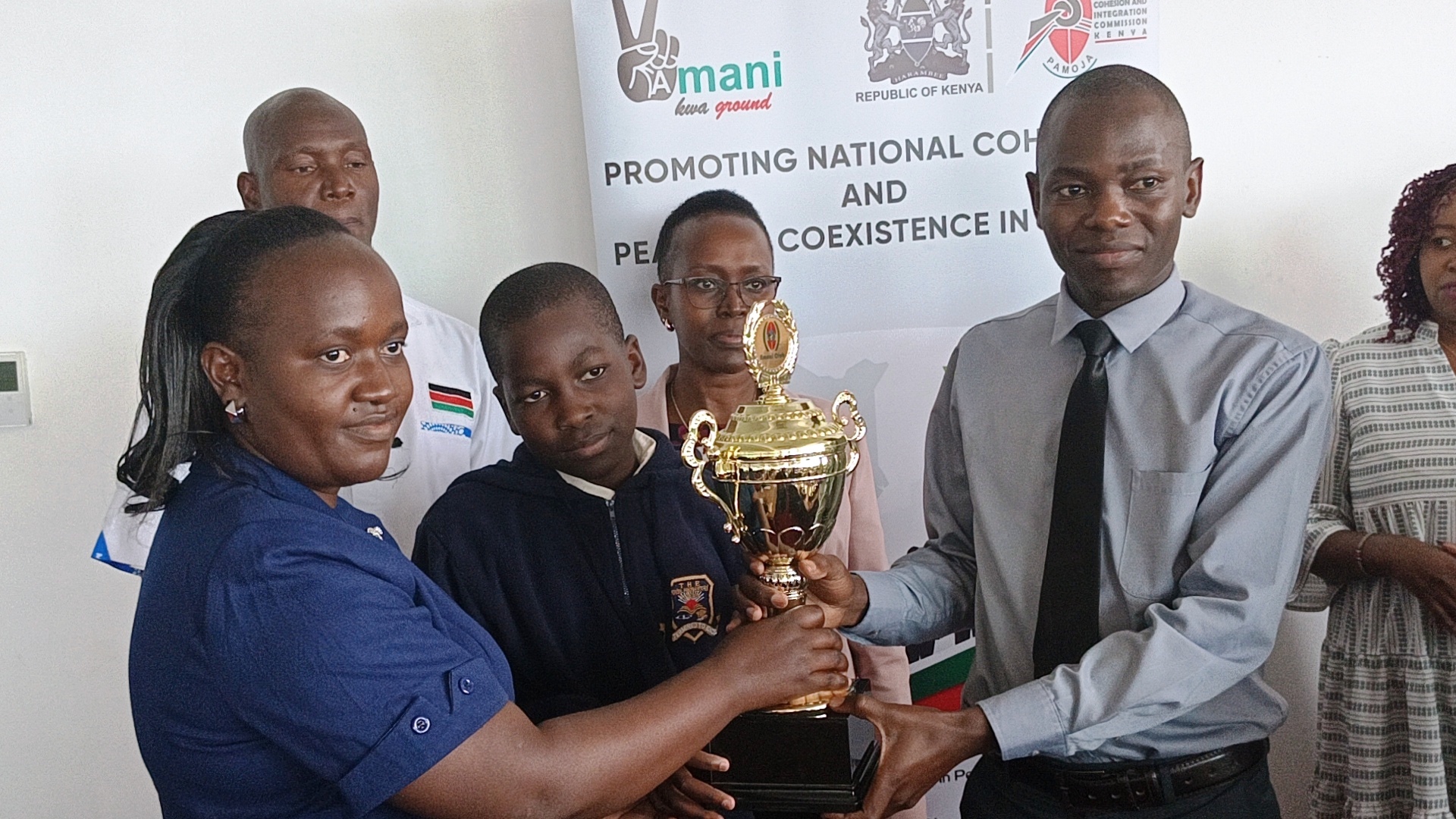
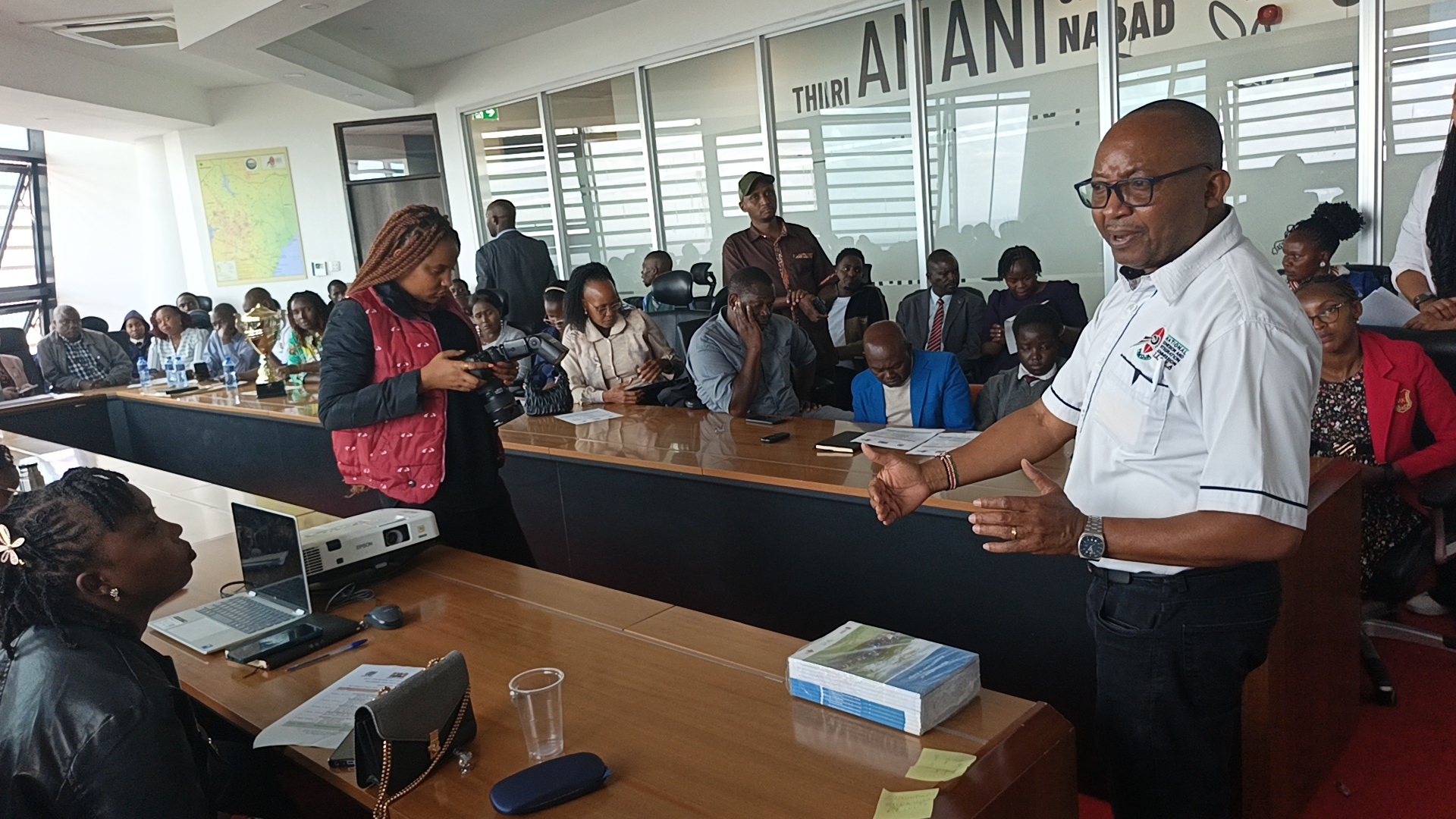
In a statement read by NCIC Vice Chairperson Irene Chepoisho Tulel during the national awards ceremony for 30 learners who excelled in the Amani Clubs National Essay Writing Competition on October 9, 2026, Dr Giti stressed that adults have a responsibility to protect children from the effects of political tensions.
“Learners must not allow political differences outside schools to divide the friendships they have built with their peers over the years,” Dr Giti cautioned. “They must also be careful about what they share online because a message could be false even if it comes from someone you know and trust.”
This year’s competition attracted 1,036 essays from learning institutions across 22 counties, underscoring the importance of school-based initiatives in encouraging young people to reflect on inclusion, peaceful conflict resolution and harmonious coexistence.
Dr Giti congratulated the winners, noting that participation gave learners an opportunity to articulate their ideas, examine challenges affecting their communities and contribute to national conversations on cohesion.
From primary school pupils to secondary school and university-level learners, young Kenyans used their essays to explore conflict, divisions fuelled by social media and the search for lasting peace.
Dr Giti observed that essay writing goes beyond the recognition associated with winning an award, as it helps learners develop their ideas, express themselves clearly and consider different perspectives on issues affecting society.
“Writing an essay takes patience. You have to decide what you want to say, find the words to explain it and read it again to see whether it makes sense. By submitting your work, you have given others an opportunity to consider your ideas. That is an achievement worth recognising,” he said.
He encouraged the award recipients to take pride in their accomplishments and use the experience to inspire fellow learners to participate in future competitions and become active contributors to building inclusive and cohesive communities.
Organised by the NCIC, the annual Amani Clubs essay writing competition provides young people with a platform to examine societal challenges and propose practical solutions for building peaceful communities.
The CEO said the competition forms part of the Commission’s broader efforts to promote national cohesion and integration through Amani Clubs established in learning institutions across the country.
Working in collaboration with the Ministry of Education, the Teachers Service Commission (TSC) and school leadership, the Commission supports initiatives that help learners understand national cohesion in the context of their everyday experiences.
This year’s theme, “Dialogue over Division – Youth Voices for a United Country,” placed young Kenyans at the centre of a national conversation on peace, tolerance and coexistence.
Rather than simply asking learners to define peace, the competition challenged them to explore how it can be built and sustained in their schools, neighbourhoods and communities.
The essays addressed a range of questions, including why people should listen to those with whom they disagree, how dialogue can resolve conflicts among young people, and whether social media is bringing the youth together or driving them further apart.
At the tertiary level, participants tackled a broader question: How effective is dialogue as a peacebuilding tool in divided societies?
Dr Giti said Amani Clubs provide an important platform for nurturing mutual respect, tolerance, inclusion and peaceful coexistence among young people, helping them appreciate diversity as an essential part of a cohesive society.
He added that the essay competition complements these efforts by allowing learners to explore issues of cohesion independently and communicate their understanding through writing.
“The essay competition allows a learner to think through these issues in their own words. A student who is quiet during a debate may have a great deal to say on paper. It is important that our activities make room for different ways of participating,” he observed.
In the English category, Prince Shadrack of Joysil Preparatory School in Matungu, Kakamega County, emerged the overall winner with 18 out of 20 marks. He received the overall trophy, an Amani Club jersey and a certificate.
His schoolmates, Cyril Makokha and Ricardo Echesa, tied for second place after each scored 15 marks. Both received trophies and certificates.
Joysil Preparatory School also performed strongly in the other top positions, with Cheryl Freya and Aimee Ronde scoring 14 marks each. The learners were guided by their Amani Club patron, Eunice Wakhu.
In the primary school Kiswahili category, Kyalo Tashley of Moi Complex Academy in Nyeri topped the national field with 17 out of 20 marks.
He was followed by Magdaline Nashipae of Enkirgirr Primary School in Isinya, Kajiado County, and Wangari Winvet Njeri, who tied for second place with 16 marks each.
At the junior secondary school level, Gichuki Angela Wairimu of Moi Complex Academy emerged as the leading English essay writer, scoring 18 marks.
In the senior secondary school English category, where learners examined the influence of social media on young people, Titus Kilei of Kwanthanze Senior School in Machakos County emerged the winner with 17 marks.
Rephine Ngoki Mwendwa of Kinyui Girls Senior School, Hildah Sirintai of Enoomatasiani Girls Senior School and Rhodah Shikuku of Olkeri Mixed Senior School tied for second place with 16 marks each.
In the Kiswahili category, Ainea David of Maseno School emerged the overall winner with 18 marks.

Iha Leah Sidi of Matuu Memorial, Virginia Mutua of ACK St Mary’s Ukia Girls in Makueni County, and Mwangi Edwin Njuguna of Karega Mixed Secondary School in Murang’a County tied for second place with 17 marks each.
The competition also attracted participants from tertiary institutions, where learners were challenged to examine the effectiveness of dialogue in building peace in societies experiencing divisions.
Scarlet Kisia of St Augustine Eregi Teachers Training College in Kakamega South emerged as the leading English essay writer with 15 marks.
Mwangi Michael Murimi and Vanesa Wambui of Kamwenja Teachers College, alongside Samuel Musee of Migori Teachers College, tied for second place with 12 marks each.
Institutional Commitment to Peace
St Augustine Eregi Teachers Training College Principal Duncan Okwaro said the institution was committed to nurturing talent through what he described as a “100 per cent policy.”
“When Scarlet came to my office, and I saw that she had acquired this success, I had to invest. That is why the three of us — the student, her teacher and myself — have managed to come to Nairobi to witness this milestone,” he said.
Mr Okwaro said the institution brings together students from different ethnic communities, but political competition can sometimes expose tribal divisions.
“At Eregi, like other institutions, there is a conglomeration of many tribes who, when they carry out elections, they go tribal,” he said. “If we don’t instill positive values in them through Amani Clubs, we are going to end up badly because the same fellows will go out to run a national election, talking to people outside. If the values they acquired in school were negative, then we shall not have a country.”
He said the institution had established an Amani Club and introduced a work-study programme that engages students for 21 days during the holidays.
Through such initiatives, the institution seeks to nurture responsible citizens who can promote peaceful coexistence and reject divisive politics beyond the school environment.
As the country approaches the 2027 General Election, the NCIC’s message remains clear: nurturing a peaceful and cohesive nation requires adults to protect young people from political divisions while empowering learners to become ambassadors of dialogue, tolerance and national unity.