|
Getting your Trinity Audio player ready...
|
By Lenah Bosibori
Bungoma County, Kenya: When Josephine Mucoro became pregnant with her first child, friends and relatives warned her against eating certain foods, saying they could harm her unborn baby. Like many first-time mothers, she struggled to separate reliable health information from myths, tradition and misinformation.
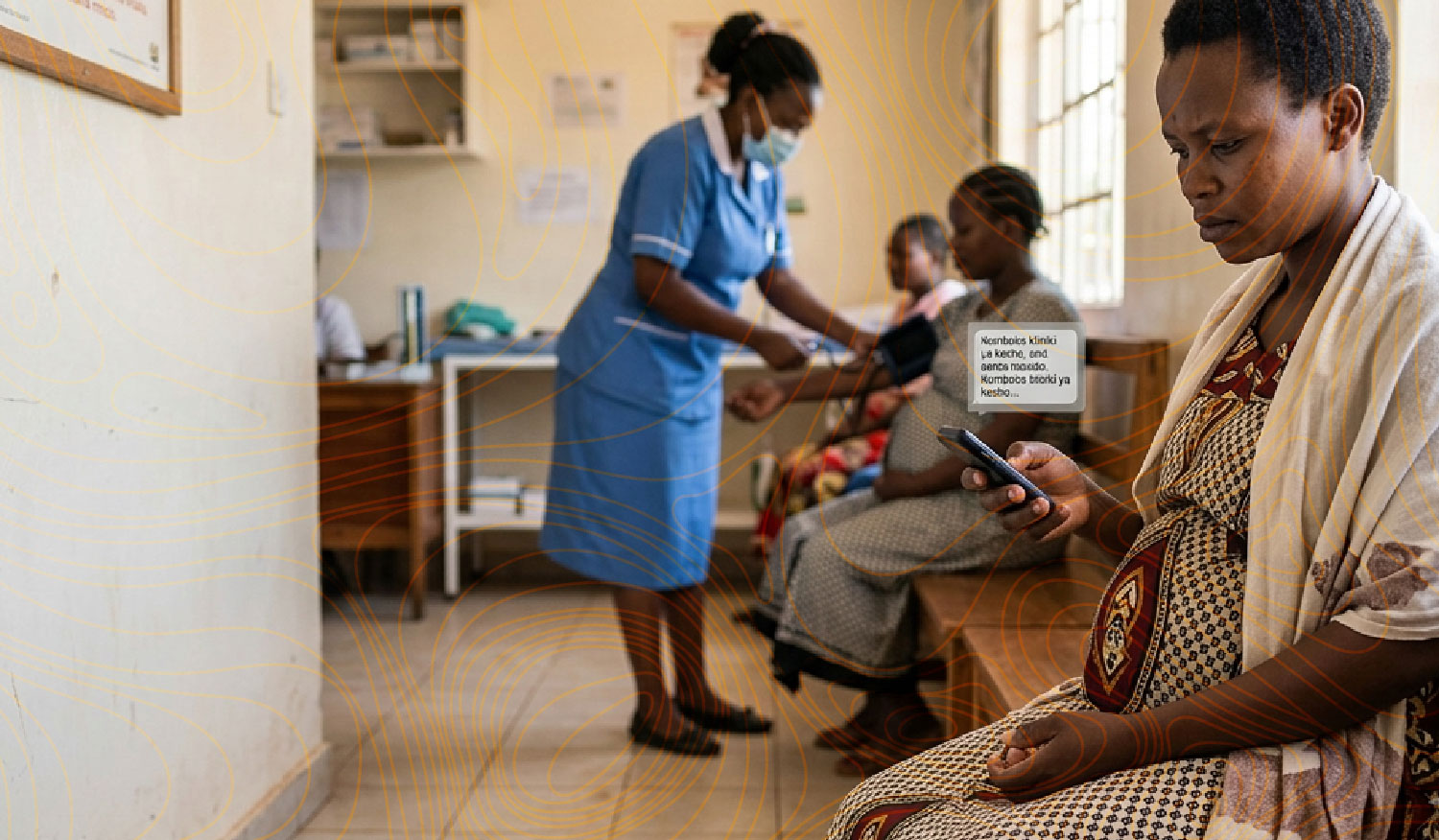
During her first antenatal clinic visit at Chwele Sub-County Hospital in Bungoma County, Mucoro was enrolled in Promoting Mothers in Pregnancy and Postpartum Through SMS (PROMPTS), a free SMS service, developed by Jacaranda Health. The platform sends maternal and newborn health information to pregnant women and mothers with babies under one year.
“It only took about five minutes to enroll,” Mucoro recalls. “The next day, I started receiving messages. I was also told that if I had any challenge during pregnancy, I could send a message to the service for free.”
Mucoro chose to receive the messages in Kiswahili.
“After joining the programme, I received my first message about healthy eating,” she says. “The messages became my daily guide. They taught me about nutrition, danger signs, and when I needed to seek medical advice.”
Kenya’s Every Woman, Every Newborn, Everywhere (EWENE) Acceleration Plan reports that half of maternal deaths involve danger signs that are not recognized in time. The initiative aims to reduce the maternal mortality ratio from 355 deaths per 100,000 live births to 140 or fewer by 2028. Digital health services such as PROMPTS can help women access information about danger signs and recognize when to seek help.
Maternal Health Advice at the Fingertips
PROMPTS began as a one-way SMS service, sending scheduled messages during pregnancy and after childbirth. But mothers soon began asking health workers whether they could use the service to ask their own questions. Jacaranda Health then expanded it into a two-way platform.
Today, mothers can text questions about pregnancy, childbirth and newborn care. The service uses artificial intelligence (AI) to sort incoming questions and prioritizes those that may require urgent clinical attention.
Cynthia Kahumbura, Co-Executive Director at Jacaranda Health, says PROMPTS provides information tailored to the stages of pregnancy and the period after childbirth.
“It supports mothers throughout their journey by sharing nutrition information, helping them recognize danger signs and providing guidance that can contribute to a healthier pregnancy.”
The service operates through SMS and does not require internet access, a smartphone or mobile data. Women enroll by sending the word ‘Mama’ to 21884.
Kahumbura says the platform receives about 12,000 questions daily, from routine concerns about nutrition, breastfeeding and common pregnancy discomforts to symptoms that could signal a medical emergency.
Behind the service is an AI model trained using more than one million questions previously asked by mothers, according to an AWS case study. The system automatically responds to about 70% of incoming questions, while higher-risk cases are escalated to clinicians.
“Our AI model helps distinguish routine concerns from possible danger signs,” Kahumbura says. “If a mother reports symptoms that suggest an emergency, the system immediately flags the message for a clinician. A healthcare worker then reviews the case, calls the mother within 15 minutes, and advises whether she should seek immediate care at a health facility.”
A study published in PLOS Medicine in 2025 followed 6,139 pregnant women across 40 facilities in Kajiado, Kilifi, Kirinyaga, Kisii, Meru, Narok, Nyeri and Siaya counties. It found that women who used PROMPTS reported improvements in maternal health knowledge, birth preparedness, routine care-seeking and newborn and postpartum care. However, improvements in knowledge of danger signs and care-seeking in response to them were small.
Human Judgement Remains Central
For a pregnant woman reporting symptoms that could signal a serious complication, such as severe headaches or blurred vision, the speed and accuracy of triage matter.
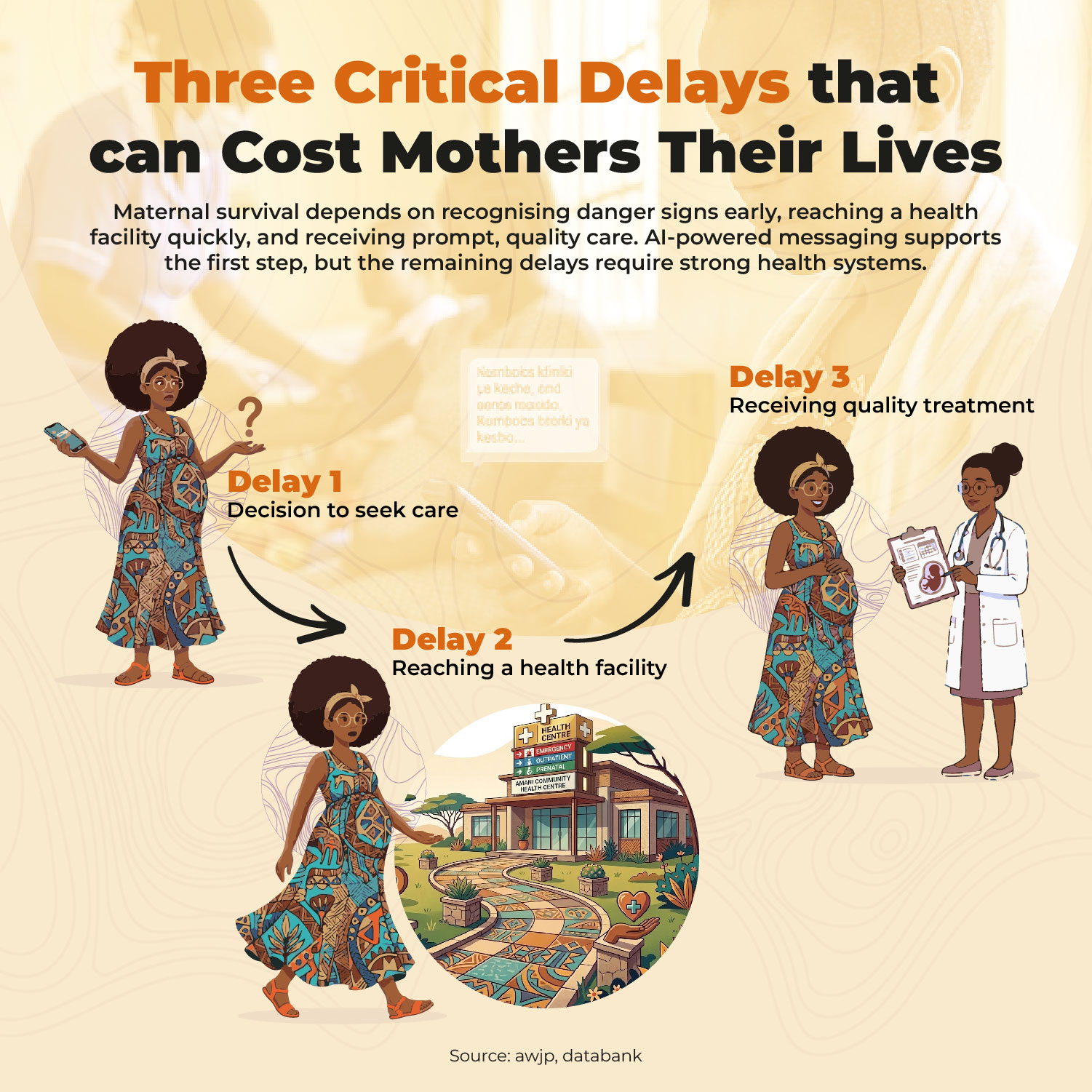
Dr. Victor Barasa, a medical doctor and digital health expert at Malindi Sub-County Hospital, says AI may help reduce some of the three delays commonly linked to maternal deaths: delays in deciding to seek care, delays in reaching a health facility and delays in receiving an accurate diagnosis.
“It can identify mothers at risk earlier and prompt timely action,” he says.
Barasa cautions against overreliance on automated systems.
“If an AI tool misses a danger sign, the doctor is expected to detect it using independent clinical judgement. If a clinician simply signs off an AI-generated treatment plan without verifying its accuracy, that could amount to negligence,” he says.
To reduce these risks, Barasa says AI systems should always operate with a human in the loop. They should also be supported by clear accountability structures, strong data protection measures and rigorous testing using local data before deployment.
The World Health Organization’s guidance on AI ethics and governance for health also emphasizes safety, transparency, accountability, and human oversight.
However, AI-enabled digital health services alone cannot solve poor maternal health outcomes. The World Health Organization (WHO) identifies several health system barriers that contribute to maternal deaths: poor-quality care, shortages of trained health workers and essential medical supplies, mistreatment, and weak accountability systems. When a woman recognizes a danger sign, she still needs to reach a health facility and receive timely, appropriate treatment.
Who is Still Left Behind?
Moreover, a digital health service cannot help women who cannot access or use it.
Javan Waita, Head of Programmes at Jacaranda Health, says language remains a challenge. Although the platform currently operates in English and Kiswahili, some women in remote communities are more comfortable communicating in local languages. Others cannot read messages because of limited literacy.
Phone ownership is also uneven. Some women do not own mobile phones, while others share them with spouses or relatives. This raises privacy concerns when women seek sensitive information about pregnancy, HIV, family planning, or violence.
“We acknowledge that some mothers may not have phones or may be unable to read Kiswahili,” Waita says. “We are working on an interactive voice response service that will allow mothers to engage with the platform through voice.”
These barriers point to the limitations of digital health innovations. Even the most advanced AI system cannot reach women excluded by poverty, language, disability, low literacy or unequal access to technology.
Beyond Medical Advice
Beyond providing health information, PROMPTS also asks women about their experiences at health facilities, including whether they were treated with dignity, privacy, and respect during childbirth, in line with the WHO standards for improving the quality of maternal and newborn care.
After antenatal visits, delivery or postnatal care, mothers enrolled on the platform are asked whether they received essential services such as iron and folic acid supplements, blood and urine tests, counselling on danger signs and birth preparedness.
“Beyond medical advice, the platform serves as a digital accountability tool,” Kahumbura says.
She adds that the responses are anonymized before being shared with health facilities, allowing managers to identify gaps in care without exposing individual women.
According to Jacaranda Health, which reported that more than 700,000 mothers were enrolled on the platform in 2025, some of the concerns raised by mothers include verbal abuse, poor communication, and gaps in service quality.
“We have seen facility managers take this feedback seriously,” Kahumbura says. “Where mothers report disrespectful treatment or poor communication, facilities have organized continuing medical education sessions on respectful maternity care and, in some cases, conducted investigations to address the issues raised.”
For women like Mucoro, digital health services provide practical advice, and the data they generate can help health facilities improve care. However, quality maternal healthcare requires more than information; women also need accessible and adequately staffed health facilities with sufficient medical supplies.
As Kenya embraces artificial intelligence in healthcare, its adoption must go hand in hand with a functioning health system. An AI-assisted system can send messages and answer questions, but it cannot replace the services, resources and accountability needed to keep mothers and their babies safe.
This article was produced as part of the Gender+AI Reporting Fellowship, with support from the Africa Women’s Journalism Project (AWJP) in partnership with DW Akademie. The journalist used AI-assisted research tools to review and summarise relevant policy and research documents, identify patterns, surface data points for independent verification, and extract key statistics. All reporting, analysis, editorial decisions, fact-checking and final wording were done by the reporter, in line with Talk Africa’s editorial standards.