|
Getting your Trinity Audio player ready...
|
By Jackson Okata
Baringo, Kenya: Like most women in rural Perkerra ward of Baringo County, Judy Chirchir would begin her day in search of a vital commodity: water. Armed with empty jerrycans, Judy walked for kilometres in search of water. Sometimes, the community relied on a borehole whose operation depended on the availability of diesel.
Judy’s struggle for water dictated nearly every aspect of life from farming and livestock keeping to children’s education and household income.
But even with the struggles of water access, a solution lay in sight. Baringo is blessed with solar energy.
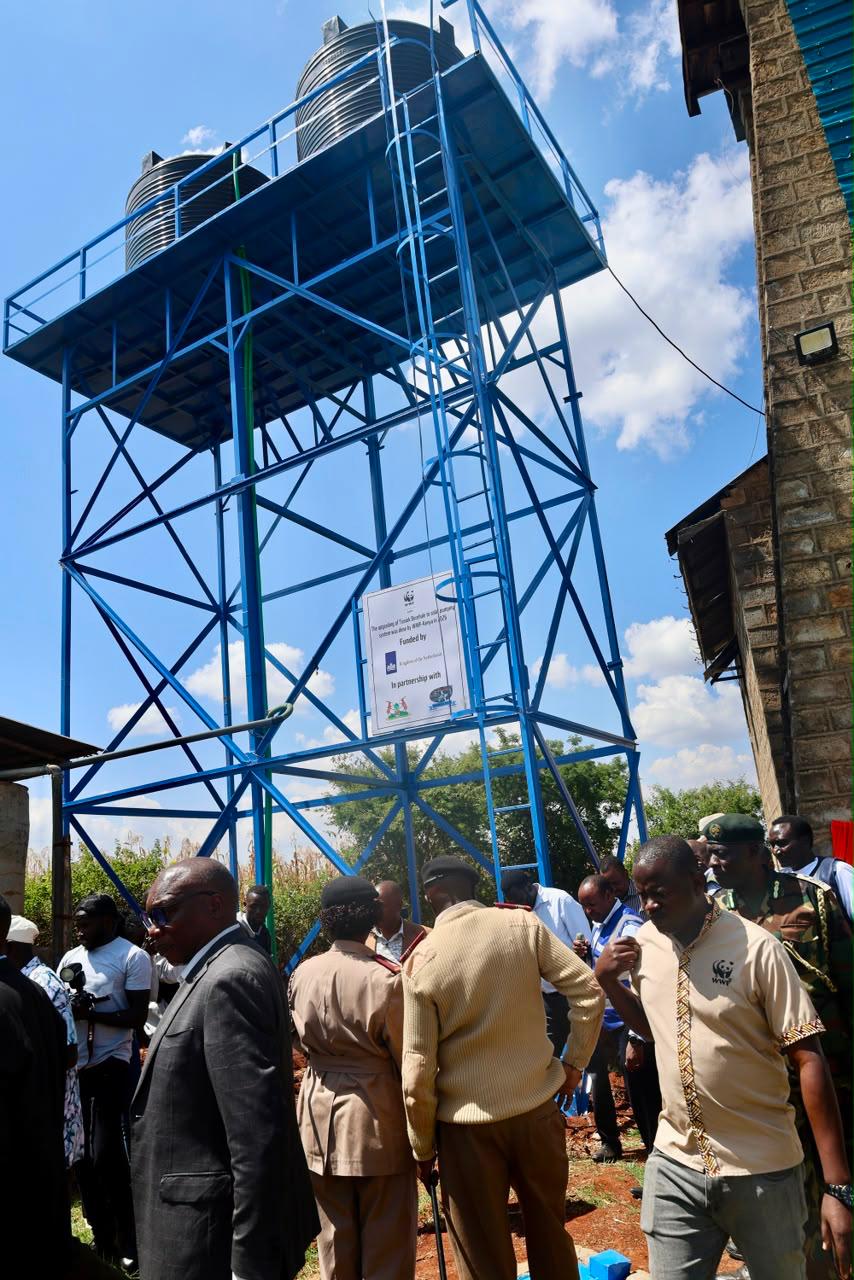
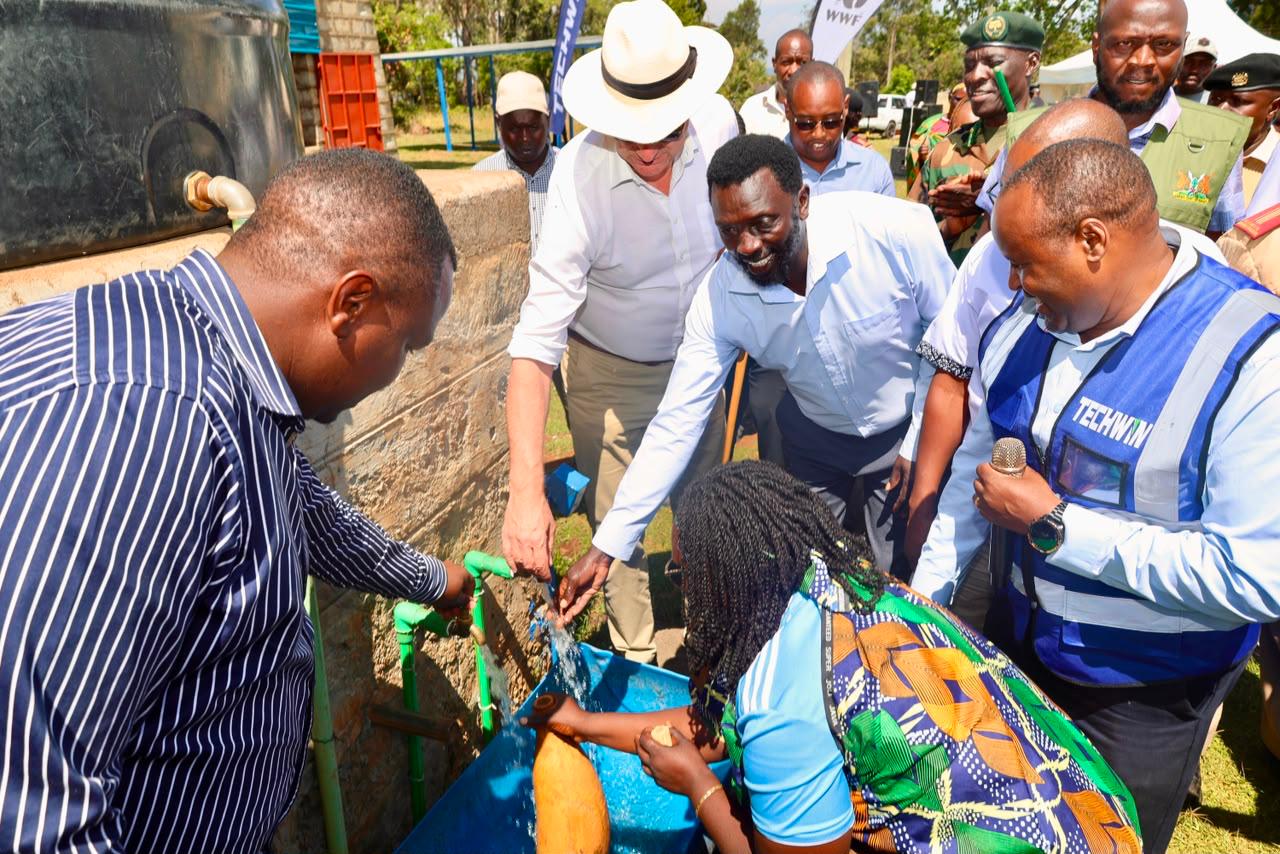
At the Toniok community borehole in Perkerra Ward, solar power has replaced the diesel-powered water system that frequently broke down. This has guaranteed reliable access to clean water for more than 500 households, schools, and health facilities.
The project is part of the Catchment to Tap (C2T) initiative, a five-year programme designed to strengthen water security across Kenya by integrating catchment conservation with sustainable water service delivery. The programme is funded by the Embassy of the Kingdom of the Netherlands and implemented by WWF-Kenya together with government agencies and water sector partners.
From diesel dependency to clean energy
The KES 2.5 million solar project intervention replaced the diesel pump by constructing a nine-metre water tower and installing two 10,000-litre storage tanks capable of holding 20,000 litres of water. A community management committee was also established to oversee operations and maintenance.
For residents like Judy, the impact has been immediate.
“In the past, we had to buy diesel and then find someone to operate the water pump. The process was expensive, unreliable and sometimes left us without water for several days,” said Judy.
Today, she says, the community contributes only a small maintenance fee, far less than what households previously spent on diesel, transport and labour.
“To us, this is a miracle and a dream come true.”
For Doreen Ngetich, the solar-powered water project means freedom from exhausting daily walks.
“I used to walk about three kilometres looking for water because I could not always afford diesel or the money needed to pay those operating the engine,” she said.
“The solar-powered system has made life much easier. Water is now pumped using clean and reliable energy from the sun,’’
Doreen observed that they now have time to focus on farming, caring for their families, and pursuing income-generating activities, while children spend more time in school rather than searching for water.
Caring for water catchment areas
According to Wayne Kiplimo, Secretary of the Narosura Water Resource Users Association, improving water access requires more than drilling boreholes.
Kiplimo noted that the initiative adopted an integrated approach by strengthening community participation, improving governance and protecting water sources throughout the catchment.
“The focus has been on ensuring that the water system is sustainable,” he says.
Beyond solarisation, community members have been trained to manage water infrastructure, while local institutions have received equipment and technical support to improve long-term operations.
The broader Catchment to Tap project also supports restoration of degraded catchments and strengthens Water Resource Users Associations to improve conservation and water governance.
Baringo County Deputy Governor Felix Kiplagat Maiyo says the county has drilled more than 700 boreholes, but only about 60 per cent remain functional because of poor management and the high cost of electricity.
“Many boreholes break down because of the cost of power,” he says.
Currently, only around 10 per cent of the county’s boreholes have been converted to solar power.
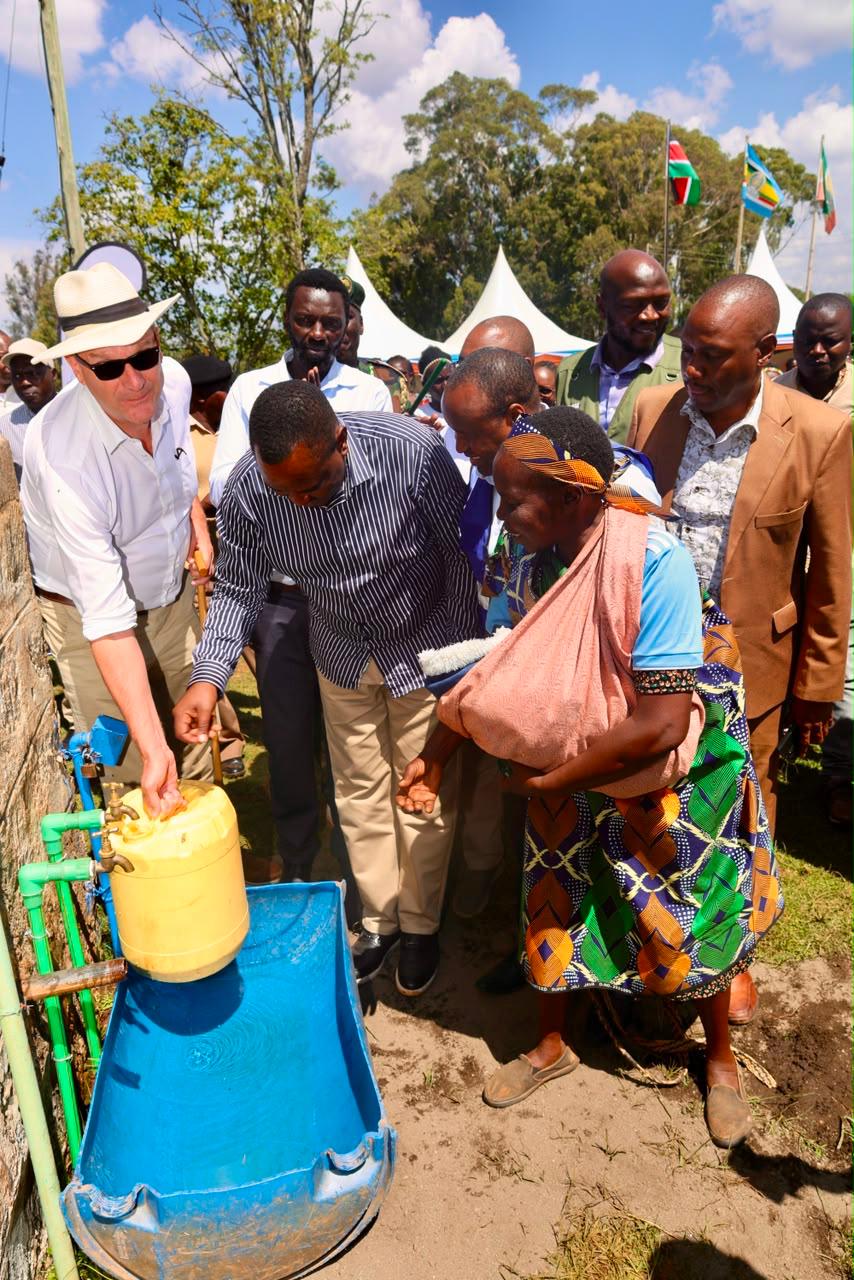
According to Maiyo, increasing that proportion could dramatically improve water access across the county while reducing operational costs.
He noted that the county is now working to strengthen governance by establishing better management structures to oversee community water systems and ensure long-term sustainability.
Paying for sustainability
Speaking during the launch, Dutch Ambassador Keno Jan Bakker said that while water should remain affordable, modest user fees are essential to maintaining infrastructure.
“There is no such thing as completely free water. The infrastructure has to be operated and maintained,” said Bakker.
WWF-Kenya Chief Executive Officer Jackson Kiplagat said the county also needs greater investment in protecting catchments, harvesting rainwater and constructing check dams to capture runoff that currently flows away during heavy rains.
Kiplagat warned that without deliberate planning, agricultural production across the region is expected to decline as rainfall patterns become increasingly unpredictable.
“We need a systematic county plan to harvest water, make it available for productive use and allow it to recharge the aquifers that supply our boreholes,” he said.
For women like Judy and Doreen, shorter walks in search of water mean lighter loads, lower household costs, and children spending more time in classrooms than on dusty paths searching for water.