|
Getting your Trinity Audio player ready...
|
By Bobby Ramakat
If you believe that infections impact all genders equally, this piece invites you to think again. Antimicrobial Resistance (AMR)—the process by which microbes evolve to defeat the drugs designed to kill them—is often framed as a purely biological or technical problem. But a closer look reveals it is a crisis deeply shaped by gender.
Gender is a social construct that dictates the roles, behaviours, and power dynamics between women, men, and gender-diverse people. While AMR is driven by the misuse and overuse of medicines across human health, agriculture, and the environment, its impact is far from gender-neutral. A complex mix of biological, social, and economic factors, rooted in systemic inequalities, makes women and girls disproportionately vulnerable to drug-resistant infections.
The Gendered Burden of Care and Risk
In most settings, particularly in the Global South, women and girls are the primary, often unpaid, caregivers. This role places them on the frontlines of infection, frequently in environments where infection prevention and control (IPC) is inadequate. Whether at home, in the community, or in healthcare facilities, this constant exposure increases their risk of contracting and spreading infections, without the protective measures they need.
This vulnerability is compounded by deep-seated social norms. Studies on childhood vaccination consistently show a bias: a male child is more likely to receive essential immunisations than a female child. When it comes to seeking healthcare for themselves, women and girls face even greater barriers. They are less likely to access services in a timely, person-centred manner due to a lack of financial autonomy, restricted mobility, and the normalised neglect of their own well-being in favour of other family members.
The Vicious Cycle: Violence, Stigma, and AMR
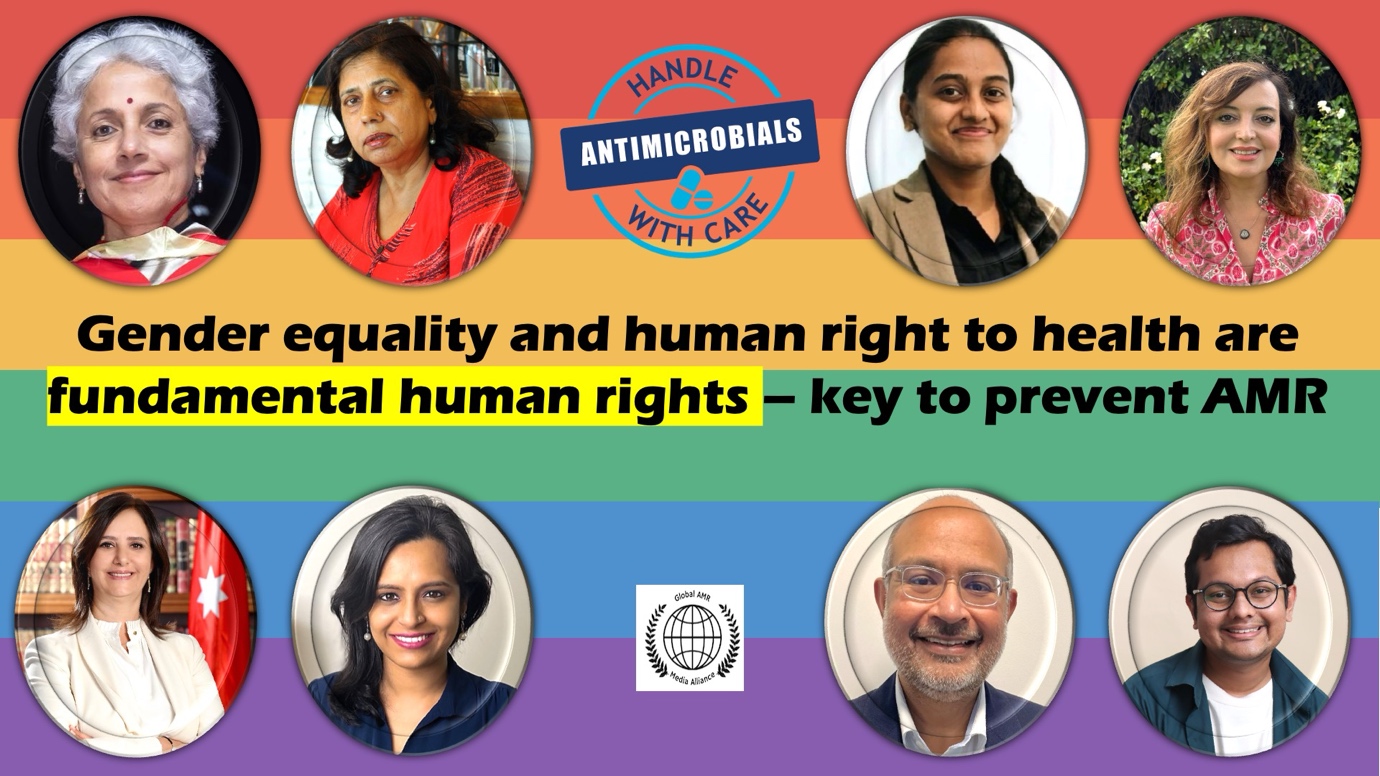
The link between gender-based violence and AMR is stark and often overlooked. As Dr. Soumya Swaminathan, former Chief Scientist of the WHO, points out, we cannot hope to prevent AMR without tackling this issue. “Women are at a very high risk of intimate partner violence… This could lead to more infections.” Sexual and physical violence increases the risk of sexually transmitted infections, urinary tract infections, and pelvic inflammatory disease—all of which require antibiotic treatment.
Furthermore, the trauma and lack of agency that result from violence often prevent women from seeking timely and complete care. They may take partial courses of antibiotics or the wrong doses, creating the perfect conditions for resistance to develop. The experience of unsafe abortions and unplanned pregnancies further elevates this risk.
Stigma acts as another powerful barrier, particularly for diseases like TB and HIV/AIDS. Bhakti Chavan, an extensively drug-resistant TB (XDR-TB) survivor, explains: “In many communities, a woman diagnosed with TB or HIV is judged… Her character, her marriage prospects… are questioned. I have seen many women hide their illness because of this stigma.” This leads to delayed diagnosis, poor treatment adherence, and ultimately, the development and spread of drug-resistant forms of the disease.
Power, Agency, and Access to Care
The power dynamics within healthcare are heavily gendered. “Women often have the least power in being able to negotiate and advocate for themselves within healthcare settings—whether they are healthcare professionals or patients,” notes Dr. Esmita Charani of the University of Cape Town. Women frequently prioritise the health of family members over their own, and when household resources are scarce, male family members are often chosen to receive care first.
This lack of agency is reinforced by social norms around menstruation, pregnancy, and control over financial assets. These norms limit women’s access to WASH (Water, Sanitation, and Hygiene), education, and the freedom to seek healthcare. As Dr. Deepshikha Bhateja from the Indian School of Business explains, this directly impacts the drivers of AMR, increasing susceptibility to infection and leading to inappropriate diagnosis and management.
To truly understand these barriers, an intersectional lens is essential. A woman’s experience is not defined by gender alone. Her caste, religion, migration status, and role as, for example, a female farmer in a rural area with a migrant husband, create multiple, overlapping layers of disadvantage. As Dr. Salman Khan, a former member of the Quadripartite Working Group on Youth Engagement for AMR, asserts, “AMR is shaped by those who have power, whose health is prioritised, who control resources, and whose voices are ultimately heard.”
From Vulnerability to Leadership
While women are disproportionately impacted, they are also the key to the solution. Dr. Mayssam Akroush, Founding President of The Pan Arab Women Physicians Association, argues that women are “at a great position to lead the change.” As mothers, teachers, doctors, and pharmacists, they are the primary decision-makers regarding their families’ health. Targeting AMR awareness campaigns at women can educate an entire population on the responsible use of antibiotics.
A Call to Action: Mainstream Gender into AMR Responses
There is a growing consensus that our National Action Plans on AMR must address these gender inequalities head-on. This means including gender-based violence indicators, recognising sexual health services as key hotspots for antibiotic exposure, and embedding gender-sensitive stewardship indicators into policy.
We have failed to prevent drug-resistant TB, with case numbers stagnating for decades. We had the science and the tools, but we failed to address the social and structural drivers, including gender inequity, that fuel the epidemic.
The most effective and sustainable response to AMR must, therefore, be a feminist one. As Shobha Shukla, Chairperson of the Global AMR Media Alliance (GAMA), states, “AMR and other health responses must be rooted in a feminist development justice model which is based on care and solidarity for each other, where no one is left behind.”
In 2024, the WHO released guidance on integrating gender into AMR policies. The path forward is clear. By strengthening primary healthcare, achieving Universal Health Coverage, and centring our response on the realities of women and girls, we can build a world that is safer and more equitable for all.
Bobby Ramakant is a WHO Director General WNTD Awardee 2008 and part of CNS editorial and on the board of Global Antimicrobial Resistance Media Alliance (GAMA), which was conferred the 2024 AMR and One Health Emerging Leaders and Outstanding Talents Award at the High-Level Ministerial Conference on AMR. Follow Bobby on X: @bobbyramakant