
|
Getting your Trinity Audio player ready...
|
By Omboki Monayo
Nairobi — For decades, health spending in Africa has been framed as a moral obligation or a social crusade. But according to a senior African Development Bank (AfDB) official, that framing is not just outdated—it is economically catastrophic.
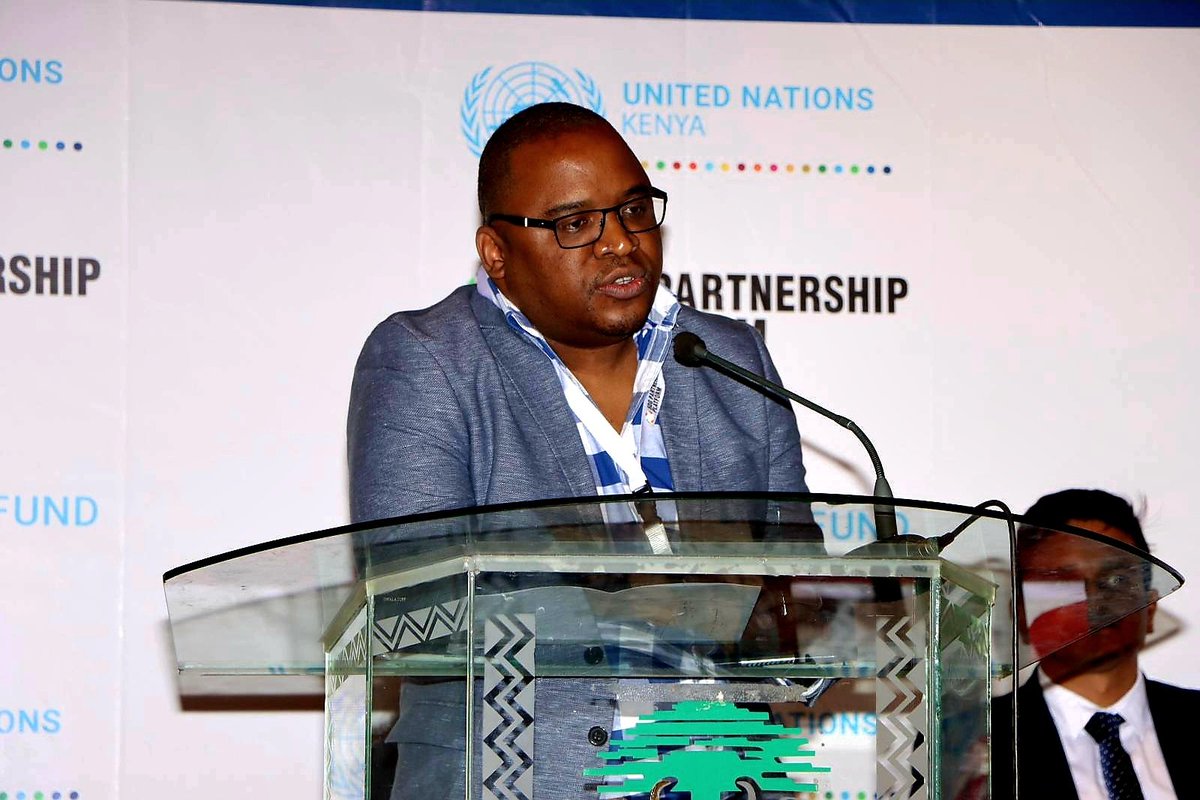
Speaking at the World Health Summit (WHS) Regional Meeting 2026 in Nairobi, Prof. Babatunde Omilola, Director of Public Health, Security and Social Protection at the AfDB, delivered a blunt message: the era of treating health as merely a “social pillar” is over. Health, he argued, is an economic imperative.
“Africa is losing $2.4 trillion annually as a result of lack of investment in the health sector,” Prof Omilola revealed, citing AfDB research. “We looked at the disease burden and realised if we do not improve health service delivery, we are not likely to achieve economic productivity that will help us reduce the overall disease burden.”
The staggering figure, equivalent to roughly two-thirds of the continent’s combined GDP, underscores a vicious cycle. Poor health outcomes suppress labour productivity, discourage foreign investment, and drain household savings through out-of-pocket medical expenses. Yet, despite carrying more than 25 per cent of the global disease burden, Africa accounts for less than three per cent of global health expenditure.
The missing link, according to Prof Omilola and other panelists at the summit, is not just money. It is largely efficiency, or the lack of it.
The Efficiency Trap
While African governments often plead for more donor funding, experts argue that fragmented and poorly managed public financial systems are bleeding out existing resources.
Richard Matikanya, Deputy Executive Director of the Children’s Investment Fund Foundation, warned that the proliferation of donor-driven “vertical silos”, through bodies like PEPFAR, GAVI, and the Global Fund, has created parallel health architectures that undermine national systems.
“Every time we create all of these parallel universes that are parallel to national health systems, it’s inefficient, and when these funds stop, it just puts us in difficulties in terms of management, and we leave nothing behind,” Matikanya said. “We need to stop creating parallel architecture. These parallel universes are inefficient.”
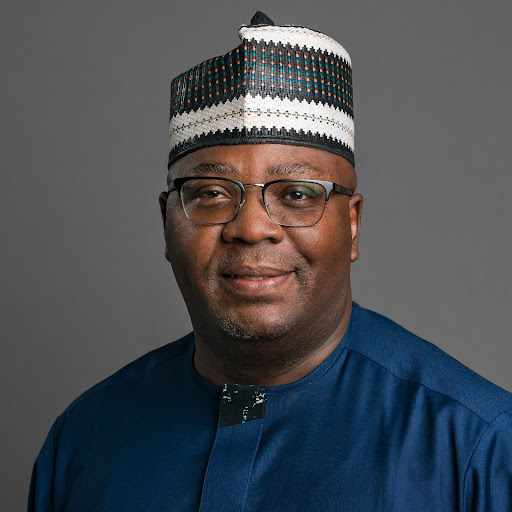
He argued that if development partners genuinely support Universal Health Coverage (UHC) and national health plans, “then we should support one national health plan”as opposed to depending on multiple, uncoordinated streams of funding that vanish when donor priorities shift.
This fragmentation is compounded by weak public financial management (PFM) at the domestic level. Research from sub-Saharan Africa shows that countries with high-quality PFM systems consistently record lower maternal, under-five, and non-communicable disease mortality. Specifically, better “predictability and control in budget execution”, which ensures that allocated funds actually reach health facilities on time, is strongly correlated with saving lives.
Yet across the continent, debt-service obligations now consume more than 31 per cent of government revenues, crowding out investments in health, education, and infrastructure. Total African public debt reached $1.9 trillion in 2024, with seven countries already in debt distress. In this fiscal straitjacket, efficiency is not optional; it is survival.
Fix the Plumbing
Matikanya was explicit about where reforms must begin. “If we don’t address public financial management to achieve elevated efficiency, nothing will happen in terms of progress,” he said. “We need to invest in public finance management systems, and apply the same to payroll systems to address the issue of ghost workers, insurance design, tax systems, fiscal space business.”
The reference to “ghost workers”—non-existent employees drawing salaries—highlights the scale of leakage. A resilient health system, Dr. Omilola explained, is one where a facility can procure oxygen, medicines, or personal protective equipment immediately, without waiting months for new approvals. It is one where the health minister can act during an emergency without begging for supplementary budgets.
“Markers of a resilient system: no spike in out-of-pocket spending due to health emergencies, budgetary elasticity, when the minister of health can act immediately rather than wait for new resources to come in,” he said. “Resilience is when the facility can actually procure the oxygen, medicines, PPE rather than waiting for new approvals.”
The Local Manufacturing Dividend
Beyond fixing budget execution, Prof Omilola argued that African governments must reimagine health spending as investment—starting with pharmaceutical manufacturing. The continent currently imports 99 per cent of its vaccines and 70 to 90 per cent of its pharmaceutical products, mainly from the EU, India, and China. Only one per cent of vaccines administered in Africa are produced locally, despite the continent consuming roughly a quarter of the world’s vaccine supply.
“In Africa, we import 99 per cent of our vaccines, and 70 to 90 per cent of the pharmaceutical goods and commodities,” Prof Omilola noted. “We’re trying to let governments know that this is a serious investment that generates serious income revenue.”
He cited Namibia as an example of missed opportunity: “They are investing heavily in the health sector, but they are not thinking about how the resources they are investing will lead to economic productivity, boost job creation, stem outbound medical tourism, generate sufficient revenue from service delivery to plough back into the health sector.”
The African Union has set a target for 60 per cent of vaccine supply to be produced locally by 2040. Achieving that goal would not only secure supply chains, which were brutally exposed during COVID-19, but also retain billions of dollars in foreign exchange currently spent on imports.
Sovereignty and Hard Conversations
Underpinning the entire discussion was a theme of genuine ownership. Matikanya argued that African governments must stop outsourcing their health sovereignty to donors.
“We cannot continue to talk about sovereignty if it’s compromised. And if external resources are being pumped into our health system, then it’s fragile and cannot be sustainable,” he said. “Part of country ownership includes having difficult conversations with our partners, because we all want accountability, and it includes ensuring that resources are utilized as efficiently and effectively as possible.”
Kenyan President William Ruto, who opened the summit, echoed this sentiment: “Delivering health is our responsibility as governments; any other assistance we get is secondary. Many of our leaders on our continent believe that it is somebody else’s responsibility. We have to design ways and means of raising domestic resources to fund our health delivery systems”.
For the AfDB’s Prof Omilola, the path forward is clear but demanding: mobilising domestic resources, fixing public financial management, and treating health as the economic driver it truly is. “The era and idea of health being just a social pillar is gone,” he repeated. “Health is an economic imperative.”