
|
Getting your Trinity Audio player ready...
|
By William Abala
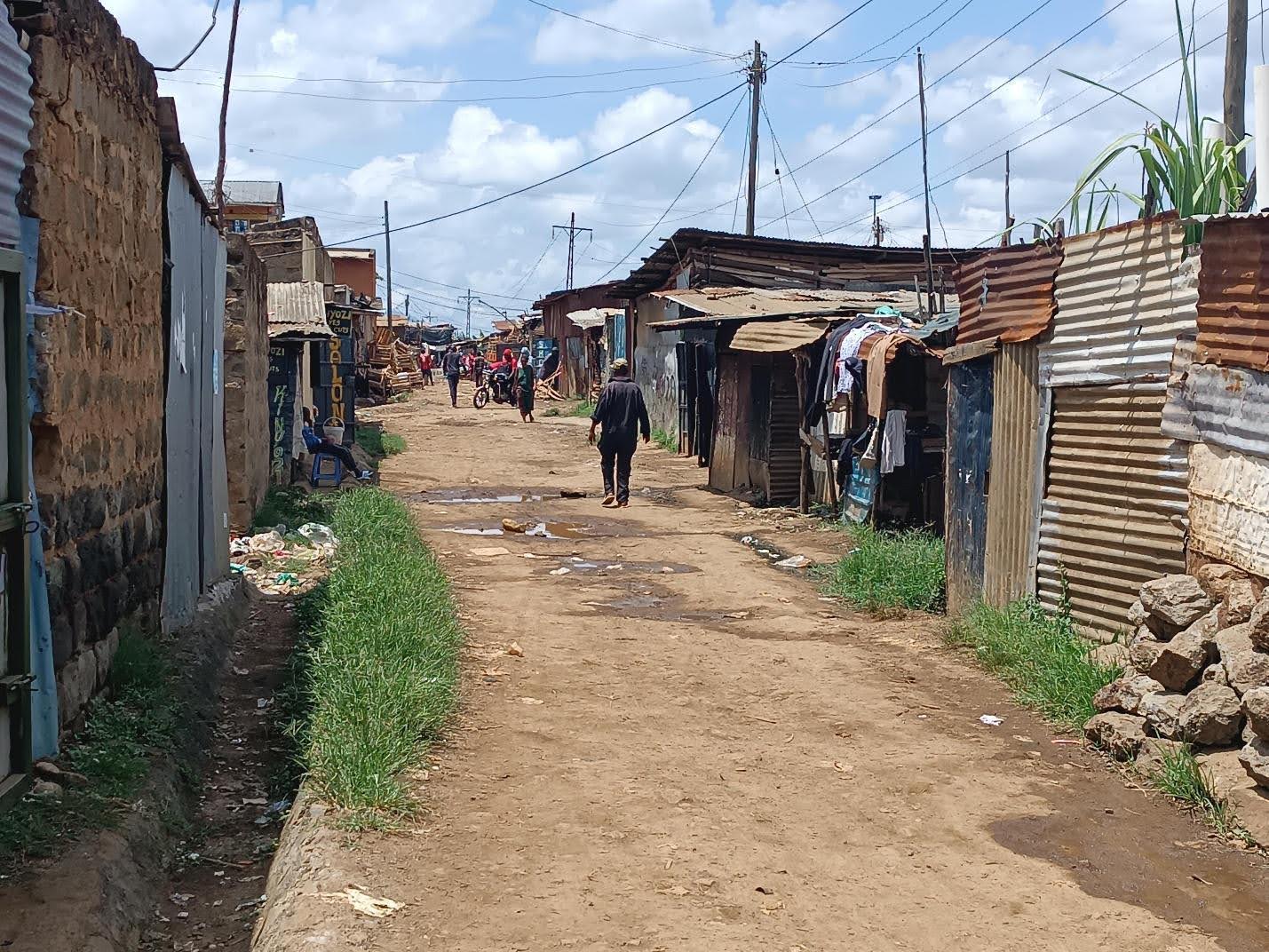
Kiambu County, Kenya: The narrow, sewage-lined paths of Kiandutu slum in Thika twist like veins under the weight of thousands of shanties. Home to over 50,000 people, most surviving on less than $2 (KES 258) a day, the slum is a pressure cooker of unemployment, alcoholism, and desperation.
Families squeeze into single-room shacks, children play beside toxic waste, and violence, especially against women, is as common as the choking smoke from charcoal stoves. Here, survival is a daily gamble, and for women, the stakes are highest: their bodies are not their own, their choices are dictated by fear, and the cycle of violence is as relentless as the rain flooding their dirt floors.
Somewhere in the corridors, Martha walks quickly, her head wrapped in a faded leso, eyes darting. She is not heading to the market. She is not visiting a friend. She is running to the only government health facility in the informal settlement, the Kiandutu Health Centre.
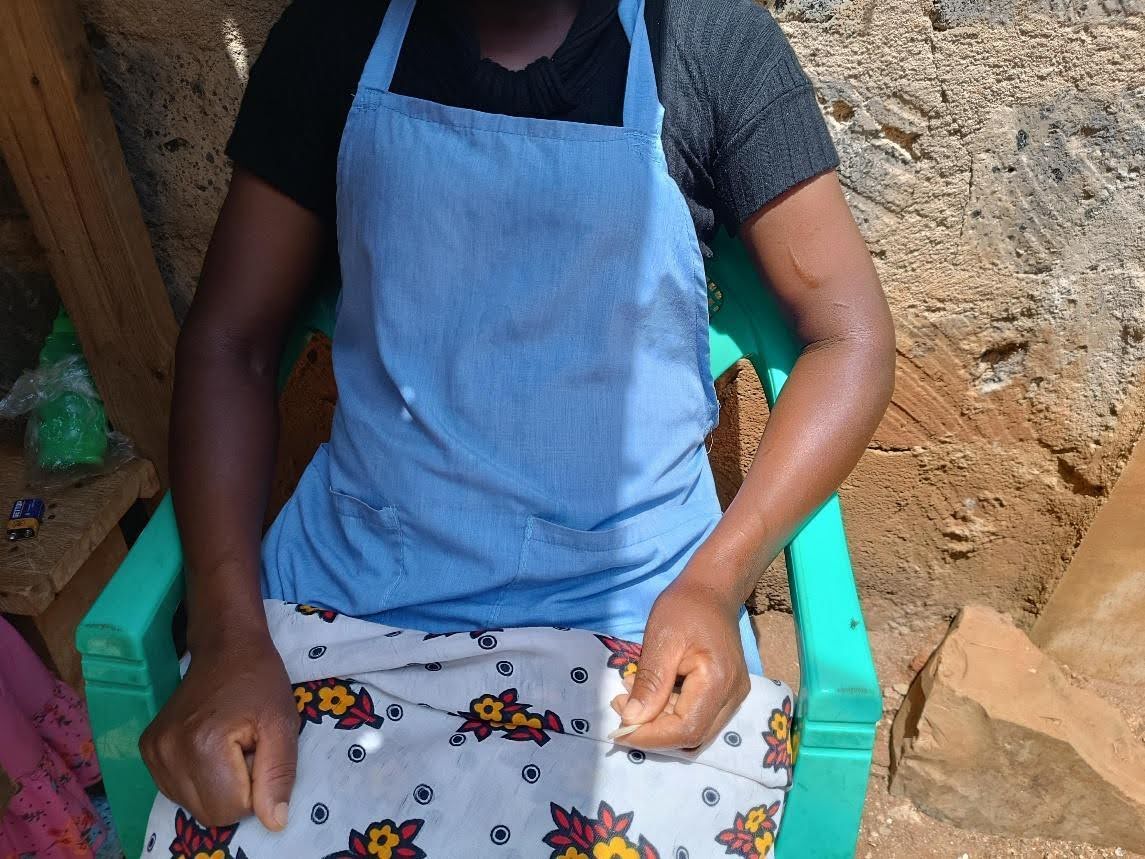
A community health worker—one of the few trusted allies—has promised her a discreet contraceptive injection. But if her husband finds out, she knows the beating will be worse than the last time.
“He says children are a sign of God’s blessing,” she whispers, her hands trembling, adding, “But I already have four. My body is tired. I cannot feed them all.”
Yet in Kiandutu, a woman’s womb is not always her own.
Intimate Partner Violence (IPV) is not just bruises and broken bones—it is the silent stranglehold on a woman’s right to choose.
At Kiandutu Health Centre, one in three women reports experiencing physical or sexual violence from a partner, a figure that mirrors Kenya’s national intimate partner violence (IPV) rate (KDHS 2022) but nearly doubles the global average (WHO 2021). For many, this violence extends to reproductive coercion—men dictating if, when, and how their wives can use contraception.

Dr. John Odero Ong’ech, a Nairobi-based gynecologist, explains:
“We see women who beg for long-acting contraceptives like implants or intrauterine devices (IUDs)—methods their husbands can’t detect. Others are forced into pregnancies they don’t want. The psychological toll is devastating.”
Martha’s Dilemma: Risking Violence or Risking Another Child
Martha’s story is not unique.
“Last year, I tried pills,” she confesses. “He found them. Threw them in the fire. Then he kicked me here until I stopped screaming… (she touches her ribs)… I couldn’t breathe properly for weeks.”
Now, she sneaks to the Kiandutu Health Centre located in Madaraka- Thika, where she gets her contraceptives.
“If he finds out this time, I don’t know what he’ll do,” she says. “But another baby? That will kill me, too.”
Healthcare Barriers: “They Ask for Husband’s Permission”
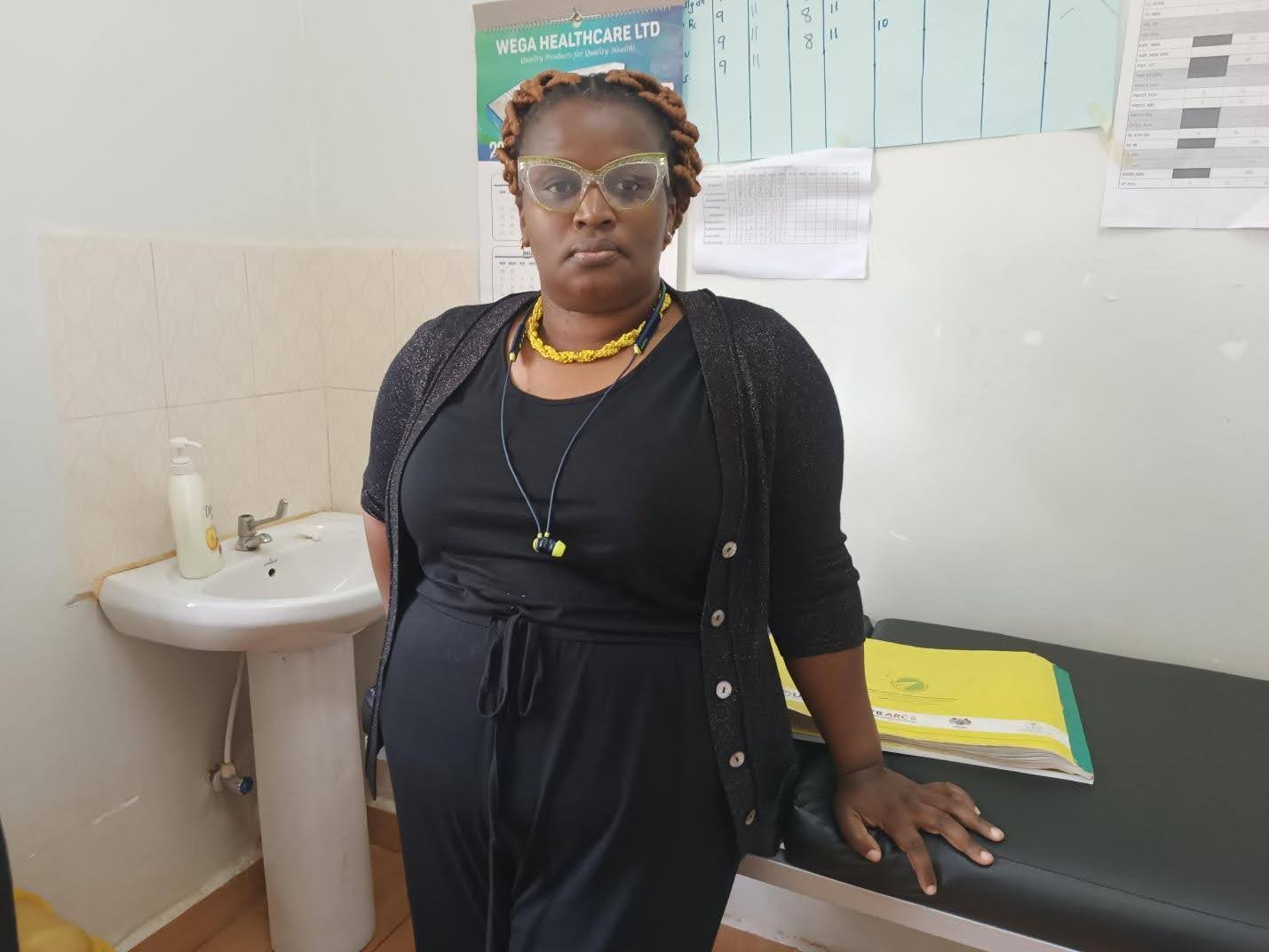
Even when women escape violent partners, clinics often demand spousal consent for family planning. Rebecca Mwangi, a nurse in Kiandutu, admits:
“Some providers fear backlash from men. So they turn women away unless they bring their husbands.”
Kenya’s Protection Against Domestic Violence Act (2015) exists on paper. However, FIDA Kenya reports that less than 10% of IPV cases in slums ever reach court.
“Police say it’s a ‘family matter,’” says Advocate Judith Owenga. “Women are sent back to their abusers.”
With no income, leaving is impossible. Marie Stopes Kenya found that 62% of women in Kiandutu depend entirely on their partners for survival, making contraception a lifeline.
“We use code words,” says Community Health Promoter Anne Wanjiku. “If a woman says she’s ‘visiting Auntie,’ we know she needs help.”
Men Who Stand in the Way—And the Few Who Don’t
Random interviews with Kiandutu men reveal stark attitudes: “A real man controls his home. If my wife uses birth control, she’s cheating.” — John, 32. “I beat her once for going to the clinic. Children are my pride.” — Musa, 34. But there are exceptions. David, 29, accompanies his wife to appointments:
“I saw my mother suffer. I won’t let my wife go through that.”
Despite Kenya’s commitment to increasing modern contraceptive use to 66% by 2030 (aligned with SDG 3.7 of ensuring universal access to sexual and reproductive healthcare services, including family planning), progress is hindered by spousal consent requirements, lack of IPV-sensitive healthcare training, and deep-rooted gender norms that discourage women’s reproductive autonomy. Without addressing these systemic barriers, the 2030 target remains out of reach for millions of Kenyan women.
Irene Njeri Wairimu, a gender rights activist who has spent years knocking on Kiandutu’s rusted doors, knows the cruel calculus of survival here. She times her visits carefully—midday when men are at construction sites, or weekends during football matches. The women she meets are anything but idle: most hustle as laundry washers earning $2/day (KES 256), market traders hawking wilted greens, or home-based seamresses stitching school uniforms for exploitative contractors.
“Every time we counsel women on their rights, we also see the fear in their eyes—not just of their husbands, but of starvation,” she says.
“We tell them: ‘Go to the clinic, learn about contraceptives, protect your health.’ But then they whisper back: ‘If he finds out, who will feed my children?’
The hardest cases, she says, are the mothers who arrive at her organization’s office with battered faces and hungry toddlers in tow.
“The man beating her is often the same one paying rent. Do we push her to report him and risk homelessness? Or do we bite our tongues and slip her contraceptives, knowing the violence will continue?” Her hands tighten around a folder of case files.
“We fight for their rights, but this slum fights back harder.” Says Irene.
The Cost of Silence
Meanwhile, Martha gets her injection. For three months, she’s safe from pregnancy. But the fear lingers.
“Every night, I pray he doesn’t notice,” she says. “But if he does… (she pauses)… I’ll say it’s for high blood pressure.”
As Dr. John Odero Ong’ech puts it, “Until men stop treating women’s bodies as property, Kiandutu’s cycle of poverty and violence will never break.” As Martha slips back into the shadows of Kiandutu, she clutches a small card—a hidden number for a GBV hotline.
“Maybe one day,” she says, “I’ll be brave enough to call.
For now, survival is her rebellion.
This story was produced under the Kenya Creates – Journalist Fellowship Story Grant Program in partnership with Journalists for Human Rights (JHR).