
|
Getting your Trinity Audio player ready...
|
By Victoria Musimbi
Nairobi, Kenya: Better access to financial information and sustained follow-up on public projects could help improve oversight in the use of public resources.
These measures were among the issues discussed during a Kenya Editors Guild (KEG) and International Republican Institute (IRI) programme examining oversight and reporting of complex and high-risk public financing instruments.
The discussions focused on how financial decisions can be tracked from borrowing and procurement through implementation and repayment, while strengthening institutional responses and proactive disclosure. They also explored ways to translate complex financial information into clear and accessible information for the public.
Following The Money
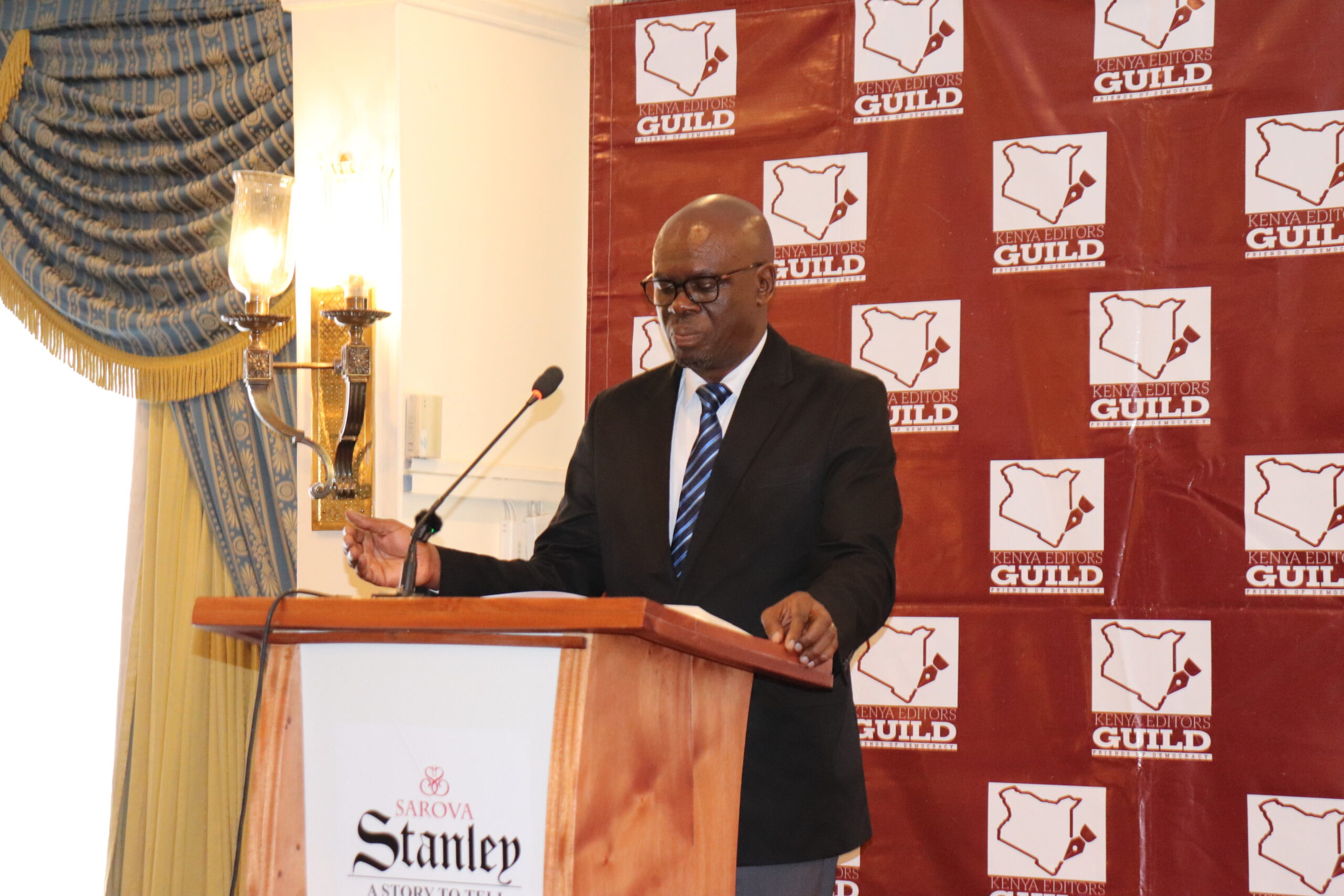
Francis Openda, Vice President of the Kenya Editors Guild, said the partnership with IRI had provided an opportunity to examine how the media can engage public institutions more effectively on public finance oversight.
He noted that accountability should cover the full life cycle of public financial obligations, from the decision to borrow and the financing agreement to procurement, implementation and repayment.
“Accountability should not begin after the money has been borrowed or spent,” Openda said, emphasising the need to examine why money is borrowed, how it is used and whether the intended value is ultimately delivered.
“We need to help Kenyans understand not just how much the country or a county owes, but why it is borrowed, on what terms, what has been achieved and who is accountable for the outcome.”
Openda urged journalists to go beyond reporting project approvals or announcements and ask why money is being borrowed or spent, how much is involved, the true cost including interest, and the financing terms.
He also highlighted the importance of establishing the currency in which a loan is denominated, noting that exchange-rate fluctuations can increase the amount required for repayment.
“Every time the Kenyan shilling takes a beating against the dollar, the amount that we are expected to repay goes up. It is not constant,” he said.
On procurement, he challenged journalists to establish whether the process was competitive, who won the contract and whether a project was single-sourced.
The examination, he added, should continue after completion to establish what was delivered, at what cost and whether the project is functioning and providing the promised public benefits.
“Was the project completed? If yes, at what cost? Is it functioning and providing the promised public benefits?”
Openda further called for responsible reporting by ensuring institutions are given a fair opportunity to respond and distinguishing allegations from established facts.
“Public finance reporting requires patience. It is not instant coffee,” he said, urging journalists to follow the money and paper trail and translate complex financial documents into information ordinary wananchi can understand.
Debt and Revenue Pressures
Alexander Riithi, Head of Programmes at The Institute for Social Accountability (TISA Kenya), said Kenya’s debt currently stands at Sh13.2 trillion, according to Treasury figures, with about Sh7.3 trillion being domestic debt.
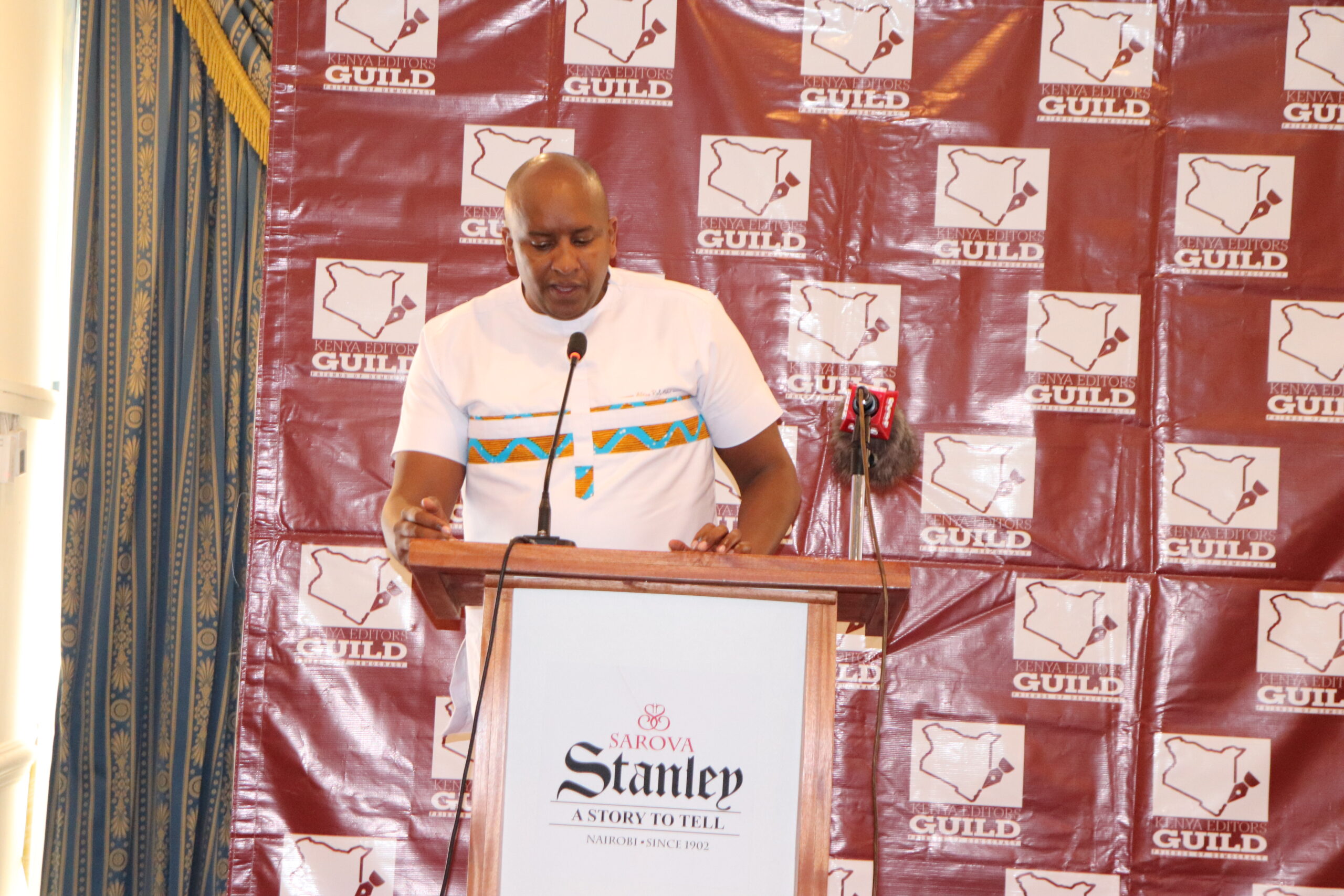
Riithi attributed the debt problem partly to unrealistic revenue projections during budget formulation. Revenue shortfalls force the government to borrow more to finance expenditures already incurred.
Rising expenditure, coupled with shrinking access to international debt markets, has increased domestic borrowing and crowded out the private sector as government competes with businesses for funds.
“We need accurate forecasts for our macroeconomic indicators, particularly GDP and revenue, and a credible budget. Going forward, we also need to reduce expenditure to lower our borrowing appetite.”
Riithi warned that failure to address the problem could eventually lead to default, lowering Kenya’s standing in international credit markets, affecting businesses’ access to financing and contributing to job losses.
On the debt ceiling, he noted that Kenya initially had a debt anchor of 55% of GDP. The country later introduced a nominal ceiling, initially set at Sh8 trillion and increased to Sh10 trillion, before returning to the 55% of GDP threshold.
“Our debt is now approaching 70%of GDP, which is significantly above the 55% target. Removing that target would simply open more space for borrowing against revenues that may never materialise.”
He called for fiscal consolidation to bring debt back towards the 55% threshold.
On privatisation, Riithi observed that divestiture could only provide temporary relief because government assets available for sale would eventually be exhausted. He instead advocated long-term measures to reduce expenditure and increase revenue.
“Last year, ordinary revenue was about Sh2.4 trillion against expenditure of roughly Sh4.8 trillion. Unless we reduce expenditure so that revenue can better match our needs, we will continue deepening the problem.”
Riithi identified reducing the size of government and merging some parastatals as measures that could cut overhead costs. He also raised concerns about budget credibility, noting that up to Sh209 billion was added to the budget through Article 223 approvals in the last financial year.
On securitisation, he raised concerns about the lack of transparency and public participation. He cited the fuel levy, saying Sh7 per litre had been added to the levy to repay securitised debt.
“Securitising revenue streams means using future revenues today and limiting the fiscal space available to future governments.”
Riithi called for regulations governing securitisation, public participation and disclosure of the agreements. He cautioned that the practice could erode the future revenue base and leave future governments with limited resources to fund their priorities.