|
Getting your Trinity Audio player ready...
|
By Victoria Musimbi
Nairobi, Kenya’s ability to feed a growing population is under serious threat. More frequent droughts, devastating floods, unpredictable rainfall, and declining crop yields are squeezing smallholder farmers who form the backbone of the country’s food system—and experts warn the situation will only worsen.
With Kenya’s population projected to rise from roughly 58 million today to 70 million by 2040, the urgency of adapting agriculture to a changing climate has never been greater.
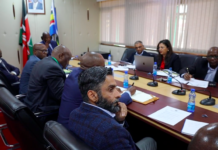
These pressures took center stage at a Kenya Editors Guild Press Club forum on “Resilient Harvests: Building Climate-Smart Agriculture for Kenya’s Future,” which brought together scientists, policymakers, researchers, development partners, and journalists to examine practical solutions for strengthening food systems and building climate resilience.
Better forecasts, but farmers must act on them
Improving access to reliable climate information emerged as a critical first step. Paul Murage, a climate scientist and assistant director at the Kenya Meteorological Service Authority (KMSA), told the forum that Kenya has made significant strides in weather forecasting—decentralizing services to all 47 counties and adopting high-resolution models that generate localized predictions.
“Today, we produce 48 forecasts—one national and 47 county-specific. Our models now operate at a resolution of four by four kilometers, enabling us to provide more localized and actionable information,” he said.

Under the Meteorological Act, 2026, KMSA’s mandate has expanded beyond issuing forecasts to regulating climate information services and delivering impact-based forecasting—helping farmers understand how specific weather conditions will affect their crops and livestock.
But Murage cautioned that better forecasts alone are not enough. “It is concerning that despite improved forecast accuracy, the gains are not always reflected in increased production or reduced losses. Farmers must use the information provided to make informed decisions,” he said.
Climate change is already reshaping Kenya’s farms
John Recha, a climate-smart agriculture and policy scientist at the International Livestock Research Institute (ILRI), was blunt about the stakes. “Climate change is no longer a future threat. It is already shaping what farmers can plant, how much they harvest, and what food reaches our markets,” he said.
Agriculture contributes about 25 percent of Kenya’s GDP and employs nearly 60 percent of the workforce—yet millions of Kenyans remain food insecure. Recha warned that without urgent action, climate change will deepen crop losses, drive up food prices, and erode household incomes across the country.
He also saw grounds for optimism, pointing to Kenya’s strong agricultural institutions, innovative farmers, and active research organizations as assets that can drive adaptation—if investments in climate-smart approaches are scaled up decisively.
From science to soil: solutions that are already working
AGRA Kenya Country Director Davis Muthini described agricultural transformation as a “three-legged stool” requiring guaranteed livelihoods, agricultural intelligence, and sustained investment. The challenge, he said, is no longer finding solutions—it is getting them into farmers’ hands.
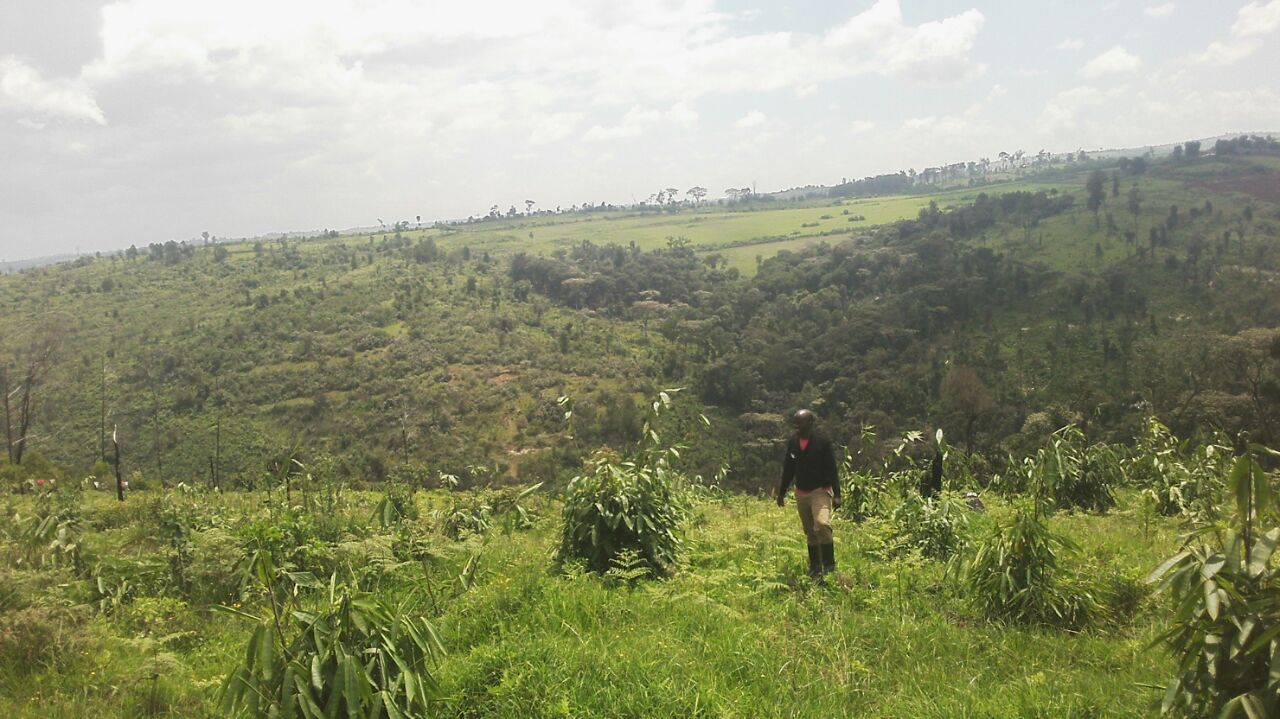
Through AGRA’s Strengthening Regenerative Agriculture in Kenya (STRAK) project, farmers in Embu, Makueni, Tharaka Nithi, and Kitui counties are already seeing results. By adopting mulching, composting, agroforestry, and micro-dosing of fertilizer, they are restoring soil health and lifting yields. In Tharaka Nithi, farmers who combined manure, mulching, and micro-dosing nearly tripled their sorghum harvests.
“Climate-smart agriculture, when implemented effectively, is not a cost to be absorbed but an investment that generates returns for households, communities, and the national economy,” Muthini said.
The media’s role in the climate story
Kenya Editors Guild President Zubeidah Kananu used the forum to call on journalists to reframe how they cover climate change—moving beyond disaster narratives toward solutions-oriented reporting.
“Climate reporting must not only document droughts, floods, and crop failures. It must also highlight solutions, innovations, policies, and community-led responses that are helping people adapt and thrive,” she said.
Kananu acknowledged the weight of the crisis—floods washing away homes and harvests, droughts leaving millions food insecure—but said there were reasons for cautious optimism. Farmers are adopting climate-smart practices, researchers are developing resilient crop varieties, county governments are investing in adaptation planning, and technology firms are providing weather intelligence and digital advisory services.
The task now, participants agreed, is acceleration—scaling what works, strengthening coordination, and ensuring that proven solutions reach the communities that need them most. Kenya has the tools. The challenge is deploying them fast enough.