|
Getting your Trinity Audio player ready...
|
By Lenah Bosibori
Nairobi — As Kenya grapples with a shortage of eye care specialists and limited government funding, health experts are turning to artificial intelligence-powered solutions aimed at reducing preventable blindness in underserved communities.
Speaking in Nairobi on Tuesday during a stakeholder forum on strengthening eye health systems at primary and community levels, Bernard Agbor, Chief Executive Officer of the Africa Ophthalmology Network Foundation, said the initiative seeks to address one of Africa’s biggest eye care challenges, which is the unequal distribution of eye care professionals.
“Most eye care professionals are concentrated in major cities, leaving communities with limited access to services. This creates serious accessibility challenges, especially in rural areas where most patients live,” he said.
The Vision Centre discussions, convened through a partnership between Women Youth and Children Development Organization (WYCDO), Kenya, and HE Vision Group, brought together government hospitals, faith-based institutions, eye care professionals, NGOs, and community organizations to explore ways of improving access to eye care services.
The push comes as many eye conditions develop silently without pain or early warning signs, prompting stakeholders to explore models that combine community-based healthcare, artificial intelligence, and sustainable business approaches to improve access to services where specialists remain scarce.
Agbor said nearly 75 percent of patients requiring eye care services are found in local communities, making community-focused solutions critical in the fight against avoidable blindness.
The proposed model introduces artificial intelligence-powered equipment that can be used even by non-specialist healthcare workers, allowing services to move closer to communities.
“We are not bringing something completely new. We are introducing solutions that fit within existing healthcare pathways while improving referrals, follow-ups, and telemedicine,” Agbor explained.
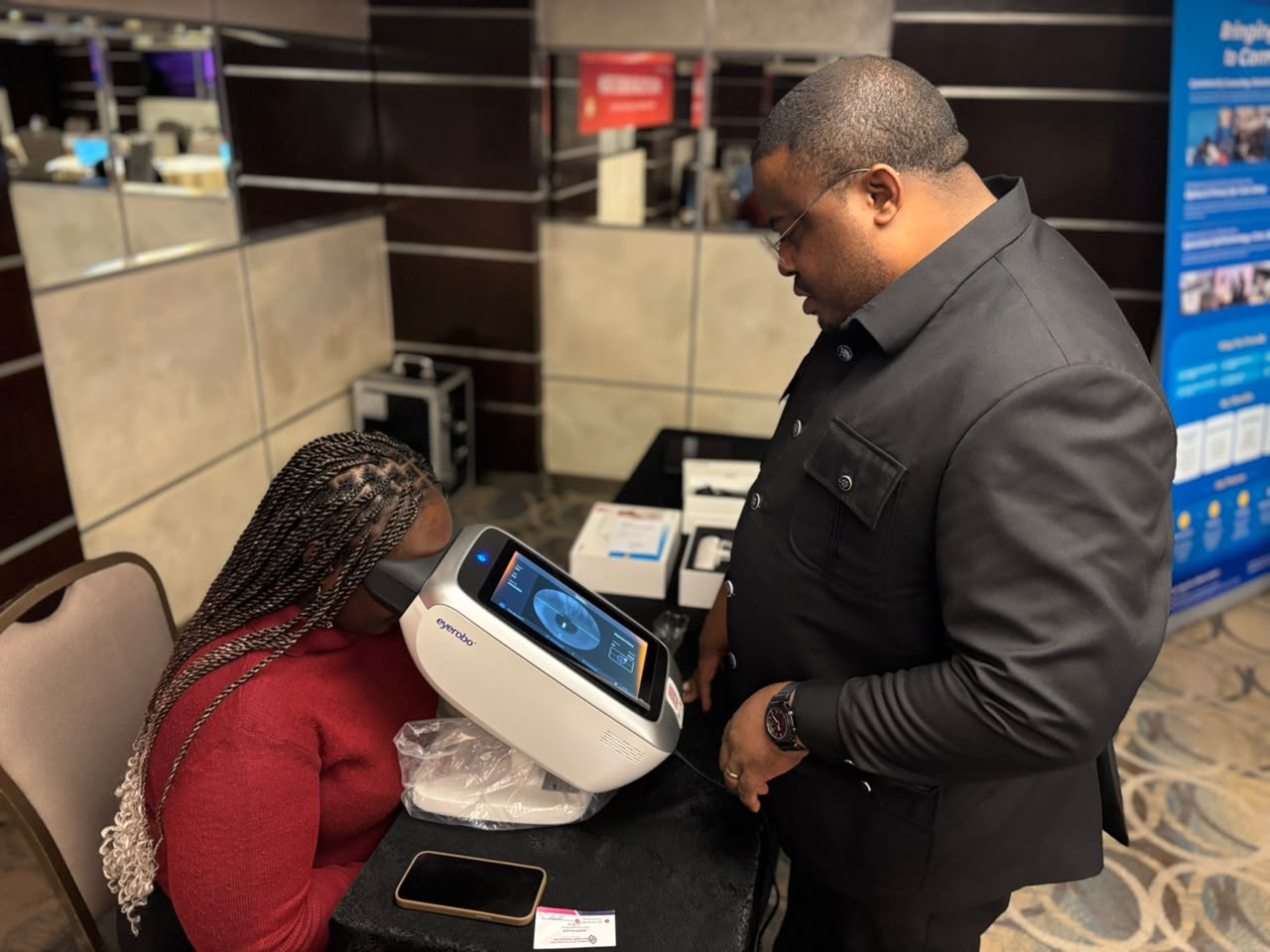
Among the technologies showcased were portable slit lamps attached to mobile phones that allow health workers to examine and capture images of the front of the eye, non-mydriatic fundus cameras capable of screening patients for conditions such as diabetic retinopathy and glaucoma in under a minute without dilating the eyes.
Other devices included vision screeners designed for mass screening and artificial intelligence-powered systems capable of recommending eyewear using facial scanning technology. One of the mass screening devices can conduct eye measurements in less than ten seconds, screen hundreds of patients daily, and automatically generate preliminary vision assessments
According to Agbor, the technology is intended to support rather than replace healthcare professionals. “Artificial intelligence is not replacing eye care professionals. It supports them by improving efficiency and precision. Specialists can focus more on diagnosis and treatment decisions,” he said.
Agbor warned that many healthcare projects collapse once donor funding ends and stressed the importance of building locally sustainable systems capable of operating without external support.
In her remarks, Helen Yan from He Eye Specialist Hospital in China said that, in addition to the AI technologies, their organization is partnering with WYCDO to introduce innovative Vision Centre models designed to bridge major gaps in eye healthcare delivery in rural communities.
According to Yan, the group has developed more than 20 portable artificial intelligence-based devices capable of screening patients with minimal training.
“Most eye care professionals are concentrated in cities, while people living in remote areas continue to struggle with accessibility. We developed these solutions to bring services directly to communities where they are needed most,” she said.
The technology allows volunteers and ordinary healthcare workers to operate screening equipment after receiving between thirty minutes and one hour of training.
The organization has already established collaborations in Tanzania, Cameroon, Ghana, Ethiopia, and Uganda, and is now exploring partnerships in Kenya.
“We do not want a model that depends entirely on donations because that cannot sustain services. We want a system that creates value, generates revenue, and continues serving communities long term,” Yan said.
Yan explained that retinal imaging can identify not only eye diseases but also broader health risks, including cardiovascular diseases, neurological conditions, and early signs of systemic illnesses.
The platform also supports offline functionality, allowing screenings to continue even without internet connectivity.
Terry Kiragu, Co-founder and Program Director at WYCDO, said they are partnering with HE Vision Group to help vulnerable communities who continue to suffer from limited access to eye care despite growing need.”Our goal is to bring people back to the steering wheel of their own lives so they can reclaim their identity, confidence, and ability to thrive regardless of where they come from or the challenges they have faced,” she said.
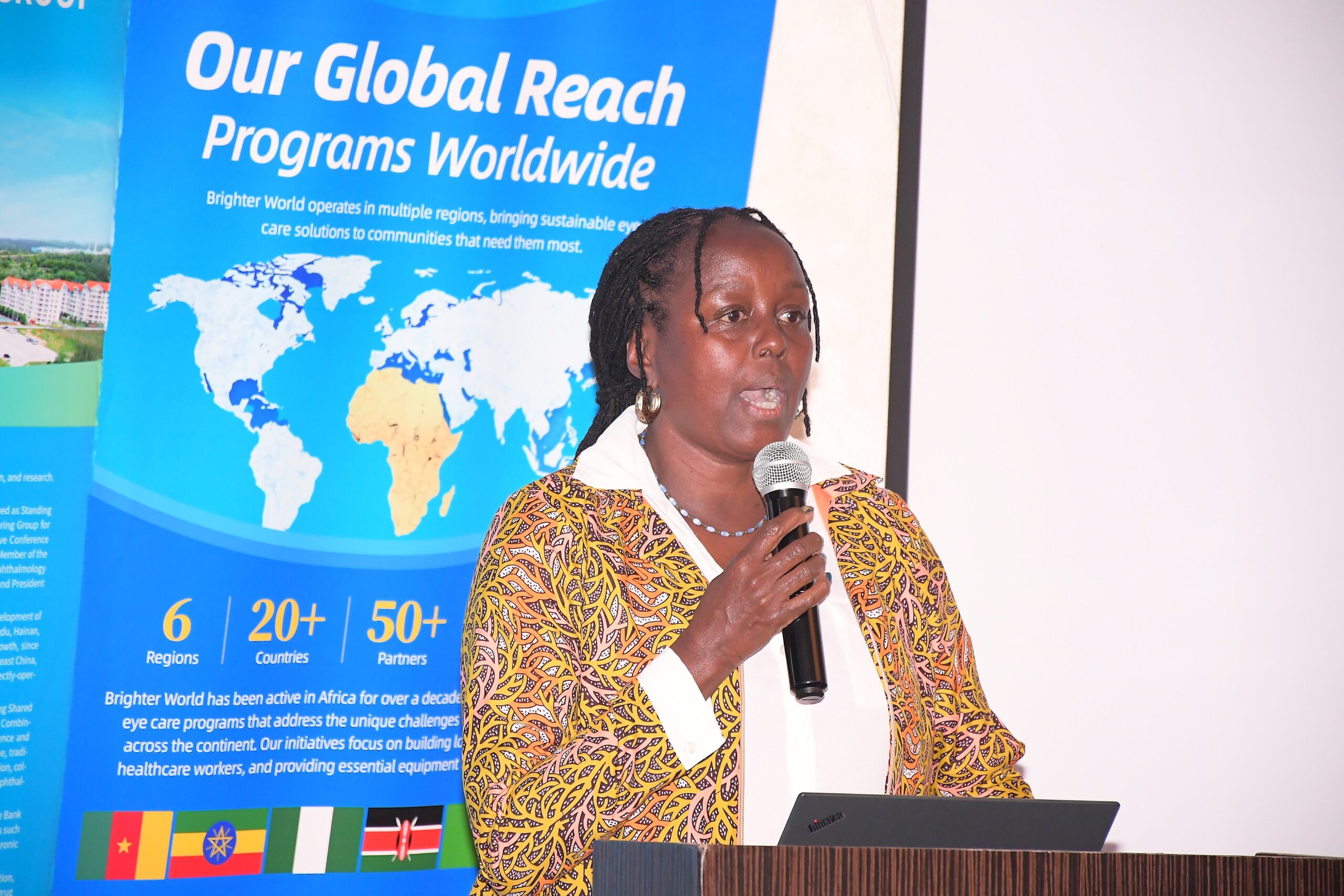
The organization works with women, youth, and vulnerable communities, focusing on empowerment, healing from trauma, and overcoming barriers created by poverty and lack of access to services.
Kiragu said eye care remains one of the most overlooked healthcare challenges despite its direct impact on quality of life and economic productivity.
The organization currently works with approximately 300 elderly women living in informal settlements where vision-related challenges continue to emerge as one of the biggest concerns.
“We see it every day. Many elderly women are slowly losing their eyesight because of conditions that can easily be treated. The problem is that they do not know where to go, who can help them, or how to access services,” she explained.
Common conditions affecting vulnerable communities include cataracts, glaucoma, visual impairment linked to diabetes and hypertension, and untreated vision problems that worsen because of delayed diagnosis.
While outreach camps occasionally provide temporary relief, Kiragu said communities continue to lack permanent solutions at the primary care level.
This challenge has inspired the push for Vision Centres, community-based facilities designed to bring eye care services closer to where people live.
The proposed centres would provide screenings, awareness programs, referrals, treatment, and follow-up services without requiring patients to travel long distances.
“The integration of artificial intelligence is appealing because it means more people can be screened quickly, more children with vision problems can be identified early, and communities become more aware that eye conditions can be treated,” she said.
Unlike traditional donor-dependent projects, the Vision Centre model is being designed as a social enterprise where communities themselves become active participants in sustaining services.
“We are not waiting for someone else to solve our problems. This is about local solutions for local needs. Communities must feel ownership and see these centres as their own,” Kiragu added.
Daniel Mochere, President of the Optometrists Association of Kenya, raised concerns about regulation within Kenya’s eye care sector, warning against the growing sale of reading glasses through informal channels without proper examinations.
“There are many eye conditions that cannot simply be solved with glasses. Someone may have cataracts or another underlying condition and delay treatment because they bought glasses from the street,” Mochere said.
He also warned that increasing screen exposure among children and young adults could contribute to eye strain and vision problems.
The forum further highlighted growing concerns around diabetes related blindness.
“Nearly 40 percent of diabetic patients with poorly controlled blood sugar eventually develop eye complications, including diabetic retinopathy, cataracts, and temporary vision loss,” Mochere said.
He urged people living with diabetes to undergo eye examinations at least twice every year, while those without complications should undergo annual examinations.
“Expanding community-based Vision Centres could become one of the most practical solutions for improving affordability, accessibility, and early detection,” said Mochere.
“The era of artificial intelligence is already here,” Agbor said. “The question is whether we choose to shape it or wait for others to shape it for us.”