
|
Getting your Trinity Audio player ready...
|
By Mercy Kachenge
Addis Ababa , Ethiopia: Africa CDC warns that among girls aged 10 to 14 may be substantially undercounted, exposing a wider failure to identify and protect the continent’s most vulnerable adolescents.
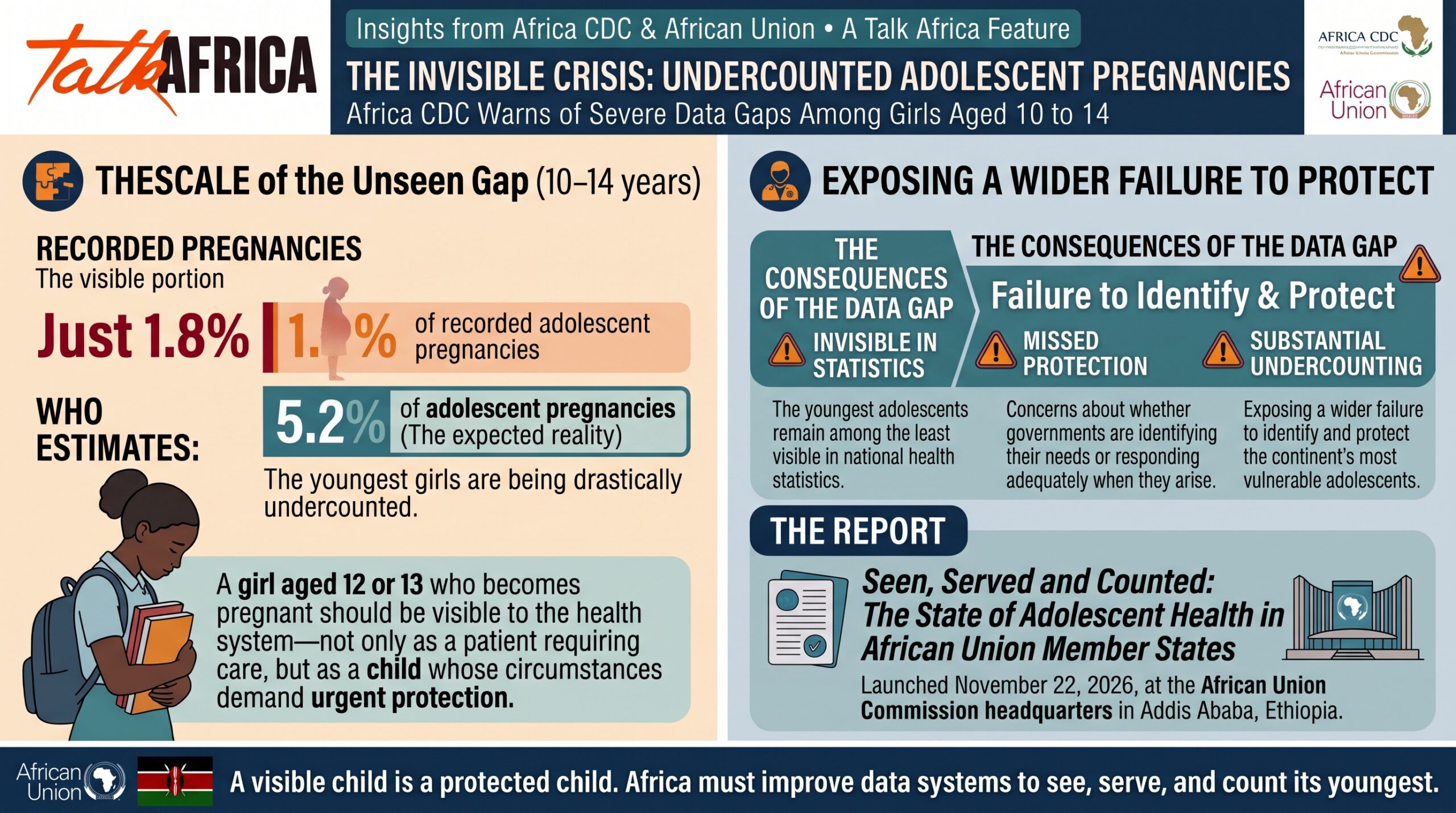
A girl aged 12 or 13 who becomes pregnant should be visible to the health system, not only as a patient requiring care but as a child whose circumstances demand urgent protection.
Yet across Africa, the youngest adolescents remain among the least visible in national health statistics, raising concerns about whether governments are identifying their needs or responding adequately when they arise.
A new assessment by the Africa Centres for Disease Control and Prevention (Africa CDC) has exposed the scale of this gap, finding that pregnancies among girls aged 10 to 14 accounted for just 1.8% of recorded adolescent pregnancies, compared with a World Health Organization estimate of 5.2%.
The figures suggest that the number of pregnancies recorded among the youngest girls may not reflect the full extent of the problem.
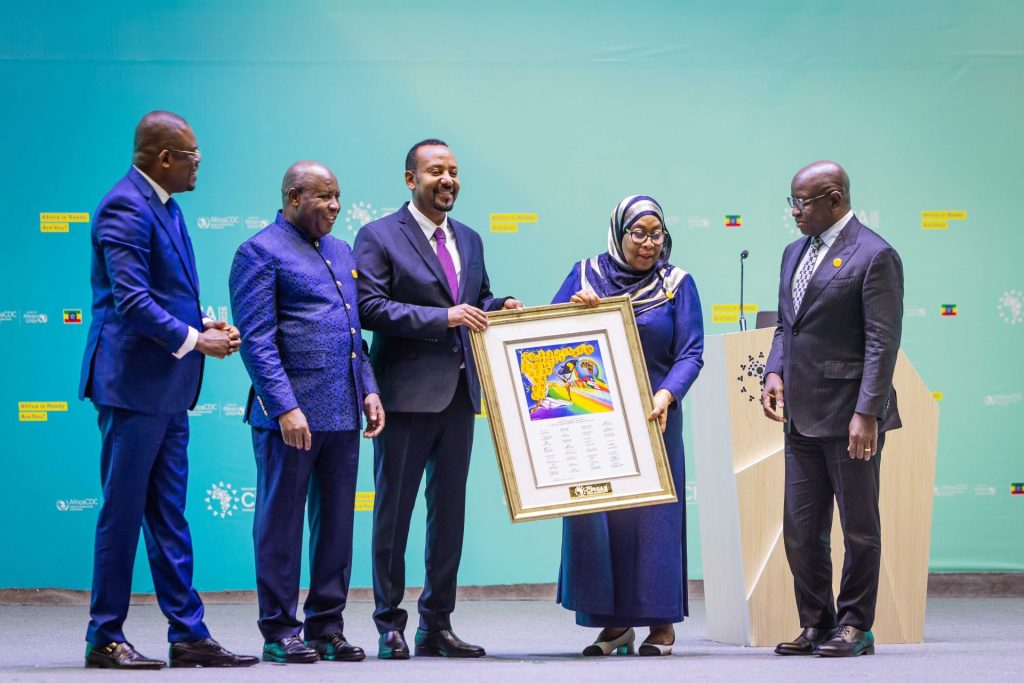
The report, *Seen, Served and Counted: The State of Adolescent Health in African Union Member States*, was launched on November 22, 2026, at the 5th International Conference on Public Health in Africa (CPHIA) in Addis Ababa, Ethiopia. Co-hosted by the Government of Ethiopia and Africa CDC.
Drawing on information submitted by the Ministries of Health of all 55 African Union Member States, the assessment examines adolescent health policies, financing, service delivery and monitoring between 2021 and 2025.
Its findings raise a fundamental question: how can governments protect adolescents whose health needs are not adequately reflected in the data used to plan services?
The report found that adolescent girls aged 10 to 19 accounted for 16.5% of all pregnancies in countries able to report the relevant figures.
In Southern Africa, the proportion was higher, at 24.2%, or almost one in four pregnancies.
The share of pregnancies among adolescents declined only slightly from 17.9% in 2021, suggesting that progress has been slow.
But the assessment cautions that the recorded figures tell only part of the story.
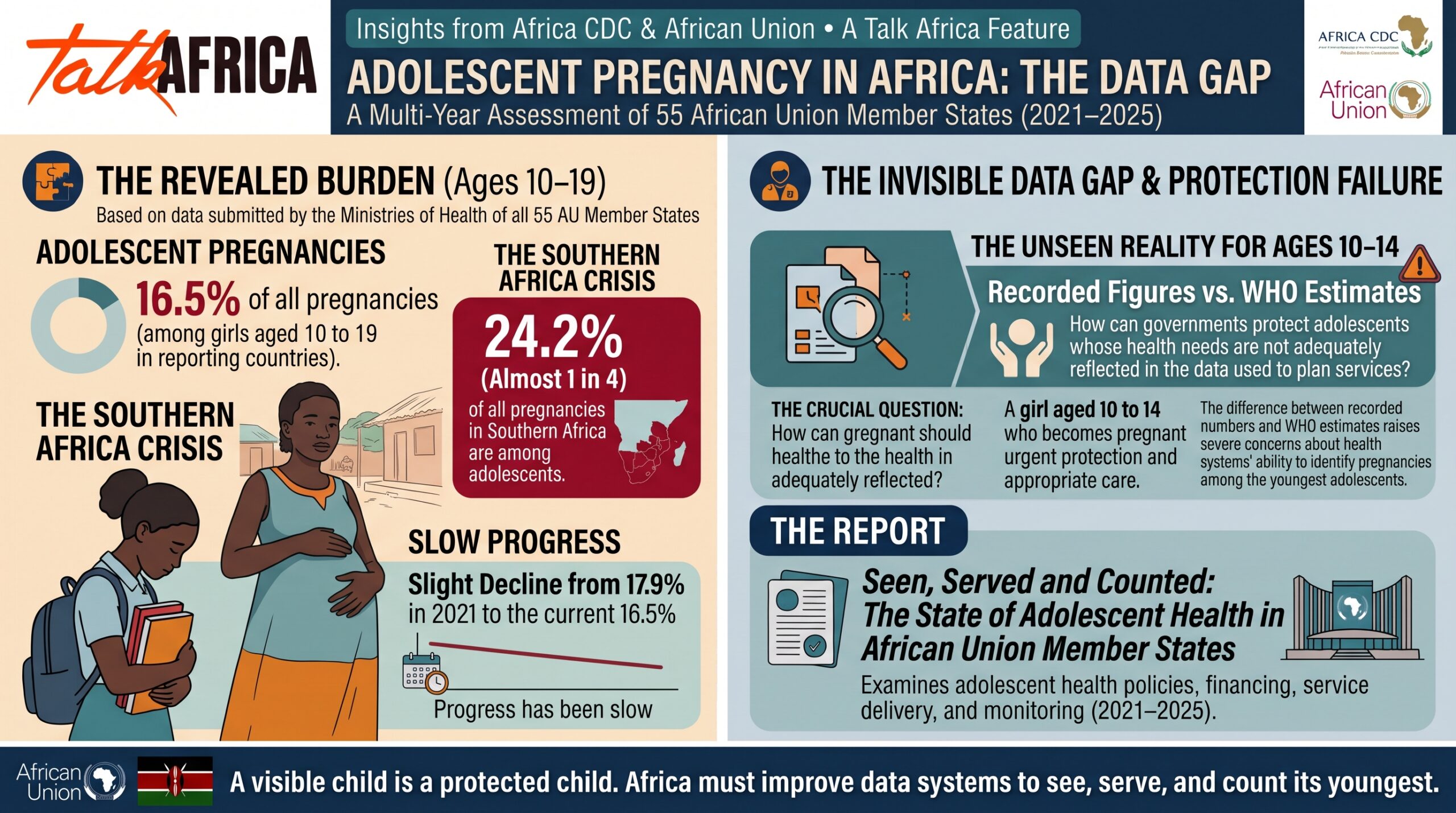
For girls aged 10 to 14, the difference between the recorded proportion and the WHO estimate raises concerns about the ability of health systems to identify pregnancies among younger adolescents and provide appropriate care.
The Implications Extend Beyond Statistics
When pregnancies among children are not adequately recorded, governments may struggle to understand the scale of the protection and healthcare needs involved, making it harder to design effective interventions.
The report recommends treating every pregnancy among girls aged 10 to 14 as a child protection case, alongside action against child marriage and measures to keep girls in school.
The recommendation reflects the need to address adolescent pregnancy not only as a health issue but also through education, protection and wider social support.
However, the report shows that even older adolescents face significant barriers when seeking sexual and reproductive health services.
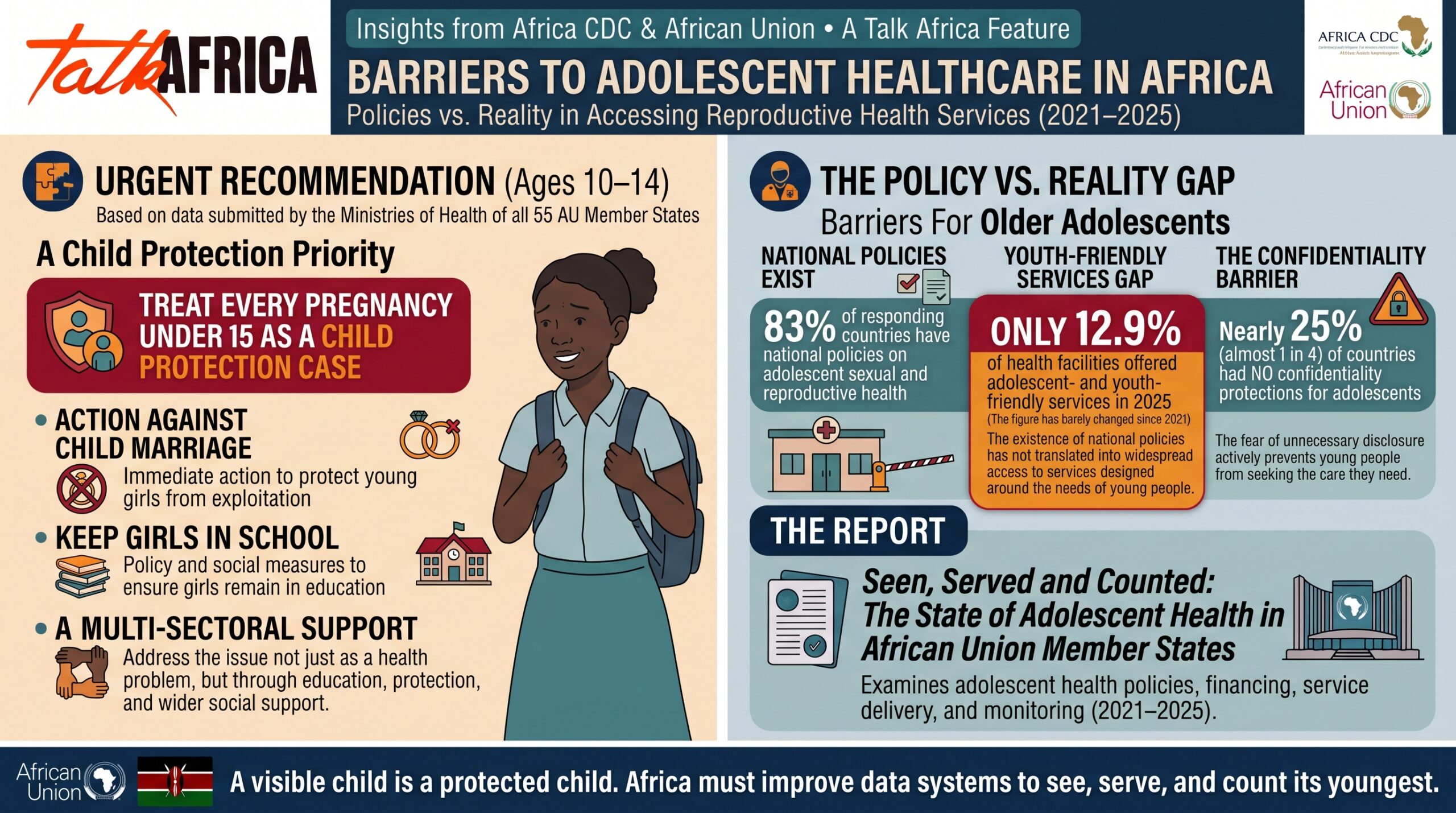 Although 83% of responding countries have national policies on adolescent sexual and reproductive health, only 12.9% of health facilities offered adolescent- and youth-friendly services in 2025.
The Figure Has Barely Changed Since 2021
This means that the existence of national policies has not translated into widespread access to services designed around the needs of young people.
The report also found that almost one in four countries had no confidentiality protections for adolescents, potentially creating additional barriers for young people seeking care.
For adolescents, the ability to obtain information and healthcare without fear of unnecessary disclosure can influence whether they seek services when they need them.
The findings suggest that improving adolescent health requires more than increasing the number of facilities offering services. It also requires addressing the conditions that prevent young people from accessing them.
Africa CDC Director General Jean Kaseya said the assessment was intended to expose the gaps between policy commitments and actual service delivery.
“What we cannot measure, we cannot manage, and what we cannot show, we cannot finance,” he said.
The report identified insufficient funding as the most frequently reported barrier, with 73% of countries citing it as a challenge.
Workforce shortages were reported by 71% of countries, while 63% identified weaknesses in their data systems.
The financing gap is particularly significant because 60% of countries could not establish how much they spent on adolescent sexual and reproductive health.
Without clear expenditure data, governments cannot adequately determine whether resources allocated to adolescent health are reaching the intended services.
The report also found that 37% of countries did not routinely disaggregate their health data by age.
This limits the ability of health authorities to distinguish the needs of younger adolescents from those of older teenagers, potentially leaving the most vulnerable groups inadequately represented in planning and resource allocation.
In her foreword to the report, Tanzania’s President and African Union Champion for Maternal and Child Health, Samia Suluhu Hassan, warned against interpreting the low recorded figures among younger girls as evidence that the problem is smaller than previously understood.
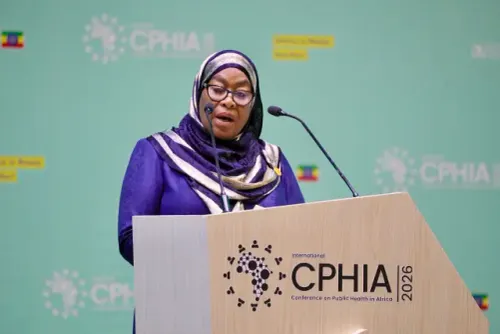
“I do not believe our youngest girls are safer than we thought. I believe they are hidden,” she said.
The Report Nevertheless Identifies Areas Of Progress
Modern contraceptive use among girls aged 15 to 19 increased from 14.0 to 17.1 per 100, while early postnatal care rose from 57% to approximately 62% of mothers.
But the overall findings indicate that these gains have not been accompanied by comparable improvements in the availability of adolescent-friendly services.
Youth Champion Ivy Nduta Mureithi said young people needed services they could access without fear, alongside transparent budgets and a greater role in decisions affecting their health.
The assessment recommends integrating adolescent-friendly service standards into primary healthcare facilities, removing consent and confidentiality barriers, expanding access to contraception and improving the collection of age- and sex-disaggregated data.
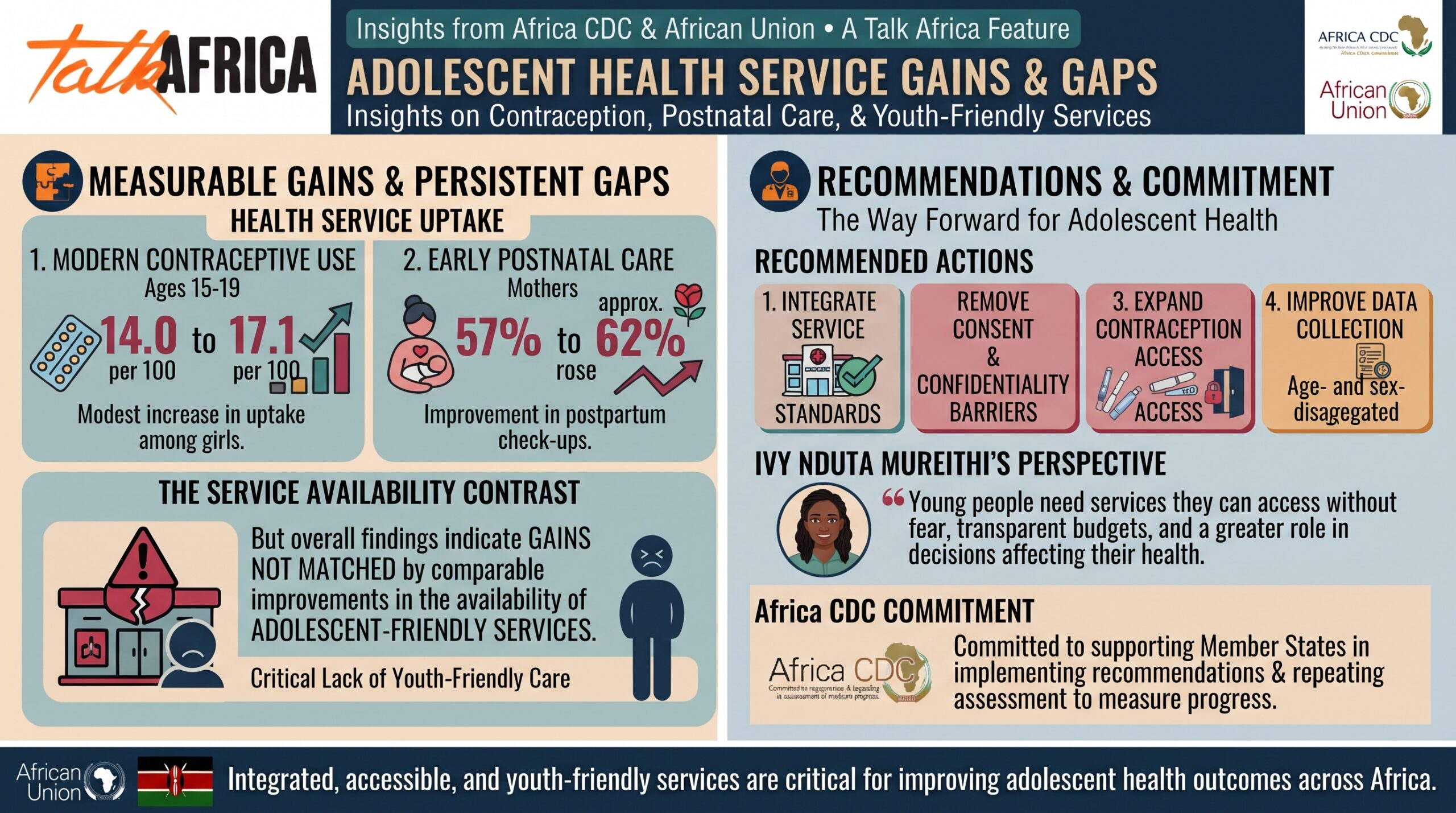
Africa CDC has committed to supporting Member States in implementing the recommendations and repeating the assessment to measure progress.
The findings were presented during the Africa CDC Youth Pre-Conference and Women in Health Leadership Summit, held ahead of the Conference on Public Health in Africa 2026.
Participants signed a public Commitments Register and adopted a Joint Leadership Declaration for presentation at the conference.
For the continent’s youngest girls, the next phase of action will require health systems to identify their needs, provide appropriate services and ensure that their circumstances are reflected in the data used to shape national health policies.
The challenge is no longer simply whether governments have recognised adolescent health as a priority.
It is whether the girls who remain least visible in the statistics will finally become visible in the services designed to protect them.