|
Getting your Trinity Audio player ready...
|
By Winnie Kamau
Nairobi, Kenya: In Doha this month, a room full of diplomats and regulators is deciding who writes the rules for the world’s digital infrastructure. For most Africans, this will register as a distant story about elections at a United Nations agency. It is not. It is a story about who owns the airwaves, who controls the satellites overhead, who sets the technical standards behind our phones, and who gets to profit from all of it.
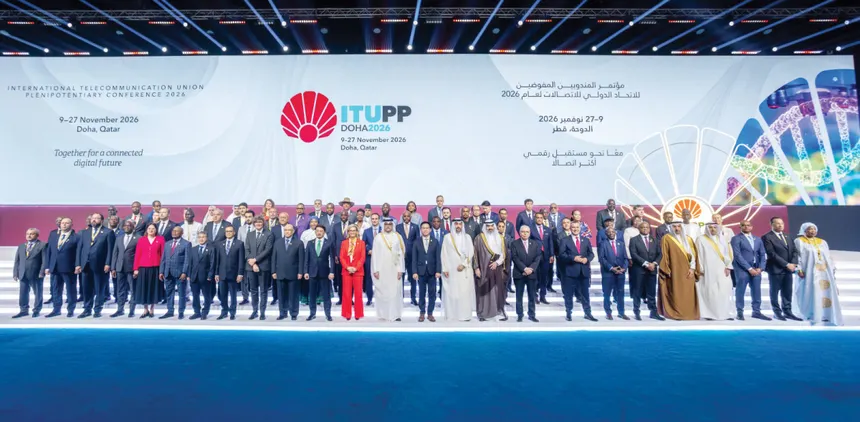
The International Telecommunication Union (ITU) holds its Plenipotentiary Conference every four years. The 22nd ITU Plenipotentiary Conference (PP-26) it’s the body’s highest policy-making body, setting its leadership, budget and strategic direction. This year’s conference in Doha runs for 2weeks from 9th to 27th November and will decide ITU’s strategic and financial plans for 2028 to 2031. Secretary-General Doreen Bogdan-Martin has described it as where members set “the course for humanity’s shared digital future” (ITU). My argument is simple: Africa must stop being primarily a consumer of global digital infrastructure and standards and become an active author of them.
A Seat At The Table Is Not The Same As A Say
The headline results have already come in, and they are sobering. Doreen Bogdan-Martin of the United States was re-elected Secretary-General with 164 of 173 votes. Adel Darwish of Bahrain is Deputy Secretary-General. In ITU’s announcement of the bureau results, the directorships went to Eric Fournier of France, Seizo Onoe of Japan and Nele Leosk of Estonia. Zimbabwe’s Cosmas Zavazava, who sought another term leading the Telecommunication Development Bureau, lost.
Not one of the five senior elected posts is now held by an African. That matters most for the development bureau, the part of the ITU that works on connectivity, digital inclusion and technical capacity in developing countries. Africa has lost an insider in the very office most concerned with its priorities.
It is important to be precise, because the picture is not yet complete. Elections for the Radio Regulations Board and the 48-member ITU Council are scheduled for 16 November. Africa holds 13 Council seats, and 19 African countries are competing for them. Four African candidates are contesting three places on the Radio Regulations Board.
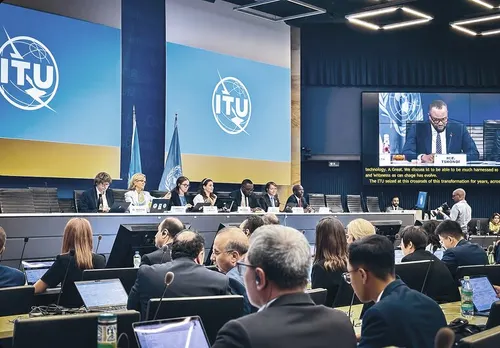
There is also a real reason for encouragement. The African Telecommunications Union coordinated 50 African Common Proposals, backed by 32 member states, and ministers met in Doha on 12 November to align their positions. Africa understands the value of bargaining as a bloc. The test is whether those proposals survive the negotiations intact.
Who Owns The Sky?
The most consequential fight is one many Africans have never heard of: the contest over satellite spectrum and orbital slots. SpaceX now has more than 11,000 satellites in orbit, roughly two-thirds of all active satellites. Part of its advantage comes from the ITU’s first-come, first-served filing system, which rewards whoever files early and launches fast.
For a continent with vast distances, scattered rural populations, landlocked states and stretched infrastructure budgets, satellite connectivity is genuinely attractive. It could reach remote schools, border communities, clinics, islands and areas cut off by floods or drought. I welcome that potential.
But a hard question follows. Will Africa be a beneficiary of satellite connectivity, or a captive market for a handful of foreign operators? The two outcomes look similar in the first year and very different in the tenth. Dependence on external infrastructure during a crisis, high equipment and subscription costs, limited local value creation and weak bargaining power are all real risks.
The answer lies in how governments negotiate. Licensing terms, spectrum management, competition rules, consumer protection, taxation and local partnership requirements are all sovereign decisions. African states negotiating one by one against multinational operators will lose. Harmonised regional approaches give them a fighting chance.
Connectivity That People Can Actually Use
It is easy to talk about satellites and standards while forgetting the people they are meant to serve. The ITU’s State of Digital Development in Africa report puts internet usage in Africa at 38% in 2024, against 68% globally. The Broadband Commission’s State of Broadband in Africa 2025, as reported by Africa News Agency, adds that about 710 million Africans live in areas covered by mobile broadband but still do not use the internet.
The urban and rural gap is stark: 57% of urban residents use the internet, against only 23% in rural areas. Affordability is a big part of the explanation. The ITU found that entry-level mobile broadband costs more than double the 2% of income that the UN Broadband Commission sets as its affordability target. The State of Broadband in Africa 2025 puts it plainly: “Affordability remains the main barrier to mass Internet adoption in Africa” (Africa News Agency).
These numbers tell us that coverage is not the same as connection. A tower in the village does nothing for the household that cannot afford the data. Africa’s agenda at the ITU should measure success by usage, quality and price, and by whether women, young people and rural communities can truly participate in the digital economy. Fibre kilometres and tower counts are not enough.
Standards Are Power, And Participation Is Expensive
The ITU also shapes international standards for mobile networks, satellite communications, the Internet of Things and artificial intelligence. These decisions look technical, but they carry economic and political weight. Whoever writes the specification for 6G, or for how AI systems handle language, shapes who profits and who adapts.
If African engineers, universities and companies are absent from those rooms, Africa will keep importing technologies built around other people’s assumptions: other languages, other bandwidth realities, other business models. AI systems and connected devices need to work for people who communicate in Swahili, Kinyarwanda, Yoruba, Hausa and Amharic, in places where power and bandwidth cannot be taken for granted.
The African Telecommunications Union’s January 2026 study of Africa’s role in global internet governance names the obstacles bluntly: underrepresentation in technical standard-setting bodies, limited technical capacity, and fragmentation among stakeholders. Older evidence points the same way. A Research ICT Africa survey of African stakeholders found that 87% named lack of financial resources as the main barrier to effective participation.
Africa cannot influence standards if its experts cannot afford to attend the meetings where standards are drafted. Funding a ministerial delegation for a week in Doha is not the same as sustaining a cohort of engineers who show up, year after year, to working groups in Geneva, to the IETF and to other technical forums.
Neither Big Tech Nor State Control
Another fault line runs through the Doha negotiations: how far the ITU should reach into internet governance. Some governments, notably Russia and China, want to expand the role of the ITU Council’s Working Group on Internet Policy, which is open only to governments. Others warn that this would move decisions about the open internet into closed intergovernmental rooms. The Internet Society says its aim is to ensure PP-26 “upholds the existing multistakeholder model” of internet governance (Internet Society background paper).
Africa should resist the temptation to see this as a choice between two evils. Corporate concentration is a real problem. A few firms dominate cloud infrastructure, satellite connectivity, social platforms, search and AI, and African governments often have little leverage over them.
But handing governments broader control is no cure. In too many African countries, the same governments pushing for “digital sovereignty” have also ordered internet shutdowns, censored critics and expanded surveillance. Sovereignty that belongs to the state alone is not sovereignty for citizens.
The better path is an open, multistakeholder governance model, backed by strong, transparent, public-interest regulation. Governments regulate, but civil society, academia, the technical community, businesses and ordinary users must have a real voice.
What Africa Should Demand
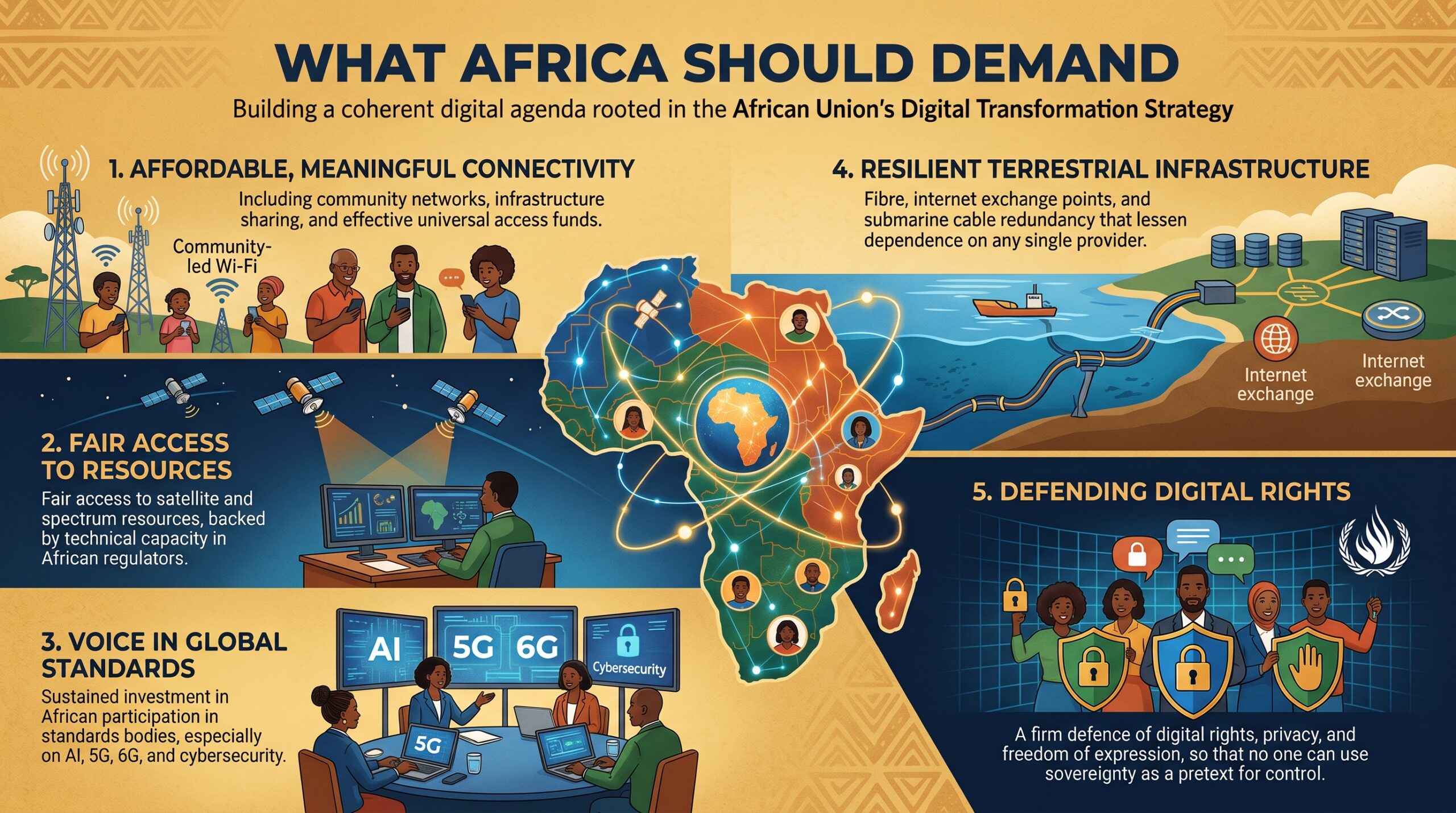
Africa’s agenda should be coherent and rooted in continental frameworks such as the African Union’s Digital Transformation Strategy. In my view it should rest on five commitments.
- Affordable, meaningful connectivity, including community networks, infrastructure sharing and effective universal access funds.
- Fair access to satellite and spectrum resources, backed by technical capacity in African regulators.
- Sustained investment in African participation in standards bodies, especially on AI, 5G, 6G and cybersecurity.
- Resilient terrestrial infrastructure: fibre, internet exchange points and submarine cable redundancy that lessen dependence on any single provider.
- A firm defence of digital rights, privacy and freedom of expression, so that no one can use sovereignty as a pretext for control.
Kenya’s Moment
Kenya has a strong claim to lead here. It has a world-class mobile money ecosystem, a mature technology sector, major regional connectivity infrastructure and a deep record in internet governance. That standing should now be used to shape regional positions on satellite regulation, cross-border fibre, IPv6 adoption and AI governance.
Just as important, Kenya should open its delegations and preparatory processes to civil society, journalists and technical experts. Decisions made in Doha should not stay the private business of ministries and regulators. Citizens live with the consequences, and they deserve to understand them and to hold their governments accountable for the positions taken in their name.
The Question That Matters
Whatever the results of the 16 November elections, the underlying question will remain. Can Africa achieve digital sovereignty without owning or shaping the infrastructure and standards its digital economy runs on?
I do not believe it can. Influence over spectrum, satellites, standards and institutions is where economic power in the digital age is decided. A continent of 1.4 billion people, with the world’s youngest population, cannot be content to adopt the rules written elsewhere.
The loss of an African voice in the ITU’s senior leadership is a setback, but it is also a prompt. It is a reminder that representation means little without technical capacity, sustained financing and regional unity. The next four years will be shaped by choices made in rooms most Africans never see. We should insist on being in them.