|
Getting your Trinity Audio player ready...
|
By Liz Anyango
Nairobi Kenya: Imagine visiting a hospital, giving your details, answering questions about your health and having that information recorded in a digital system. The information could help researchers understand diseases, improve healthcare and shape policies that affect millions of people.
But here is the bigger question: Who controls that information? Who decides how it is used? And do the African institutions and communities that generate this knowledge have a say in what happens to it?
These questions are at the centre of growing calls for Africa to take greater control of its data and knowledge systems, with research leaders arguing that the continent must move beyond depending on externally generated information and solutions to shaping its own research agenda.
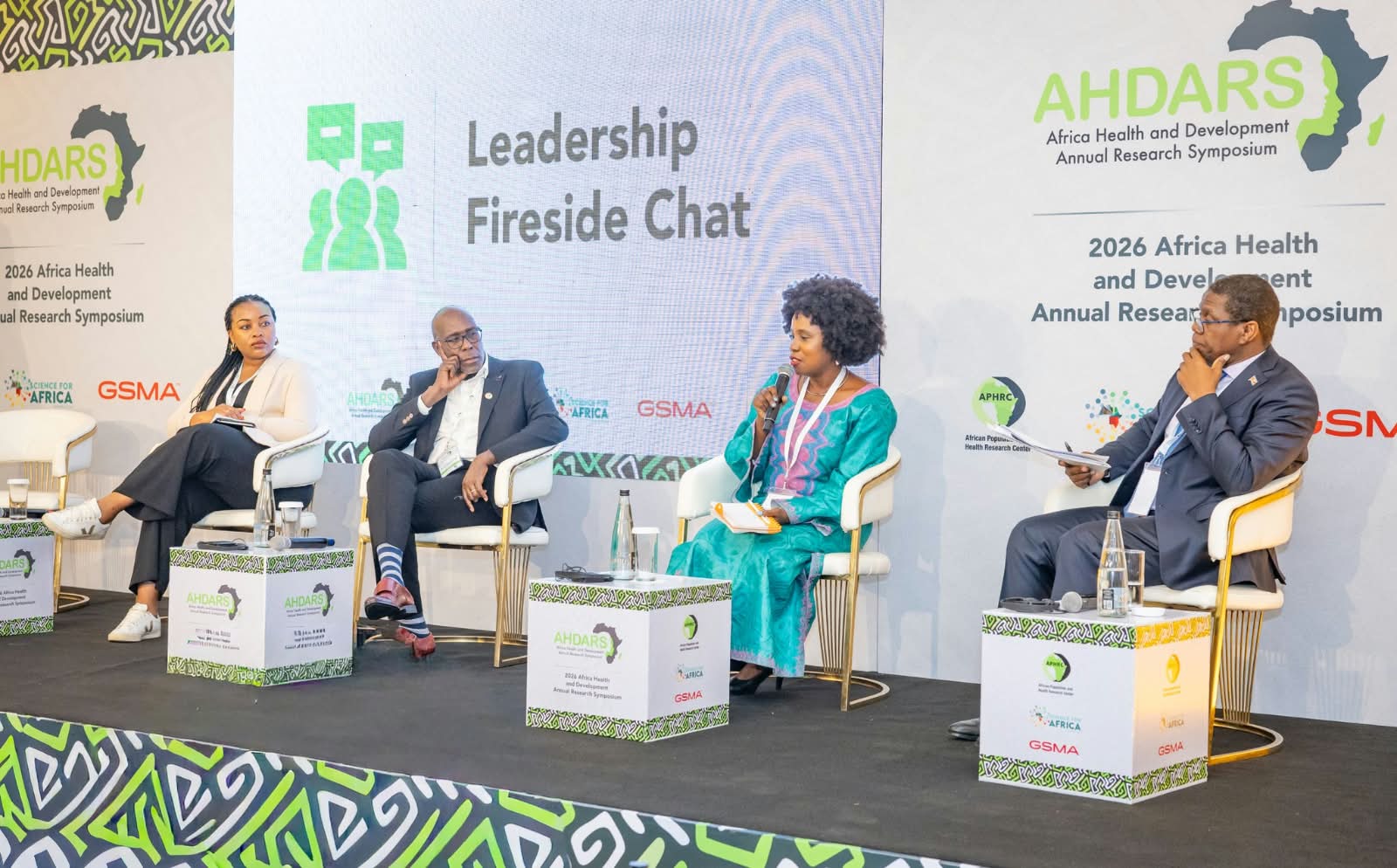
The conversation took centre stage on Tuesday during the opening of the 2026 Africa Health and Development Annual Research Symposium (AHDARS) in Nairobi.
The two-day symposium, held under the theme Building African-Centered Data and Knowledge Systems: New Models, New Power. What Can Be Done Differently?, has brought together researchers, policymakers, funders, private sector representatives, civil society organisations and innovators from Africa and beyond.
Discussions on the opening day focused on the need to establish African-owned, ethical, inclusive and interoperable data systems that respond to the continent’s development priorities.
The central argument was that Africa must move beyond being a consumer of externally generated research and technology to becoming a producer of knowledge, solutions and innovations that address its own challenges.
Opening the symposium, African Population and Health Research Center (APHRC) Executive Director Dr. Catherine Kyobutungi described data and knowledge as some of the continent’s most valuable resources, drawing comparisons with Africa’s natural wealth.
“Data and knowledge systems are Africa’s new oil. But how do we work together to harness this immense resource and ensure that its value benefits our people?” she posed.
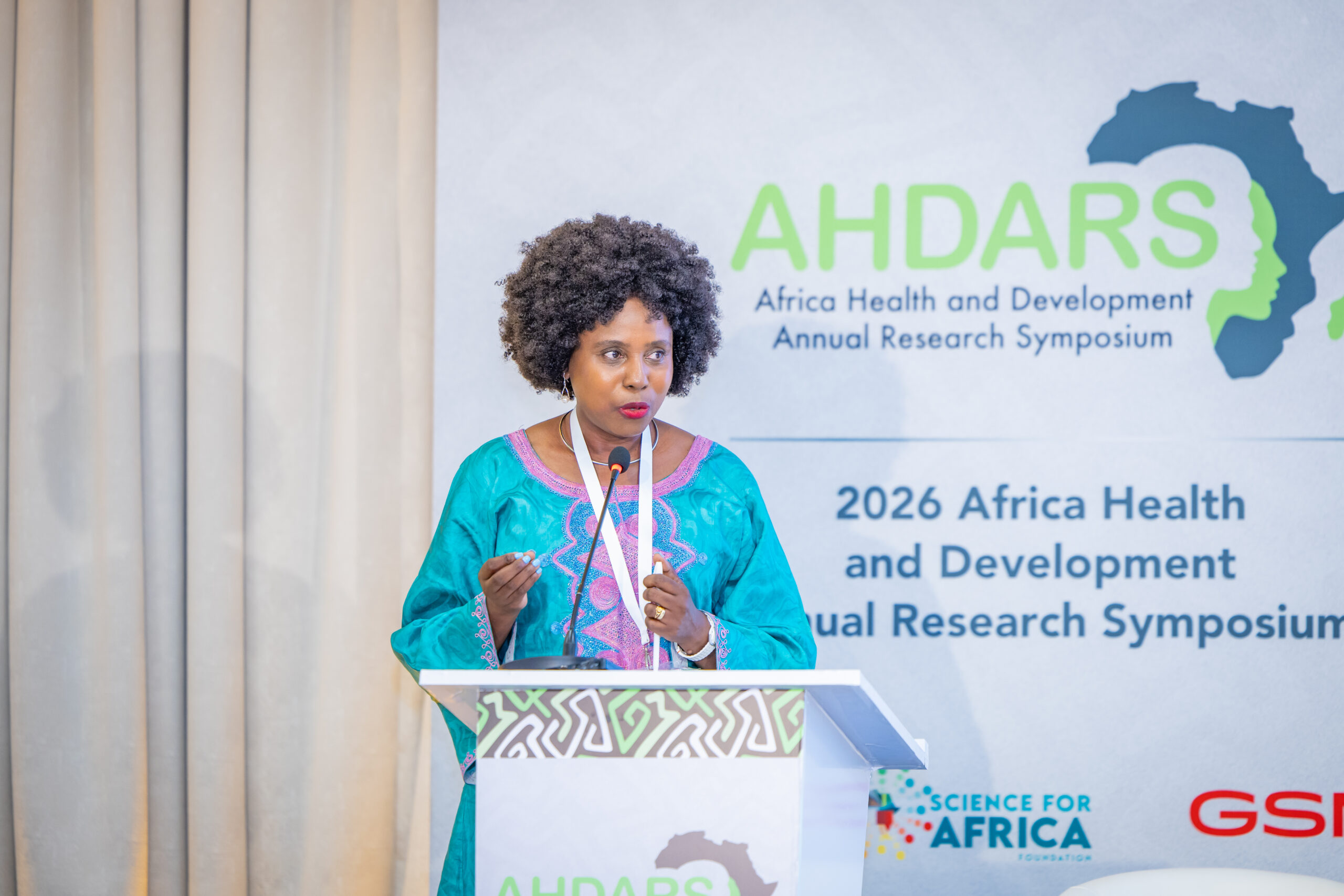
Dr. Kyobutungi argued that Africa’s data future must be shaped through local ownership, leadership and investment rather than continued dependence on external systems and priorities.
She maintained that data and knowledge systems must be built by Africans, owned by Africans and designed to serve African interests.
She also challenged stakeholders to move beyond conversations and commitments towards practical action that allows African institutions and researchers to define and shape their own knowledge agenda.
“If we are not already leading these efforts, we should be,” she said.
The question of ownership also featured prominently in the remarks by Dr. Tom Kariuki, Chief Executive Officer of the Science for Africa Foundation.
Dr. Kariuki challenged the perception that Africa lacks the capacity to develop and manage its own data systems, arguing that the continent already possesses substantial research talent and data.
“Africa has no shortage of talent or data. What we need is ownership, infrastructure and influence. We are not bench players. The question is no longer whether Africa can build its own data systems, but how quickly,” he said.
His remarks pointed to a wider challenge facing African research institutions: having the resources, infrastructure and decision-making authority to generate, manage and apply knowledge on their own terms.
Collecting data alone is not enough. African institutions must also have the technical capacity and financial support to transform research findings into practical solutions that improve people’s lives.
However, achieving this will require more than the efforts of research institutions.
Kanwulia Okafor, Director of Industry Services (Africa) at GSMA, emphasised the importance of collective action and strategic partnerships in transforming the continent’s data and knowledge systems.
“Africa is sitting on a goldmine of data and knowledge. But no single actor can transform the continent’s data and knowledge systems alone,” she said.
She called for shared commitment among governments, research institutions, the private sector and development partners to harness this resource, inform better decisions and ultimately improve lives across Africa.
This need for collaboration was echoed by Prof. Shaukat Abdulrazak, Principal Secretary in Kenya’s State Department for Science, Research and Innovation.
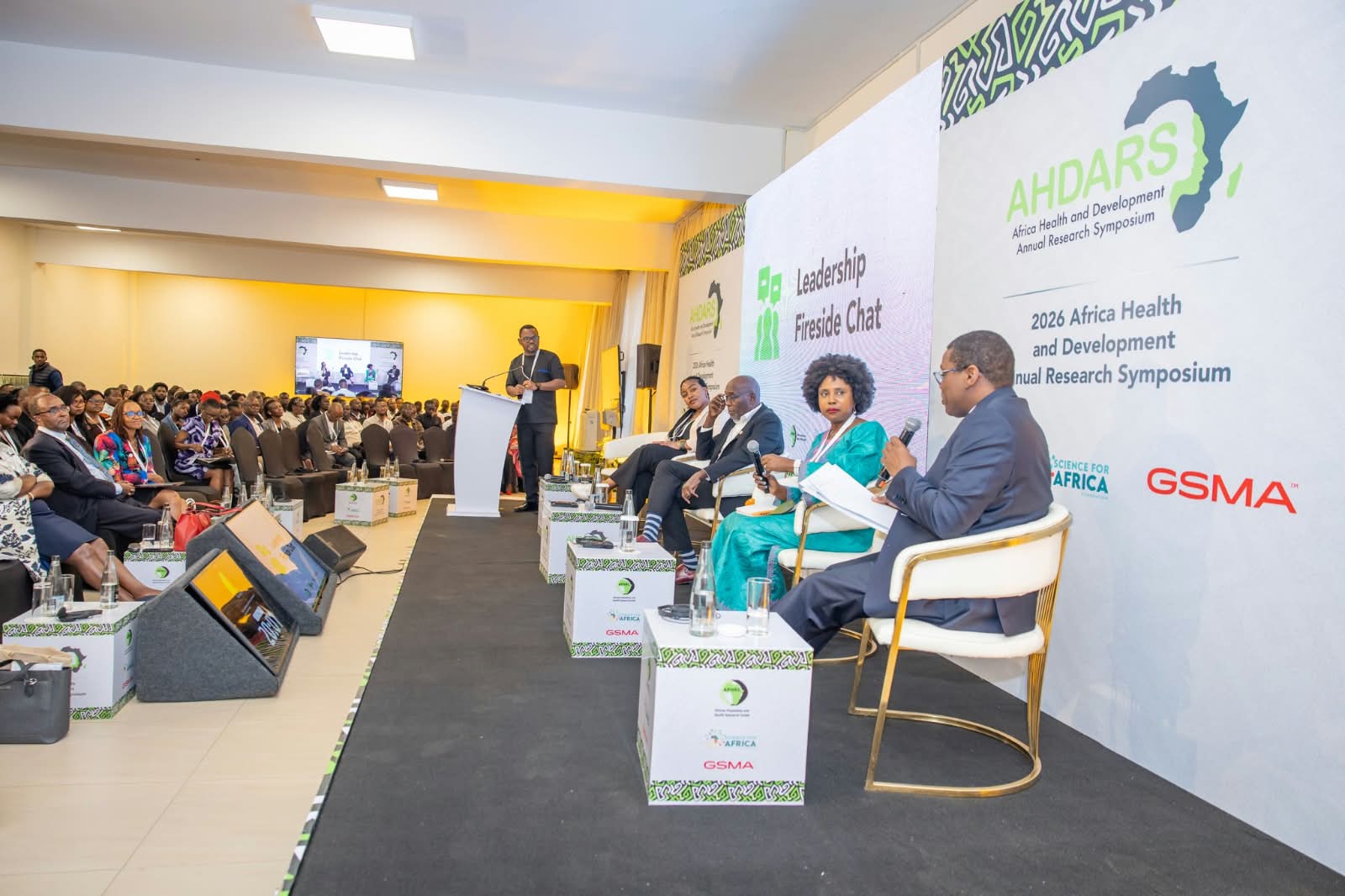
Prof. Abdulrazak called for stronger partnerships between research institutions, governments, businesses and other development stakeholders to connect scientific research with innovation, commercialisation and economic growth.
“Through meaningful and coordinated collaboration, Africa can harness its data and knowledge systems to drive a continuum from research to innovation, commercialization, and ultimately, economic and social impact for shared prosperity,” he said.
He further stressed that Africa must move beyond consuming data and knowledge to generating insights that inform decisions, improve people’s lives and support sustainable development.
His remarks highlighted the importance of ensuring that scientific discoveries do not remain confined to research institutions but translate into policies, products and services that benefit communities.
Beyond the opening speeches, AHDARS 2026 is providing a platform to examine some of the most pressing issues shaping Africa’s research and development landscape.
The programme features keynote presentations, scientific and policy discussions, fireside conversations, masterclasses and sessions showcasing innovative approaches to strengthening the continent’s data and knowledge ecosystems.
Key areas of focus include digital health, data governance, interoperability, responsible artificial intelligence, digital infrastructure and evidence-informed policymaking.
These discussions come at a time when digital technologies and artificial intelligence are increasingly influencing how health information is collected, processed and used to guide decisions.
For Africa, however, adopting these technologies is only part of the challenge. The continent must also ensure that their development and application reflect local realities, protect communities and strengthen its ability to determine its own development priorities.
The discussions at AHDARS 2026 therefore raise broader questions about the future of research and innovation on the continent: Who controls African research data? Who benefits from scientific discoveries? And how can African institutions secure greater influence in global research and technology partnerships?
As the symposium continues on Wednesday, attention is expected to turn to practical approaches for strengthening African ownership, improving collaboration and ensuring that research and data translate into meaningful development outcomes.
Ultimately, the conversations in Nairobi point to a broader continental priority: Africa must not remain merely a source of data or a recipient of externally developed knowledge. It must become an active leader in generating, governing and applying knowledge to shape its own future.