|
Getting your Trinity Audio player ready...
|
By Lenah Bosibori
Nairobi-A APHRC report reveals a gap between teachers’ high motivation and low well-being, as educators in refugee and host communities struggle with overcrowded classrooms, inadequate pay, insecurity, and limited employment benefits.
A classroom with 200 learners and one teacher leaves little time to give each child individual attention. In Kenya’s refugee camps, this is the reality for some teachers who work to ensure that children affected by conflict and displacement continue their education.
For Dorcas Ayo Tindy, a Kenyan teacher in Kakuma refugee camp, Turkana County, every school day brings fresh challenges. Her pupils come from different countries, speak different languages, and have different learning needs.
“Some arrive at school without knowing Kiswahili or English, making it difficult for me to communicate; with too few desks, some children are forced to sit on the floor,” said Tindy.
In Dadaab refugee camp, Abas Abdullahi Abdi, a Somali refugee who has taught since 2012, faces a different but equally difficult challenge. Despite years of experience and further training, he earns KSh13,000 (about US$100) a month. He says the salary is insufficient to support his family and ageing parents.
Their experiences reflect the wider challenges facing teachers in refugee and host communities. They are expected to educate children who may have experienced war, displacement and trauma, often with limited teaching materials, low pay, insecure contracts and few employment benefits.
For women teachers, the burden can be even greater. Unsafe journeys to school, fears of sexual violence and family responsibilities add to the demands of teaching.
These challenges are highlighted in a report by the African Population and Health Research Center (APHRC), titled Teacher well-being, which found a striking gap between teachers’ commitment to their work and their well-being.
Highly motivated, but struggling to cope
Lydia Namatende-Sakwa, an APHRC researcher, said the study found that teacher motivation stood at about 91 per cent among teachers in refugee camps and was similarly high among those in host communities.
“We were surprised to find that motivation could be at 91 per cent within the refugee camps, and generally it was over 91 per cent for both refugee camp and host community teachers,” Namatende-Sakwa said during the report’s launch.
The finding surprised researchers because teachers were working under difficult conditions, including overcrowded classrooms, inadequate sanitation, poor washing facilities, heavy workloads and shortages of teaching and learning materials.
Despite these challenges, many teachers expressed a desire to remain in the profession over the next five years. However, their well-being stood at about 59 per cent. “Motivation does not equal well-being. These are two different things,” she said.
Interviews revealed that some teachers were considering leaving the profession if they found other jobs, while others remained because they had few alternatives. Namatende-Sakwa warned that poor pay, insecure contracts and limited benefits, including access to healthcare, could push more teachers out of the profession.
“The pressure is particularly evident in classrooms where learners speak different languages and have varied educational backgrounds,” she said. “Imagine a classroom with 90 learners who speak about 18 different languages, some of which the teacher may not understand.”
“If they are to get support from a teacher, we need to also replenish that teacher,” Namatende-Sakwa said.
In Kakuma, overcrowding and insecurity add to the pressure
Tindy says that she faces the challenges on the ground where her learners come from countries including the Democratic Republic of the Congo, South Sudan, Somalia and Rwanda.
The challenges extend beyond the classroom. Tindy says Kenyan teachers travelling from Kakuma town are transported to their schools for security reasons. Refugee teachers, however, often walk from their homes to work, exposing them to possible attacks.
“Women teachers face additional concerns about assault and sexual violence while travelling to school,” Tindy says. “Safer transport would help teachers reach their workplaces with less fear.” She also wants the government and its partners to consider risk allowances and safer housing for educators working in insecure areas.
She also says food rations or cash support intended to help refugee workers buy food have been withdrawn, leaving some teachers to depend on their salaries alone.
Professional training is another challenge. Some refugee teachers have completed secondary school but lack formal teacher training. Nevertheless, they are expected to manage demanding classrooms with limited resources.
Women also face uncertainty because of short employment contracts. Tindy says some refugee teachers receive contracts lasting only two or three months, making it difficult to plan for the future. “Unclear access to maternity benefits can create further financial and professional pressure for women balancing teaching with childcare,” adds Tindy.
Patricia Kitawi, APHRC research scientist in the Early Childhood Development Unit, said teachers need support to protect their mental well-being.
“Teachers need to be in a good state of mental well-being because they are the ones who support our young children. If teachers do not feel well supported, it becomes difficult for them to support the children they teach,” she said.
Kitawi said some teachers reported handling classes of up to 200 learners while also dealing with inadequate pay and limited transport support. She recalled an incident in which a parent threatened a female teacher over concerns about how their child was being treated.
In Dadaab, a refugee teacher struggles to make ends meet
Abdi’s experience at Abdul Aziz Comprehensive School in Ifo refugee camp, Dadaab, illustrates the financial pressure and limited career opportunities facing refugee teachers.
Abdi arrived in Kenya from Somalia with his parents in 1991. Born in a refugee camp, he has taught at the school since February 2012.
He is pursuing a Diploma in Teacher Education at Garissa Teacher Training College and already holds a diploma in Early Childhood Development and Education. However, he says restrictions linked to his refugee status have made it difficult to access better-paying jobs and other employment opportunities.
“I teach several classes, some with as many as 100 learners. The pupils come from different backgrounds, including South Sudan, Ethiopia, the Democratic Republic of the Congo and Burundi. Language differences can make communication difficult, while large classes leave little time to support individual learners, said Abdi.
Despite these challenges, Abdi remains committed to teaching. Seeing former pupils progress to new opportunities encourages him to continue. One former learner went to the United States on a scholarship, while others have become teachers themselves.
His diploma programme is expected to end in October 2027, followed by teaching practice in 2028. He says adapting to Kenya’s competency-based curriculum can be challenging, although trainees have received support to help them adjust.
He wants refugee teachers to have opportunities to use their experience and qualifications to secure better jobs and salaries.
Namatende-Sakwa said many refugee teachers cannot obtain registration with the Teachers Service Commission (TSC), which manages teachers in Kenya’s public education system. Without registration, they may not access the same salaries, employment protections and professional development opportunities as registered teachers.
Documentation requirements can also make it difficult for refugee teachers to obtain formal professional recognition.
The APHRC study found that about 31.6 per cent of teachers were not professionally qualified but were still teaching. Namatende-Sakwa said the government should consider how to help these educators obtain recognized qualifications.
“These are children in Kenya, many of whom have lived here all their lives. Their education should not be compromised because the teachers supporting them cannot access the same professional recognition as other teachers,” she said.
She called for pathways that would allow refugee teachers to pursue training, have their existing qualifications assessed and work towards registration within Kenya’s education system.
This could include recognizing prior learning and assessing qualifications obtained in other countries. Working with the Kenya National Qualifications Authority could help determine whether existing qualifications meet Kenyan standards and identify any additional training needed.
Namatende-Sakwa said the government would also need to allocate resources and develop a costed strategy to support teacher training, qualification recognition and registration.
Donor funding and government plans
Education in refugee camps relies heavily on humanitarian and development partners. Their funding supports schools, teacher recruitment, training, learning materials and school feeding programmes.
Joseph Kyutha, a senior programme officer with the Lutheran World Federation who also serves in an acting programme management role, said the organization supports education programmes in Dadaab, Kakuma and Kalobeyei.
According to Kyutha, the schools serve close to 140,000 learners across about 62 schools, placing considerable pressure on teachers and other resources. “When you have so many learners in one classroom, one teacher ends up handling a very large number of students,” he said.
Kyutha said declining donor funding makes it harder for education partners to maintain staffing levels and provide learning materials. “Without enough funding, it becomes difficult to run these institutions. But we have to make sure that learners remain in school,” he said.
He said recruiting Kenyan teachers to work in refugee camps can also be difficult because of the conditions, with some candidates declining job offers.
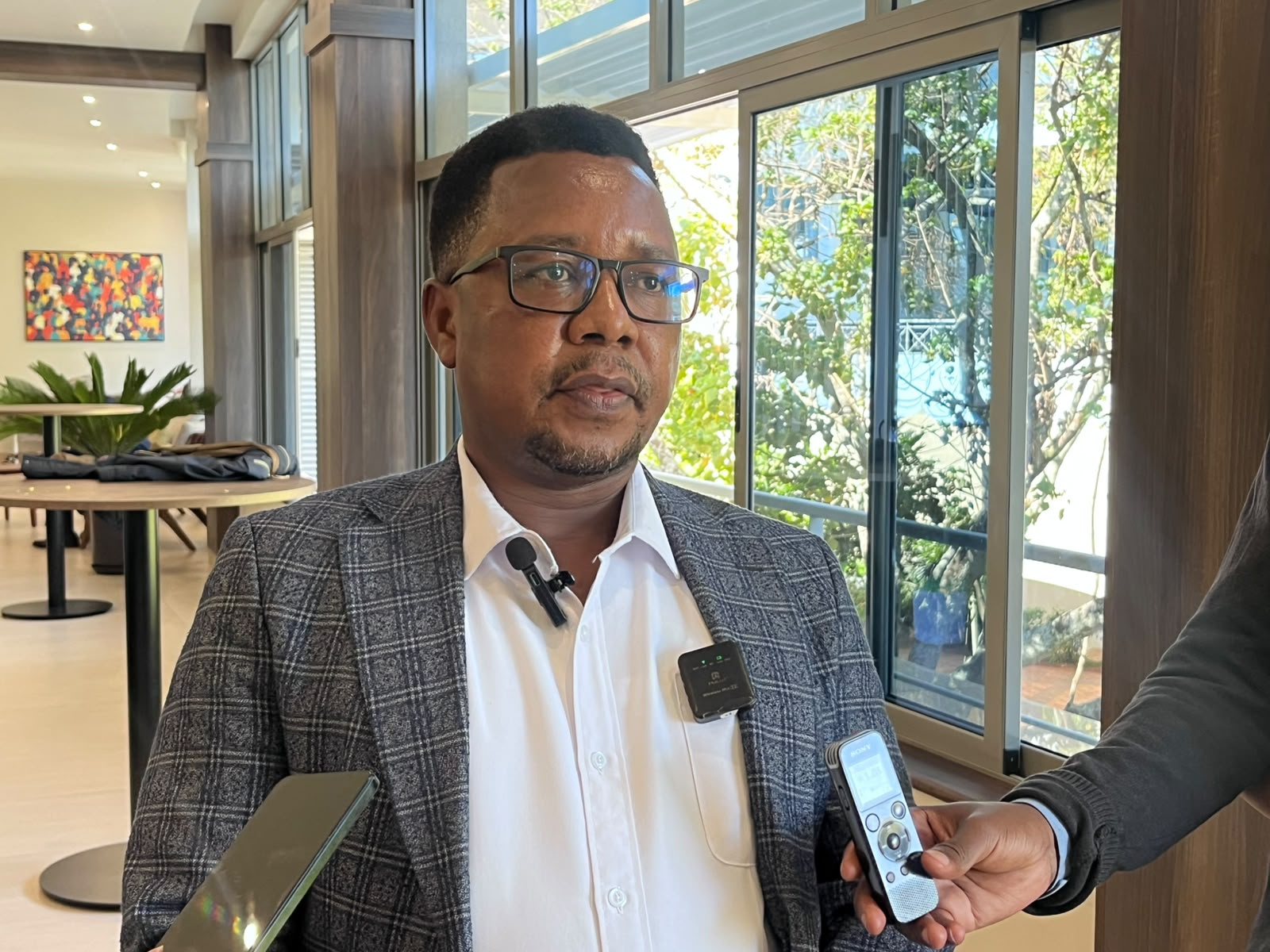
“Training programmes are among the efforts to strengthen the teaching workforce,” Kyutha said. “89 teachers from Dadaab were studying at Garissa Teacher Training College, while about 34 from Kakuma are undertaking training at a college in Lodwar.”
The government says it is also working to integrate refugees into national systems through the Shirika Plan, including efforts to improve the recognition of refugee teachers.
Dr Gichuhi Ndegwa, Director of Education, said the government is working with stakeholders to establish pathways for refugee teachers to obtain TSC registration numbers. Training programmes are underway at Garissa Teacher Training College and Bishop Mahon Teacher Training College, he said.
“Changes to the law are needed to enable refugee teachers to obtain TSC registration, and the legislative process is ongoing, including stakeholder consultations,” said Ndegwa.
Kyutha added that the TSC had deployed 10 teachers in Dadaab. The Ministry of Education was also assessing schools in Dadaab and Kakuma as part of efforts to register 20 schools and facilitate the deployment of more teachers.
These measures could strengthen government involvement in refugee education and reduce reliance on development partners.
The APHRC findings show that teachers remain highly motivated, but commitment alone cannot compensate for overcrowded classrooms, inadequate resources, low pay and insecure working conditions.
As Kenya works to integrate refugee education into its national systems, improving teachers’ working conditions, expanding access to professional recognition and ensuring reliable funding will be essential.