|
Getting your Trinity Audio player ready...
|
By Lenah Bosibori
ELBURGON, Kenya: While Kenya continues to grapple with a milk shortage and rising animal feed costs, dairy farmers are turning to homegrown feeds to keep their cows productive and their livelihoods afloat.
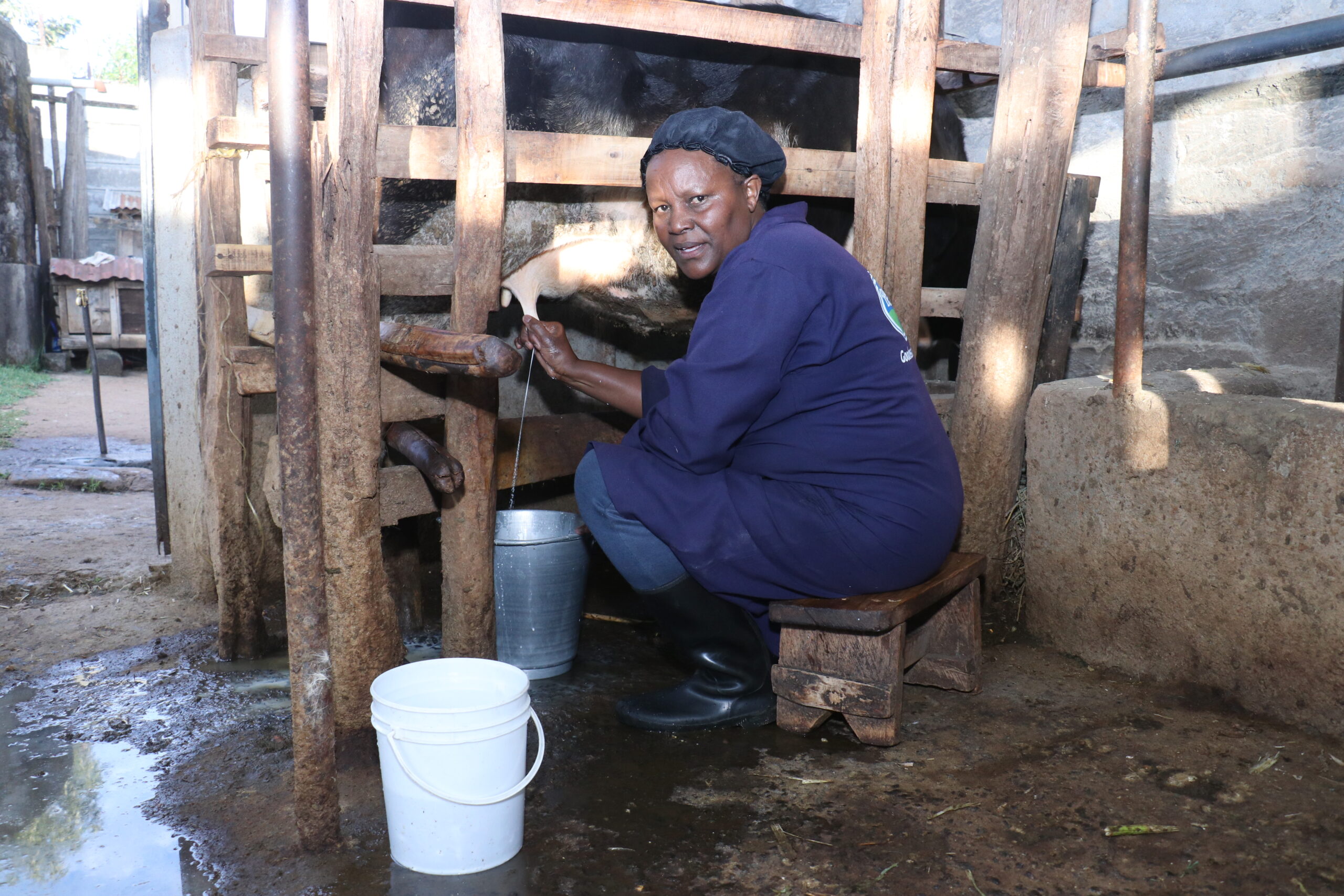
Every morning at 6 a.m., as many Nairobi residents prepare to battle traffic, 60-year-old Phelista Mwaniki is already at work on her farm in Turi Farmers Location, Nakuru County.
Within 14 minutes, she has finished milking her two cows, collecting between 12 and 16 litres depending on how well the cows are fed. She then cleans the cowshed and feeds the animals.
By mid-morning, her milk is ready for collection and begins its journey to the Elburgon Progressive Dairy Farmers Cooperative Society. For Mwaniki, dairy farming started with one cow. Over the years, the animals have helped her pay hospital bills, support her family, and educate all five of her children.
After her husband was retrenched, the couple sold part of their land to raise money to buy their first dairy cow. “That is how we started our life,” she recalls. The cow became the beginning of their small dairy enterprise. They later bought more animals and started selling milk.
In 2019, another opportunity came when a young farmer sold them two cows, allowing the couple to expand their herd. Then Mwaniki became seriously ill and needed hospital treatment, including a blood transfusion.
While she was away receiving treatment, her husband struggled to care for the animals and look after the family. Some cows had to be sold, leaving the family with only one. Then the remaining cow suddenly died.
The loss left the family without milk and with a young calf that still needed to be fed. “I bought milk for it to drink, and it continued growing,” she says. “God helped me, and that is how I reached where I am today.”
Today, she has two cows that produce between 12 and 16 litres of milk in the morning and a similar amount in the evening. When feed is plentiful, and the weather is favorable, production can rise to between 16 and 18 litres per milking.
Finding a lifeline in the cooperative
Mwaniki joined the Elburgon Progressive Dairy Farmers Cooperative Society in 2019 and began supplying her milk through the cooperative. For her, the cooperative has provided something she had struggled to find before: a more organized and reliable market.
In the past, she sold milk to informal buyers, some of whom delayed payments or failed to pay altogether. “It was stressful, but we managed,” she says. Today, her milk deliveries are recorded and collected by a contracted transporter. She is paid according to the amount of milk she supplies, after transport costs are deducted.
“The cooperative currently pays us KSh54.50 per kilogramme of milk, up from KSh44 before the country started experiencing the milk shortage,” adds Mwaniki.
But producing that milk comes at a cost. Feed, veterinary treatment, tick control and transportation take a large share of her earnings. “When milk production is low, even buying feed becomes stressful,” she says. “You continue taking care of the cow and hope that it will remain healthy so that you can earn enough to pay the costs.”
Building a stake in the cooperative
Mwaniki has not only supplied milk to the cooperative. She has also become a shareholder. Through deductions from her milk payments, she has gradually built her investment in the cooperative to KSh50,000.
The investment gives her access to annual dividends and other cooperative benefits. “There are many benefits,” she says. “I encourage farmers to join cooperatives in their respective areas because they belong to us.”
Members can also participate in a savings and credit scheme by contributing KSh10,000. Mwaniki says members can access loans at an interest rate of about one per cent. “The interest is low compared with other lenders,” she says. “That is one of the benefits of being a member.”
The cooperative also trains farmers on animal feeding, milk production and farm management. “The training teaches us how to manage dairy farming. Animal feed is especially important,” she says.
For Mwaniki, the cooperative has also opened the door to technologies that have made work on the farm easier. At her farm in Turi village, her two cows are not only producing milk. Their waste is also helping power her kitchen.
Mwaniki has installed a biogas system that converts cow dung into cooking fuel. She first learned about the technology during a meeting organized by the cooperative and became interested in using it to reduce her reliance on firewood and charcoal.
She contacted a service provider and installed the system at a cost of about KSh54,000. She paid an initial deposit and was allowed to repay the balance through an arrangement linked to her milk earnings.
“The system uses cow dung and water to produce gas, the gas produced is enough fuel for about five hours of cooking a day,” adds Mwaniki. Morning tea, lunch and other family meals can be prepared using the biogas.
“It has helped me a lot,” she says. “In the morning, I make tea, heat water and later prepare lunch.” Before the biogas system, the family sometimes cooked outside using firewood or charcoal because smoke filled the kitchen. Wet firewood also made cooking difficult.
“With biogas, I can cook throughout the day,” Mwaniki says. “Even food that takes longer to prepare is no longer a problem.”
The leftover material from the biogas system is also useful on the farm. Mwaniki uses cow dung waste to produce organic vegetables, giving her another way to make use of what her cows produce.
The Feed Challenge
Despite the benefits of dairy farming, Mwaniki says the biggest challenge remains the rising cost of feed and keeping cows productive. “Feed can be expensive, particularly when weather conditions affect the availability of fodder,” she says.
Farmers also have to spend money treating diseases and controlling ticks. “When a cow falls sick, veterinary costs can quickly eat into the money earned from milk,” she adds.
To reduce her dependence on purchased feed, Mwaniki is now trying to grow more fodder on her farm. She has planted sunflower and other fodder crops and plans to make silage for use during dry periods.
“The work I am doing now is to make sure I have feed,” she says. “I have planted sunflower, and I am also planting crops that I can use for silage.” The income from her cows helped educate all five of her children.
“We divided part of our land and educated all of them, up to the last-born,” she says. Her first-born eventually became a lawyer. “We sent all of them to school,” she says. “I am not a leader; I am a worker,” she says. “I love to work, and I do not have a problem with that.”
For Mwaniki, dairy farming remains a business that can provide food, income, and opportunities when managed carefully. For farmers to produce more milk and earn more from dairy farming, they also need reliable markets, affordable inputs, access to finance, and technical support.
Partnerships to strengthen dairy farming
To address some of these challenges, Heifer International, through the Transforming Yield through Feed and Fodder Access in Dairy (TYFFAD) Project, is working with partners across the dairy value chain.

The project brings together farmer-owned cooperatives, county governments, research institutions and private sector players to strengthen dairy farming and build a more resilient value chain.
“We are big on partnerships because different partners bring different solutions to these challenges,” says Dr. Dennis Ogaso, Project Coordinator, Livestock Production at Heifer International Kenya. “Producer organizations are farmer-owned umbrella bodies. For us to directly impact farmers, working through them is essential.”
The partnerships are also designed to help address gaps in finance, skills, and access to quality farm inputs. “When it comes to accessing credit, financial institutions are our biggest allies.
For capacity building, we work closely with the county government, while research bodies like Kenya Agriculture Livestock Research Organization (KALRO) provide certified grass and pasture seeds,” Ogaso says. “Local entrepreneurs and agro-traders then complete the loop across the entire supply chain.”
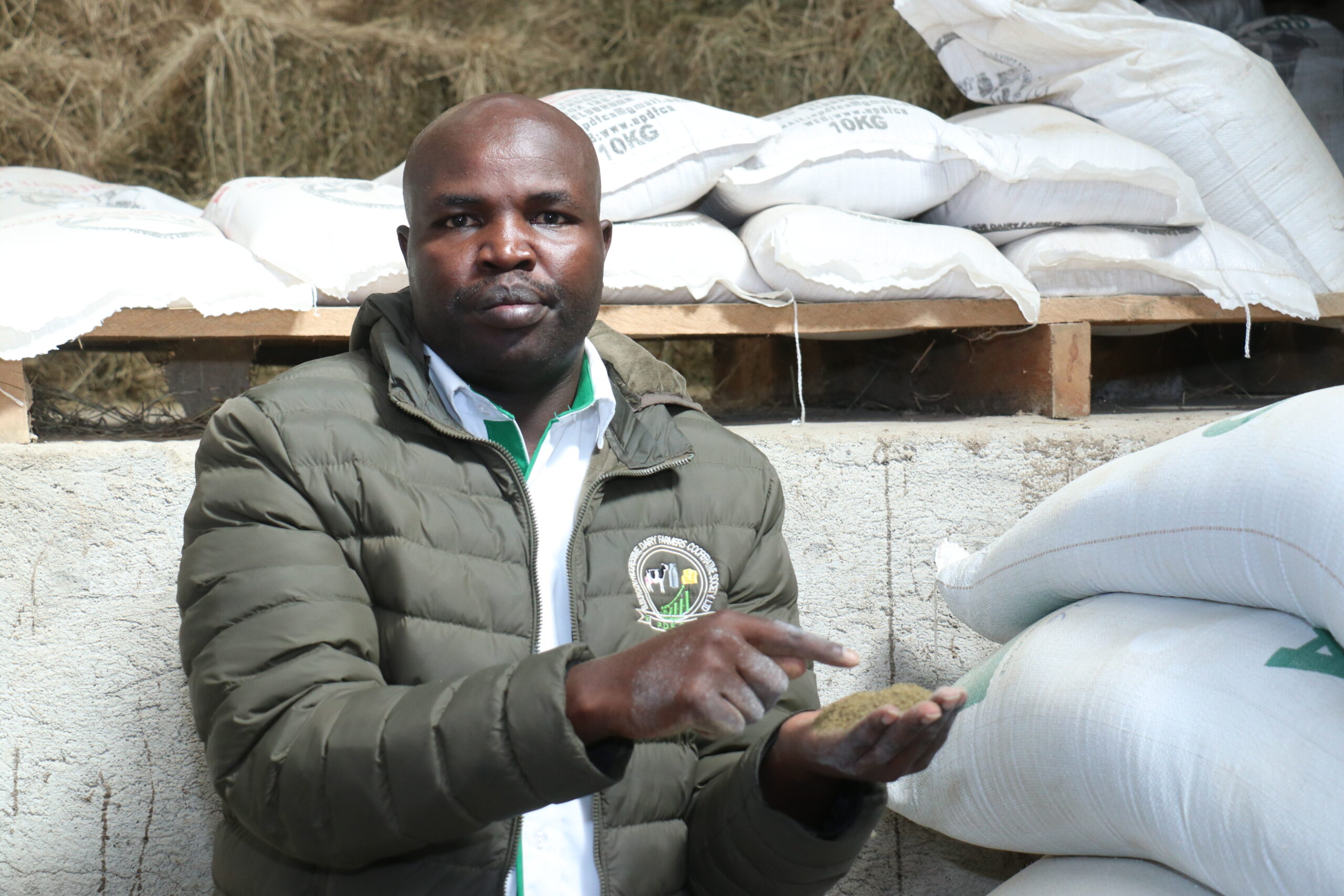
At the Elburgon Progressive Dairy Farmers Cooperative Society, milk collection and marketing are at the centre of the cooperative’s work. “Our core service is milk aggregation and marketing. We collect milk daily, chill it and sell it to the market,” says Daniel Kiptum, the cooperative’s manager.
“All our milk, 100 per cent, goes to Brookside Dairy Ltd.” The cooperative currently collects an average of 18,500 kilogrammes of milk every day. Farmers who live far from the branch send their milk through transporters, while those living nearby deliver it directly to the cooperative.
Once milk is delivered, farmers receive confirmation showing the quantity supplied and the date. Those using transporters receive an SMS notification, while farmers delivering milk directly receive an acknowledgement receipt.
The cooperative pays farmers KSh54.50 per kilogramme at the farm gate and retains KSh2 for every kilogramme supplied as part of an annual bonus scheme. “At the end of the year, each farmer receives KSh2 for every kilogramme supplied between 1 January and 31 December,” Kiptum says.
The cooperative also provides farmers with other services, including agrovet shops at its branches where they can access farm inputs such as animal supplements on credit.
For farmers such as Mwaniki, such support can make the difference between simply keeping a few cows and building a dairy enterprise that supports an entire family. Her two cows may produce only a few litres at a time, but behind every litre is a story of resilience, investment and the determination to keep working.