|
Getting your Trinity Audio player ready...
|
By Victoria Musimbi
Nairobi, Kenya: As Kenya faces increasingly frequent and severe weather-related hazards, efforts to strengthen early warning systems are becoming more critical.
The country is now taking steps towards Action-Based Forecasting (ABF), an approach that seeks to translate weather forecasts into clear information on potential impacts and practical actions that can be taken before hazards escalate into disasters.
The initiative is being implemented in Kenya by the Kenya Meteorological Services Authority (KMSA) and the National Disaster Operations Centre (NDOC) through the WISER ActionFirst in Africa project, which is supported through partnerships involving the UK Met Office, the World Meteorological Organization (WMO) and the Foreign, Commonwealth & Development Office (FCDO). The project brings together government agencies, humanitarian organisations, civil society, the media, selected sectors and communities through a co-production process.
Kenya’s preparations for the October-November-December (OND) 2026 season come as forecasts indicate the potential for above-average rainfall. However, stakeholders emphasise that the Action-Based Forecasting process is a long-term effort aimed at strengthening how weather information is understood and used, rather than being focused on a single rainy event.
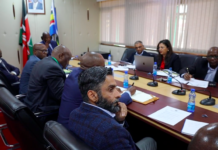
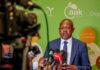
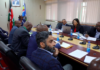
Representing the UK Met Office at a national sensitisation workshop on Action-Based Forecasting and institutional coordination for early action in Kenya, John Mungai said the Weather and Climate Information Services for Africa (WISER) programme, for which he serves as Regional Coordinator, has been implemented in Kenya through various projects since 2015.
He said the programme supports countries to move beyond simply producing forecasts by ensuring weather and climate information is trusted, accessible, inclusive and used to support early action, protect lives and livelihoods, and strengthen long-term resilience.
“A key part of what we are doing through WISER Africa is ActionFirst™ in Africa,” Mungai said, describing it as an initiative supporting the development and implementation of people-centred, action-based early warning systems across Eastern, Southern and West Africa.
He noted that accurate forecasts are only one part of an effective early warning system, adding that forecasts must be clearly understood, trusted by users, linked to practical actions and integrated into decision-making systems.
“Forecasts need to be understood, they need to be trusted, they need to be linked to actions, and they need to be integrated into decision-making systems,” he said.
Mungai described KMSA as a major national meteorological service in Africa, noting that it also hosts a regional specialised meteorological centre that supports several countries with early warning information on extreme weather.
He said the workshop marked an important beginning for Kenya and that strengthening Action-Based Forecasting would be a long-term process requiring continued collaboration, data sharing and learning.
Mungai also highlighted the importance of Gender Equality, Disability and Social Inclusion (GEDSI), calling for early warning systems that respond to the needs of different groups.
“Let us leave no one behind,” he said.
Making Early Warnings More Inclusive and Actionable
Hannah Kimani, who is in charge of Public Weather Services at KMSA and leads the WISER ActionFirst initiative in Kenya, said the programme seeks to transform how weather information is communicated and used.
“Action First is about moving away from simply telling people what the weather will be to explaining what the weather will do and, most importantly, what actions can be taken to mitigate the effects of extreme weather events,” Kimani said.
She explained that the initiative promotes collaboration among government institutions, humanitarian organisations, civil society, the media, communities and other sectors to develop a people-centred and inclusive early warning system.
“We need to bring everyone on board and develop a people-centred, all-inclusive early warning system that targets the people who are most vulnerable,” she said.
The initiative places particular emphasis on gender, equity, disability and social inclusion to ensure early warning information reaches people who are often left out of conventional communication systems.
Kimani noted that efforts to make forecasts more accessible to persons with disabilities have already begun under the wider WISER programme.
Through the WISER Kenya pilot, forecasts were produced in Braille between March and May 2026 in the pilot counties of Garissa and Tana River. Sign-language interpretation was also introduced during the National Climate Outlook Forum (NCOF).
“These efforts have largely been at the national level. Through Action First, we want to take this further and ensure that information reaches last-mile users,” she said.
The challenge, she added, extends beyond persons with disabilities. Some marginalised communities may not have access to television, radio or mobile phones, requiring alternative ways of delivering warnings.
“This is why we want to go into communities and understand how best to reach these people. It could be through women’s groups, pastoralist groups or other community structures,” she said.
As part of the co-production process, the project has brought together humanitarian organisations represented by the Kenya Red Cross Society, civil society organisations, the media and representatives from selected sectors.
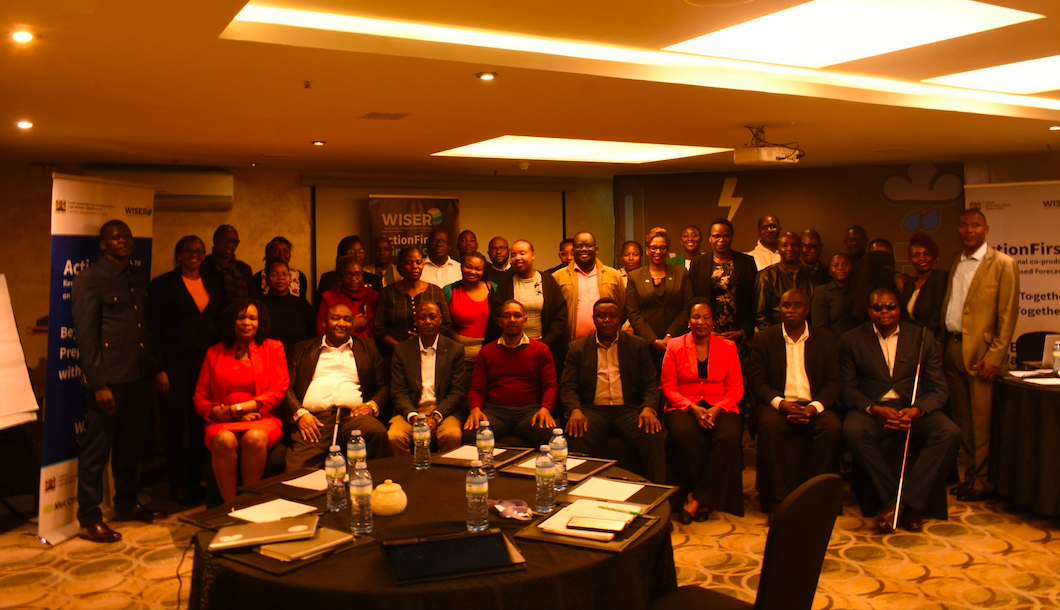
Kenya’s ActionFirst™ process began with a national co-production workshop in Nairobi, where stakeholders identified priority hazards and developed impact-action tables and risk matrices.
The process will move to Kisumu and Elgeyo-Marakwet counties, where the information will be contextualised based on local needs and experiences.
“Action First is about having a common and shared understanding,” Kimani said, adding that the county consultations will help determine whether the identified impacts and proposed actions reflect community realities.
Impact-Based Forecasting (IBF) helps identify potential impacts by combining weather forecasts with information on exposure and vulnerability. ABF goes a step further by linking those anticipated impacts to practical early actions before a hazard escalates into a disaster.
Kimani emphasised that these approaches cannot be implemented by a single institution.
Bringing together government agencies, county governments, humanitarian organisations, emergency responders, civil society, the media, development partners and communities is expected to strengthen coordination, improve public messaging and support timely anticipatory action.
The process will eventually inform the establishment of an Action-Based Forecasting Working Group and an implementation plan to guide the rollout of ABF in Kenya.
Kimani also emphasised that ActionFirst is not intended to duplicate existing early warning systems but to build on existing platforms, frameworks and policies while strengthening coordination.
“One of the biggest gaps we need to address is the format and packaging of weather and climate information,” she said.
She gave the example of flooding, noting that warnings may not be accessible to people with visual impairments or others who cannot use conventional communication channels.
“These are some of the challenges we are trying to address. We want to explore how we can meet the needs of people who may not have access to conventional communication channels,” she said.
Achieving an inclusive early warning system will require continued engagement with communities to understand their specific needs and identify communication channels that work for them.
“It is a significant challenge, but we believe it is achievable. This is just the beginning, and we are committed to finding ways of ensuring that early warning information reaches everyone,” she said.