

By Pauline Achieng Tom
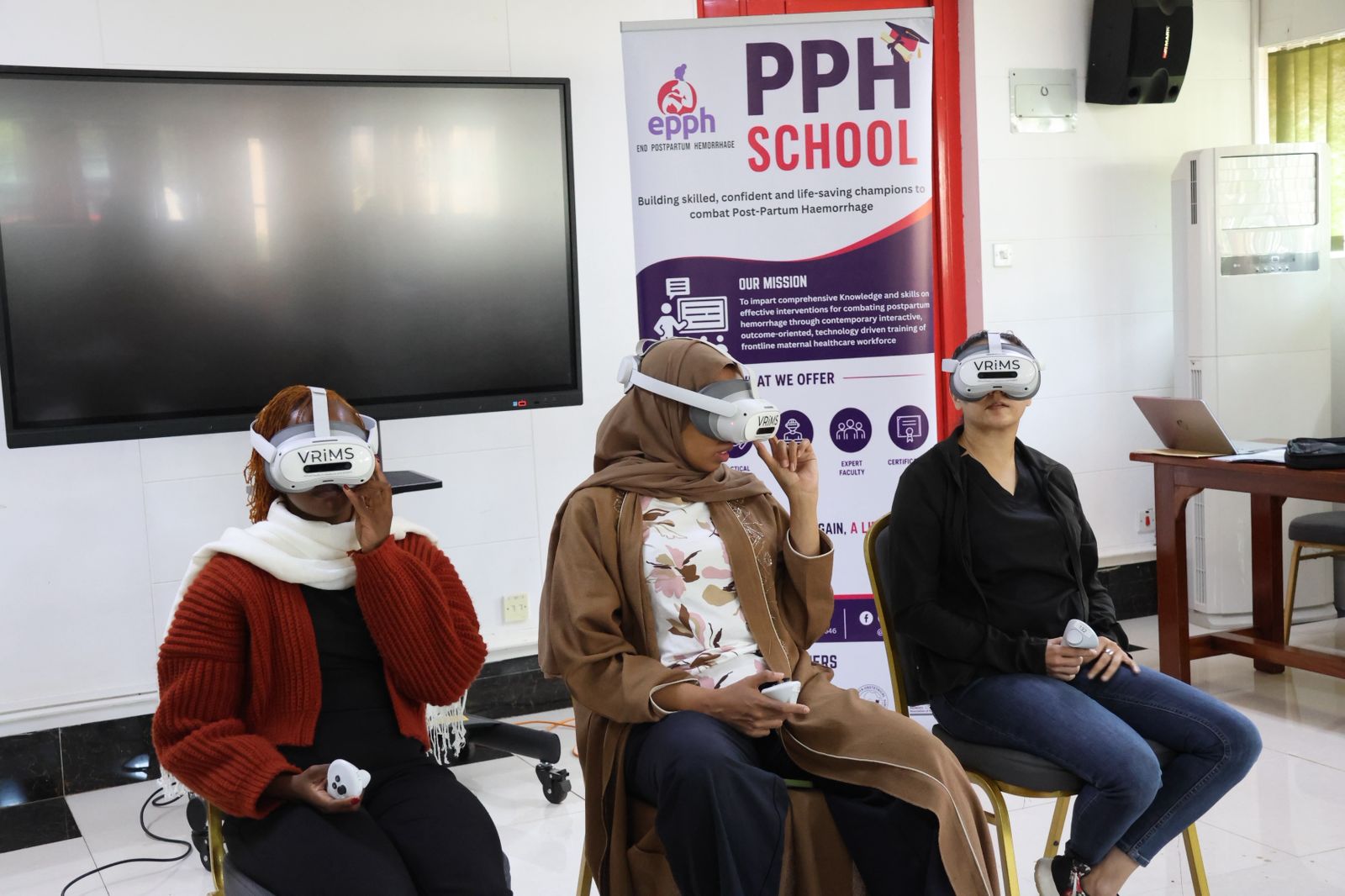
Nairobi, Kenya: Inside Chiromo Campus in Nairobi, rows of students sit still with Virtual reality (VR) headsets strapped to their faces watching a scene unfold in front of them. A caesarean section plays out in first-person view.
A doctor carefully lifts out a baby and calls out instructions to a nurse to administer oxytocin, a uterotonic drug meant to stop bleeding before it starts. Facilitators move around the room helping students and watching screens that mirror exactly what each student is seeing.
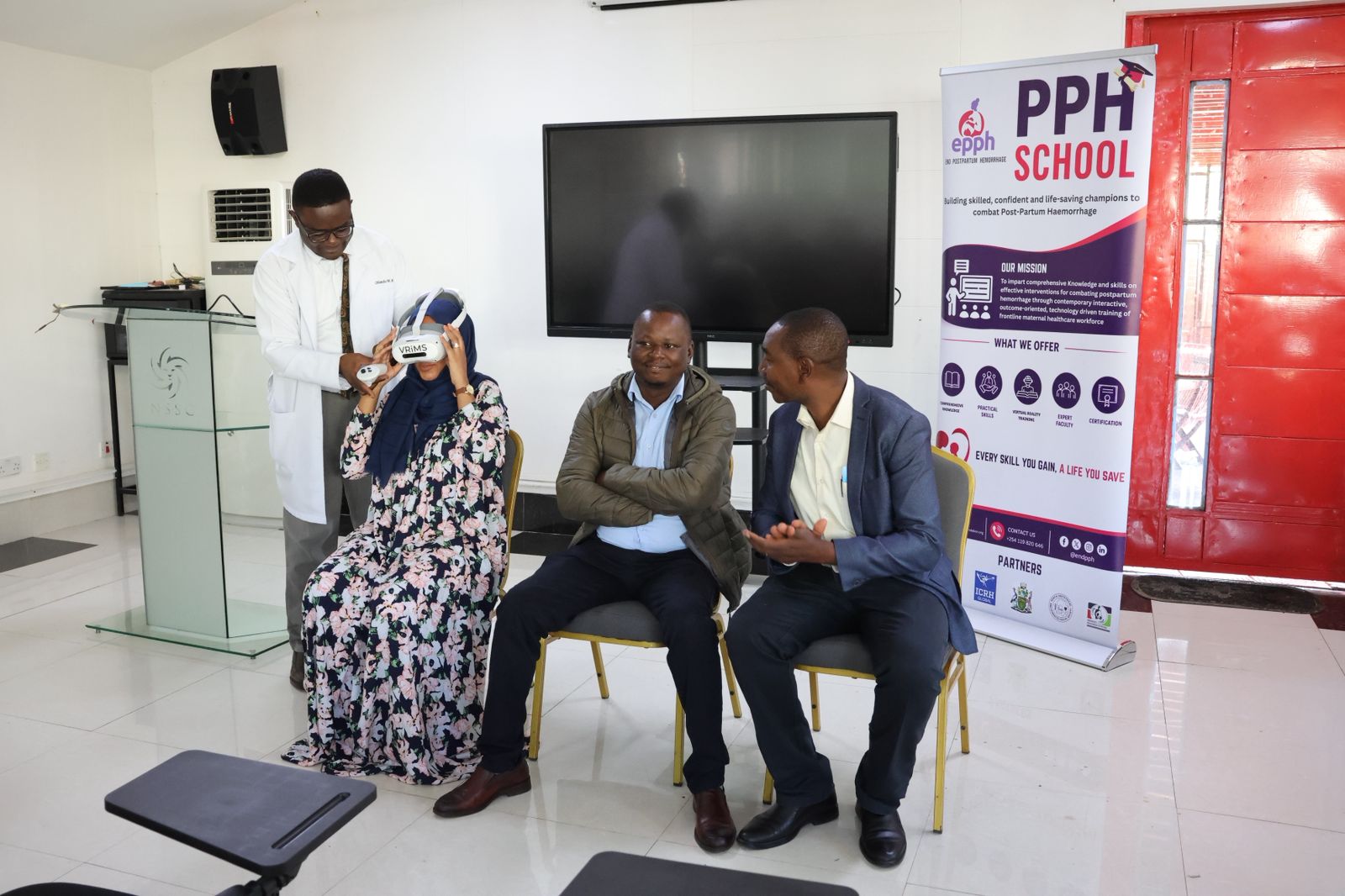
This is one of the innovations the End PPH Foundation is using in its push to end postpartum haemorrhage (PPH) deaths in Kenya with VR based training for medical students,nurses and midwives.
Speaking at the PPH School, Dr. Kireki Omanwa, Lecturer at the University of Nairobi Department of Obstetrics & Gynaecology says maternal and neonatal deaths in Kenya have remained consistently high, and while several factors contribute to this, skill set remains key among them hence the VR headsets for training and reskilling.
“We have done the same thing over and over again over the years and our maternal mortality ratios are still the same,” he says.
He adds, “We realized one of the biggest gaps is human resource, skills and retaining these skills. So that is why we came up with this idea of a PPH school basically focusing on PPH alone because it’s our biggest killer.”
According toKenya Demographic Health Survey (KDHS) 2022, Kenya’s maternal mortality rate sits at 355 per 100,000 live births.Further data from the Ministry of Health shows that the country loses 15 mothers every day from preventable causes, 10 of whom die from excessive bleeding.
 PPH occurs when a mother experiences excessive bleeding after childbirth, traditionally defined as blood loss of 500 millilitres or more following a vaginal birth or 1,000 millilitres or more after a caesarean section. In 2025 World Health Organization (WHO) updates recommends starting treatment as early as a 300 millilitres blood loss especially in women showing signs of shock.
For many health workers, skills can erode in the long, quiet stretches between emergencies especially in counties where a single consultant may be covering a large population. Constant reskilling ensures doctors are prepared and do not freeze during an emergency instead muscle memory takes over.
During VR PPH training, students are taken through repeated simulations so that when they face an emergency for the first time, knowledge overrides the freeze response. The technology immerses the learner inside a realistic clinical environment, allowing them to witness emergencies unfold without putting any patient at risk.
The concept of VR training is borrowed from the aviation industry, the industry which has high safety standards, has long relied on simulation training to build muscle memory in pilots in rare but critical emergencies such as navigating turbulence, darkness and mechanical failure.
“By watching and immersing yourself in this technology, it creates a pathway in the brain,” Dr. Omanwa says. “Then when you encounter a similar situation in real life, you actually remember what you saw being done and you can actually do it.”
The programme brought together students from medical training institutions across Kenya alongside senior obstetricians and gynaecologists and surgeons from Pumwani National Hospital and hospitals in Eldoret, Murang’a and Nairobi.
Beyond VR simulation training, The PPH School is also deploying a second technology for a different problem,what happens when the only doctor available lacks specialist experience. The platform, known as Proximie, is a telepresence system that allows specialists to remotely guide doctors through complex procedures in real time using multiple camera feeds which then allows a specialist to connect and offer their expertise without being in the room.
Dr. Omwanwa says that this technology will bridge the specialists gap in the country. Kenya has roughly 700 gynaecologists for a population of 52 million, many facilities lack immediate access to expert support during obstetric emergencies.
“I could be in Nairobi with a colleague in Eldoret, and on the other end, a doctor in Garissa or Marsabit performing his first caesarean section.” Omwanwa explains “Through Proximie, I can actually guide a colleague through every step of an emergency how to clean and drip the patient, where to cut, how far is too far before risking a haemorrhage.”
“I can actually guide the person who is a novice from the comfort of my hospital where I am.”
According to Dr. Richard Mogeni, an instructor at PPH School and an Obstetrician & Gynaecologist,the standard instruction in a PPH emergency is to shout for help, but Mogeni argues that what’s needed in the moment isn’t always more hands.
“There are times when somebody just needs to be confidently told that they can do something,” he says.”That small thing can be the thing that is between the life of a patient and death.”
Dr. Mogeni who is also the Deputy Director of Reproductive Health at Moi Teaching and Referral Hospital says that technologies like Proximie and the VR training headsets have the ability to not only save lives but also to reduce referrals and improve quality of care.
“In a country like ours where there is a shortage of health care personnel, it will help. For example, a midwife knowing how to do some basic procedures that they can do in case of a PPH emergency can save a life.”.
Mogeni says that despite medical schools and training colleges producing thousands of graduates every year, the large number of students can mean inadequate hands-on training that VR training can supplement.
“When the numbers are big, the hands-on experience is little before VR people have been using other technologies like YouTube, Reels, short stories kind of thing. But this one is embedded with, step-by-step kind of way of doing things and has the immersion aspect that makes you feel like part of the process.”
As Kenya continues to grapple with stubbornly high maternal mortality rates, the End PPH foundation hopes technologies such as VR simulation and the Proximie platform will help close the gap between medical knowledge and real-life emergencies.








Very educative. Technology involvement. This initiative will help mother’s alot.
Comments are closed.