|
Getting your Trinity Audio player ready...
|
By Mary Mwendwa
Nairobi– The Retirement Benefits Authority (RBA) has reported a significant milestone for Kenya’s pension industry, with total assets under management hitting KSh2.81 trillion as of December 2025. However, beneath this impressive figure lies a troubling reality: only 26.5% of Kenya’s working population is covered by any form of pension scheme, leaving millions vulnerable to old-age poverty.
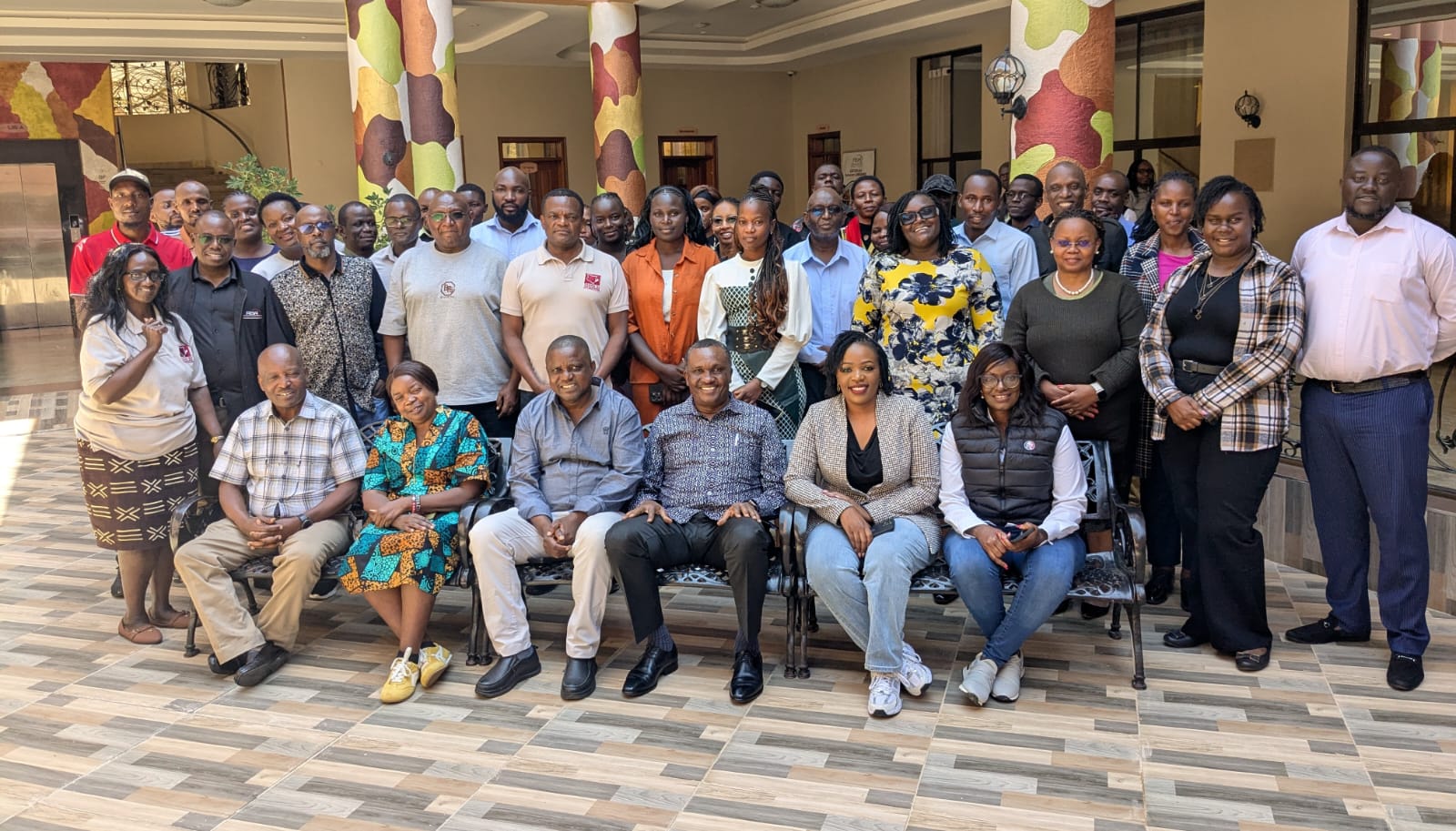
Speaking during a media engagement workshop in Naivasha on June 25, 2026, RBA CEO Charles Machira painted a stark picture of the challenges facing Kenya’s retirement benefits sector. The event, held in collaboration with the Media Council of Kenya and the Kenya Editors Guild, brought together journalists and editors to discuss “Securing the Storyteller’s Future.”
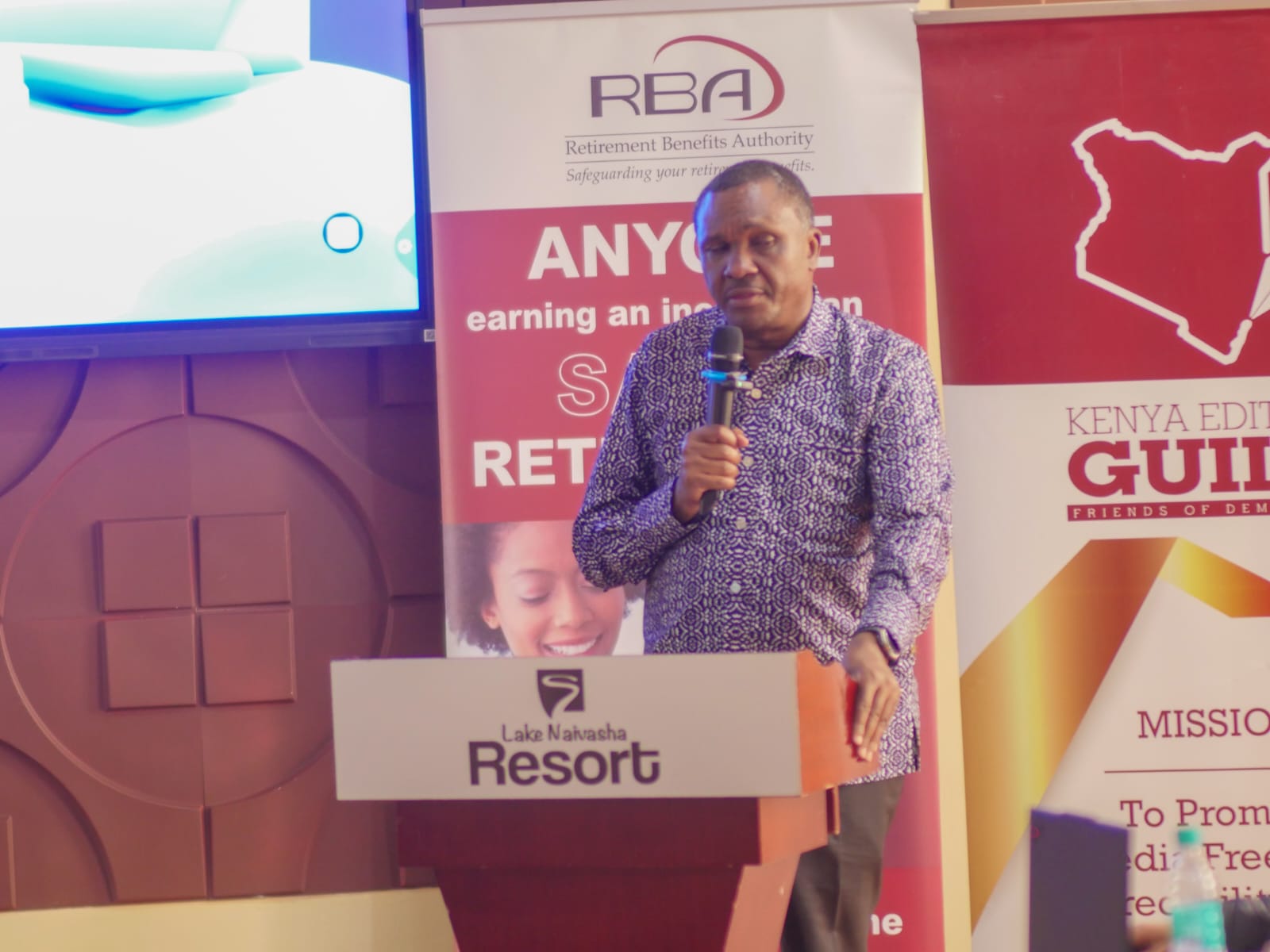
“You cannot effectively guide the public on financial security if you yourself are vulnerable to financial insecurity,” Machira told the gathering, underscoring the importance of personal financial planning for media professionals.
The Trillion-Shilling Success Story
The pension sector has experienced remarkable growth over the past quarter-century. According to RBA data, pension assets have grown from just KSh40 billion in 2000 to over KSh2.8 trillion today. The industry now manages more than 1,000 registered schemes, and the number of Kenyans with pension accounts has reached 7.5 million.
However, this growth masks a deeper structural problem. 83.2% of Kenya’s workforce operates in the informal sector, according to the Kenya National Bureau of Statistics Economic Survey 2023. Only 266,764 individuals are registered in individual pension schemes, highlighting a massive coverage gap.
International data further contextualizes Kenya’s challenge. The pension-to-GDP ratio stands at 16.05%, slightly above the non-OECD average of 15.2% but far below OECD levels of 92.2%. According to the ILO, the informal economy forms 84% of Kenya’s workforce, significantly limiting access to structured retirement savings.
The Unremitted Contributions Crisis
Machira also revealed a deeply concerning trend: unremitted pension contributions stood at KSh67.9 billion as of March 31, 2026, up from KSh66.4 billion in December 2025 and KSh57 billion at the end of 2024.
The problem is overwhelmingly concentrated in the public sector. Public universities, county governments, and state agencies account for approximately 93% of all unremitted contributions, with public universities alone owing KSh30.24 billion as of December 2025.
This “silent capital drain” has far-reaching consequences. According to a Business Daily analysis, “fewer pension inflows mean lower domestic savings and greater dependence on short-term borrowing.” Workers lose both their principal savings and the compounding investment returns that would have grown their retirement funds.
A Changing Pensions Landscape
The pensions sector is evolving rapidly, driven by several key trends:
-
Increased job mobility is disrupting continuous pension contributions, leading to fragmented savings.
-
The growth of informal and gig work is limiting access to structured schemes.
-
Rising life expectancy is stretching retirement savings, with many retirees outliving their funds.
-
Demand for tech-first solutions is growing, with pressure for digital, user-friendly platforms.
Policy Interventions
The RBA is pushing for several policy amendments to address these challenges. Key proposals include the following:
-
Empowering KRA as a collection agent for unremitted pension contributions, allowing the tax authority to freeze bank accounts and seize assets of defaulting employers.
-
Exempting death benefits from income tax provides relief to beneficiaries.
-
Removing segregated pension fund rules and simplifying compliance for pension schemes.
-
Capping tax-favored employer gratuity contributions at 31% of emoluments.
Behind the statistics lies a human tragedy. According to the 2024 Pension Survey, 55% of pensioners receive less than KSh20,000 per month, and only 41% of retirees feel their pension is adequate for their needs.
“A journalist who spends their entire career fighting for the rights, dignity, and financial accountability of others should never face retirement in poverty,” Machira declared, speaking directly to the media professionals in attendance.
The RBA, through its Strategic Plan 2024–2029, aims to grow pension assets to KSh3.2 trillion and increase coverage from 26% to 34% by 2029.
Meanwhile, new regulations introduced in November 2023 establish Income Drawdown Funds (IDD), offering retirees more flexible income options. Under this framework, retirees can draw regular income while their balance continues to earn returns, with maximum annual withdrawals capped at 12% of the outstanding balance.
As Machira concluded, “Let us use this Naivasha retreat not just as a professional milestone, but as a personal turning point. Let us secure the storyteller’s future, so that together, we can secure our nation’s future.”