|
Getting your Trinity Audio player ready...
|
By Mary Mwendwa
Nairobi—A new report exposes systemic barriers that leave transgender Kenyans legally invisible—blocked from jobs, banking, and even burial with dignity.
When a transgender woman in Mombasa died, her family refused to let her community bury her in the clothes she had lived in. They dressed her body according to the gender she was assigned at birth. When a trans man in Uasin Gishu went to the police to report an assault, he was arrested instead—accused of “impersonation” because his ID showed one gender, his appearance another.
And when a young trans woman in Nairobi sat for a job interview she was fully qualified for, the hiring manager looked at her documents, looked at her face, and said, “You’re impersonating someone.” The interview ended there.
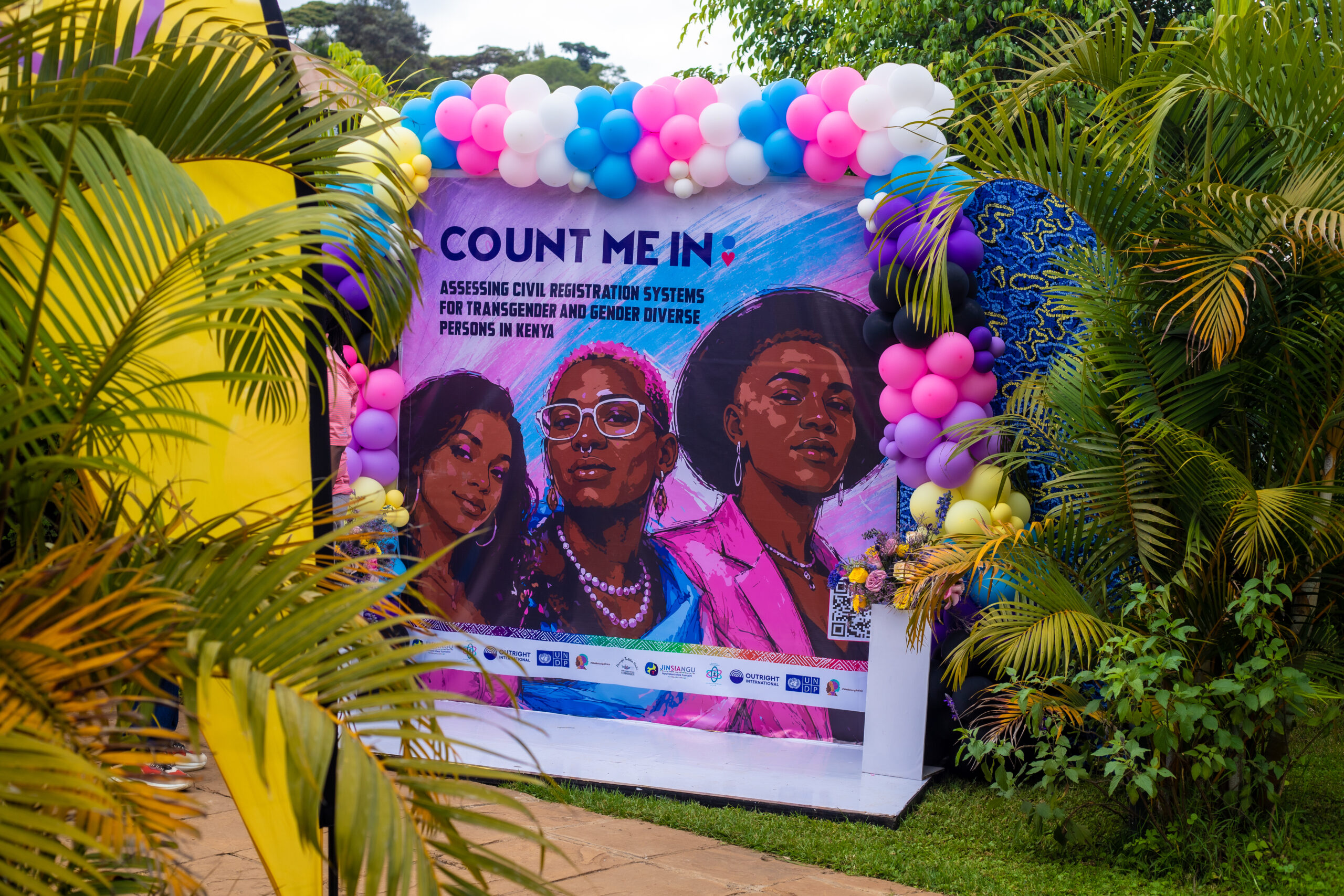
These are not isolated tragedies. They are the daily, grinding reality of life for transgender and gender-diverse persons (TGDPs) in Kenya, according to a landmark report released today titled “Count Me In: Assessing Civil Registration Systems for Transgender and Gender Diverse Persons in Kenya.”
Produced by the National Transgender Advocacy Network (NTAN)—a coalition of Jinsiangu Kenya, Trans’Alliance Kenya, Coast Trans Network, and Muamko Mpya—the 112-page study is the most comprehensive investigation ever conducted into how Kenya’s civil registration system fails its transgender citizens. The findings are damning.
On paper, Kenya’s civil registration system works. It issues birth certificates, national IDs, and passports efficiently—over 90% of TGDP respondents in the study had visited registration offices and received some form of documentation. But that is precisely the paradox, says Toni Samantha King’ori, executive director of Jinsiangu Kenya.
“The system is functional for issuing new documents,” King’ori explains. “But it completely breaks down when a person needs to update their records to reflect who they truly are. A transgender woman can change her name through a deed poll. But she cannot change the gender marker on her ID. So she walks through life with documents that scream ‘male’ while she is visibly female. That mismatch is not an inconvenience. It is a weapon used against her every single day.”
The numbers bear this out. Among 345 transgender, non-binary, and intersex Kenyans surveyed across Nairobi, Kisumu, Mombasa, and Uasin Gishu, only 8.8% had ever requested a gender marker change. Nearly 90% reported that the civil registration process does not recognize their self-identified gender, while over 80% said stigma and discrimination were the biggest barriers.
More than 70% described the cost of changing names as prohibitive, with informal payments ranging from KES 20,000 to over KES 500,000. And yet, despite these barriers, demand is growing. Data abstracted from civil registration records between 2022 and 2025 shows a sharp surge in applications for gender marker corrections in 2025—applications that the law does not even permit. People are filing papers they know will be rejected, simply because the need to be seen is that desperate.
The report documents how the inability to align documents with identity creates a cascade of exclusions touching every aspect of life. In employment, one respondent explained: “Even if you qualify, the moment they look at your papers and then look at you, they say you’re impersonating someone.”
Another, a trans man with a university degree, said he has been turned away from countless interviews: “You start wishing you were a ‘beautiful lady’ because then maybe you would be hired.” In financial services, mismatched documents mean no bank accounts, no M-Pesa registration, and no access to government funds. “You want to open a bank account, but the documents don’t match. They look at your ID and say, ‘This is not you.’ So you are blocked.” Housing insecurity is chronic: participants described being evicted repeatedly, never staying anywhere longer than a year.
“You relocate to a new place, and you start sensitizing—is this environment safe?” As you assess, six months have elapsed. Even in death, recognition is denied. One group in Mombasa recounted: “We went to bury a colleague. The church refused to bury the person. We buried our person ourselves.”
The report paints a harrowing picture of what happens when transgender Kenyans walk into government offices. Service counters are open, with no privacy. Staff call out old names loudly. Other applicants stare, murmur, and sometimes mock. One transgender woman described going to change her passport: “They called other officers to come look at me. They would say my old name loudly, even after I told them my new one. It was like entertainment for them. That kind of outing is dangerous because it invites violence.”
In Uasin Gishu, a trans man described being forced to use his own pen at the fingerprinting office because the officer refused to hand it over. “It sounds small, but it shows you the level of contempt.” Some respondents described being asked to strip. “A friend wanted an ID, so he approached our local chief… They even undressed him and realized he was a man. They took him to the toilets and told him, ‘We want to know if you are a woman or a man.’ “The psychological toll is devastating. “After so many times being turned away, you stop trying,” one trans man in Kisumu said. “It feels like you don’t exist.”
Kenya’s legal framework is a study in contradiction. Under the Registration of Documents Act, any person can change their name by registering a deed poll—legally possible, though administratively nightmarish. But under the Birth and Death Registration Act and the Registration of Persons Act, there is no provision for changing a gender marker. None.
The only exception is for intersex persons, who gained limited recognition following the 2014 Baby A case. For transgender persons, the law is a wall. And yet, Kenyan courts have repeatedly signaled that this wall must come down. In Republic v. Kenya National Examinations Council (2014), the High Court allowed a transgender woman to change her name and gender marker on academic certificates. In SC v. Director of Public Prosecutions (2025), the court declared that transgender persons have a right to self-identified gender and directed the state to grant legal recognition. But the executive and legislature have not acted. As one judge observed in 2019: “There is a need for government, and Parliament in particular, to address in a holistic manner the interests of minorities such as transgender persons.” Today, in 2026, nothing has changed.
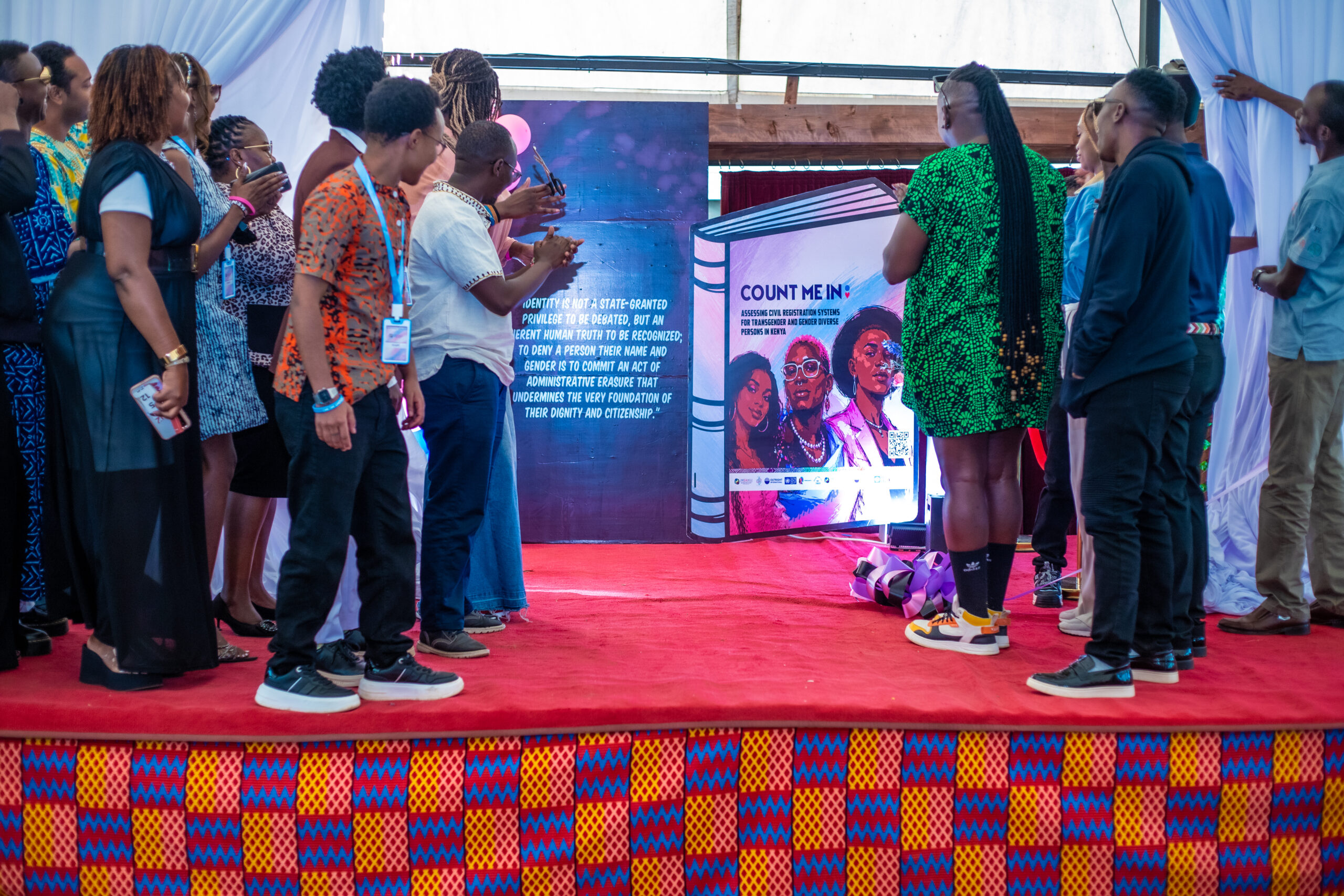
The report’s title—Count Me In—is both a plea and a declaration, drawing on the global commitment to “leave no one behind” under the Sustainable Development Goals. An epigraph opens the report: “Identity is not a state-granted privilege to be debated but an inherent human truth to be recognized; to deny a person their name and gender is to commit an act of administrative erasure that undermines the very foundation of their dignity and citizenship.”
The report makes three core recommendations: in the short term (1-2 years), develop TGDP-inclusive guidance manuals for staff, introduce private service counters, and pilot legal aid desks in urban centers. In the mid-term (3-5 years), decentralize services to rural areas, simplify the deed-poll process, and codify existing court precedents into law.
In the long term (5-10 years), enact a standalone Gender Recognition Act allowing self-determination of gender markers, establish an independent oversight body, and launch national public education campaigns. The report points to international models that work, such as Argentina’s Gender Identity Law (2012), which allows changes based solely on self-determination, and South Africa’s Alteration of Sex Description Act (2003). In East Africa, no country has explicit laws allowing gender marker changes.
“Kenya has a chance to lead,” says Seanny Odero, executive director of Trans’Alliance Kenya. “We have a progressive Constitution. We have courts that have ruled in our favor. We have a civil registration system that works, in technical terms. The only missing piece is political will. We are not asking for special rights. We are asking for the right to exist on paper the way we exist in life.”
Behind every statistic in the report is a person. A trans woman in Nairobi who has spent five years trying to update her documents: “The moment I said I was changing my name, everyone in the room stopped what they were doing. ‘But these names you want, they sound female—what do you mean?’ From that point, the whole process became a battle.”
A trans man in Kisumu was told to ‘come back with your husband’ to change his name. A young gender-diverse person in Nairobi who has given up entirely: “Every office tells you something different. You never know the real process. So you stop trying. You just live with the wrong papers, the wrong name, and the wrong everything. What else can you do?”
The report concludes with an urgent warning: without reform, transgender and gender-diverse Kenyans will continue to face systemic exclusion, locked out of the rights and opportunities the Constitution guarantees to every citizen. “Kenya’s civil registration system is functional in its core mandate,” the authors write, “but it remains exclusionary for transgender, gender-diverse, and intersex persons when it comes to updates and corrections essential for legal recognition. Experiences of stigma, inconsistent guidance, weak privacy protections, and inadequate staff training undermine dignity and trust.”
The question, now, is whether the government will act—or whether another generation of transgender Kenyans will continue to be counted out.
Images courtesy of Jinsiangu.