|
Getting your Trinity Audio player ready...
|
By Omboki Monayo
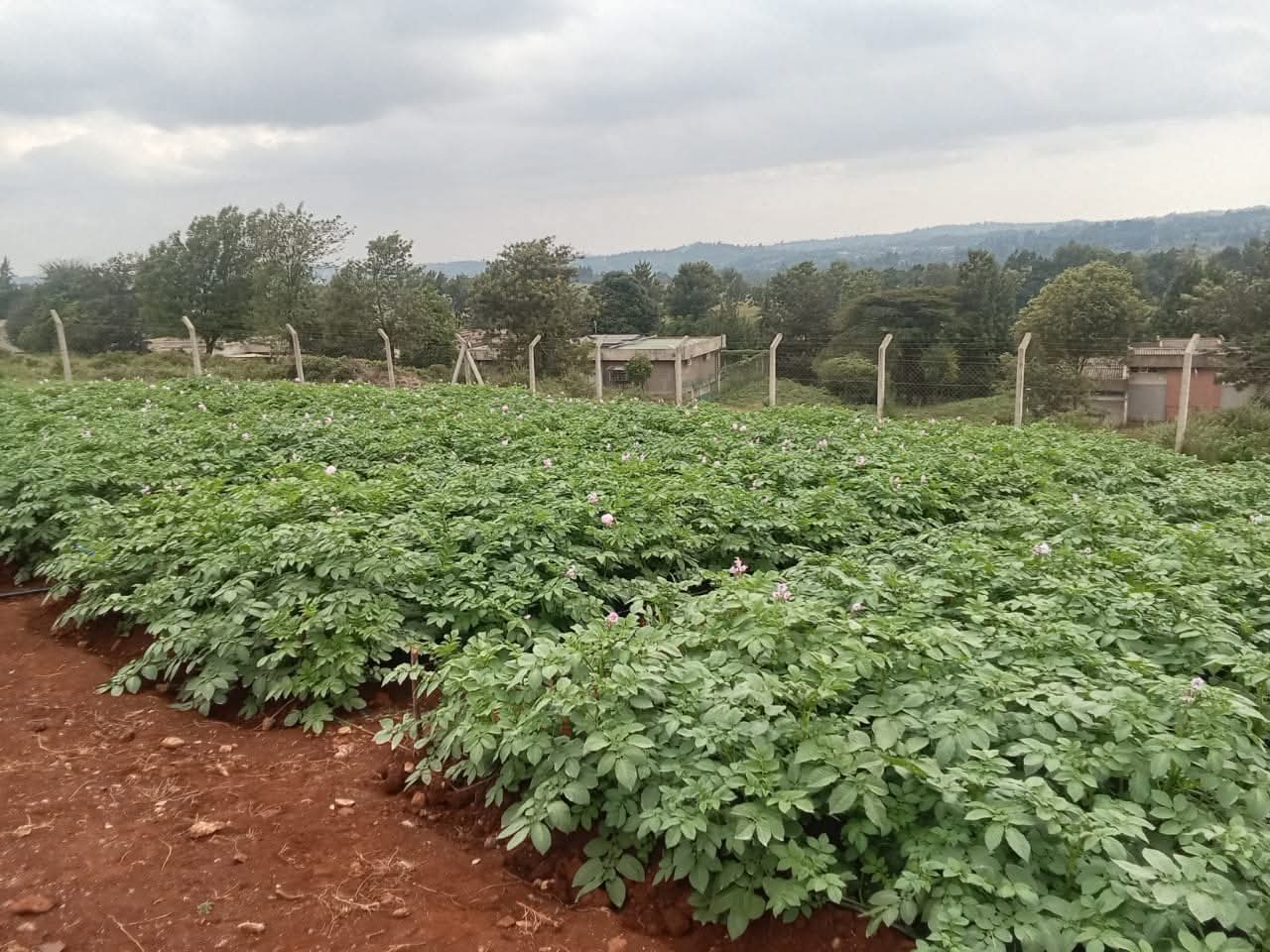
Nairobi, Kenya: Across the lush highlands of Kenya, a silent crisis is unfolding beneath the soil. The potato, the nation’s second most important staple crop, is in trouble. Yields have collapsed by two-thirds in just six years, dropping from 21 to a mere seven tonnes per hectare. This decline is more than a statistic; it represents a seismic threat to food security and livelihoods for the estimated 2.5 million people depending on the potato value chain.
This local struggle reflects a global emergency. According to the Intergovernmental Science-Policy Platform on Biodiversity and Ecosystem Services (IPBES) Nexus Assessment, global agrobiodiversity is crashing. The assessment reports that the world’s food supply relies dangerously on just nine crop species, which contribute to 65% of total production. As traditional varieties vanish, so does the genetic resilience needed to fight pests, diseases, and climate shocks. For Africa, where food systems are already fragile, this narrowing of the genetic base is a ticking time bomb.
The Seed Crisis
According to the Kenya Agricultural and Livestock Research Organisation (KALRO), there are at least 1.17 million potato farmers in Kenya and millions of households across East Africa that depend on potatoes for food and income. Their crops, however, remain at risk of being ruined by potato late blight.
KALRO notes that this threat is mainly driven by late blight.
“Late blight causes a loss of up to 60% of potatoes to a farmer and a total of around 23% annual loss in Kenya, translating into 15.4 billion shillings,” says the research institution.
To counter this challenge, KALRO, through its Horticultural Research Centre based in Tigoni, has developed a late blight-resistant biotech potato variety that is yet to be released.
Another culprit behind Kenya’s potato crash is not drought or locusts, but a lack of quality seeds. Experts estimate that fewer than 5% of Kenyan farmers use certified, disease-free seeds. Most rely on “recycled” tubers saved from previous harvests. Over generations, these seeds accumulate debilitating diseases, namely bacterial wilt, potato cyst nematode (PCN), and the infamous late blight.
“The ghost that has haunted potato farmers for centuries,” is how Dr. Moses Nyongesa, Principal Research Scientist at KALRO, describes late blight. “It caused the Irish Potato Famine of the 1840s. Nearly 200 years later, it’s still destroying 23% of Kenya’s potato production every year.”
The Genetic Solution
To break this cycle, Kenyan scientists are turning to the very biodiversity that is being lost globally. Using genes from wild potato relatives in the Andes, researchers have developed “Shangi Kinga”—a genetically modified version of the country’s favourite variety. Unlike conventional crops that require a cascade of fungicides, Shangi Kinga is nearly immune to late blight.
“The process is precise,” explains Dr. Nyongesa. “We don’t change what makes Shangi special—its taste, cooking time, texture, market acceptance. We add one thing: the ability to recognize and defend against late blight.”
The economic case is staggering. Economic modelling suggests the 3R-gene Shangi could generate KES 31.9 billion in benefits over 30 years by slashing fungicide costs and preventing losses. For a smallholder spending KES 15,000 per acre on chemicals, the savings could pay for a child’s school fees.
Beyond GMOs: Hybrid and True Seeds
However, biotechnology is just one tool. A separate, massive initiative led by the International Potato Center (CIP) and Dutch giant HZPC is launching Africa’s largest hybrid potato breeding project. The goal is to move away from planting heavy, diseased tubers towards “True Potato Seed” (TPS). These are botanical seeds, similar to tomatoes, which are lightweight, disease-free, and cheap to transport.
“In East Africa, where seed systems cannot keep up with demand, TPS would be a game-changer,” says Harmen den Braber of HZPC. Thiago Mendes of CIP adds that the economic reality forces a rethink: “The economics simply do not work for most smallholders” regarding certified traditional seeds.
Furthermore, collaboration with the James Hutton Institute has introduced varieties like Malaika and Glen, designed to resist the devastating PCN pest. “The release of these two varieties is the culmination of many years’ work,” says Professor John Jones, the Hutton lead. “It has brought together researchers… to help ensure that we provide solutions that align with the needs of growers.”
A Path Forward
Despite the breakthroughs, regulatory hurdles remain. Dr. Nyongesa notes that delays in commercializing GM crops have cost Kenya billions. Yet, the momentum is undeniable. The IPBES Nexus Assessment warns that prioritizing one element (like yield) over biodiversity creates “undesirable trade-offs.” In Kenya, the approach is holistic.
At the Rukaria Innovation Hub, farmers are not just passive recipients of science; they are active participants. The hub integrates climate-smart agronomy with high-quality seed production, engaging over 20 farmer groups. As one farmer noted, “Even young people see farming as something modern and profitable.”
The lesson from Kenya could serve as a valuable benchmark for other countries in the wider EAC, IGAD, and the African continent. Protecting potato diversity isn’t just about saving a tuber. It is about securing the sovereignty of the African plate. In the battle against climate change and hunger, the seed is the ultimate weapon.