|
Getting your Trinity Audio player ready...
|
By Jasmine Atieno @sparkleMine
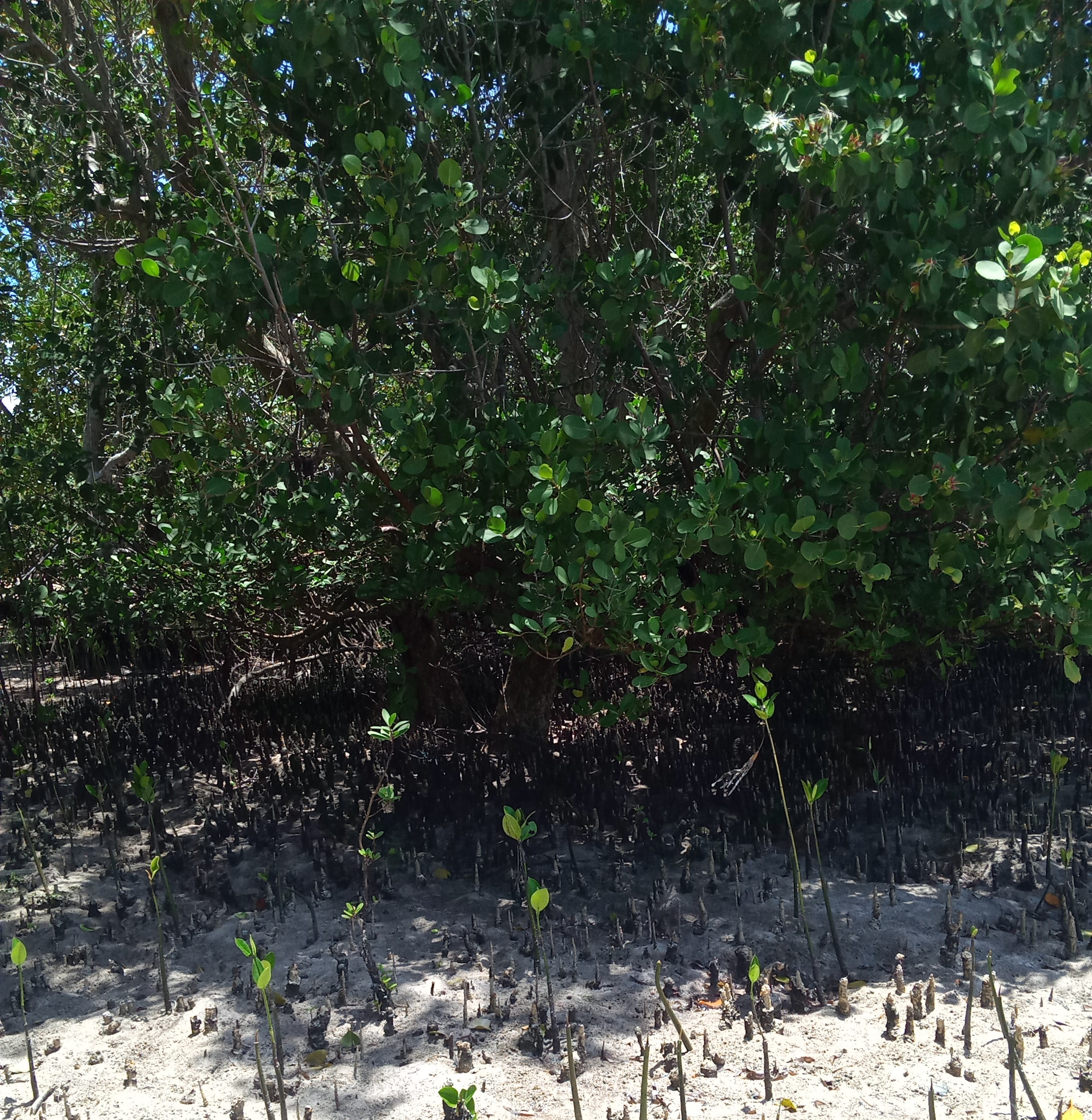
Mombasa, Kenya: In the mud of Gazi Bay at low tide, mangroves stand as silent guardians, their roots intricately woven with the sea and the community’s history. While fishermen navigate the narrow waterways and children forage along the coast, the village elders remember a time when these forests reached much deeper into the ocean.
These trees have served as a vital anchor for generations, far exceeding their biological definition. They represent a cornerstone of Kenyan coastal life, providing a natural defense against shoreline erosion, sustaining families through fishing, and anchoring cultural practices in medicine and ritual.
Ali Kassam, a fisherman in his fifties, leans on his paddle as he guides his canoe through the shallow waters. His voice carries the weight of years spent at sea.
“When the mangroves die, the fish disappear. And when the fish disappear, so does our food and money,” he says, glancing at the thinning patches of forest along the shore.
“These trees are our shield. Without them, the sea will swallow us. I remember when the channels were thick with roots, when you could barely push your canoe through. Now, there are gaps. The water runs faster, the fish hide less, and the storms feel stronger. We depend on mangroves not just for fishing, but for life itself. If they go, we go.” Details the fisherman.
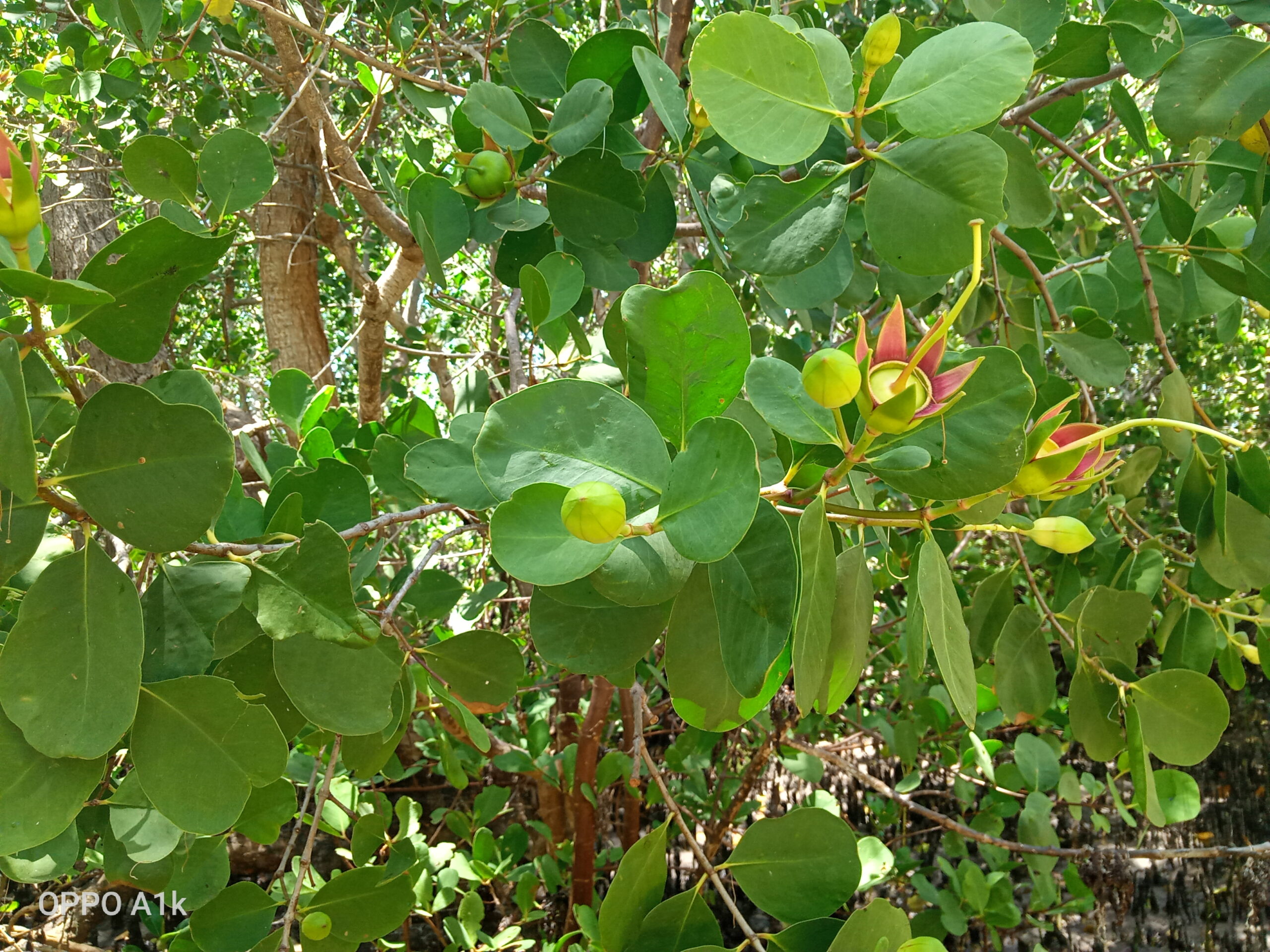
His words paint a picture more vivid than any scientific chart, a reminder that mangroves are not just ecosystems but lifelines. Yet today, two species Mkomafu (Xylocarpus granatum) and Milana (Sonneratia alba) are telling a story of resilience and loss.
Mkomafu, prized for its strong timber and cultural significance, is disappearing under the weight of overharvesting. Milana, the frontline defender against waves, is under siege from pests that hollow out its strength. Scientists warn that if these species vanish, it won’t just be trees we lose. It will be heritage, livelihoods, and natural defenses against the ocean’s fury.
Kenya’s mangrove forests cover about 61,000 hectares, representing just 1.8 percent of the country’s total forest cover. Though small in extent, their ecological and cultural importance is immense.
Kenya’s mangroves grow only along the Indian Ocean, scattered across five coastal counties. Lamu is their stronghold, holding more than half of the country’s mangrove cover. In Kwale, they cling to smaller bays like Gazi, while in Mombasa they survive in patches around Tudor Creek and Port Reitz, squeezed by the city’s rapid growth and port expansion.
Kilifi’s mangroves spread through Mida Creek and the Tana Delta, and further north, the Tana River estuaries shelter smaller stands. Each county tells a different story, from Lamu’s vast forests to Mombasa’s shrinking fragments, together showing how nature and human pressure shape where mangroves endure.
Yet in recent years, restoration projects—especially those led by communities—have begun to slow losses. Community-Based Ecological Mangrove Restoration (CBEMR) initiatives in places like Gazi Bay and Mida Creek have demonstrated that when local people are empowered, mangroves can regenerate naturally.
A 2022 study noted that while mangrove cover has stabilized in some regions, exposure to coastal hazards such as erosion and flooding has increased due to pest infestations and the weakening of frontline species. Two species in particular stand at the heart of this struggle: Xylocarpus granatum, locally known as Mkomafu, and Sonneratia alba, known as Mlilana.
Both are vital and vulnerable. Mkomafu has long been valued for its strong timber. In Muslim communities, it carries cultural weight, often used to craft funeral beds. Its wood also finds use in construction, making it a target for illegal harvesting.
“Xylocarpus granatum is not just another tree, it is deeply woven into the cultural fabric of coastal communities,” explains Dr. Judith Okello, a research scientist at the Kenya Marine and Fisheries Research Institute. “Families depend on it for traditional practices, and its fruit has medicinal value that has been passed down for generations. But because of uncontrolled harvesting, we are watching this species disappear before our eyes. If we lose it, we are not only losing a tree—we are losing heritage, medicine, and a vital ecological pillar,”
Without structured conservation, she warns that both its ecological and cultural importance could vanish.
Mkomafu is rare along the coastal strip, yet it is one of the most targeted species due to its strong wood used in furniture and carvings. Coincidentally, the name only appears three times in the recently prepared National Mangrove Ecosystem Restoration Guidelines (2025), with no specific and dedicated clear guide on its propagation. This omission underscores the precarious position of the species: culturally significant, ecologically vital, but institutionally overlooked.
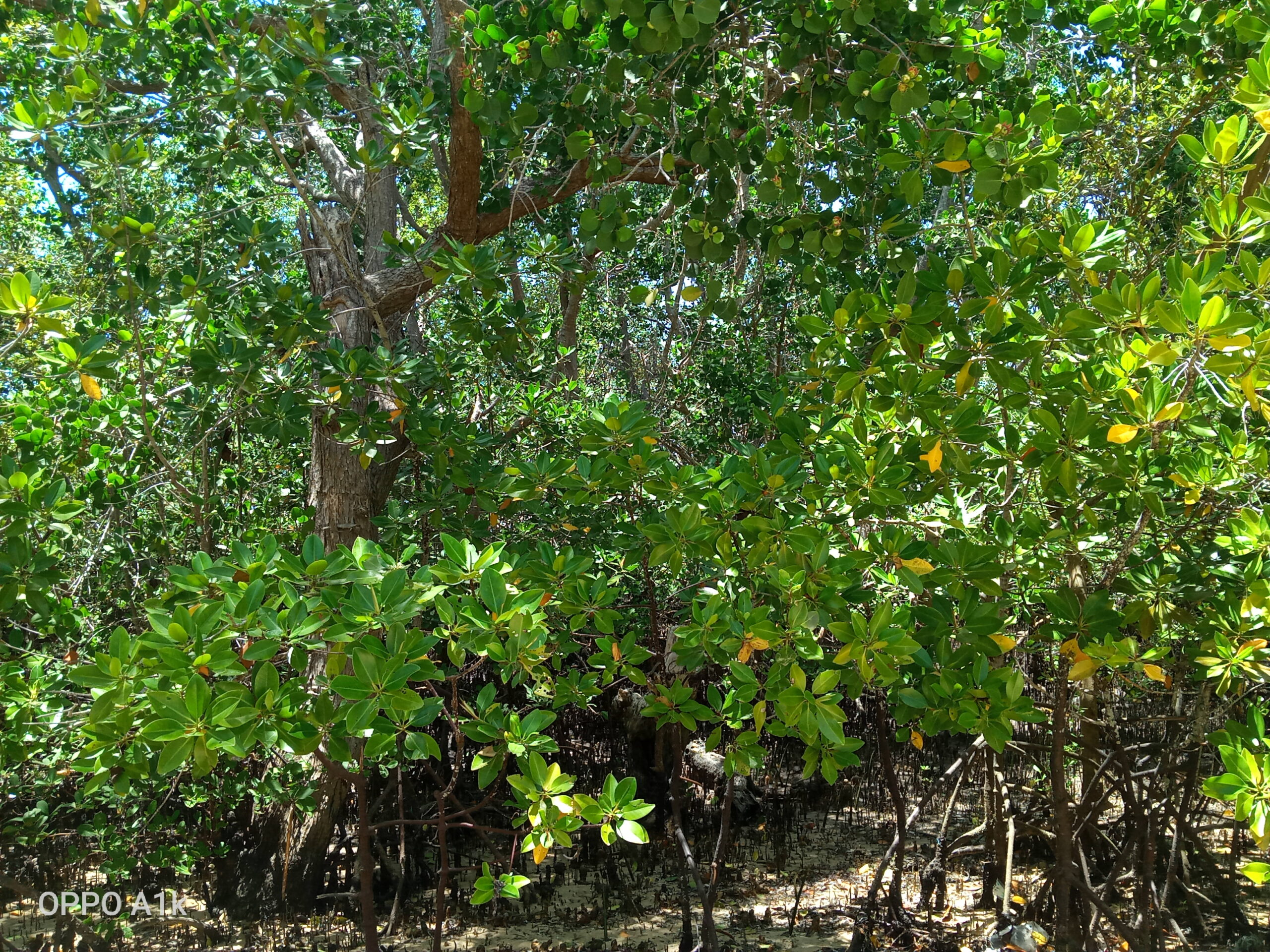
Sonneratia alba, meanwhile, occupies the seaward margin of mangrove ecosystems. It is the frontline soldier, absorbing wave surges and shielding other mangrove species from erosion. Yet it is under attack from widespread pest infestations that have resulted in large-scale diebacks in almost every mangrove patch where it occurs.
Unlike species such as Rhizophora or Ceriops, which produce easy-to-plant propagules, Sonneratia alba requires more complex nursery techniques.
“Nurseries often ignore Sonneratia because it is harder to grow,” says Okello. “But if we continue to neglect it, we will have no seedlings to replace what is dying. That is a dangerous oversight.”
In the National Mangrove Ecosystem Restoration Guidelines (2025), the species is mentioned only twice, with little detail on how to address its decline.
The threats facing Sonneratia are insidious. Pests bore into its wood, leaving concealed damage that only becomes visible when tree tips dry out. “Sonneratia alba plays a critical role in coastal defense,” Okello explains.
“Its roots absorb wave surges, shielding other mangrove species from erosion. But pests have plagued this species for decades, eating away at its strength. You don’t see the damage immediately the frass hides it but then the tree tips dry out, and entire bands of forest begin to die. From the air, you can see the coastline changing. This is not just a biological issue; it is a warning that our defenses against erosion are crumbling.”
Henry Komu, a scientist at the Kenya Forestry Research Institute, warns against the popular belief that mangrove restoration simply means planting trees.
“Planting millions of seedlings in a day looks impressive, but without proper site assessment, without restoring tidal flows, and without understanding the ecosystem, most of those seedlings will not survive. Restoration is not a race. It is about patience, science, and respect for the environment. When we reduce it to numbers, we set ourselves up for failure.”
For local communities, the challenges are deeply personal. Rassam Mansour, Chairperson of the National Alliance of Mangrove Community Forest Associations, stresses that restoration cannot succeed without addressing people’s needs.
“Funding is always short-term—one to five years and then projects end, leaving communities stranded. We have plans, we have the will, but without resources, we cannot sustain restoration. And if you ignore livelihoods, you are asking people to choose between feeding their families and protecting mangroves. That is not a fair choice. Communities must be part of the planning, not just the labor force. When projects are designed from the top down, they fail because they don’t reflect our realities. True restoration means giving communities ownership, so they protect mangroves not because someone paid them, but because they see their future in those forests.” Mansour explains.
Community-Based Ecological Mangrove Restoration offers a way forward. Conservation practitioners emphasize that CBEMR is about restoring natural ecological conditions such as tidal flows—while empowering communities as custodians of the forest. WWF-Kenya notes that CBEMR is effective because it helps communities identify the root causes of mangrove destruction while giving them the tools to protect and sustainably manage the forests.
“CBEMR is about listening to the land and listening to the people,” says Okello. “It means restoring tidal flows, understanding site-specific conditions, and empowering communities as custodians of the forest. When communities are involved, they identify the root causes of destruction, whether it is poverty, overharvesting, or lack of knowledge, and they become the solution. Planting should be the last option. If mature trees are producing seeds and tidal flows are intact, mangroves can restore themselves naturally. Communities know this, and when they are trusted, they can lead the way.”
Ali’s words echo this philosophy. For him, mangroves are not abstract ecosystems but daily companions.
“When I go out to fish, I look at the roots. If they are strong, I know the fish will be there. If they are weak, I worry. My father taught me that mangroves are like family. They protect us, they feed us, they give us wood when we need it. But now, I see them dying. I want my children to know the forests the way I did. That is why we must protect them. Not for me, but for them.”