|
Getting your Trinity Audio player ready...
|
By Juliet Akoth
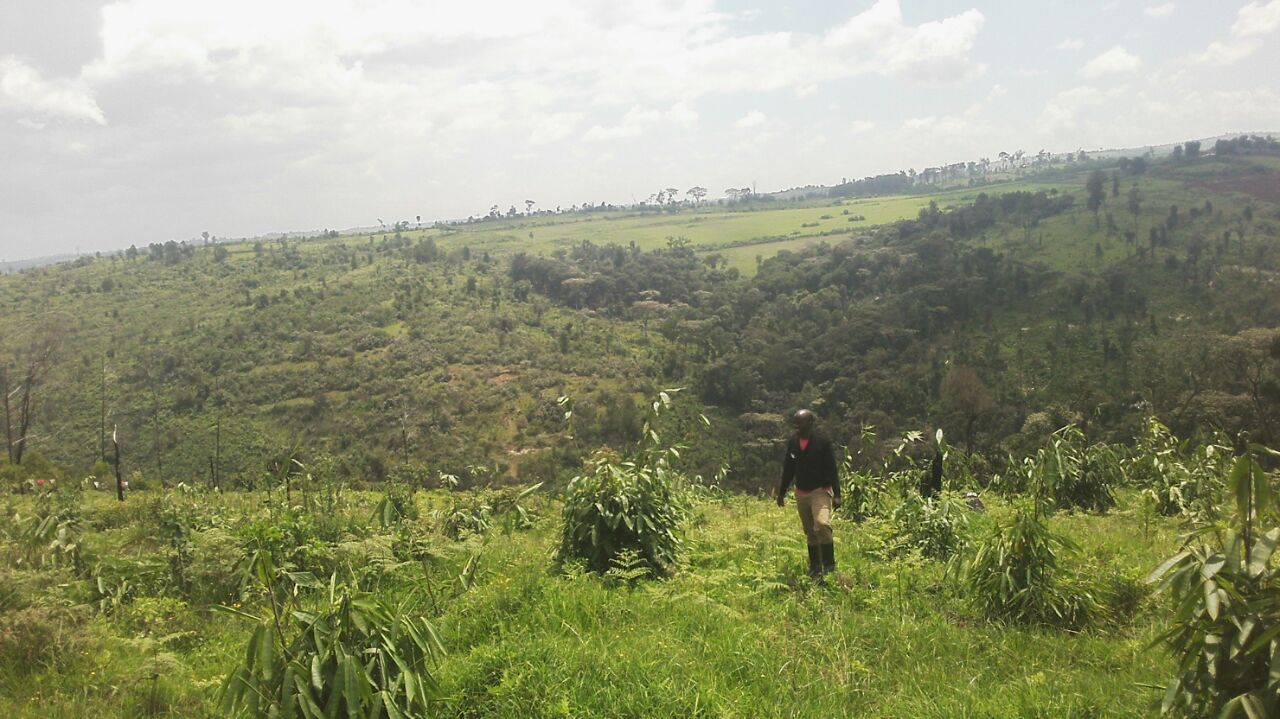
Laikipia, Kenya: Stephen Matu and his wife, Caroline Njoki, manage a thriving half-acre farm in Solio, Laikipia County, Kenya, where they cultivate vegetables, seedlings, and fodder alongside dairy cows and two essential water pans. Although the land is currently flourishing, it was once characterized by arid conditions, dust, and erratic weather.
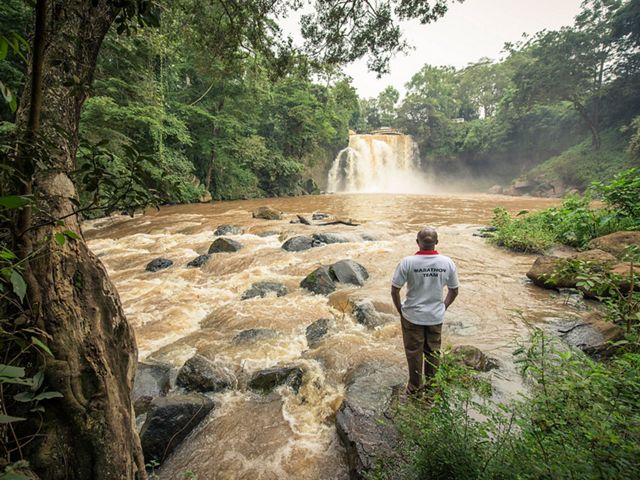
Beyond providing a livelihood, their farm now stands as a symbol of resilience and adaptation, contributing to the broader conservation of the Tana River’s upper catchment—the primary water source for Nairobi.
Matu recalls arriving in Solio after his family was evicted from the Mt. Kenya forest in 2009. His father had once fought as a Mau Mau combatant and later returned home to find his family land had already been subdivided among relatives, leaving him landless.
With few options, the family had moved back into the forest, a decision that would eventually end in displacement when the government cleared encroachers from protected areas.
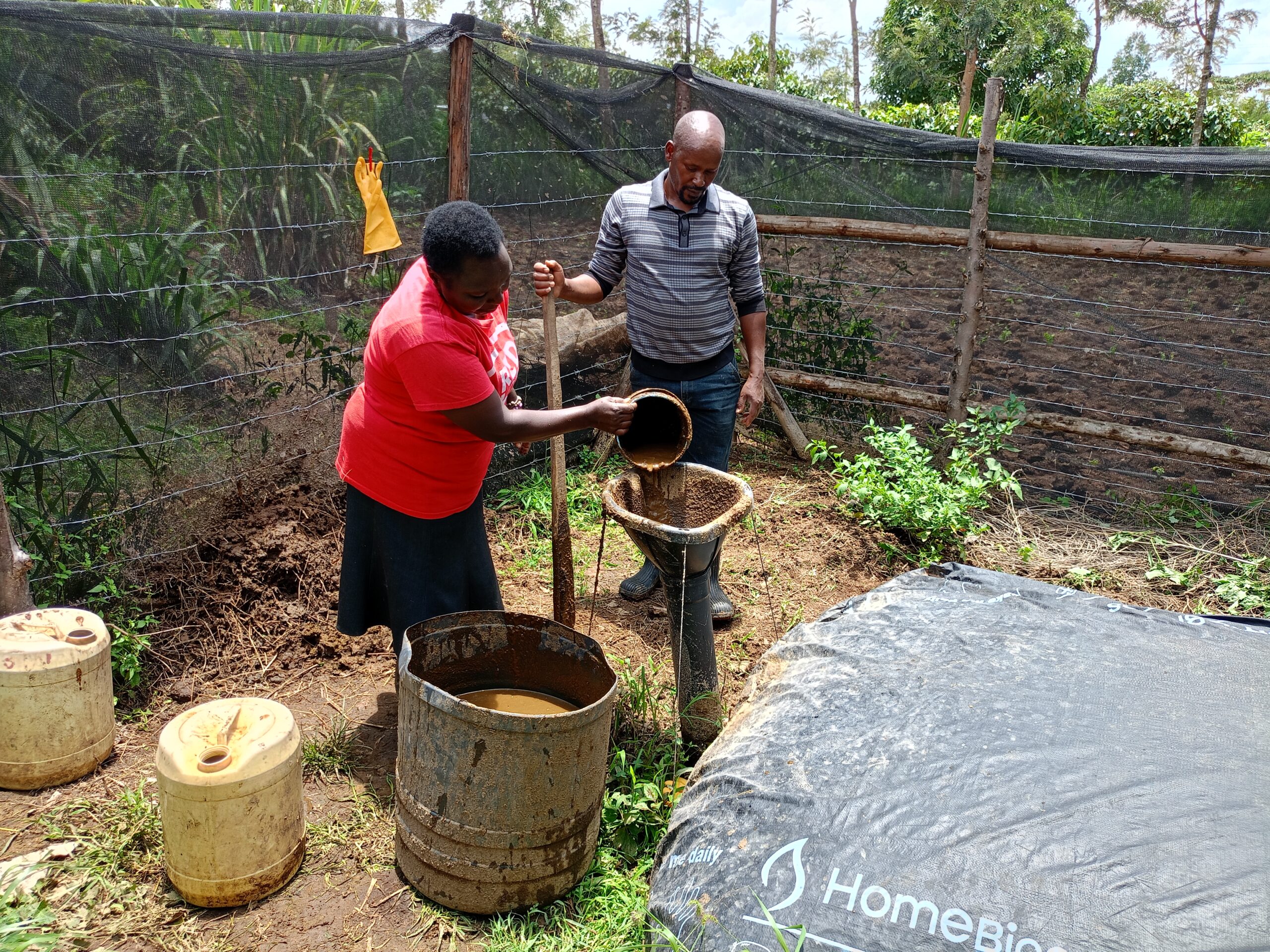
Matu, Njoki and their two children were later among 5,000 people evicted from the Mount Kenya and Aberdare forests, ecosystems that form critical headwaters of the Tana. Families were resettled on a 20,000-acre tract carved from Solio Ranch, Kenya’s first private rhino sanctuary, but the transition was harsh.
“The land was bare. There was no vegetation or even water. It used to look like just an open field,” Matu says.
With no reliable water source nearby, the family depended on a community borehole. Water had to be hauled by hired donkeys, an expense they struggled to meet. Matu took casual jobs in nearby towns while Njoki remained at home caring for their children and trying to make the land usable.
Their fortunes began to change in 2017 when Njoki met field officers from the Upper Tana Nairobi Water Fund, an initiative working with farmers upstream to improve land use and water management. “I was among those farmers who got interested in knowing more,” she says.
Through training, she learned rainwater harvesting, tree nursery management and kitchen gardening. Her first batch of acacia and grevillea seedlings earned 10,000 shillings ($76.97), giving the family a crucial boost. Over time, they added drip irrigation kits, fodder crops and dairy cows, gradually building a more resilient farming system.
“We have been able to pay school fees for our two children,” Njoki says.
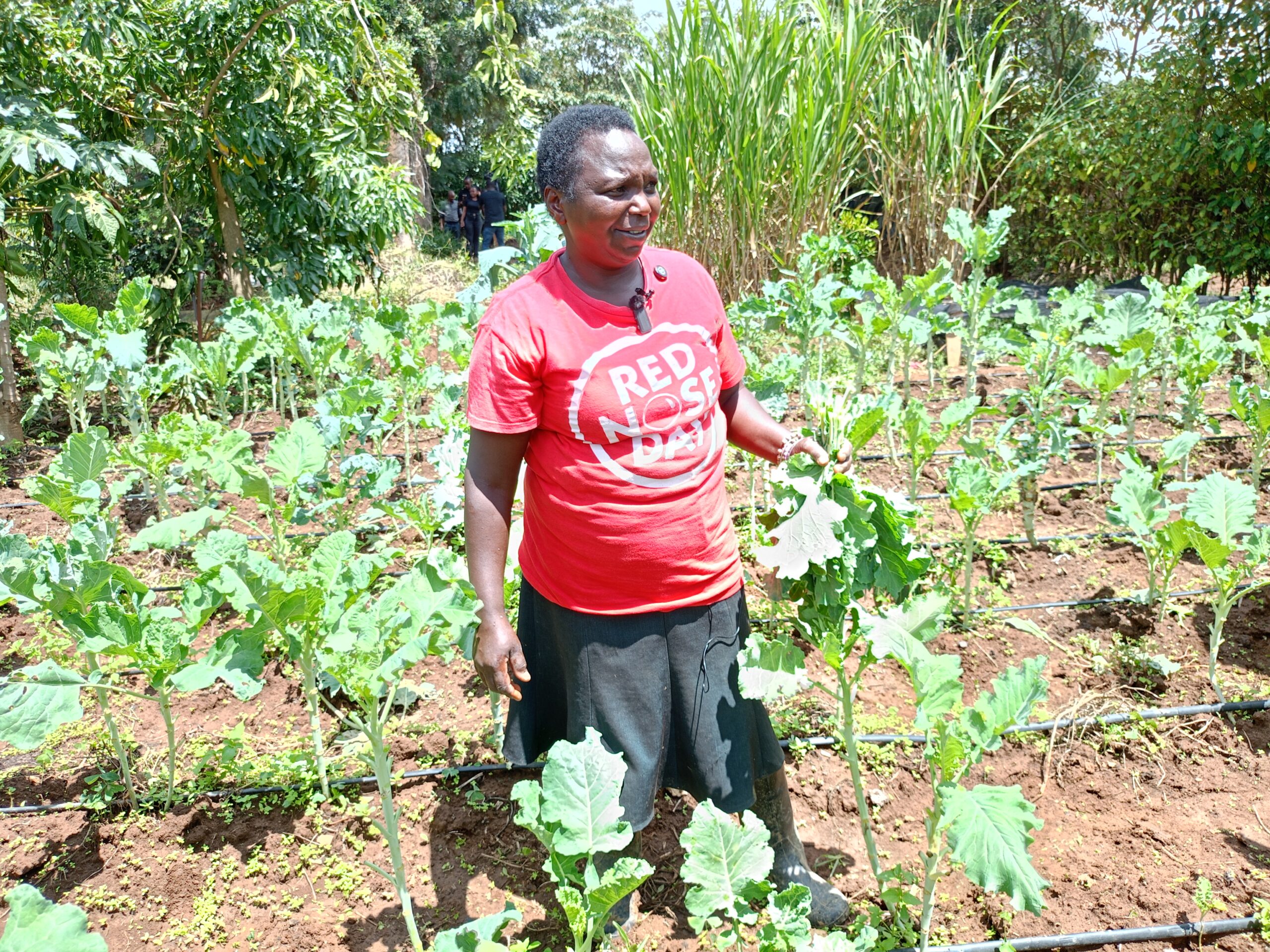
Today, Njoki says she earns about 500 shillings ($3.84) each morning from selling 10 litres (2.64 gallons) of milk. She also sells vegetables and seedlings, though demand shifts with the seasons. As more farmers move into tree nurseries, she is turning to fruit seedlings such as lemons, avocados and oranges to stay competitive and increase returns.
Kales sell at 20 shillings ($0.15) per kilo, bringing in about 200 shillings ($1.54) a day. Fruit seedlings fetch 250 shillings ($1.92), while tree seedlings sell for 20 shillings ($0.15). The family has also invested in a 20,000-shilling drip irrigation kit ($153.63) and grows Napier grass on additional land for commercial purposes.
Their progress explains the logic behind the Upper Tana Nairobi Water Fund. Launched in 2015 by The Nature Conservancy (TNC) as Africa’s first water fund and now operating as an independent trust, it brings together government agencies, private companies and communities to protect Nairobi’s main water source.
The watershed supplies about 95% of Nairobi’s water and supports millions of people beyond the city, so the health of farms upstream matters far downstream. When farmers conserve soil, capture rainwater and improve farming practices, rivers carry less sediment, dry-season flows are steadier and water reaches homes, industries and hydropower producers in better condition.
Anthony Kariuki, the trust’s conservation program manager, says the model only works if farmers see clear benefits. “All what we are doing is successful if the farmer is succeeding,” he explains. He argues that cleaner, more reliable water downstream depends on livelihoods improving upstream.
In Laikipia, county extension assistant Peter Kihungi has watched those changes unfold in resettlement areas like Solio. He says farmers have adopted water harvesting, agroforestry, terracing and other conservation practices that are slowly restoring productivity to dry land.
“No drop of water according to us should go to waste,” he says.
Murang’a county faces a different challenge. There lies a steep terrain and heavier rainfall increases soil erosion, sending sediment into rivers feeding the same watershed.
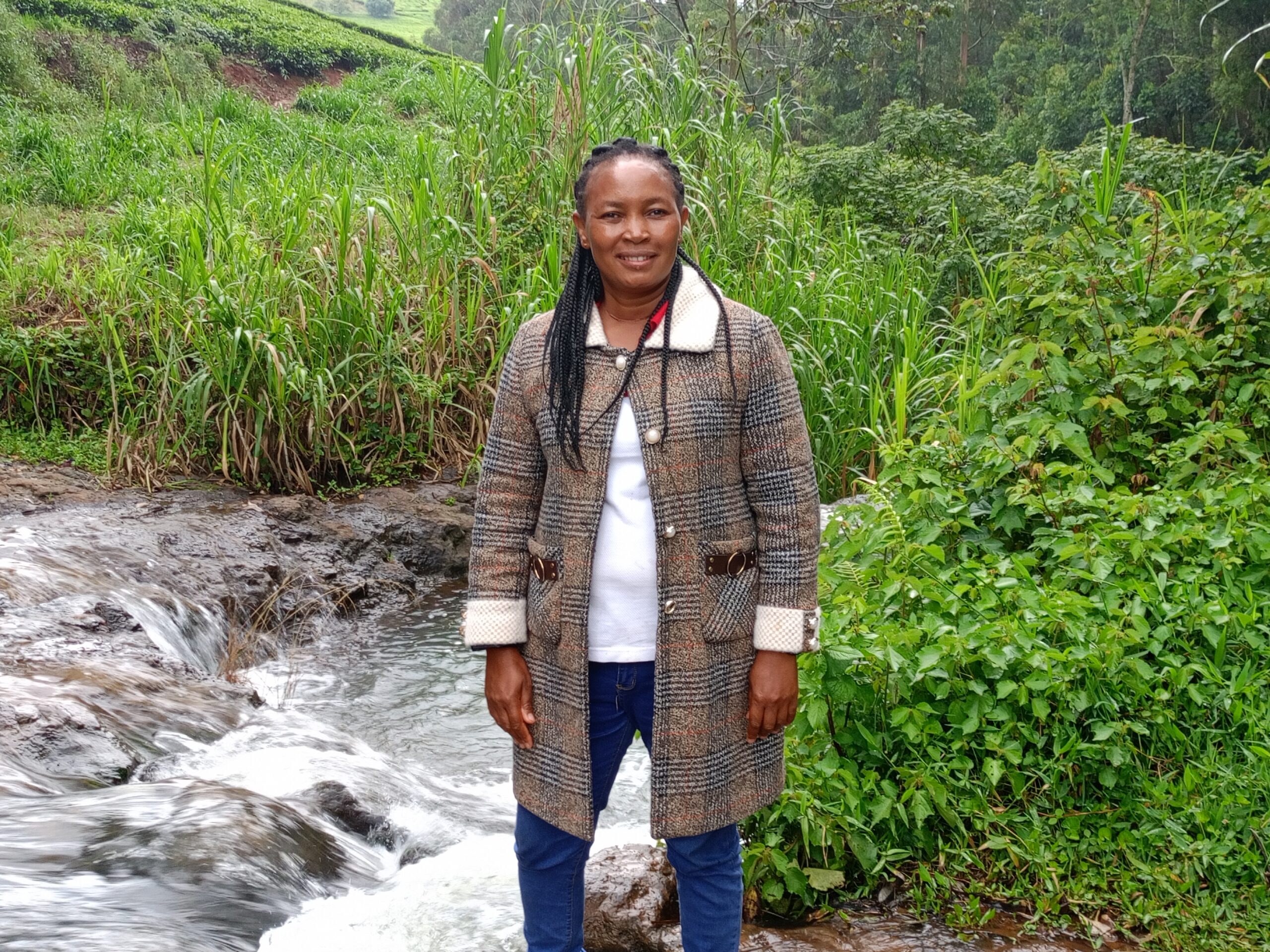
County extension officer Caroline Wangari says farmers are central to protecting water quality through nature-based solutions such as terracing, grass strips and other conservation measures.
The project looks different on the ground here, but the principle is similar: healthier farms help protect water.
“Most of the farmers wanted to be given cash. Instead, the programme focused on providing seedlings, materials and technical support,” Wangari says.
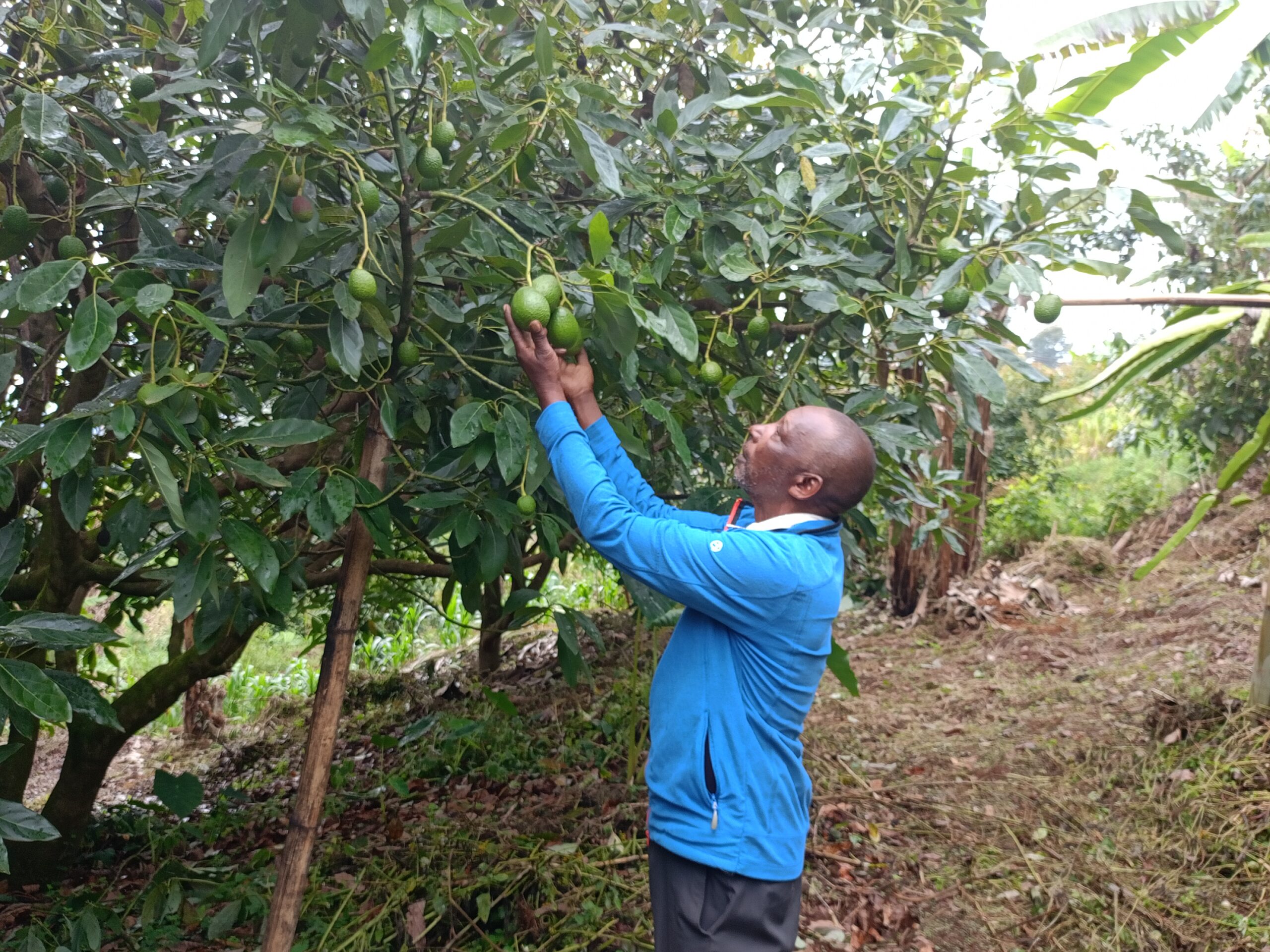
On farms across Murang’a, the results are becoming visible. Francis Mburu, a 75-year-old farmer in Gatanga, says water pans have enabled him to farm through dry seasons, while 67-year-old David Nyoro says support from the project helped him expand from 20 avocado trees to 200 on his five-acre farm.
“These trees have helped me with getting income, taking my children to school and even building my house,” he says.
According to the trust, the programme has planted 5.9 million trees, created more than 22,000 green jobs and generated $118 million in additional farmer income. It also notes that more than 260,000 farmers have adopted climate-resilient practices, while 17,000 water pans now harvest more than two billion litres (528 million gallons) of rainwater annually.
Challenges remain, however. Some farmers still ask why they should protect water that appears to benefit Nairobi first, and Kariuki says the model will only last if communities continue to see tangible gains.
Across the watershed, farmers like Matu and Njoki are rebuilding their lives while protecting a resource that sustains millions downstream. In Solio, that reality can be measured in milk sold, seedlings raised, school fees paid and a once-bare farm brought back to life. Their farm shows that the story of Nairobi’s water begins not in the city, but with rural families making bare land productive again.