|
Getting your Trinity Audio player ready...
|
By Winnie Kamau
Nairobi, Kenya -In an era of declining international aid and precarious health milestones, a significant commitment has been made to support the well-being of millions of women and children across the African continent.
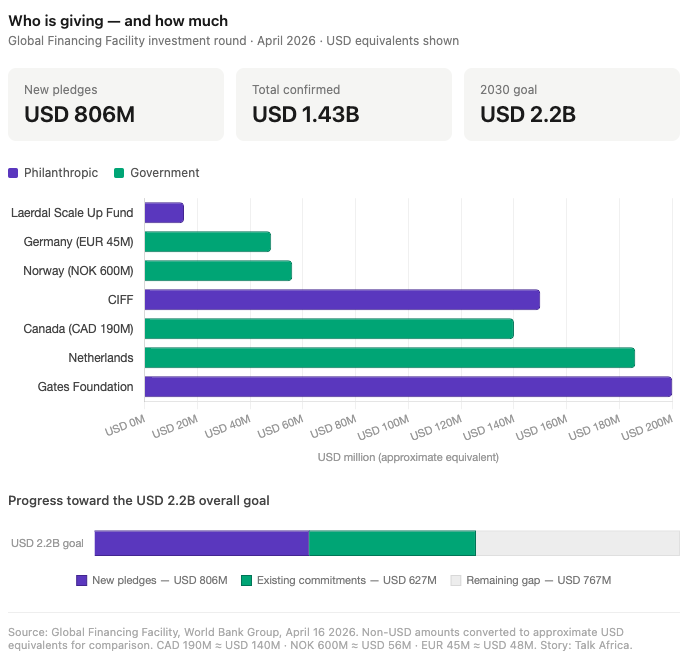
The Global Financing Facility for Women, Children and Adolescents (GFF) has announced new funding commitments totalling USD 806 million raised at the sidelines of the World Bank Group-IMF Spring Meetings in Washington, D.C. on April 16, 2026.
The pledges represent more than 80 percent of the GFF’s target of raising USD 1 billion by the end of the year, and mark the launch of its ambitious TRANSFORM 2030 strategy, a five-year plan to dramatically accelerate reductions in preventable maternal and child deaths.
Advocates caution that time is of the essence as fresh international investment begins to revitalize health infrastructure throughout 26 African countries.
For Africa, the stakes could not be higher of the 36 countries the GFF currently works with, 26 are on the continent spanning West, East, Central and Southern Africa. They include Burkina Faso, Cameroon, the Central African Republic, Chad, Côte d’Ivoire, the Democratic Republic of Congo, Ethiopia, Ghana, Guinea, Kenya, Liberia, Madagascar, Malawi, Mali, Mauritania, Mozambique, Niger, Nigeria, Rwanda, Senegal, Sierra Leone, Somalia, Tanzania, Uganda, Zambia and Zimbabwe.
A Catalytic Model That Works Through Countries, Not Around Them
Hosted by the World Bank Group and launched in 2015, the GFF operates on a model that deliberately works through national health systems rather than parallel donor structures. It is, by design, country-led aligning governments, civil society, philanthropies and the private sector around a single national health plan.
The results, its supporters argue, speak for themselves. Since joining the GFF, partner countries have become global leaders in reducing maternal and child deaths. Three-quarters have reduced their rates of childhood stunting.
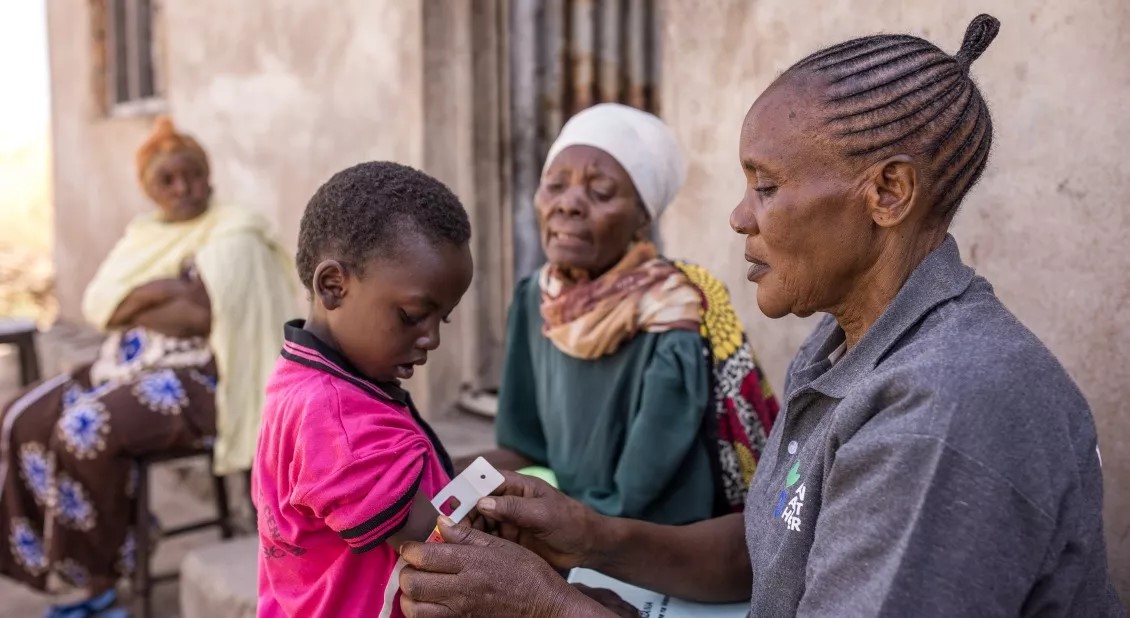
Mamta Murthi, Vice President of the World Bank Group and Chair of the GFF Trust Fund Committee, framed the moment starkly: “The case is clear: investing in women, children and adolescents builds human capital, reduces poverty, and creates jobs and lasting prosperity. With its new strategy, a fully funded GFF will help partner countries deliver lifesaving care to hundreds of millions of people twice as fast.”
Africa Voices Its Stake
For African health ministers gathered at the Spring Meetings, the announcement was personal.
Sierra Leone’s Minister of Health and Sanitation, Dr. Austin Demby, who chairs the GFF’s Ministerial Network, welcomed the pledges as a turning point but also a challenge. “The GFF is an essential partner to our countries as we strive to move from donor dependency to domestic sustainability,” he said.
Adding “Its catalytic model helps us maximize every dollar towards high-impact health priorities for women and youth. The funding commitments announced today are an incredible start to this Investment Round as the GFF aims to raise USD 1 billion by the end of the year.”
Guinea’s Minister of Economy, Finance and Budget, Mariama Ciré Sylla, drew a direct line between primary health care investment and economic resilience. “As we learned during the Ebola and COVID crises, a weak primary health care system costs lives and poses a systemic risk to the economy,” she said.
Adding “Guinea’s partnership with the GFF is delivering significant returns, helping us reduce health care costs, unlock more domestic resources, and strengthen the resilience of both our health system and our economy against future shocks.”
 New Tools: Commodities and Innovation
Beyond the headline funding, two new programmes were launched alongside the pledges.
The Sustainable Commodities Access Program backed by USD 250 million, including support from the Gates Foundation and CIFF is designed to fix one of the most stubborn bottlenecks in African health systems: unreliable access to essential medicines and supplies. By incentivising countries to invest more in high-quality commodities and addressing supply chain gaps, the programme aims to ensure that a health worker in a rural clinic in Malawi or Mozambique can depend on having what she needs when a mother arrives in labour.
Kate Hampton, CEO of the Children’s Investment Fund Foundation, described it as removing “practical barriers” that persist even when political will and funding exist. “We need to remove the practical barriers, including limited access to essential supplies,” she said.
The second initiative, a USD 15 million innovations challenge programme, targets the Safer Births Bundle of Care, a data-driven approach to reducing maternal and newborn mortality that has already been piloted in Tanzania. The results from that pilot were striking: a 75 percent reduction in maternal mortality and a 40 percent reduction in newborn mortality.
Tore Laerdal, founder of Laerdal Global Health, announced the scale-up commitment with a call to others to follow. “We hope this investment will catalyse further support from partners towards a new GFF challenge programme so we can collectively reach many more women and newborns with lifesaving care,” he said.
The Bigger Picture: From 36 to 50 Countries
The TRANSFORM 2030 strategy is not only about deepening work in existing partner countries it is about expanding the reach of the model. The GFF intends to grow from 36 to 50 countries by 2030, targeting those with the highest maternal and child mortality rates.
The financial projections are significant. The expanded strategy is projected to leverage USD 12.5 billion in World Bank Group financing, USD 17.8 billion in partner resources, and USD 21.4 billion in domestic resources channelling these towards high-impact health interventions that contribute to the World Bank’s goal of reaching 1.5 billion people with quality, affordable health services by 2030.
Rosemary Mburu, Executive Director of WACI Health, a pan-African civil society organisation, welcomed the donors’ recommitment but pointed to what must follow.
“Investing in primary health care for women, children, and adolescents is one of the smartest, most cost-effective investments that countries can make in their future growth and resilience,” she said. “We applaud the donors who have recommitted today to the GFF and urge other funders to step up and support this critical partnership.”
A Race Against Setbacks
The announcement lands at a difficult moment. Global health aid has contracted sharply in recent years, and the systems built to track and support women’s health from data collection to community health worker networks are under pressure.
The GFF’s own model depends on catalysing domestic resources, meaning that the sustainability of these gains ultimately rests on African governments themselves stepping up their own health spending.
That is precisely the message Canada’s Secretary of State for International Development, Randeep Sarai, chose to emphasise. “As a founding and leading donor, Canada has seen firsthand how this model delivers results,” he said. “We remain committed to working with the GFF and partners to help scale impact, strengthen accountability, and build resilient systems that contribute to stronger global health security and stability around the world.”
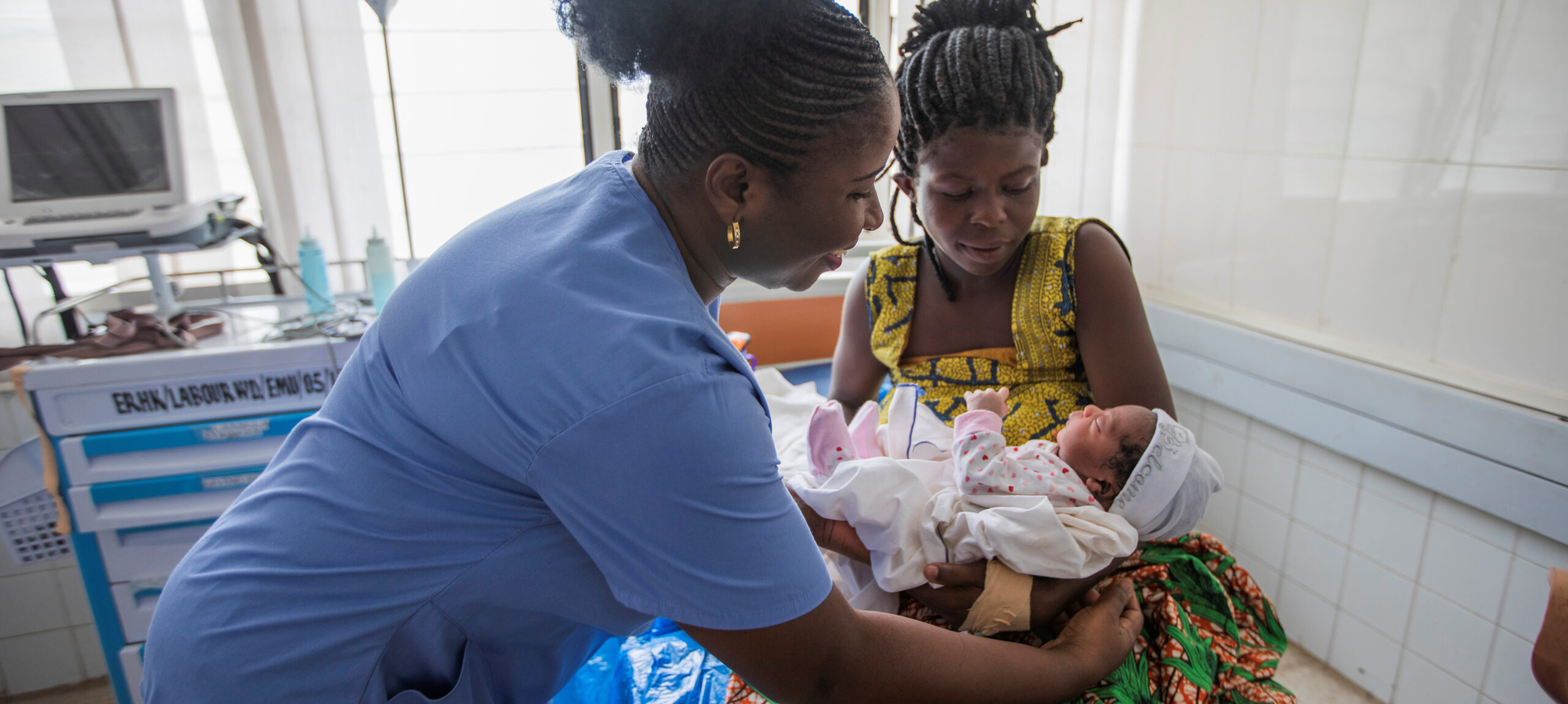
For the women giving birth in rural clinics across sub-Saharan Africa and for the children who depend on functioning health systems to survive their earliest years the USD 806 million is more than a diplomatic announcement. It is a down payment on the chance that they will be counted, cared for, and given a fighting chance.
Hosted by the World Bank Group, the Global Financing Facility for Women, Children and Adolescents (GFF) operates in 36 nations, including 26 across Africa. Through its TRANSFORM 2030 strategy, the facility seeks to mobilize USD 2.2 billion to fast-track improvements in maternal and pediatric health outcomes by the end of the decade.
The outstanding portion of the initial billion-dollar funding goal is expected to be secured by the conclusion of 2026.
This story is done in collaboration with Claude