
|
Getting your Trinity Audio player ready...
|
By Victoria Musimbi
Naairobi- Kenya’s economy continued to grow in 2025, despite pressures from rising living costs, increasing demand for public services, and energy needs, according to the latest Economic Survey by the Kenya National Bureau of Statistics (KNBS). The report points to uneven performance across key sectors.
The economy expanded by 4.6 percent in 2025 to reach KSh 16.23 trillion, slightly down from the 4.7 percent recorded in 2024. Growth was largely supported by the services sector, even as some productive sectors slowed.
Agriculture, the backbone of the economy, recorded a slowdown to 2.8 percent from 4.3 percent in the previous year, mainly due to drought conditions experienced between October and December, which affected production and supply chains.
The health sector continued to expand, with the number of facilities rising to 16,713 and more than 20.9 million Kenyans registered under the Social Health Authority (SHA), reflecting improved access to healthcare services.
Energy production increased to 15,067 GWh, driven mainly by geothermal and other renewable sources, even as petroleum imports rose by 12.2 percent to meet growing demand. Inflation remained stable at 4.1 percent, staying within the government’s target range, supported by policy measures and easing supply pressures.
Employment rose to 21.6 million, with 822,100 new jobs created, most of them in the informal sector. Digital connectivity also strengthened, with mobile subscriptions rising to 78.4 million, supporting communication and business activity.
Presenting the report, KNBS Director General Macdonald Obudho said the Economic Survey provides a comprehensive, evidence-based assessment of the country’s socio-economic performance, forming a critical foundation for planning, monitoring, and policy formulation across sectors.
He noted that the report captures both progress and emerging pressures, highlighting resilience in key areas while also pointing to structural challenges that continue to affect growth momentum.
Obudho emphasized that KNBS remains committed to producing timely, credible, and high-quality statistics that support national development, adding that strengthening data systems is essential for improving decision-making in both the public and private sectors.
“The Economic Survey provides comprehensive data that reflects performance and supports evidence-based planning,” he said. He added that strengthening statistical systems remains key to ensuring development decisions are guided by accurate and timely data.
“Reliable statistics are essential in ensuring that policy decisions are grounded in evidence and respond effectively to the country’s development needs,” he added.
Dr. Daniel Mwirigi, Chairman of the KNBS Board, speaking during the launch of the Economic Survey, noted the extensive technical work, institutional coordination, and professionalism within the institution.
He said the Board has overseen the production of the report to ensure credibility, accuracy, and adherence to international statistical standards.
“The Board provides strategic direction, policy oversight, and governance to ensure the production of independent, credible, and high-quality official statistics key to transparency and accountability,” he said.
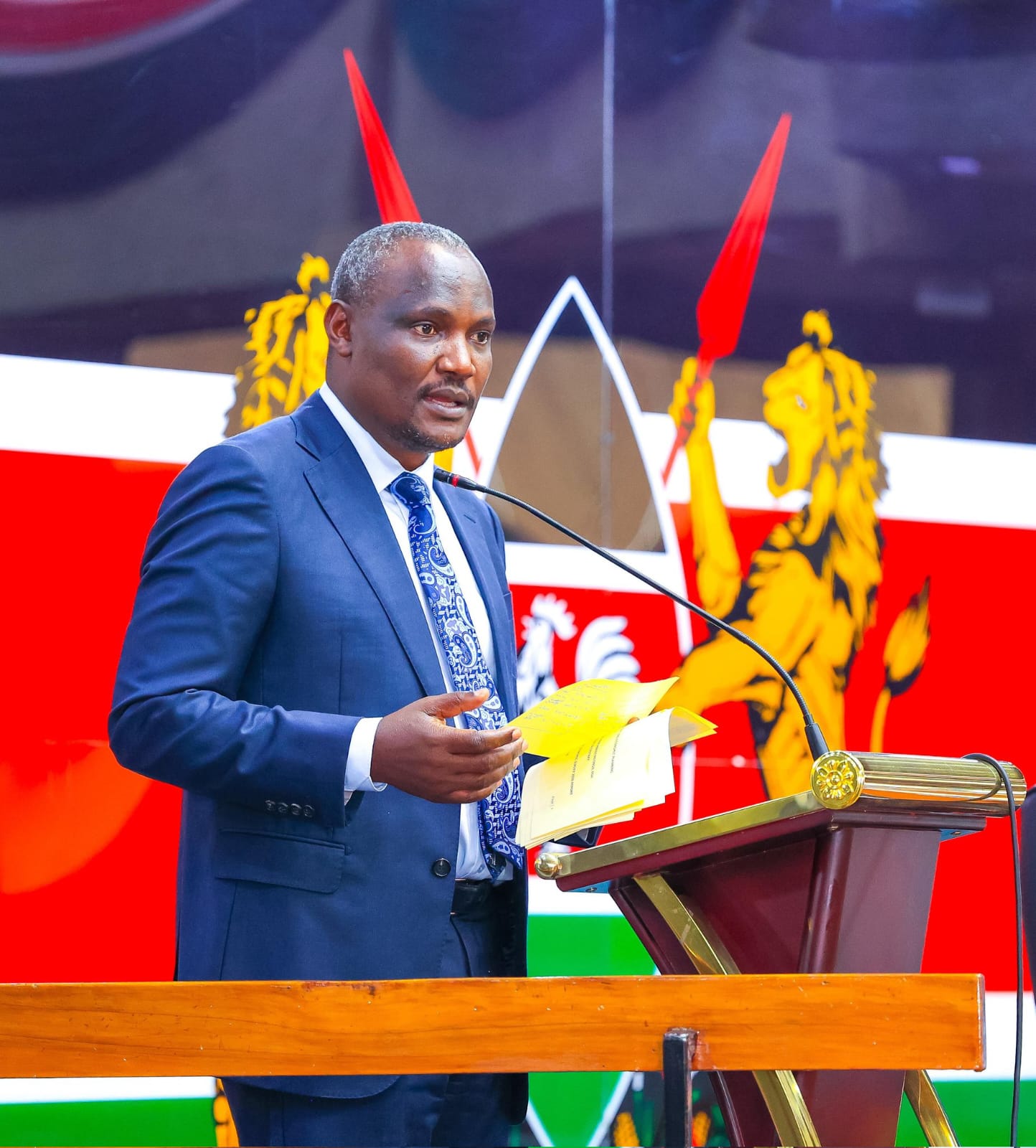
He further noted that strengthening statistical capacity is essential for meeting the growing demand for reliable and timely data across all sectors.
Cabinet Secretary for the National Treasury and Economic Planning, Hon. FCPA John Mbadi, EGH, noted that data remains central to national planning and reforms, underscoring its role in budgeting, policy direction, and economic transformation.
“Our policies, budgets, and reforms are only as strong as the data that informs them,” he said. He added that evidence-based decision-making is critical for effective government interventions under Vision 2030 and the Bottom-Up Economic Transformation Agenda.
He further noted that while growth remains resilient, structural challenges persist in agriculture, productivity, and fiscal space, requiring continued reforms to sustain inclusivity.
“The quality of our decisions as a government depends on the quality of our data,” he added.
Looking ahead, the economy is expected to remain stable in 2026, supported by services growth, improved agricultural output, and infrastructure investment, though risks remain from global energy price volatility and public debt pressures.
The report also introduces the Residential Property Price Index (RPPI), which tracks housing market trends and supports policy formulation in the real estate sector.
Overall, the survey presents a picture of a resilient but uneven economy, highlighting the need for continued reforms to support inclusive and sustainable growth.