|
Getting your Trinity Audio player ready...
|
By Lenah Bosibori
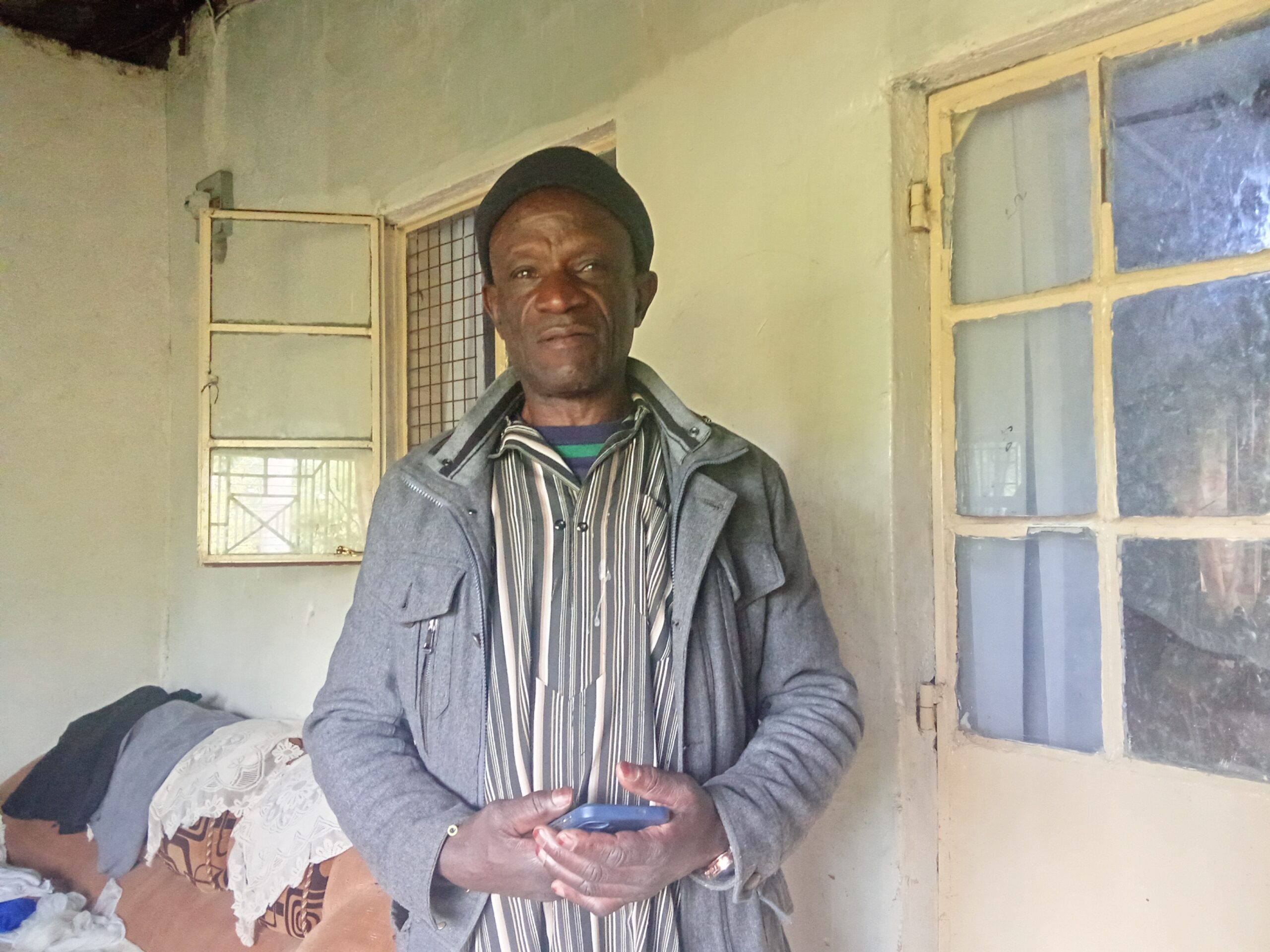
Nyanchwa, Kisii County: In the bustling Nyanchwa area of Kisii County, 80-year-old Yussuf `Ismail and his granddaughter walk slowly toward the chief’s office early Friday morning. The granddaughter, a 2025 Form Four graduate, is seeking her first national identity card.
Ismail belongs to the Nubian community, a small minority group in Kenya. Their ancestors were brought to Kenya from Sudan by the British during the colonial period to serve as soldiers and military settlers.
Despite President William Ruto’s abolition of the controversial ID vetting process on February 5, 2025, many Nubian families report that obtaining identification documents remains a slow and complicated process.
Ismail says his granddaughter cannot complete her ID application without a parent or guardian’s thumbprint, a requirement that still affects minority communities even after vetting was officially removed.
“I had to come with her because they need my thumbprint,” he explains. Ismail is not the girl’s father but her guardian. Both her parents died several years ago.
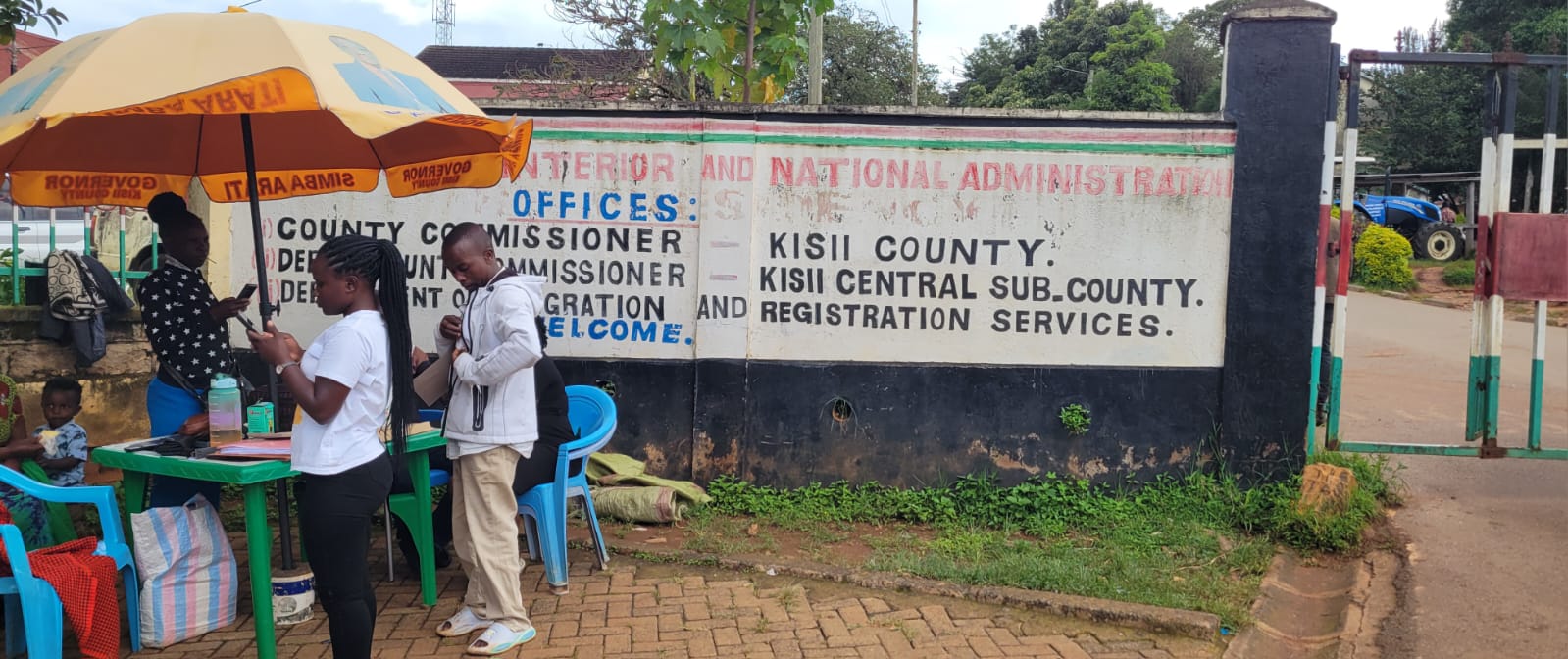
The application process, which began in mid-February, became a protracted affair with weeks spent moving from one office to another. Applicants were first required to obtain documents from the District Commissioner’s office, and then proceed to the chief, who had to provide a letter confirming his acquaintance with the applicant.
“Even though vetting was removed, the process still takes a lot of time,” Ismail says.
The verification of his granddaughter’s application was further complicated and delayed because the name of her father was inconsistent across various documents; he is listed as Omondi on the birth certificate but is recorded differently on other official records..
A Long History of Scrutiny
The plight of Ismail’s granddaughter mirrors the widespread difficulties encountered by many Nubians throughout Kenya.
For over ten years, citizenship and inclusion advocate Mustafa Mahmoud has focused on documentation issues and observes that Nubians have historically been subjected to increased scrutiny during the national ID application process.
The Nubian community faced decades of exclusion, often being listed as “others” in official government documents and not formally recognized as one of Kenya’s ethnic communities. This lack of recognition means they have to undergo more rigorous processes compared to other citizens to establish their identity.
Mahmoud noted that these difficulties escalated following the 1998 bombing of the United States Embassy in Nairobi, which led to tighter security checks during the registration for national identification documents.
Because the Nubian community is predominantly Muslim, he says they were often subjected to additional suspicion and vetting. “Applicants were required to produce more documents than other Kenyans, sometimes documents from parents and even grandparents,” he says.
From Vetting Panels to Chief’s Letters
Ismail Ali, a village elder for the Nubian community in Nyanchwa, says the situation has improved compared to the past when Nubians had to appear before vetting panels.
“We were being vetted by a panel and many documents were required, including birth certificates from parents and even grandparents,” he says. Today, he says, the process mainly involves local administrators.

“Now we go to the chief. If the chief knows you, he writes a letter so you can proceed and get the application form,” Ali explains.
If the chief does not know the applicant personally, village elders may be asked to confirm whether the person belongs to the community.
However, delays remain common. “Some applications take up to three months,” Ali says. “In some cases, the application may be returned if a required document or detail is missing, forcing the applicant to start the entire process again.”
Mahmoud notes that even though vetting panels were removed, some verification still happens behind the scenes. “After the documents are signed by local administrators, the files are still sent to security agencies for independent verification,” he says.
The Cost of Being Undocumented
Delays in obtaining ID cards have serious consequences. Mahmoud says some Nubians across the country have waited 10, 20 or even 30 years to obtain identification documents. “Without IDs, people struggle to access education, employment, banking services and healthcare,” he said, adding that the problem can affect future generations.
“When parents do not have identity documents, their children may also struggle to obtain birth certificates,” he says. “That increases the risk of statelessness.”
In Nyanchwa village, Ismail estimates there are about 600 Nubians. “We used to be many here, but some people moved away to look for land because this area has become too small,” he says.
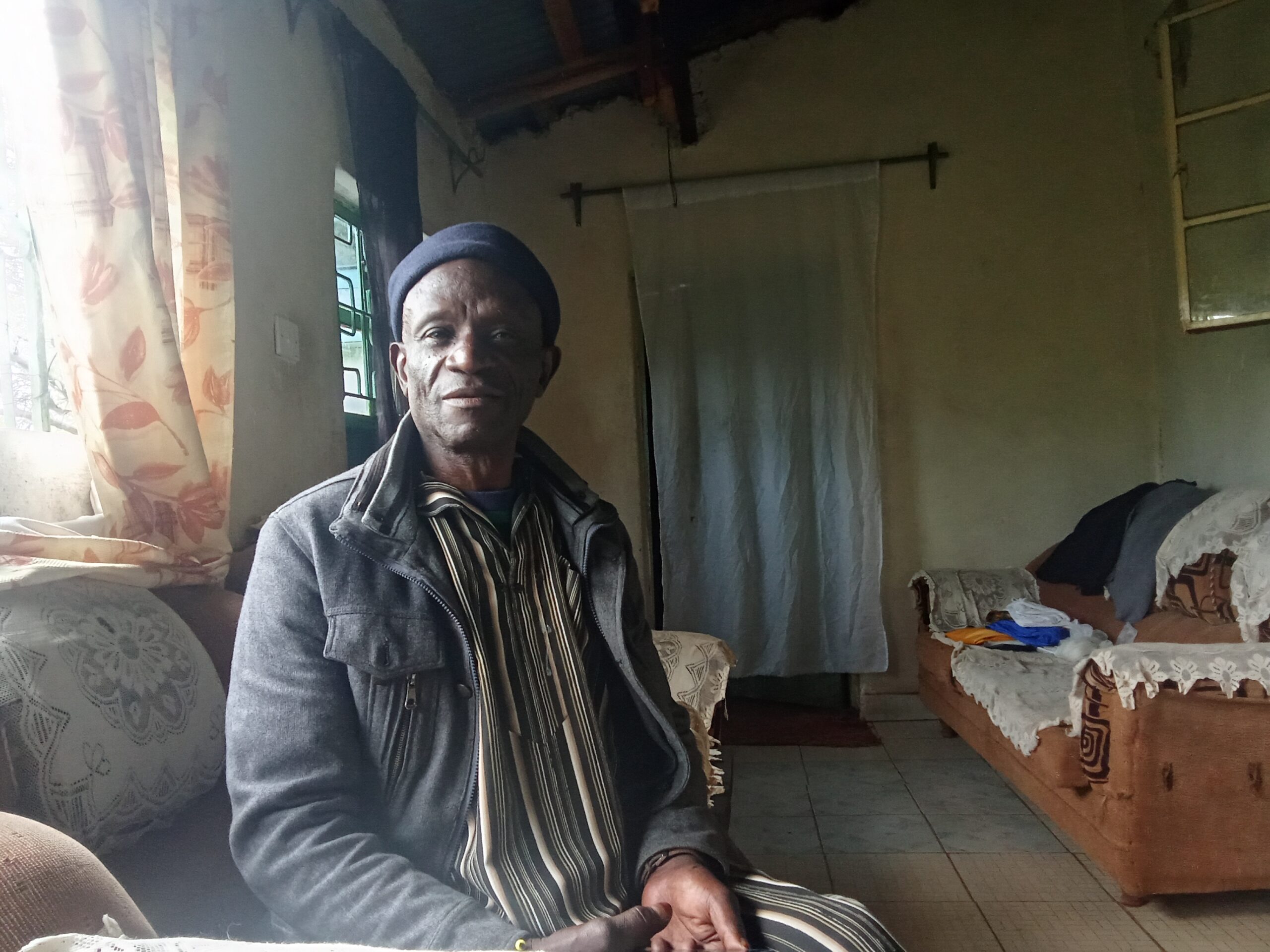
Most families live on small plots measuring about 50 by 100 feet. Despite the challenges, Ismail says education levels in the community have improved. “In the past our children were not going to school,” he says. “Now things have changed and we have around 20 graduates.”
The Nubian community in Nyanchwa traces its roots to the colonial period, when their grandparents were recruited as soldiers by the British. After the war, many were settled in different parts of Kenya instead of being returned to their ancestral lands.
Mahmoud says the long struggle for documentation has pushed some Nubians to change their names in order to obtain ID cards. “Some people register under other tribes or change their names so that they can be accepted,” he says.
He warns that this could slowly erase the community’s identity. “When people feel their name or tribe is the problem, they may change it just to survive.”
Concerns Over the Maisha Number
Ali also raises concerns about the government’s new digital identification system known as the Maisha Number, a digital identification system introduced by the Kenyan government to give every citizen a unique lifelong number linked to their personal and biometric information.
The number is expected to replace several identification documents and help people access services such as education, healthcare, banking and government programs. “I understand Maisha Number, but we do not like it because it requires a lot of personal information that someone may not want to share,” Ali said.
According to Mahmoud, the digital systems alone may not solve the problem. “If the underlying laws still exclude some communities, then the digital system may also exclude them,” he says.
Matoya Obaga, the chairman of community policing in Kisii town, says the verification process is necessary because local leaders are often held responsible if mistakes occur. He notes that the issuance of identity cards has improved since the president’s directive, although verification can still take time. According to him, the chief’s letter and local confirmation help prevent fraud.
“We realized that sometimes people bring individuals from outside Kisii and claim they are Nubians,” he says. “There was even a case where someone went to another county and brought a person claiming to be his guardian.”
Eleazar Mogere, the assistant chief of Nyanchwa sub-location, says local administrators play a key role in confirming applicants’ identities.
“Sometimes it is difficult to know whether someone applying for an ID is really Nubian,” he says. “If the applicant has lost both parents, the guardian must accompany them and provide a thumbprint.”
He also notes that although members of the Nubian community say the process still takes a long time, the current procedure is now the same as that used for non-Nubians, even though many Nubian applicants say it remains slow.
Kennedy Ongige, the Registrar of Persons in Kisii County, says the system places significant responsibility on chiefs. “If someone is lying, the chief will be answerable,” he says.
Still, he notes that the process is easier than the earlier vetting system that required applicants to appear before panels.
Allegations of Bribes
Not everyone has had a smooth experience, for Riziki Aleyo, a local resident, says it took a long time for her daughter to obtain an ID because she was born in Vihiga County but grew up and studied in Kisii. “At some point I was asked for maziwa ya ngamia,” she says, a coded phrase often used to refer to a bribe.
For Ismail and his granddaughter, the hope is that the process will soon end. But for many Nubian families in Nyanchwa and across the country, the journey to obtain a simple identity document remains long, uncertain and deeply frustrating.