|
Getting your Trinity Audio player ready...
|
By Mary Mwendwa
Vijayawada, India: A hush fell over the room as Kasa Pushpavalli began to speak, her voice a fragile thread connecting her to a past she has spent years trying to unravel. “I was seven years old when my mother died,” she started, the words hanging heavy in the air. “That loss was the first crack in my world, the one that shattered everything else. It all began when neighbors pressed my father to fill the silence in our home with a new wife.”
Kasa recalls the bewildering cruelty that greeted her the moment her step-mother crossed their threshold—a woman they had never met, whose immediate and visceral dislike for Kasa was a mystery that would never be solved. Once firmly entrenched in their home, the woman’s presence became a storm of unexplained beatings and withheld food, a campaign of torment that ultimately forced Kasa to abandon her education. “My younger sister and I became ghosts in our own home,” she continued, her composure fraying at the edges. “We were outcasts, while my two step-siblings were treated like royalty. And the most devastating part? All of it unfolded right before my father’s eyes, and he just… watched.”
Driven to the brink by the relentless mistreatment, a fourteen-year-old Kasa made a desperate choice. She slipped away from the house and found herself swallowed by the chaotic streets of Guntur District in Andhra Pradesh. Alone, despairing, and with no one to turn to, she saw only one grim path to survival: joining the other young girls in a brothel and entering the bleak world of commercial sex work.
Her story, while uniquely her own, echoes the fates of millions of young girls who are pushed into circumstances far beyond their control. Some, like Kasa, are driven by broken families and abuse into the sex trade. Others are trafficked across borders to toil in mines or as domestic laborers in countries like Bangladesh and Nepal, all victims of a toxic brew of poverty, drug abuse, and shattered family structures.
“I ran because home was a warzone, and my step-mother was the enemy,” Kasa revealed. “If my real mother had been alive, I would never have dared the streets, because life here is a special kind of hell for a young girl.” She described the brothel not as a place of survival, but of slow erosion. “Hundreds of men… some pay, others don’t. And the little you earn, you must hand over to the owner.” The price for her body was a pittance, a mere 5 to 20 Rupees, a value placed on a life.
That life was a constant dance with danger, not just from violence but from disease. She lived in fear of HIV and other infections, a fear made real by the men who refused the simple protection of a condom. “And then there were those who didn’t see a human being when they looked at you,” she said, a tremor in her voice. “They saw an object to beat and mistreat. I thank God every day that, despite the mistreatment, I never contracted HIV.”
Salvation arrived in the most unexpected form: a police raid. As officers swarmed the brothel and she was arrested, Kasa felt an unexpected wave of relief. “Somehow, I knew I was finally safe in the hands of the police,” she explained. That arrest was not an end, but a beginning. She was taken to the Jesus Mary Joseph Ujawala Home, a sanctuary for girls rescued from commercial sex work.
Within those protective walls, the fragments of Kasa’s life began to be pieced back together. She and the other girls were taught life-giving skills—tailoring, garment making, and intricate embroidery. Their hands, once instruments of survival, learned to create. They began crafting beautiful products, not for the demands of the street, but for a future they could now dare to imagine, selling their wares to a public that now saw not victims, but artisans.
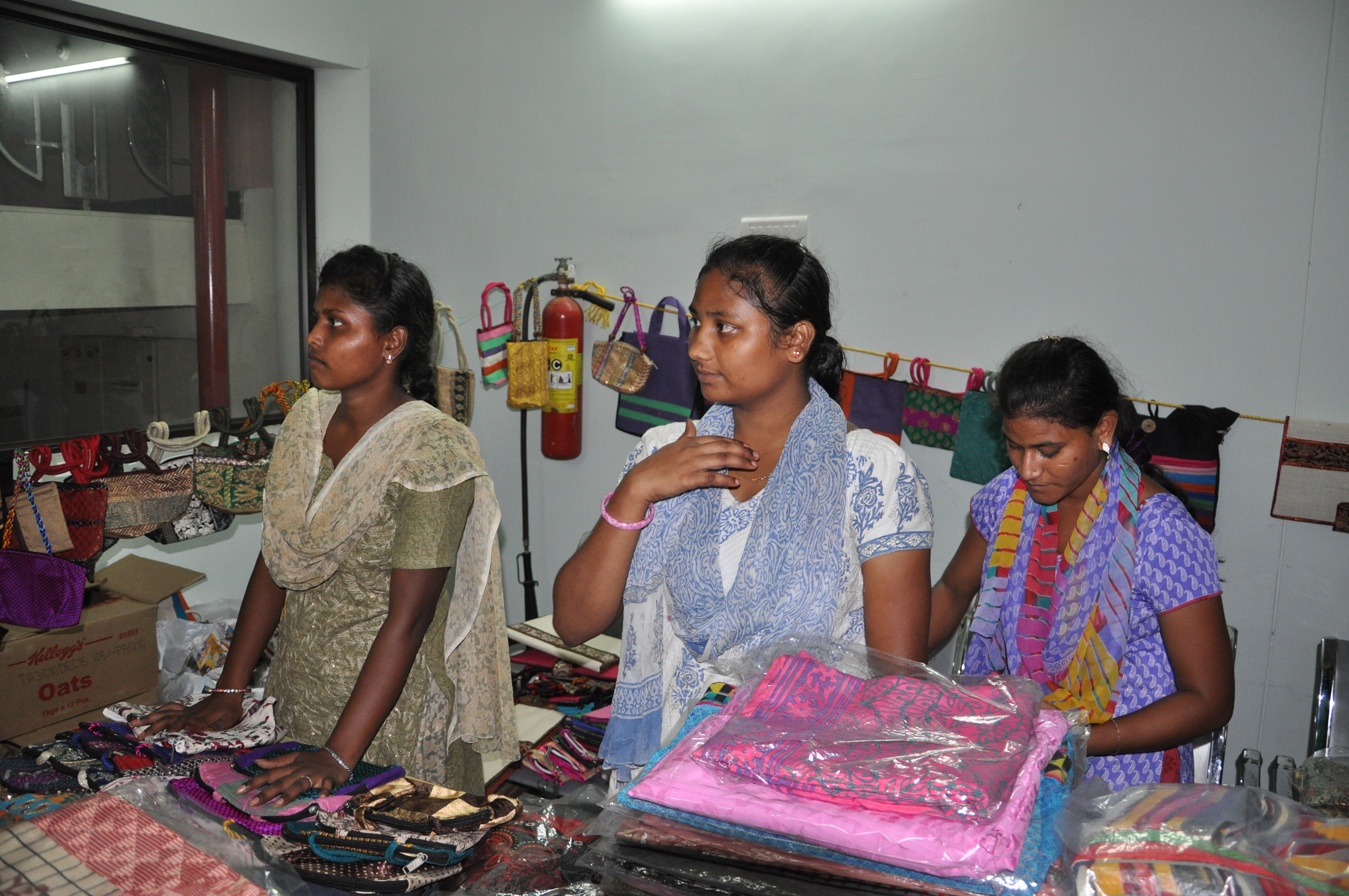
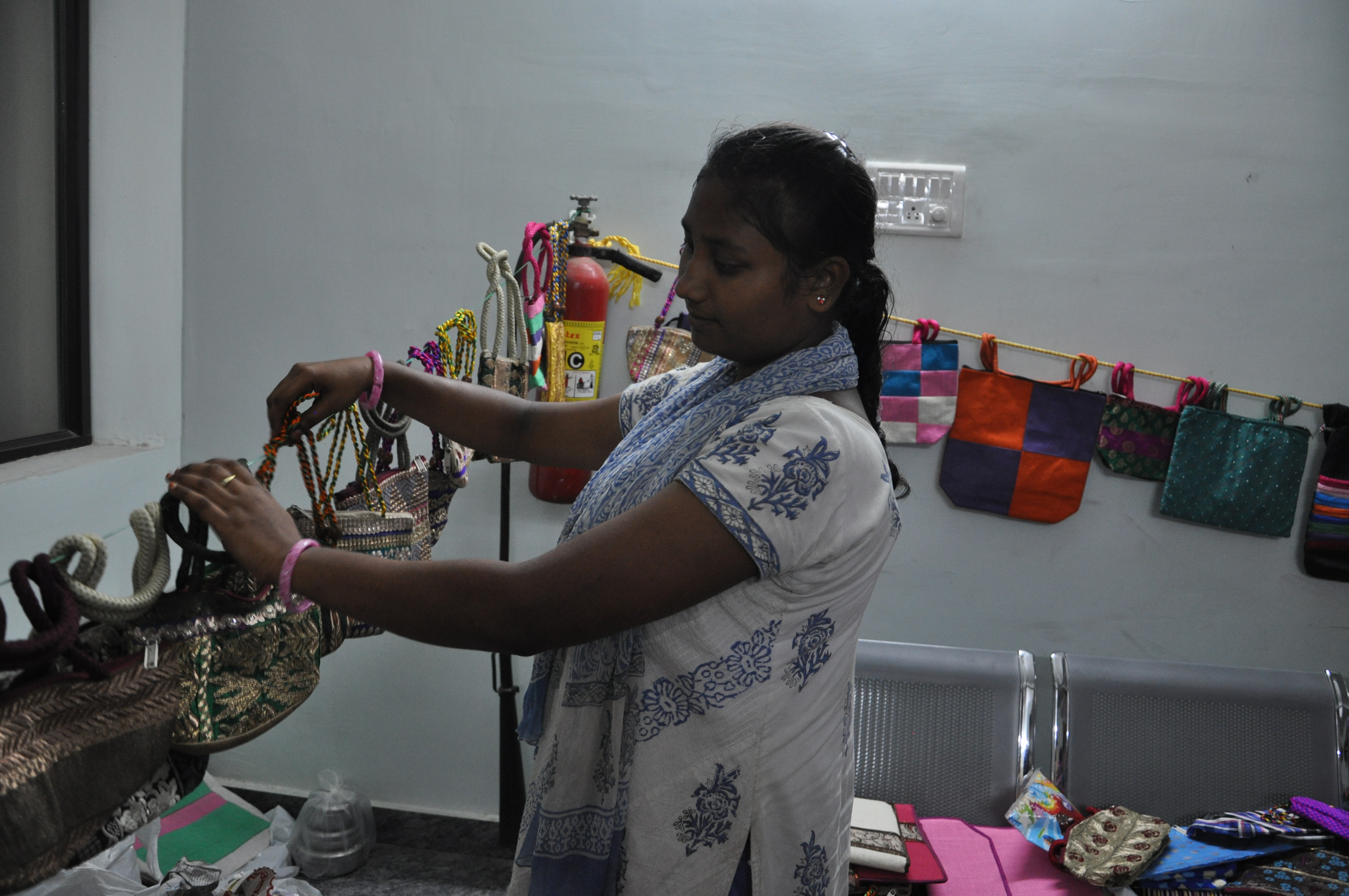
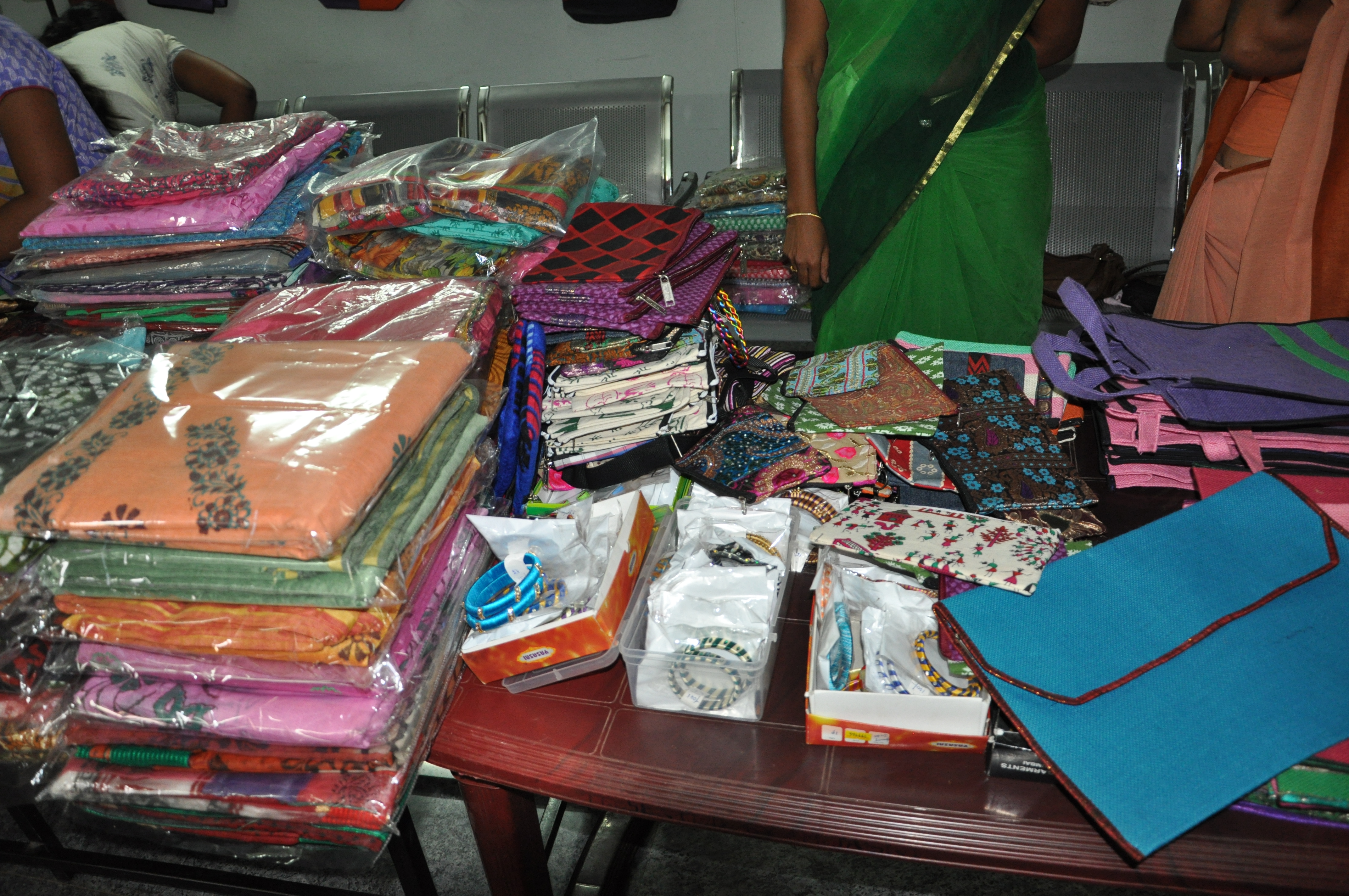
I met Kasa at an exhibition at Acharya Nagarjuna University in Guntur, while displaying handbags, dresses, bracelets and scarfs; neatly and colorfully displayed for sale.
With teary eyes, long hair and a scarf around her neck, she speaks very few words in English. Our conversation was handled by a translator Sister Rosalina, Project Director, JMJ Ujawala Home Nambur.
Sister Rosalina discloses that they have 56 girls at their home currently. “These girls are brought to us in a bad state. Some are usually very traumatized and sick. We, therefore, arrange for counseling services and other forms of treatment to bring them back to normal life.”
Sister Rosalina further reveals how they work closely with policemen. A good example is Kasa and other girls who were rescued by police from the brothels and brought to them.
Missing cases and some girls trying to run away from their facility are some of the challenges they face.
However, organizations like JMJ have been instrumental in child protection issues by helping lobby for mobile courts and other systems that would see children especially girls get protection from sexual violations.
K.Vijayalakshmri, Headteacher, Rajasthani Hindi Vidiyalaya School confirms there are many girls at the age of 13 -15 drop out of school and get married or disappear without any trace.
“It is very difficult to handle some of these issues because parents of such girls never want to cooperate to enable us to get the girls and bring them back to school. For those trafficked as slaves in Bangladesh or Nepal nobody is willing to give information on their whereabouts. I try my best to sensitize parents to be keen on their girls so that they remain in school. It is tough for me but I Just try.” She says.
The National Human Rights Commission of India reveals over 40,000 children are reported to be missing every year out of which 11,000 remain untraced. A trend that is worrying and needs urgent interventions to save children from this vice.
Ravi Sebastian, New beginnings Charitable Trust in Vijayawada notes that there are thousands of Ngo’s operating in India.” Our organization is working with different stakeholders where 60 percent of the people we support are girls.”
Ravi confirms that child trafficking and sexual violence among women and girls has been one of the biggest challenges his organization encounter on regular basis.
“We do not have accurate data on child trafficking and therefore it becomes difficult to plan on the kind of interventions we need to put in place. However, we have set up children parliaments in villages where children are used to monitor other children secretly and give us information through phone calls.”
Ravi says that Vijayawada is becoming a hub for prostitution and child trafficking. Prostitution in India is not legal and those caught by the long arm of the law get prosecuted.
He points out some challenges in trying to help fight child trafficking. “It is very difficult to get first-hand information about missing girls. At times we get them at Railway stations, raise alarm and also parents are lured to think that their children are going to work yet they land in other countries as sex slaves. Two things do happen in this scenario; either these girls die in unknown circumstances or they contract HIV/AIDS.” Ravi alludes.
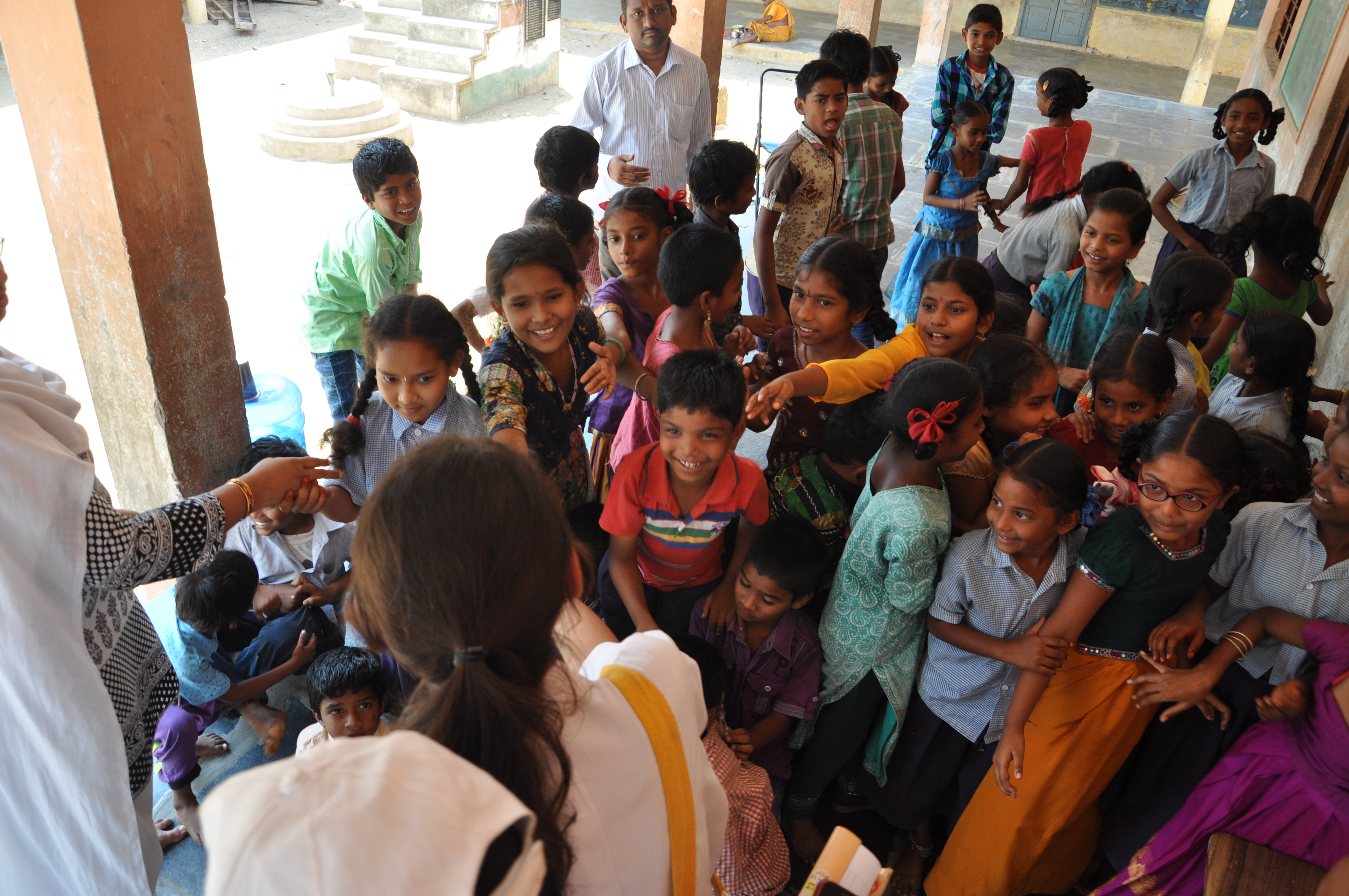
Other reports from the Trafficking in Persons Report 2014 indicate that over 20 million persons from various forms of exploitation were trafficked worldwide with an estimated 15.5 Billion Dollars generated in the Asia region.
For example, in India, 5 out of 10 girls between ages of 15 -19 were victims of sexual violence.
Bangladesh and Nepal remain the biggest recipients of child trafficking where girls end up in brothels and domestic labour. The borders are free to cross with no identification documents needed, hence creating a loop hole for the traffickers.
According to the Protocol to Prevent, Suppress and Punish Trafficking in Persons, Especially Women and Children (2000), child trafficking is the recruitment, transportation, transfer, harbouring or receipt of children for the purpose of exploitation. It is a violation of their rights, their well-being and denies them the opportunity to reach their full potential.
While recent research has yielded information on the nature of child trafficking, little is known about its magnitude. The International Labour Organization’s 2002 estimation of 1.2 million children being trafficked each year remains the reference (Every Child Counts, New Global estimate on Child Labour).
To reduce vulnerabilities that make children susceptible to trafficking, International organizations like UNICEF assists governments in strengthening laws, policies, and services including legislative review and reforms, establishing minimum labour standards, and supporting access to education.