|
Getting your Trinity Audio player ready...
|
By Peter Otieno
Nairobi, Kenya: To strengthen Kenya’s rapidly growing creative economy, the Sanara programme has deployed more than KES 1.2 billion in commercial financing and grants. The initiative is aimed at helping over 20,000 young creatives across the country to acquire business and technical skills, while funding more than 330 creative enterprises. Sanara project is also supporting upwards of 3,000 creative startups spanning Nairobi, Mombasa, Nakuru, Kisumu, Kakamega, and Turkana Counties.
The project is supported by the Mastercard Foundation and implemented by HEVA Fund, SNDBX Ubuntu, Baraza Media Lab, and GoDown Arts Centre, Sanara combines financing with business development, technical training, market access, and policy support to help creative businesses grow sustainably.
Demand for the programme’s Ota loan facility has reached nearly KES 4 billion, highlighting both the financing gap facing creative entrepreneurs and the sector’s growing investment potential.The programme has placed a strong emphasis on inclusion, with 63 per cent of financed businesses being women-led, while nearly 30 per cent of beneficiaries are accessing formal credit for the first time.
Building Capacity for Investment
Speaking on the strategic approach to these investments, Pamela Mutembei, Investment Director at HEVA Fund, emphasized that capital alone is not enough to drive lasting transformation. HEVA Fund prioritizes deep capacity building as the primary engine for change in the creative sector.
“We invest in the creative ecosystem through two distinct modules,” Mutembei explained. “First is the Grant Module, which is tailored mainly for the idea stages and startup businesses. Second is our Loan Module, which funds established businesses with concessional debt that is significantly more affordable than traditional commercial money.”
Mutembei noted that a critical part of HEVA’s strategy involves arming entrepreneurs with foundational corporate skills. “We focus on helping creative entrepreneurs learn about taxation, HR, and marketing strategies. This targeted approach is essential to make them truly investable for long-term growth,” she added.
The Power of Collaboration
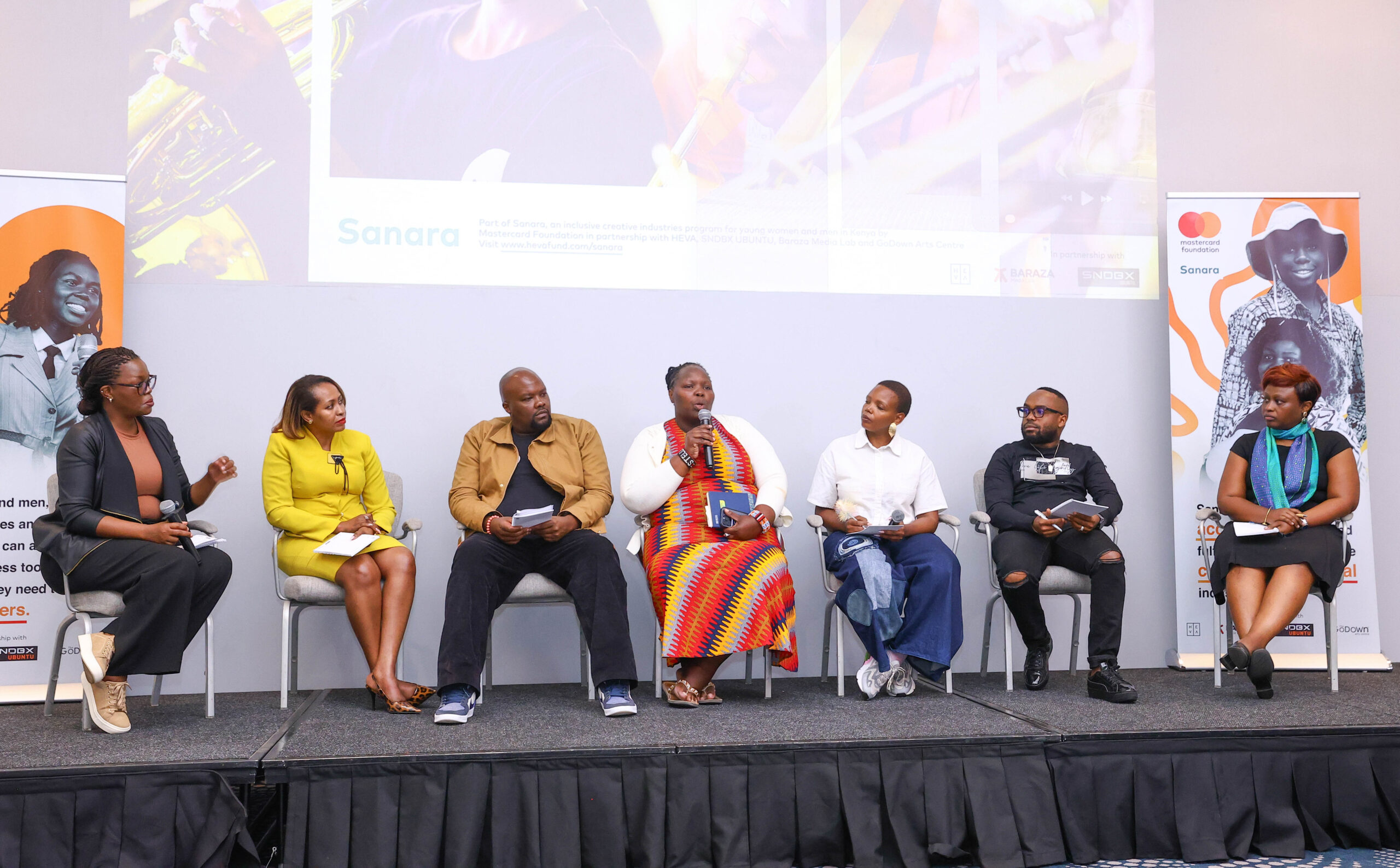
Speaking during the Sanara Creative Economy Learning Forum in Nairobi, Tabitha Masese, Programme Manager at HEVA Fund, reiterated that collaboration remains key to unlocking the sector’s potential.
“When creative sector actors come together, we achieve far more than we can individually. Collaboration is at the heart of building a thriving creative economy. Our goal is to transform the lives of young people by ensuring they have access to finance, business development support, technical skills and market opportunities. Through Sanara, we are demonstrating that with the right ecosystem, young creatives can build sustainable businesses, create jobs and contribute meaningfully to Kenya’s economic growth,” she said.
The forum brought together investors, financial institutions, policymakers, development partners, and industry leaders to explore innovative financing models that can accelerate the growth of Kenya’s creative economy.
Inclusive Growth and Policy Frameworks
Sanara’s experience shows that creative enterprises become more investment-ready when financing is integrated with business development services, technical skills training, and market access. The programme is also expanding opportunities for women, refugees, persons with disabilities, and other underserved entrepreneurs.
Through the Ota Pepea Access to Market Initiative, refugee creatives from Turkana showcased their products in Nairobi leading to them securing new buyers. The refugee creatives also got access to international markets and demonstrated how improved market access can translate into business growth.
Alongside enterprise financing, Sanara is working with county governments to strengthen creative economy policies and map creative infrastructure to support long-term sector growth.The programme has identified access to finance as the biggest challenge facing creative enterprises, while emphasizing that blended financing, enterprise development, skills training, supportive policies, and strong industry ecosystems are essential for sustainable growth.
Kenya’s creative economy contributes more than five per cent of the country’s Gross Domestic Product (GDP) and is among its fastest-growing sectors. As demand for financing continues to grow, Sanara’s results are strengthening the case for increased public and private investment to position the creative economy as a major driver of jobs, innovation, and inclusive economic growth.