|
Getting your Trinity Audio player ready...
|
By Omondi Rodgers
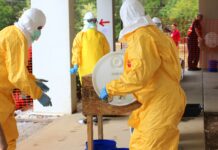
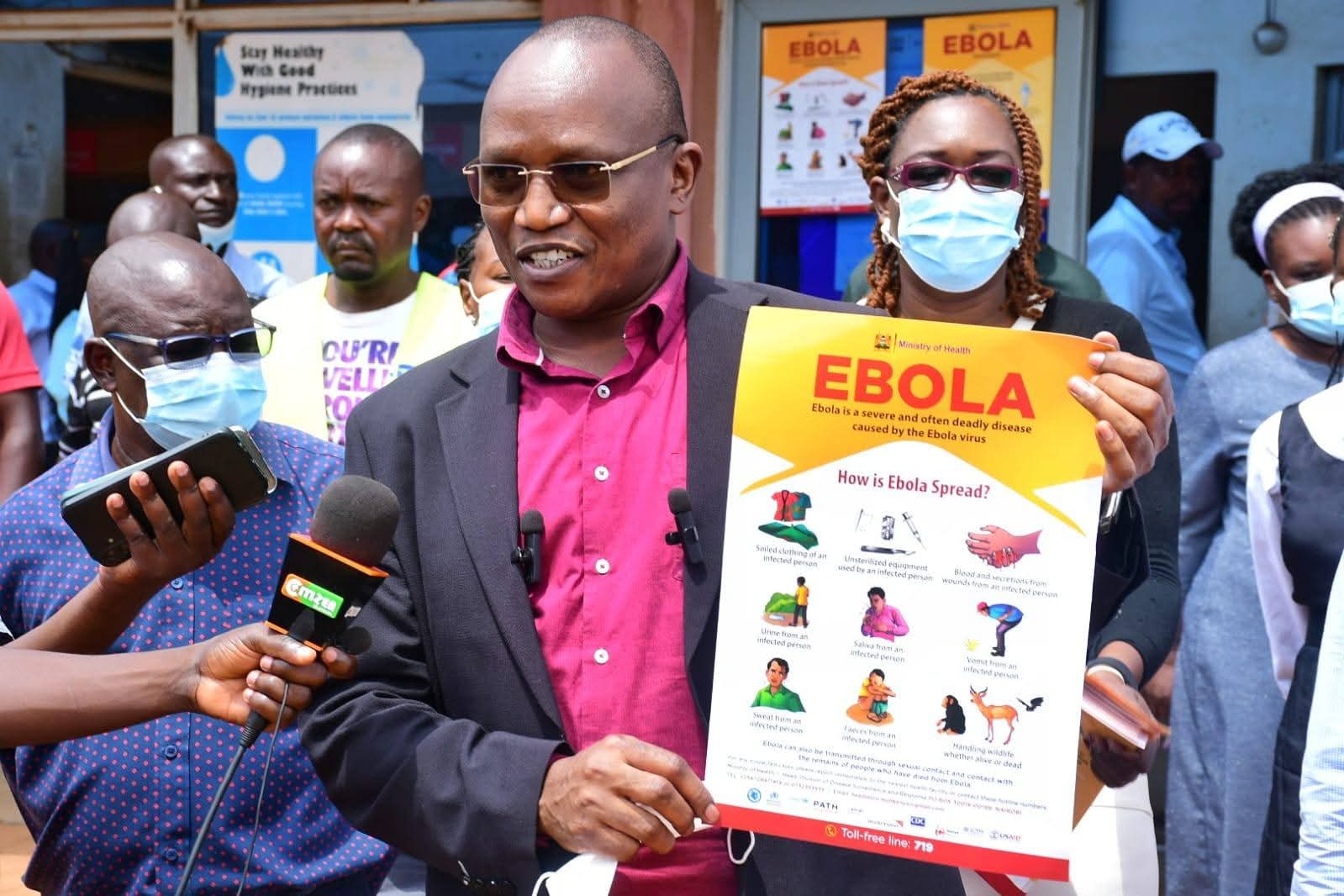
Busia County, Kenya: The Busia County Government has heightened surveillance and screening measures at the Busia border point following concerns over the Ebola outbreak reported in Uganda and the Democratic Republic of Congo (DRC). Health officials say the county is on high alert to prevent the virus from entering Kenya through the busy border crossing.
Speaking during an assessment of preparedness at the Port Health Unit at the Busia border point, Busia Deputy Governor and County Executive Committee Member (CECM) for Health, Arthur Odera, said the county has established strict screening measures for all incoming travelers.
“We have a screening unit here at the border to screen passengers for symptoms of Ebola disease, with staff manning it 24 hours a day. We have also engaged the Red Cross to set up a screening unit specifically for pedestrians to ensure that 100 percent of incoming traffic is screened,” he said.
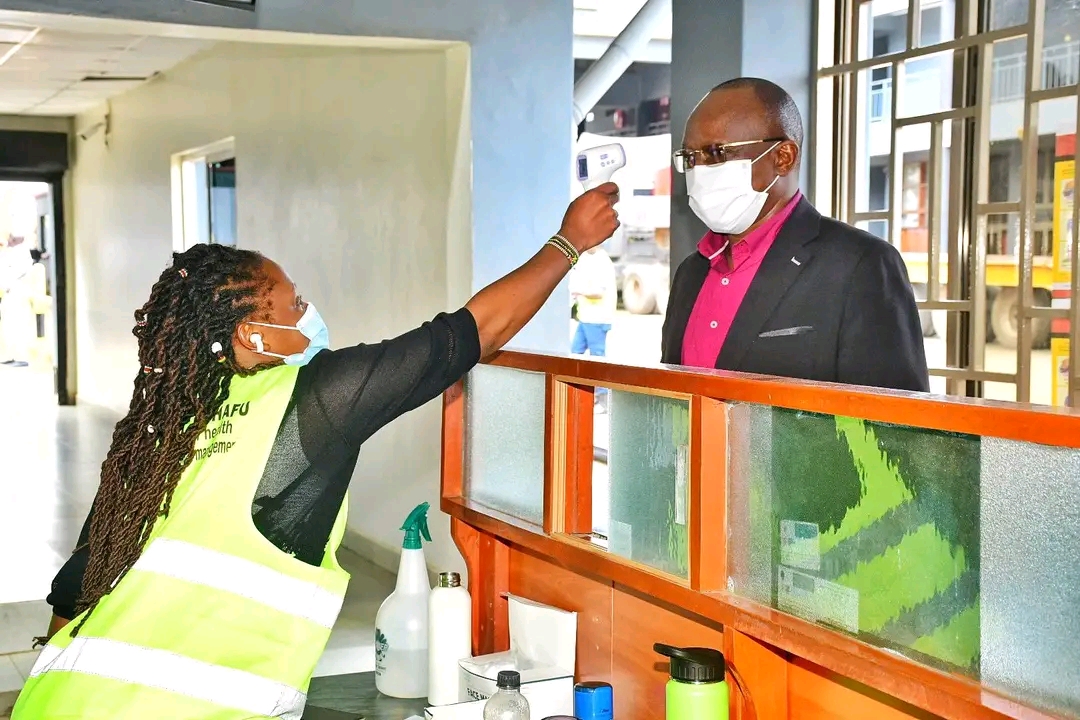
Odera noted that the county government remains highly alert to safeguard residents and travelers using the border. “We have enough hand-washing stations and sanitizers because the alert requires us to enhance our response and ensure that we do not take chances with the lives of Kenyans,” he added.
The Deputy Governor said the county is conducting awareness campaigns to educate residents about Ebola symptoms and prevention measures. He also called on the media to support public sensitization efforts.
“We want our people to be aware so that they can detect symptoms and seek help whenever there is an outbreak. They must understand that this disease is transmissible and take every precaution to avoid infection,” he said.
Odera further disclosed that the county has already identified an isolation center to handle any suspected Ebola cases if they arise. He added that Kenyan authorities are collaborating closely with officials in Uganda to monitor the movement and travel history of people entering the country.
WHO Voice and Statistics
The World Health Organization (WHO) has been supporting preparedness efforts in high-risk Kenyan counties, including Busia. According to the WHO’s latest situation report on the Ebola outbreak in Uganda, as of May 2026, there have been over 220 confirmed cases and more than 40 deaths linked to the Sudan strain of the Ebola virus in Uganda, with the outbreak affecting districts near the Kenyan border, including Mbale and Kampala. The case fatality rate among confirmed cases stands at approximately 18 percent.
Dr. Abdourahmane Diallo, WHO Representative to Kenya, commended Busia County’s readiness but urged sustained vigilance.
“The risk of cross-border transmission remains very high due to population movement and trade activities. WHO has deployed rapid response teams, provided thermal screening equipment, and trained over 500 health workers in border counties, including Busia, on case detection, infection prevention, and safe burial practices,” said Dr. Diallo.
He added that WHO is also supporting contact tracing and community surveillance. “We are working with the Ministry of Health and county governments to ensure that any suspected case is isolated, tested, and managed within six hours of identification. So far, Kenya has no confirmed Ebola case, but we cannot afford complacency.”
According to WHO data, more than 2.3 million travelers have been screened at various points of entry across Kenya since the outbreak was declared, with over 120 suspected cases investigated and ruled out. The organization has also distributed more than 15,000 pieces of personal protective equipment (PPE) and established eight Ebola treatment isolation units in high-risk counties.
Dr. Diallo emphasized the importance of community engagement. “Ebola is not just a health emergency; it is a community event. Winning trust and ensuring people report symptoms early is as critical as screening at borders.”
Stakeholder Concerns
Busia County Clearing and Forwarding Chairman, Joseph Ouma, expressed concern over the increased risk faced by workers at the border due to constant interaction with truck drivers and passengers arriving from affected countries.
“As people handling truck drivers and passengers daily, most of whom come from affected countries, we are worried. We want the government to take decisive measures to ensure we remain safe,” he said.
Ouma called for mandatory screening of everyone crossing the border, noting that some pedestrians are currently not being screened. “We are seeing only passengers arriving by bus being screened, yet many others cross the border on foot. We want everyone screened to reduce the risk of the virus entering our county.” He also urged authorities to train clearing agents on how to handle travelers and help in public awareness campaigns.
Cross-border traders have also raised concerns over the high level of interaction between Kenyan and Ugandan businesspeople at the border.
Rose Ochieng, a businesswoman who uses the border daily, said stronger preventive measures are necessary to protect traders and the wider community. “We cross this border every day, and the government must ensure proper screening both when entering and leaving the country to keep us safe. Failure to put proper mechanisms in place could greatly affect the business community,” she said.