|
Getting your Trinity Audio player ready...
|
By Mercy Kachenge
Nairobi, Kenya: Millions of Africans start their day by unlocking their phones to a predictable barrage of depressing headlines in disaster, economic struggle, political instability, corruption, and conflict. Instead of gaining a clearer picture of global affairs, many find this constant flow of information simply exhausting. As a result, an increasing number of people are actively choosing to tune out.
That phenomenon “news avoidance” has become one of journalism’s biggest headaches, and it’s forcing newsrooms everywhere to confront an uncomfortable question: if audiences no longer want the news, how does journalism change without giving up its job of holding power to account?
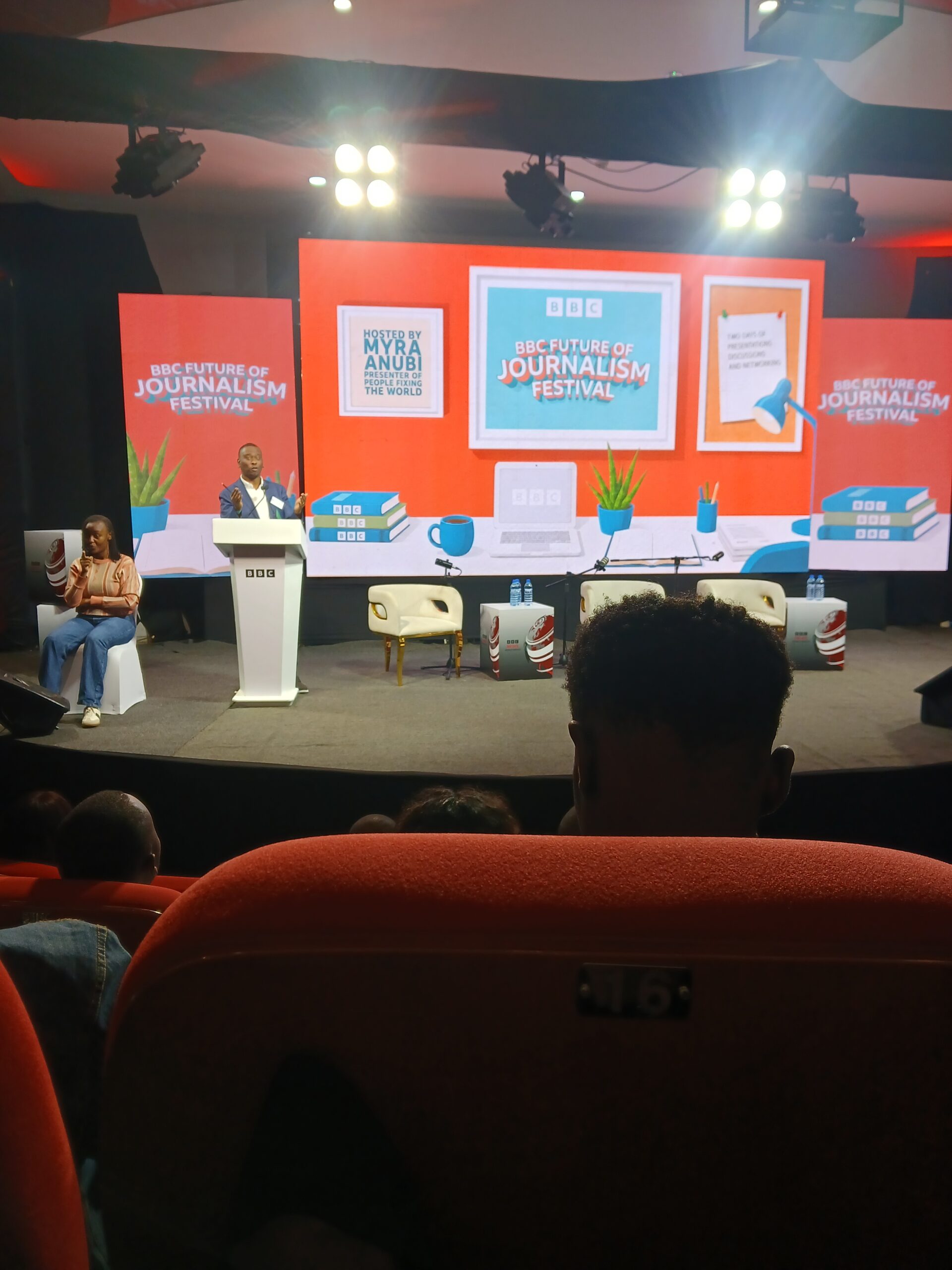
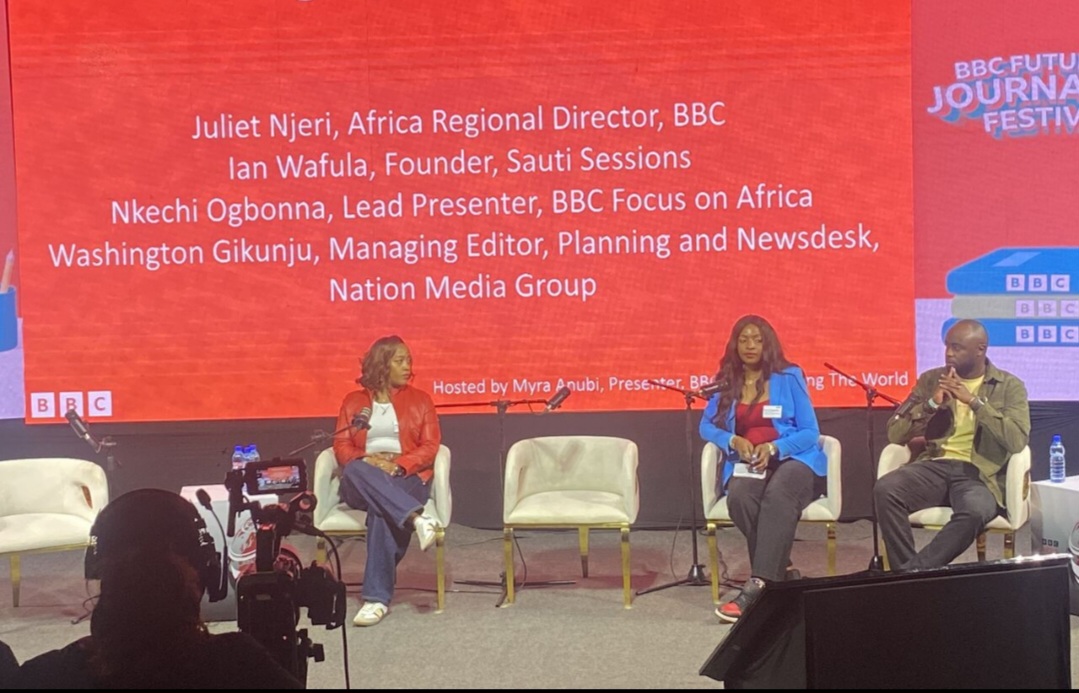
That question hung over much of the BBC Future of Journalism Festival in Nairobi, where editors, academics and reporters kept circling back to the same point: rebuilding trust will take more than new AI tools or slicker digital platforms. It will take a different way of telling Africa’s stories, one that investigates problems as rigorously as ever, but pays just as much attention to the people trying to fix them.
For Juliet Njeri Africa Regional Director BBC, the conversation starts with listening to audiences. Data gathered by the BBC and other newsrooms, she said, shows a growing number of people deliberately tuning out because the news feels relentlessly negative.
“I speak to a lot of young people who tell me the BBC only reports negative news,” she said. “They don’t want to watch negative news.“
That doesn’t mean walking away from hard journalism. Africa is still dealing with conflict, insecurity, poverty, political instability stories that have to be told. But Njeri argues they shouldn’t be the only story the continent gets to tell.
“Africa is not just doom and gloom,” she said. “People are living normal, fulfilling, exciting lives. People are innovating. People are investing in Africa. Our journalism has to reflect the lived experience of Africans.”
That thinking is behind the BBC’s growing investment in solutions journalism, reporting that digs into credible responses to social problems, not just the problems themselves. It isn’t cheerleading, she’s quick to clarify. It’s about portraying society as it actually is.
 The pressure for that shift is coming from several directions at once. Advertising revenue keeps bleeding toward digital platforms and social media, and a lot of newsrooms are still mid-struggle on the transition to sustainable digital operations. Press freedom keeps sliding in several African countries. And plenty of media houses remain financially dependent on governments or a handful of private owners, hardly a recipe for independence.
For Njeri, another problem that sits closer to home is the journalism classrooms. “The media industry has evolved so quickly,” she said. “We should have been changing our training models five years ago. “Not everyone agrees journalism schools should be chasing every new piece of technology, though.
At the University of Nairobi, journalism lecturer Frederick Ogutu makes the case that universities exist to teach principles, not software. Artificial Intelligence, in his view, is just another tool, one moving too fast for any curriculum to keep pace with.
“The AI of today is not the same as tomorrow,” he said. “It would be counterproductive to start running after AI.”
Fredrick argues for universities to keep teaching the durable stuff,ethical reporting, critical thinking, verification, storytelling and let individual newsrooms shape graduates around their own editorial cultures from there.
“Universities don’t train students for one newsroom,” he said. “They teach the fundamentals that allow graduates to adapt anywhere.”
Ogutu sees journalism’s bigger opportunity elsewhere entirely. For decades, African stories have often been filtered through outside perspectives, stripped of the cultural texture that makes them true to life. He thinks the future lies in reclaiming that storytelling rooted in local communities and local languages.
“There are stories you cannot truly tell without using your mother tongue,” he said, arguing that language carries an emotional weight that often gets lost in translation.
AI came up again and again at the festival, though rarely as a threat. BBC leaders mostly framed it as a productivity tool, something that helps journalists move faster without cutting corners editorially.
Njeri said BBC-approved AI systems are already helping with research, translation and video editing, letting reporters get through more material, faster. A document that used to take days to review can now be summarized in minutes; hours of footage can be sorted in a fraction of the time it once took.
But she was just as clear about where the limits are. “The trust audiences have is in us as human beings,” she said.
Every AI-assisted output still has to go through a human editor, she explained, and audiences should always be told when AI has played a role in a story. That insistence on human judgment points to a bigger worry hanging over the whole industry: public trust.
Jon Bithrey thinks solutions journalism is one real step toward rebuilding that trust, just not the whole answer. As editor of People Fixing the World, he spends his time hunting down ordinary people tackling extraordinary problems in health, education, climate, technology and community development.
“We’re looking for people who are doing inspiring things in their communities,” he said, “People who can inspire others to do similar things.”
He’s seen those stories travel well beyond the communities where they start. When journalism turns a successful local initiative into a story people actually want to read, policymakers sometimes take notice and a local fix becomes a national idea. In that sense, solutions journalism doesn’t just inform; it can nudge policy too.
Still, Bithrey is wary of overselling it. “I think it can play a part,” he said “But trust in the media goes way beyond solutions in journalism.”
Digital platforms, algorithm-driven feeds and misinformation have reshaped how people encounter information altogether, he pointed out. Rebuilding trust, in his view, takes responsible journalism, better media literacy, and audiences willing to actually question what lands in their feed.
“People should think: Is this true? Who wrote this? Why am I being shown it? Should I share it?” he said.
That sense of shared responsibility ran through the whole festival. No one argued that solutions journalism should replace investigative reporting or soften journalism’s watchdog role if anything, speakers said it demands more rigor, since reporters now have to verify not just that a problem exists but whether a proposed fix actually works.
The real challenge for African newsrooms isn’t choosing between exposing failure and highlighting progress. It’s making room for both because audiences still want journalists to expose corruption, scrutinize governments and dig into injustice, but they also want coverage that looks like the continent they actually live in: entrepreneurs building businesses, communities solving local problems, researchers innovating, young people creating opportunities.
As African journalism grapples with shrinking revenue, fast-moving technology and eroding trust, its future may depend less on the next tool and more on reconnecting with the people it’s meant to serve.
For Njeri, that future belongs to journalists who are curious, courageous, and genuinely invested in Africa’s story.
“I want them to love this continent,” she said. “Because if we don’t love this continent, then who’s going to love it for us?”