
|
Getting your Trinity Audio player ready...
|
By Mercy Kachenge
Nairobi, Kenya: According to the Ministry of Health, the country records an estimated 355 maternal deaths per 100,000 live births, far higher than the Sustainable Development Goal target of fewer than 70 by 2030.
The Ministry of Health has identified maternal mortality as one of the country’s most pressing public health challenges, with severe bleeding, hypertensive disorders, infections, unsafe abortion and delays in seeking or receiving care remaining the leading causes of death.
While Kenya has expanded skilled birth attendance and antenatal care over the years, experts argue the country cannot meet its maternal health targets through traditional healthcare approaches alone.
Increasingly, attention is turning to artificial intelligence (AI) as a tool that could help women recognise danger signs earlier, improve communication with providers and strengthen decision-making across the health system. Health experts insist, however, that technology alone will not save mothers’ lives. AI must work alongside trained health workers, stronger facilities, responsible governance and sustainable financing if it is to meaningfully reduce maternal and newborn deaths.
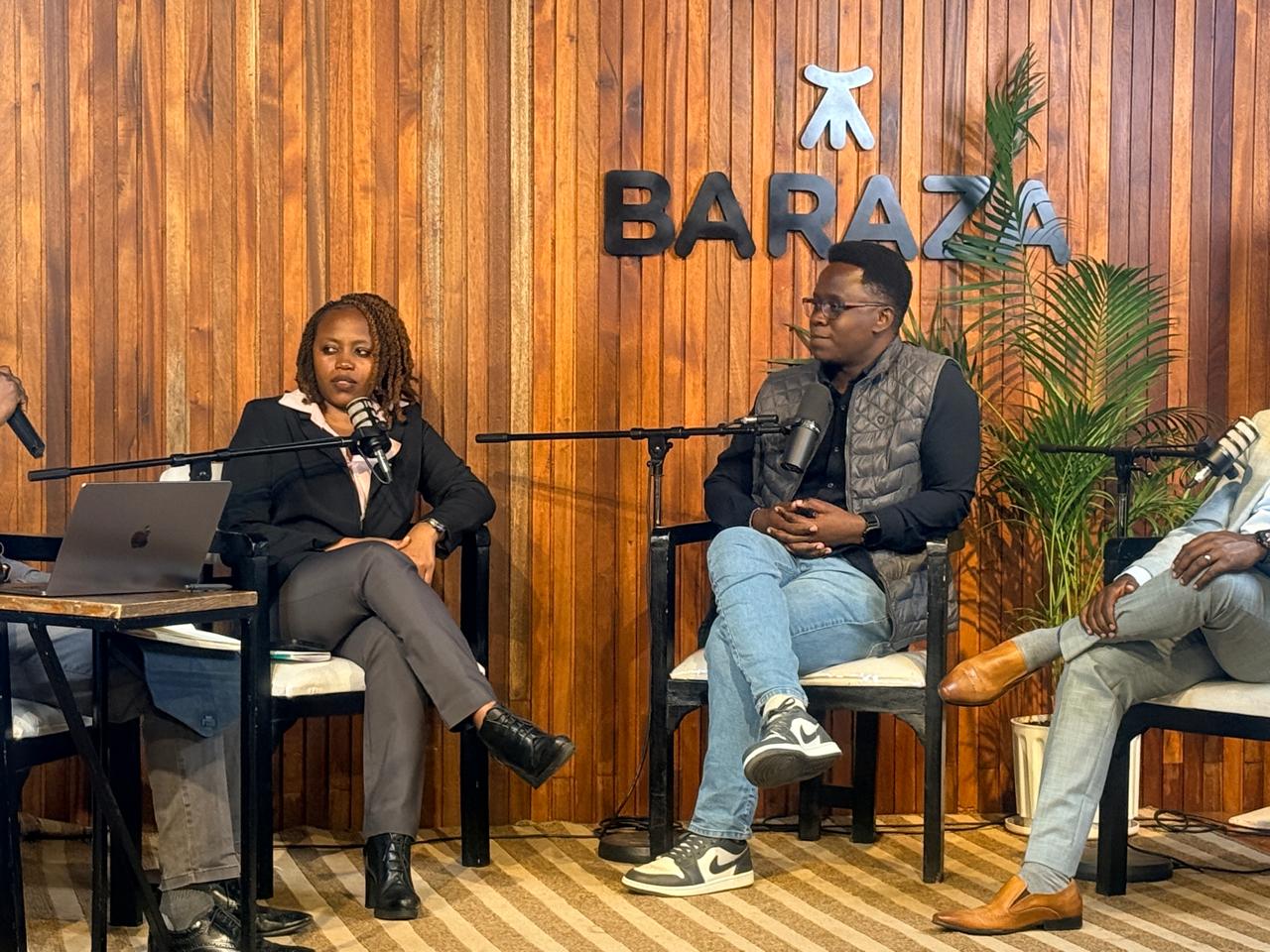 Javan Waita, Director of Kenya Programmes at Jacaranda Health, said conversations about AI should move past fascination with the technology itself and focus on one question: whether mothers receive the information they need to make life-saving decisions during pregnancy and after childbirth. “What matters is whether mothers receive messages that empower them during pregnancy and whether they are linked to healthcare facilities at the right time,” he said.
“It doesn’t matter whether the service is provided by the government, Jacaranda Health or another organisation. What matters is that mothers continue receiving support that helps them protect their own lives and those of their babies.”
Waita leads the national scale-up of PROMPTS, an AI-supported two-way SMS platform offering expectant and postpartum mothers gestation-specific health information, appointment reminders and direct access to qualified healthcare professionals. Unlike conventional reminder systems, PROMPTS lets mothers ask questions at any time and receive personalised responses based on their stage of pregnancy and individual health needs, a feature Waita believes can address one of the biggest drivers of maternal mortality: delayed decision-making.
“When mothers understand danger signs early enough, they are more likely to seek care before complications become fatal,” he explained. Without that information, women experiencing severe bleeding after childbirth may not recognise the seriousness of their condition until they develop haemorrhagic shock, one of the leading causes of maternal deaths worldwide, while newborns with fever or feeding difficulties may miss treatment because caregivers delay seeking help. “We are going to have situations where mothers lose babies, not necessarily because healthcare facilities are inaccessible or transport is unavailable, but because they are unable to make decisions to seek care at the right time and in the right place,” he said.
For Waita, AI’s value lies not in replacing healthcare workers but in strengthening their ability to reach mothers before emergencies develop. “There is a difference between AI deciding about people and AI helping people decide,” he said. “We do not allow AI to decide about mothers. Our system identifies mothers who may require attention and immediately links them to qualified human clinicians. The final medical decision always remains with trained healthcare professionals.”
As governments and technology companies race to integrate AI into healthcare, concerns have grown globally over patient safety, misinformation and overreliance on automated systems, and Waita believes healthcare demands a far more cautious approach than most other sectors. “It becomes very dangerous when artificial intelligence starts making critical decisions about human beings,” he said.
To manage that risk, Jacaranda Health has built what it calls a responsible AI framework. Unlike many publicly available systems trained on vast amounts of internet content, PROMPTS was built using thousands of real questions from Kenyan mothers and answers provided by experienced nurses and clinicians. “Our platform is not trained using Google information,” Waita said. “It is trained using real questions from mothers and real answers given by human healthcare workers.”
An additional safeguard: an AI auditor checks every generated response against predefined clinical safety standards before it reaches a mother. “If the response does not meet the required threshold, it should not reach the mother,” he said.
He welcomed Kenya’s ongoing efforts to legislate AI, arguing high-risk healthcare applications should be rigorously audited before deployment. “Healthcare is different. AI can support clinicians, but it should never replace their judgement.”
Beyond safety, Waita sees personalisation as central to the future of maternal healthcare. Every pregnancy differs; some women are teenagers experiencing their first pregnancy, others live with diabetes, hypertension, tuberculosis or HIV, conditions that raise the risk of complications and demand specialised guidance.
During enrolment, mothers share information that lets PROMPTS build individual health profiles and tailor messages to gestational age, medical history and risk factors rather than sending everyone the same content.
“The better we understand the mother’s profile, the better we are able to personalise the information she receives,” he said. Jacaranda Health is now working with the Ministry of Health to integrate PROMPTS with Kenya’s Electronic Medical Records system and its Digital Health Superhighway, a move expected to improve continuity of care and reduce duplication across facilities.
Technology alone, though, cannot transform maternal health if it ignores the communities it serves. Waita argued that many AI systems built outside Africa fail because they overlook local cultural beliefs shaping healthcare decisions citing, for example, communities where pregnant women avoid eggs for cultural reasons.
“If an AI platform simply recommends eating eggs without understanding why women avoid them, then the advice may never be followed,” he said, adding that culture varies not just between Africa and Europe but among Kenya’s own communities.
Adding “Technology must understand the people it serves. If it ignores culture, even the most advanced innovation may fail because it does not fit the realities of the community.”
Empowering mothers with information, Waita said, addresses only one side of the problem: improving maternal survival also requires fixing the facilities where women eventually seek treatment. Informed mothers will still face poor outcomes if those facilities lack medicines, equipment or skilled workers.
Drawing on maternal and newborn health assessments from Jacaranda Health’s programmes, he estimated that 90% of maternal and neonatal complications are preventable: roughly 30% tied to behaviour, such as poor nutrition, delayed care-seeking or failure to recognise danger signs, and the remaining 70% dependent on the quality and readiness of health facilities.
“A referral only works if the receiving facility is prepared,” he said. “If a mother arrives at a health facility after being referred but finds there are no essential medicines, no trained healthcare workers or no functioning equipment, then the referral system has failed her.”
To address this, Jacaranda Health runs MENDAS, a programme built to sharpen the knowledge and clinical skills of frontline maternal and newborn care workers. Rather than pulling clinicians into classroom training, MENDAS uses a WhatsApp-based platform called Delta, letting nurses access continuous professional education without leaving their workstations.
“We want healthcare workers to have the right information and the right skills to identify and manage complications when mothers arrive at health facilities,” Waita said. “Technology should not only support mothers. It should also strengthen the people providing care.” The programme covers recognising obstetric emergencies, managing complications and making timely referrals.
Jacaranda Health also runs facility quality assessments across counties, examining whether they have essential medicines, functional equipment, adequate staffing and the infrastructure needed for quality maternity care, with findings compiled into dashboards shared with county governments and the Ministry of Health to guide resource allocation.
“Data should drive financing,” Waita said.
“If counties understand exactly where the gaps are, it becomes much easier to prioritise investments that will improve maternal and newborn outcomes” a point he says matters even more as Kenya rolls out Universal Health Coverage with limited resources.
Sustainability remains a central worry once donor funding tied to AI health projects runs out, but Waita said Jacaranda Health is deliberately building financing models beyond grants. “What matters is not who owns the solution,” he said. “What matters is whether mothers continue receiving life-saving information.”
One approach has been partnerships with public and private institutions, including a two-year commercial arrangement with insurer Britam to deliver gestation-specific maternal health messages to its clients evidence, Waita said, that digital maternal health tools can attract financing beyond donor support. The organisation is also exploring partnerships with telecom companies while discussing long-term government ownership of the platform.
“Our goal is for the government to eventually take up the platform because that’s how sustainability is achieved,” he said, adding that success should be measured not by whether Jacaranda Health keeps running PROMPTS indefinitely, but by whether mothers keep receiving timely information regardless of who manages the system.
Immanuel Momanyi, Head of Acceleration at Villgro Africa, echoed that view, arguing many African innovations collapse not from technical failure but from failure to achieve adoption.
“Pilot projects usually succeed because there is grant funding,” he said. “The real challenge begins when innovators have to convince governments, hospitals or ordinary users to pay for the service.”
Many startups, he said, spend years building technically impressive products without enough attention to whether people value the solution enough to pay for it. “If people are not willing to pay for your solution, then there is no sustainability. Product-market fit is what determines whether an innovation survives.”
He challenged governments to move beyond celebrating innovation at conferences and become active buyers of locally developed technology: “Talking about AI is not adoption. Adoption is when the government actually pays for innovations that have demonstrated value.”
He also urged innovators to co-create with the governments and health facilities that will eventually use their products, arguing that solutions built with counties and facilities from the start are more likely to be adopted than finished products delivered from outside.
Scaling AI presents another challenge: cost. Momanyi noted that advanced AI systems require expensive computing infrastructure and data-processing capacity, making independent scaling difficult for many African startups though he believes supportive government policy and strategic investment can help local innovators compete with larger technology companies.
“Policy creates the environment where innovation either succeeds or fails,” he said. “If we create an enabling environment and governments become early adopters of local innovations, then these solutions have a much better chance of succeeding.”
The discussion also turned to data, often the most overlooked resource in conversations about AI. Experts agreed that AI’s effectiveness depends entirely on the quality of the information used to build and train it; whether predicting pregnancy risks or supporting agricultural productivity, poor-quality data produces poor-quality decisions.
For Kenya, that means investing not only in technology but in stronger health information systems capable of generating accurate, timely and representative data.
As Kenya works toward reducing maternal mortality and meeting its Sustainable Development Goal commitments, artificial intelligence is emerging as a valuable tool rather than a replacement for conventional healthcare. The consensus among experts is that AI will not eliminate maternal deaths on its own — mothers will still need functioning health facilities, skilled clinicians, reliable referral systems, essential medicines and supportive public policy.
But deployed responsibly, integrated into the national health system and backed by sustainable financing, it could help close longstanding gaps by empowering women with timely information, strengthening frontline workers and enabling governments to make better decisions from real-time data.
For Waita, the measure of success is simple: “It doesn’t matter whether it’s Jacaranda Health, the government or another organisation delivering the service. What matters is that every mother receives the right information at the right time, reaches the right health facility and has the best possible chance of going home safely with her baby.”